Diseases
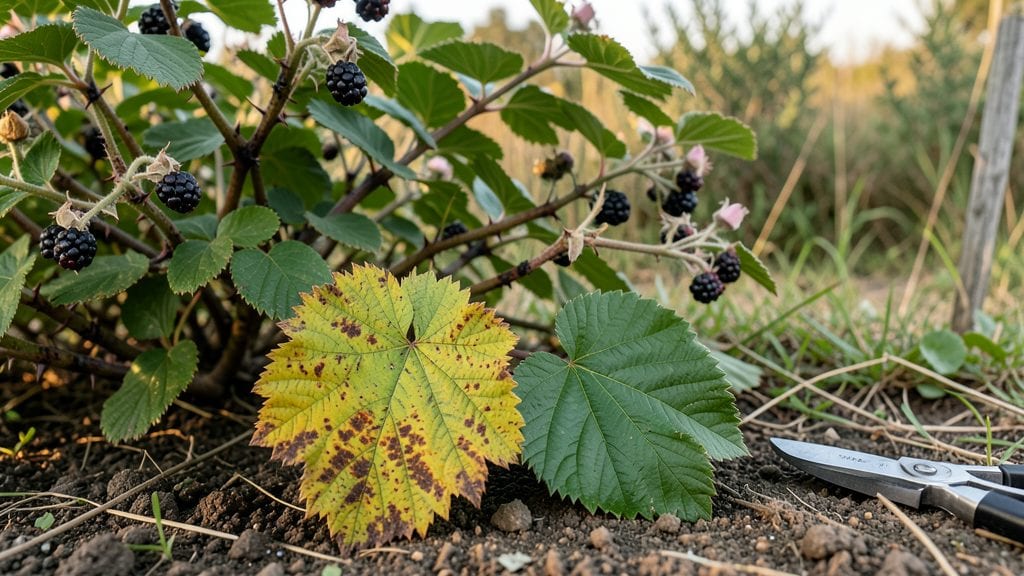
Blackberry plant diseases can turn your thriving brambles into a sad, spotted mess—unless you catch them early. I’ve spent years watching anthracnose, rust, and botrytis creep into my bushes, and I’ve learned the warning signs that save entire harvests.
The key is knowing what to look for before the damage spreads.
Most fungal diseases start with tiny spots on leaves or canes—dark, sunken, or rust-colored patches that grow if you ignore them. Humidity and wet foliage create the perfect breeding ground, so pruning for airflow and avoiding overhead watering cuts the risk dramatically.
My bushes stay healthier now because I check them weekly after rain.
Once you spot trouble, organic sprays like neem oil or copper fungicide can stop it in its tracks. For stubborn cases, targeted pruning removes infected stems entirely. The goal isn’t just to treat—it’s to prevent next year’s outbreaks by cleaning up debris and spacing plants properly.
This guide covers the 10 worst offenders, from anthracnose to bacterial canker, with step-by-step fixes that actually work. Whether you’re dealing with a single cane or a whole patch, you’ll walk away knowing exactly what to do—and when to do it.
Root Causes Of Blackberry Ailments
Blackberry plants may seem resilient, but they’re not immune to disease—especially when environmental or cultural factors create the perfect storm for pathogens. Understanding why these issues arise helps you take proactive steps to protect your berries.
Below, we break down the real culprits behind blackberry plant diseases, from fungal invaders to poor growing conditions.
Blackberries thrive in open, well-ventilated spaces, but when plants grow too close together, moisture lingers, and humidity spikes—creating a fungal paradise. Botrytis blight, anthracnose, and powdery mildew all love this environment because stagnant air traps spores near leaves and fruit.
- Why it happens:
- Dense canes block airflow, preventing water from evaporating quickly.
- Overgrown brambles retain moisture longer, giving fungi like Botrytis cinerea (gray mold) an easy entry point.
- Weakened plants (from stress or poor nutrition) can’t fight off infections as effectively.
- Actionable fix:
- Prune aggressively in late winter/early spring to remove dead or crossing canes.
- Space new plants 4–6 feet apart in rows, with 8–10 feet between rows for better circulation.
- Avoid mulching too heavily—keep 3–4 inches of clearance around the base to prevent soil-borne spores from splashing onto foliage.
Blackberries hate soggy roots. While they need consistent moisture, poor drainage, overwatering, or heavy rainfall can drown roots, weaken the plant, and invite root rot (Phytophthora) and bacterial diseases like crown gall.
- Why it happens:
- Clay or compacted soil prevents water from draining, leading to anaerobic conditions where harmful fungi thrive.
- Frequent overhead watering keeps leaves wet for extended periods, encouraging Colletotrichum (anthracnose) and Pseudomonas (bacterial leaf spot).
- Fungal spores in wet soil splash onto stems and leaves during rain or irrigation.
- Actionable fix: - Test your soil’s drainage—dig a hole, fill it with water, and time how long it takes to drain.
If it’s slower than 6 hours, amend with compost or sand. - Water at the base (drip irrigation or soaker hoses) instead of overhead sprinklers. - Raise beds or plant on mounds if your soil is naturally heavy. - Avoid planting in low-lying areas where water pools after rain.
Blackberries are hardy but not heat- or cold-proof. Sudden shifts—whether scorching summer heat or late frosts—stress plants, making them more susceptible to fungal infections like rust (Kuhnia) or powdery mildew.
- Why it happens:
- Heat stress weakens cell walls, allowing pathogens to penetrate more easily.
- Cold snaps (below 20°F) can damage canes, creating entry wounds for Monilinia (mummy berry fungus).
- High humidity + heat (ideal for powdery mildew) often occurs in late summer, when blackberries are already fruiting.
- Actionable fix:
- Mulch heavily (4–6 inches of straw or wood chips) to regulate soil temperature.
- Provide afternoon shade in hot climates (use shade cloth if temps exceed 90°F).
- Choose cold-hardy varieties (e.g., ‘Cheyenne’ or ‘Triple Crown’) if you’re in a short-season zone.
- Avoid late-season nitrogen fertilizers, which promote tender new growth vulnerable to frost damage.
Fungal spores and bacteria hitchhike on pruners, trellises, and even compost. If you’re not sterilizing tools or using clean planting material, diseases like armillaria root rot or bacterial canker can spread like wildfire.
- Why it happens:
- Infected plant debris left in the soil releases spores year after year.
- Reusing tools without cleaning spreads pathogens from one plant to another.
- Compost made from diseased plants can reintroduce fungi into the garden.
- Actionable fix:
- Sterilize pruners between cuts with 70% isopropyl alcohol or a 10% bleach solution.
- Remove and destroy (don’t compost) all infected plant parts—burn or bag them to prevent reinfection.
- Test new soil for pathogens before planting (especially if buying from a nursery).
- Rotate crops—don’t plant blackberries in the same spot for 3+ years without a break.
Aphids, spider mites, and Japanese beetles suck plant sap, starving blackberries of nutrients and leaving them open to secondary infections. For example, aphid honeydew feeds yeast spot fungi, while beetle feeding creates wounds for Monilinia to invade.
- Why it happens:
- Pests create stress, reducing the plant’s ability to produce antifungal compounds.
- Honeydew and frass (insect waste) provide a sticky medium for fungal spores to grow.
- Root-feeding grubs (like Japanese beetle larvae) damage roots, making plants more prone to Phytophthora root rot.
- Actionable fix:
- Monitor plants weekly for pests—use neem oil or insecticidal soap for early infestations.
- Introduce beneficial insects (ladybugs, lacewings) to control aphids naturally.
- Apply kaolin clay as a physical barrier to deter beetles and mites.
- Encourage strong growth with balanced fertilization (too much nitrogen = softer, more vulnerable tissue).
Blackberries need specific nutrients to stay disease-resistant. Too much nitrogen leads to soft, sappy growth (loved by fungi), while deficiencies in phosphorus or potassium weaken structural defenses.
- Why it happens:
- Excess nitrogen promotes lush but weak foliage, making plants more prone to powdery mildew and rust.
- Low phosphorus (P) delays root and cane development, leaving plants slow to recover from stress.
- Potassium (K) deficiencies reduce cell wall strength, making berries and leaves easier targets for pathogens.
- Actionable fix:
- Test soil annually and amend based on results (aim for pH 5.5–6.5 for blackberries).
- Use a balanced fertilizer (e.g., 10-10-10) in early spring, then switch to a low-nitrogen, high-potassium (5-10-10) in summer to harden off canes.
- Add compost or bone meal for phosphorus if growth is stunted.
- Avoid synthetic fertilizers late in the season—they encourage tender new growth that’s vulnerable to frost and disease.
Drought, hail, or even unpredictable rainfall patterns can shock blackberry plants, lowering their disease resistance. For example, prolonged drought weakens roots, while sudden heavy rain washes away protective microbial communities in the soil.
- Why it happens:
- Drought stress forces plants to close stomata, reducing their ability to transpire and detoxify pathogens.
- Hail or wind damage creates open wounds where fungi like Didymella (black rot) can enter.
- Frequent rain without breaks keeps foliage wet, extending the window for fungal spores to germinate.
- Actionable fix:
- Mulch deeply (5–6 inches) to retain moisture during droughts.
- Install windbreaks (e.g., tall grasses or shrubs) to protect canes from physical damage.
- Water deeply but infrequently to encourage strong root systems that can withstand stress.
- Choose disease-resistant varieties (e.g., ‘Arapaho’ for rust resistance) if your climate is prone to extreme weather.
Quick Fixes for Blackberry Ailments
Reviving your blackberry bushes starts with targeted action—whether you're battling fungal spots, wilted canes, or mysterious leaf blights. Below, we map the most common blackberry plant diseases to practical solutions, so you can act fast and keep your berries thriving.
Prevention tips are sprinkled in to stop future outbreaks before they start.
**🔥 Cause: Wet leaves, poor airflow, or old debris harboring spores.
How to Treat It:
- 🍳 Prune for Airflow
- Remove
- Pro Tip: 💡 Snip canes 3–4 inches below infected spots—never leave stubs, as they trap moisture.
- 👨🍳 Fungicide Spray (Organic or Synthetic)
- Neem oil spray (1 tbsp neem oil + 1 tsp mild soap per quart of water) applied every 7–10 days during wet seasons.
- For severe cases, use copper fungicide (follow label rates) at the first sign of spots.
- Timing Matters: ⏰ Spray early morning or evening to avoid burning leaves in direct sun.
- 🧹 Clean Up Debris
- Rake and remove all fallen leaves from the bed. Compost them only if they’re disease-free—otherwise, bag and discard.
- Solarize the soil (cover with clear plastic for 4–6 weeks in hot weather) to kill lingering spores.
🌡️ Prevention:
- Space plants 3–4 feet apart to reduce humidity.
- Water at the base (avoid overhead sprinkling).
- Mulch with straw (not wood chips) to keep leaves dry.
**🔥 Cause: Overwatering, injured canes, or thick mulch trapping moisture.
How to Treat It:
- 🔪 Cut Out the Infected Canes
- Sever
- Warning: ⚠️ Do not compost blighted canes—burn or trash them immediately.
- 🌱 Revive the Soil
- Mix 1 cup of baking soda per gallon of water and spray on canes (helps neutralize fungal growth).
- Add compost or well-rotted manure to boost plant immunity.
- 🌿 Adjust Watering Habits
- Water deeply 1–2 times per week (early morning) instead of daily shallow watering.
- Ensure 6–8 inches of drainage around the base—raise beds if needed.
🎯 Prevention:
- Prune in dry weather to prevent splashing spores.
- Avoid mulching too close to canes (keep 6+ inches away).
- Rotate crops if replanting in the same spot (wait 3–5 years).
**🔥 Cause: High humidity, shaded plants, or dense foliage.
How to Treat It:
- 🍳 Baking Soda Spray
- Mix
- Why It Works: 💡 Baking soda raises leaf pH, making it inhospitable for fungi.
- 🌿 Improve Sunlight & Airflow
- Thin out suckers (shoots from the roots) to reduce shade.
- Train canes upward (use trellises) to lift them out of damp soil.
- 🍄 Horticultural Oil (For Severe Cases)
- Apply dormant oil spray in late winter to kill overwintering spores.
✨ Prevention:
- Space plants wider (4–5 feet apart).
- Water early so leaves dry by midday.
- Choose resistant varieties like ‘Natchez’ or ‘Triple Crown’.
**🔥 Cause: Waterlogged soil, poor drainage, or compacted roots.
How to Treat It:
- 🚿 Fix Drainage Immediately
- Install a French drain if the area floods often.
- 🌱 Fungal Soil Drench
- Mix
- Alternative: 💡 Use Trichoderma fungus (a beneficial soil microbe) to outcompete pathogens.
- 🍃 Prune Back Severely
- If roots are mushy, cut back canes by 50% to reduce the plant’s demand for water.
🔄 Prevention:
- Test soil drainage—dig a 12-inch hole, fill with water, and time how long it takes to drain (should be <6 hours).
- Avoid over-mulching (keep mulch 2–3 inches deep).
- Plant on mounds if your soil stays soggy.
**🔥 For Multiple Issues:
- 🌿 Fertilize Smartly: Use a balanced 10-10-10 fertilizer in early spring, then switch to low-nitrogen (5-10-10) in summer to avoid leafy growth at berry expense.
- 🍓 Boost Immunity: Spray with kelp meal tea (1 tbsp per gallon) every 4 weeks for micronutrients.
- 🌱 Rotate Planting Spots: If diseases persist, move blackberries to a new location every 3–4 years.
Final Reminder: 🎯 Act at the first sign of trouble**—blackberry diseases spread faster than you think! With these fixes, your bushes will bounce back stronger, and next season’s berries will be sweeter than ever.
Frequently asked questions
How do I tell if my blackberry leaves have anthracnose or just normal weather damage?
Anthracnose shows as dark, sunken spots with yellow halos on leaves, often with reddish-purple margins. Unlike weather damage, these spots appear first on lower leaves and spread upward. Check the undersides of leaves—anthracnose produces tiny black fungal structures there. If spots are just brown and crispy (no color changes), it’s likely heat or drought stress.
Can I still harvest berries from plants with fungal diseases?
Yes, but only if the fruit itself is free of visible spots or mold. Remove any berries touching infected leaves or canes, as fungi can spread through contact. Wash harvested berries with a 1:10 vinegar-water solution to kill lingering spores. Avoid eating berries from heavily diseased plants—they may have off-flavors or reduced sweetness.
Why does my blackberry patch get rust disease every year, even after treating it?
Rust spores overwinter in fallen leaves and soil, so annual cleanup is critical. Even after treatment, spores can reinfect if you don’t sterilize tools between cuts or remove all plant debris. Try dormant season spraying (copper fungicide in late winter) to kill spores before new growth appears. Also, ensure proper spacing—crowded canes trap moisture ideal for rust.
What’s the fastest way to sterilize pruners between cuts on infected plants?
Use 70% isopropyl alcohol—rub it on blades between cuts and let air-dry for 10 seconds. For a no-alcohol option, soak blades in 1 part bleach to 9 parts water for 30 seconds, then rinse thoroughly. Never skip sterilization—bacterial canker and armillaria root rot spread easily through contaminated tools. Keep a small bottle of rubbing alcohol in your pruning kit for convenience.
Are there blackberry varieties that naturally resist most diseases?
Yes! ‘Natchez’ and ‘Triple Crown’ are bred for rust and anthracnose resistance, while ‘Arapaho’ handles high humidity better than most. For organic growers, ‘Chester’ (thornless) has strong natural defenses. Always check with local nurseries—the best varieties vary by climate. Even resistant types need proper spacing and airflow to stay healthy.