Watering
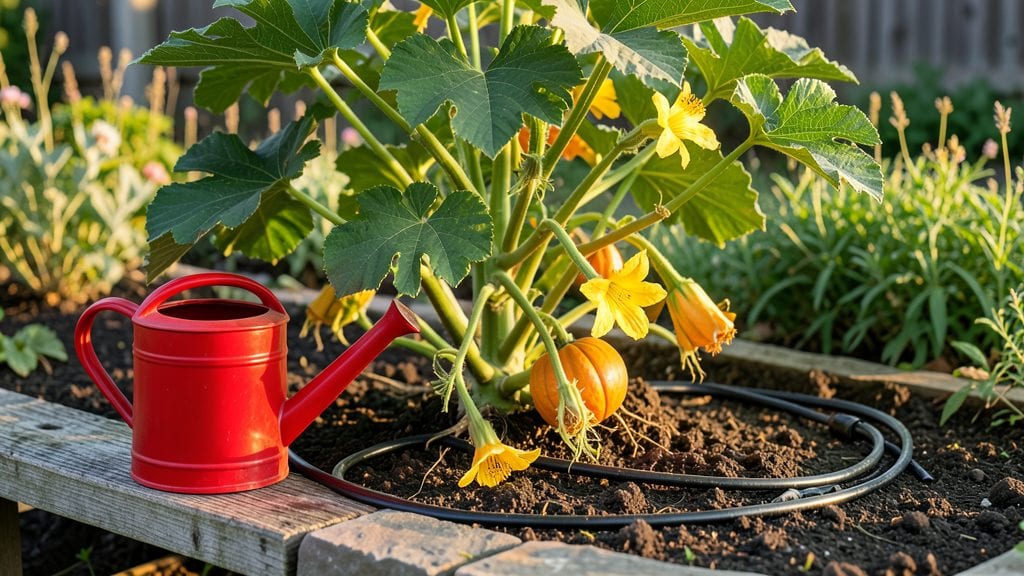
Watering pumpkin plants correctly keeps those sprawling 🎃 vines lush and your fruit plump—without wasting a drop.
Pumpkin plants demand consistent moisture to thrive—but overwatering can drown their sprawling vines and rot their fruit. Mastering the right watering technique is the difference between a bumper crop and wasted effort.
Too little water and your vines wilt, flowers drop, or fruit cracks under the sun. Too much, and you risk root rot or fungal diseases that stifle growth before harvest. The trick is balancing deep soaks with soil checks, adjusting for heat, humidity, and the plant’s growth stage.
Here’s how to water pumpkin plants like a pro: when to water, how much, and what to watch for so your 🎃 thrives from seedling to harvest.
How often to water pumpkin plants for optimal soil moisture
Pumpkin plants thrive on consistent moisture but despise soggy roots—balancing these needs is key to avoiding root rot or blossom-end rot in your fruit. Unlike drought-tolerant squash, pumpkins demand deep, infrequent watering to encourage strong root development. The secret lies in adjusting your watering schedule as the plant progresses from seedlings to fruit-bearing vines, while accounting for your local climate conditions.
I’ve learned through trial and error that soil moisture is the best indicator—stick your finger 2 inches deep into the soil. If it feels dry, it’s time to water.
For container-grown pumpkins, this check happens daily, while in-ground plants may only need watering every 3–5 days during peak summer heat. The goal? Keep the soil evenly moist without waterlogging, especially during the flowering and fruiting stages when water stress can cause fruit to abort or crack.
summary-table
During the seedling stage, young pumpkin plants need frequent, light watering to establish roots, but avoid wetting the leaves to prevent powdery mildew. I’ve found that using a soaker hose or drip irrigation at the base keeps moisture where it’s needed.
Once the vines start spreading, shift to deep watering sessions—aim for 1–2 inches of water per week, delivered in the early morning to allow foliage to dry before evening. This timing reduces the risk of fungal diseases like downy mildew, which thrives in damp conditions.
When temperatures climb above 90°F, pumpkin plants transpire rapidly, and you may need to water daily to prevent wilting. I test this by checking the soil moisture at the root zone—if the top inch feels dry but deeper soil stays moist, your plant is likely thirsty.
In humid climates, like the southeastern U.S., reduce watering slightly to avoid root rot, but never let the soil dry out completely during the flowering stage, as this can cause fruit abortion.
One common mistake I’ve seen (even among experienced gardeners) is overwatering during fruiting. While pumpkins need steady moisture, excessive water can lead to blossom-end rot or cracked fruit. To avoid this, I monitor soil moisture closely and adjust my schedule.
For example, if your pumpkins start showing signs of stress—like yellowing leaves or drooping vines—it’s better to water deeply once than give shallow, frequent drinks. This encourages roots to grow deeper, making your plants more drought-resistant.
For container-grown pumpkins, the rules change slightly because pots dry out faster. I’ve had success with self-watering containers or burying the pots halfway in the ground to stabilize moisture. In these cases, check the soil daily and water as soon as the top inch feels dry.
If you’re growing pumpkins in raised beds, mulch heavily with straw or wood chips to retain moisture and suppress weeds, which compete for water.
Environmental factors like wind or high humidity also play a role. On windy days, pumpkin leaves lose moisture quickly, so I increase watering frequency slightly. Conversely, in high-humidity areas, I water less frequently but ensure the soil drains well to prevent waterlogged roots.
Pro tip: If you notice wilting leaves that don’t recover by evening, it’s often a sign of underwatering. However, if the leaves feel slimy or mushy, you’re likely overwatering.
As your pumpkins near harvest, reduce watering gradually—especially in the 2 weeks before picking. This helps thicken the fruit rind and improves storage life. I’ve noticed that pumpkins grown with consistent moisture but not waterlogged tend to have thicker skins and fewer blemishes.
For varieties like ‘Howden’ or ‘Sugar Pie’, this adjustment is critical to avoid soft, watery flesh.
Signs of overwatering vs. underwatering in pumpkin plants
Pumpkin plants are sensitive to moisture imbalances, and their leaves act like a diagnostic dashboard for watering issues. Yellowing leaves or mushy stems often signal overwatering, while crispy edges and drooping vines scream dehydration.
Since pumpkins need 1-2 inches of water weekly, it’s easy to misjudge their thirst—especially when vines sprawl up to 20 feet long. Learning these visual cues helps you adjust before problems like root rot or blossom end rot ruin your harvest.
Start by examining the soil texture—overwatered soil feels soggy and clings to your fingers, while underwatered soil cracks and pulls away.
Check the leaf veins: dark, waterlogged veins mean excess moisture, while pale, dry veins indicate thirst. Wilting patterns also differ—overwatered plants wilt suddenly (due to oxygen-starved roots), while underwatered plants wilt gradually as they conserve moisture. These distinctions are critical for saving your pumpkin patch.
Overwatering
- 🌱 Yellow leaves (especially lower leaves)
- 💧 Soggy soil that stays clumpy
- 🪴 Mushy stems or blackened roots
- 🍃 Fungal growth (mold on soil or leaves)
- ⏰ Slow wilting after heavy rain
Underwatering
- ☀️ Crispy leaf edges (brown and dry)
- 🪴 Dry, cracking soil around roots
- 🌿 Drooping vines that don’t perk up
- 🍃 Wilting in heat (leaves fold inward)
- ⏰ Gradual wilting over days
When roots suffocate from excess water, pumpkin plants develop root rot, identifiable by a foul smell at the base and leaves turning yellow-brown. Pull back the mulch and check for blackened roots—if they’re slimy or mushy, your plant is drowning.
Conversely, underwatered roots appear dry and brittle, and the soil pulls away from the pot or ground. A simple finger test (inserting your finger 1-2 inches deep) reveals whether the soil is damp or parched.
Don’t ignore blossom end rot in pumpkins—a classic sign of inconsistent moisture. This condition causes the fruit’s blossom end to turn dark and leathery, often due to alternating drought and overwatering.
To prevent it, maintain even soil moisture and mulch with straw or grass clippings to stabilize hydration. If you spot these symptoms early, adjust your watering schedule immediately—pumpkins forgive occasional mistakes but not chronic neglect.
For container-grown pumpkins, the stakes are even higher. Small pots dry out faster, so check soil moisture daily during heatwaves. If the topsoil feels dry, water until it drains from the bottom. Overwatering in containers leads to root-bound stress, while underwatering stunts vine growth.
Use a moisture meter for accuracy, especially if your pumpkins are in black plastic pots, which retain heat and speed up evaporation.
Pro tip: Morning watering is non-negotiable. Watering at night promotes fungal diseases like powdery mildew, which thrives in damp leaves. Aim for deep, infrequent waterings—pumpkin roots grow 3-4 feet deep, so shallow sprinkles won’t reach them.
If your pumpkins are flowering but fruits aren’t setting, inconsistent watering is often the culprit. Keep the soil consistently moist (not soggy) during this critical 6-8 week fruiting stage.