Planting
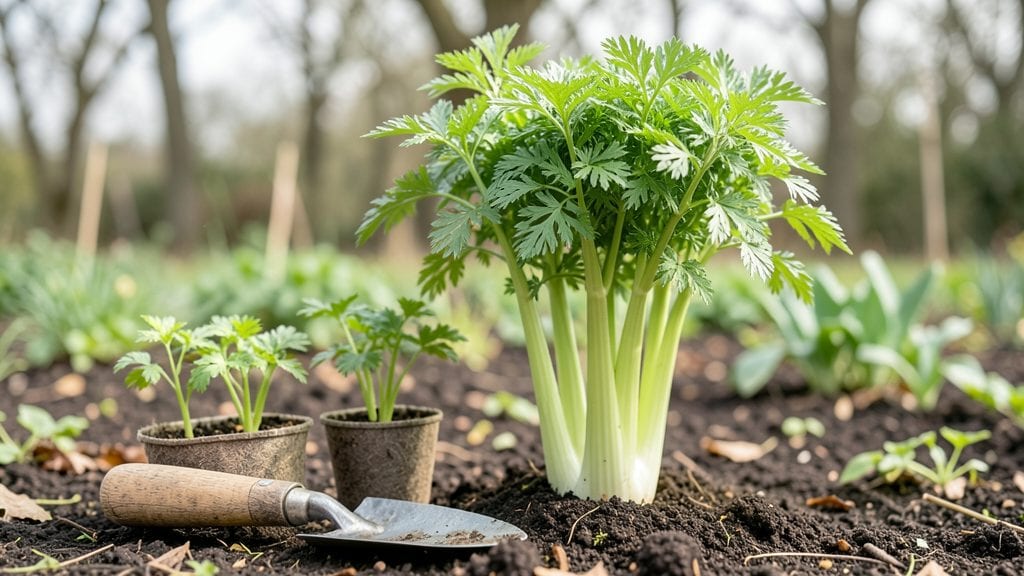
Here are celery planting tips you’ll actually want to follow—because the 120-day wait for crisp stalks starts with the right soil, not just patience. 🌱 day one. Too many gardeners rush into planting without amending the dirt first, and that’s when celery turns bitter or stunted.
Start with loose, well-draining soil rich in organic matter—think compost mixed into the top 12 inches—and keep it consistently moist but never soggy. Celery thrives in cool weather, so plant transplants 4-6 weeks before your last frost or direct-sow in late spring for summer harvests.
The trickiest part? Overcrowding. Space plants 12-18 inches apart to give them room to grow those thick, juicy stalks.
📚 In This Guide
- What you need
- Instructions
- Tips and common mistakes
- Wrapping up and next steps
What you need
- ● Celery seeds or transplants: Seeds: 1–2 grams (enough for ~50 plants) or Transplants: 10–20 healthy seedlings (check for firm stems and vibrant leaves)
- ● Well-draining soil: 1–2 bags (18–25 lbs each) of high-quality potting mix or garden soil amended with compost (20–30% compost by volume)
- ● Containers or garden bed: Containers: 5–10 gallon pots (1 per plant) with drainage holes, or Garden bed: 12–18 inches deep, enriched with organic matter
- ● Fertilizer: Balanced liquid fertilizer (10-10-10 or 20-20-20, diluted to half-strength) or Slow-release granular fertilizer (e.g., 5-10-10, 1 tbsp per plant)
- ● Watering can or hose with a gentle spray nozzle
- ○ Mulch (optional but recommended): Straw, shredded leaves, or compost (2–3 inches thick to retain moisture)
- ● Seed-starting kit (if growing from seed, includes trays, domes, and heat mat)
- ● Soil moisture meter (to monitor water levels—celery hates soggy roots!)
- ● Plant labels (to track varieties and planting dates)
- ● Row covers or shade cloth (for seedlings or hot climates)
- ● Epsom salt (1 tbsp per gallon of water, monthly for magnesium boost)
How to plant celery for a productive, year-long harvest
Celery thrives with the right soil prep—here’s how to set up your plants for steady growth.
🌱 Step 1: Prepare the Soil for Moisture Retention
Celery demands consistently damp soil, so amending your garden bed is critical. Work in 3 inches of compost and 2 inches of well-rotted manure into the top 12 inches of soil. This improves drainage while holding moisture—celery roots rot quickly in soggy conditions. I like to add a handful of perlite per square foot to prevent compaction, which keeps roots aerated.
Test your soil’s moisture by squeezing a handful—it should hold together but not drip. If it crumbles, add more compost. Avoid fresh manure; it burns tender celery roots. The goal is a loamy, slightly sandy texture that mimics its natural wetland habitat.
💧 Step 2: Plant Transplants at the Right Depth and Spacing
Set out 4-week-old seedlings (never direct-sow in cold climates) 12 inches apart in rows 18 inches apart. Dig holes just deep enough to bury the roots without folding the stem—celery hates buried crowns. Gently firm the soil around each plant to eliminate air pockets, then water deeply to settle everything.
Here’s the trick: mulch immediately with 2 inches of straw to lock in moisture and suppress weeds. Without mulch, soil dries out between waterings, causing bitter stalks. I use straw because it breaks down slowly and doesn’t mat like grass clippings. Keep the mulch 2 inches away from stems to prevent rot.
☀️ Step 3: Provide Consistent Water and Partial Shade
Celery needs 1-1.5 inches of water weekly, more in heat. Water at the base only—wetting leaves spreads disease. I use drip irrigation on a timer to avoid soggy soil. In hot climates, provide afternoon shade to prevent bolting (flowering). A 50% shade cloth works well during summer months.
Watch for yellowing leaves—this signals either overwatering or nitrogen deficiency. If the soil feels mushy, reduce watering; if leaves stay pale, side-dress with aged compost. Celery grows best in 60-70°F soil, so in cold springs, wait until night temps stay above 45°F before planting.
✂️ Step 4: Harvest Strategically for Continuous Yields
Start harvesting outer stalks when they reach 12 inches tall, cutting just above the soil line. This encourages the center to thicken. Never pull the whole plant—you’ll stunt regrowth. I harvest every 2-3 weeks this way, and the plant keeps producing for 6-8 weeks before needing replacement.
For winter crops, plant a second batch in late summer under row covers to extend the season. Celery tolerates light frosts down to 25°F, but protect it from hard freezes. Store harvested stalks in plastic bags in the fridge for up to 2 weeks—they’ll stay crisp if you trim the base before storing.
Tips & tricks for perfect celery planting
Mastering celery growth starts with understanding its unique soil needs—here are the game-changing tricks I've learned after years of trial and error.
Soil Texture is Everything: The loamy, slightly sandy texture mentioned in Step 1 is non-negotiable for celery. To achieve this, I recommend sifting your compost and perlite mixture through a 1/4-inch mesh screen before amending the soil. This eliminates large clumps that can create air pockets where roots rot. Think of it as creating a sponge-like environment where moisture is evenly distributed but never stagnant.
Timing Your Planting for Temperature: While Step 3 mentions waiting until night temps stay above 45°F, I've found that planting when daytime highs reach 65°F consistently gives even better results. Celery seedlings are particularly sensitive to temperature fluctuations—if you plant too early when nights dip below 45°F, the plants may develop bitter flavors or even bolt prematurely. Use a soil thermometer to confirm your garden bed is within the ideal 60-70°F range before transplanting.
Mulching Strategy for Moisture Control: The 2-inch straw mulch in Step 2 is brilliant, but here's the pro move: apply a second layer of mulch (about 1 inch) after your initial harvest begins. This maintains consistent moisture levels while protecting the soil from temperature swings. I've seen celery plants continue producing for an extra 2-3 weeks with this extended mulching technique, especially during dry summer months.
Harvesting Technique for Continuous Yields: When harvesting those 12-inch outer stalks in Step 4, use clean, sharp scissors or pruning shears instead of pulling by hand. This prevents damage to the remaining plant and reduces the risk of disease entry points. I also recommend harvesting in the morning when stalks are most crisp—this gives you the best quality for immediate use while allowing the plant to recover more quickly for subsequent harvests.
Pro Tips for Celery Planting Tips
- Mastering celery growth starts with understanding its unique soil needs—here are the game-changing tricks I've learne...
- Soil Texture is Everything: The loamy, slightly sandy texture mentioned in Step 1 is non-negotiable for celery. To ac...
- Timing Your Planting for Temperature: While Step 3 mentions waiting until night temps stay above 45°F, I've found tha...
Frequently asked questions
Got questions about growing celery? You’re not alone! Here are some of the most common concerns—plus quick, actionable answers to help you cultivate a thriving crop.
Can I grow celery indoors or in containers?
Celery thrives in containers as long as they’re at least 12 inches deep and have drainage holes. Use a balanced fertilizer (like 10-10-10) every 3–4 weeks, and place your pot in full sun (6+ hours/day). Indoor grow lights work too if natural light is limited. Just keep soil consistently moist—celery hates drying out!
How long does it take for celery to grow from seed?
Patience is key! Celery seeds germinate slowly—2–4 weeks in warm soil (70–80°F). From there, it takes 100–130 days to harvest mature heads. For faster results, opt for start plants from a nursery (ready in 60–80 days). Pro tip: Thin seedlings to 6–8 inches apart to avoid overcrowding.
What’s the best temperature for planting celery?
Celery is a cool-season crop—ideal temps are 60–70°F for germination and growth. Avoid planting when soil temps exceed 80°F, or your plants may bolt (go to seed) prematurely. In hot climates, try spring or fall planting, or use shade cloth to protect seedlings. Mulch helps too!
Why are my celery leaves turning yellow or wilted?
Yellow leaves often signal overwatering or poor drainage. Let soil dry slightly between waterings, and ensure pots/containers have drainage. Wilting can also mean underwatering or pests (like aphids). Check for holes in leaves or sticky residue. Treat with neem oil if pests are the culprit.
Can I harvest celery leaves before the stalks mature?
Yes! Celery leaves are edible and packed with flavor. Snip outer leaves as needed, leaving the inner ones to keep growing. For the thick stalks, harvest when they’re 12–18 inches tall but before they flower. Cut stems at the base with scissors—this encourages regrowth for a second harvest!
Still stumped? Drop your celery-growing challenges in the comments—we’re happy to help!
Wrapping up and next steps
Growing celery is totally doable—even for beginners! 🌱 By focusing on well-draining soil, consistent moisture, and proper spacing, you’ll set your plants up for success year-round. Whether you’re a seasoned gardener or just starting out, these soil tricks will help you cultivate crisp, flavorful celery at home.
Now that you’re armed with the know-how, roll up your sleeves and get planting! Start small with a few plants, experiment with your local climate, and watch your garden thrive. Happy growing—your future salads (and soups!) will thank you! 🥗✨