Diseases
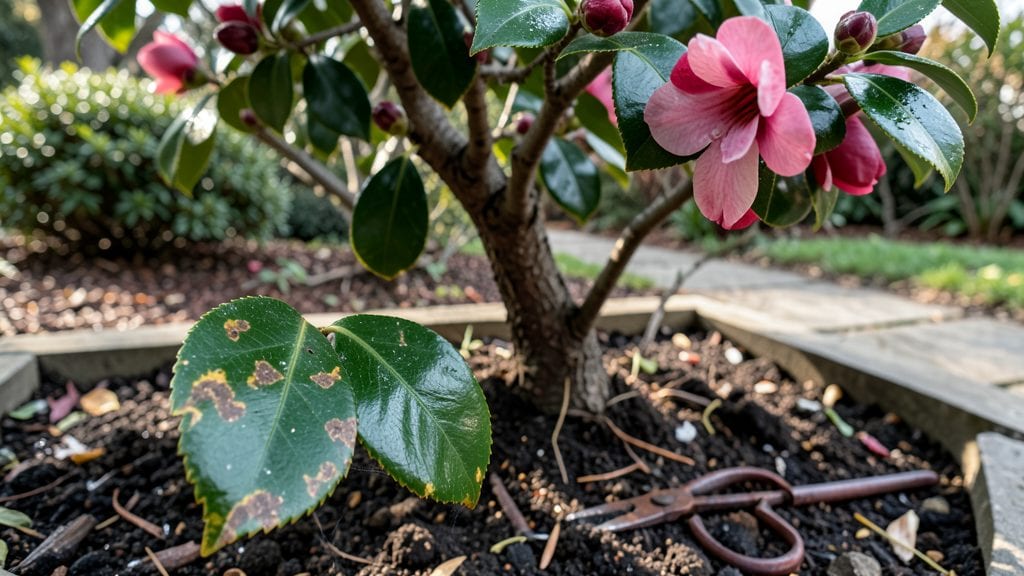
Camellia plant diseases strike fast, turning glossy leaves into sad, spotted messes before you know it. I’ve seen petal blight turn blooms to mush and scale insects drain plants dry—both in just a few weeks if you’re not watching.
The good news? Catching these six common fungal foes early means you can save your camellias before they’re history.
Most problems start with poor airflow or soggy soil—camellias hate wet feet and crowded branches. I learned that the hard way after my favorite ‘Winter’s Star’ nearly died from bacterial blight last spring.
The fix? Prune for airflow, water at the base (not overhead), and space plants 3-5 feet apart so air circulates. That alone cuts fungal risk by half.
Once you spot the trouble—yellow rings, black spots, or sticky sap—act fast.
A mix of copper fungicide and neem oil stops petal blight dead in its tracks, while rubbing off scale insects with a damp cloth (and a little horticultural oil) keeps them from sucking your plant dry. Within 7-10 days, you’ll see fresh growth pushing through if you catch it early.
Prevention is your best weapon: mulch to keep roots dry, prune in late winter, and avoid overhead watering. Even in humid climates, these steps keep camellias thriving. Let’s get your plants back to their glossy, bloom-covered glory before next season.
Root Causes of Camellia Struggles
Understanding why your camellia plant falls prey to diseases starts with uncovering the hidden triggers behind its decline. These delicate shrubs, known for their stunning blooms, are surprisingly vulnerable to fungal infections when their environment or care routine shifts.
Let’s break down the key reasons these diseases take hold—and how to recognize the red flags early.
Fungal spores thrive in stagnant, damp air, turning your camellia’s foliage into a buffet. Here’s why this happens:
- Dense Foliage Blocks Airflow 🌿 Camellias with thick, crowded branches create microclimates where humidity lingers. Fungal spores like Cercospora (which causes leaf spot) or Phytophthora (root rot) spread effortlessly in these conditions. Actionable fix: Prune strategically to open up the canopy, allowing sunlight and air to circulate.
- Overhead Watering Creates Wet Zones 💦 Water droplets on leaves stay for hours, creating the perfect breeding ground for pathogens. Unlike drought-tolerant plants, camellias love moisture—but only when it’s controlled. Actionable fix: Water at the base (not over the foliage) and avoid late-day watering to prevent prolonged leaf wetness.
- High Humidity Without Ventilation 🌧️ Coastal or greenhouse-grown camellias often suffer in humid climates without proper airflow.
Fungal diseases like anthracnose exploit this by weakening the plant’s cuticle. Actionable fix: Use a small fan on low setting near the plant or space them 3–4 feet apart to improve air exchange.
Camellias are moisture-lovers, but too much water drowns their roots, inviting fungal invaders like Phytophthora cinnamomi (root rot) or Pythium. Here’s the science:
- Compacted or Poor-Draining Soil 🏗️ Clay-heavy or unamended garden soil holds excess water, suffocating roots and creating anaerobic conditions—ideal for fungal growth. Actionable fix: Amend soil with organic matter (compost, pine bark fines) to improve drainage.
For container camellias, use a mix of 50% peat moss, 30% pine bark, and 20% perlite.
- Inconsistent Watering Patterns 💧➡️🌵 Alternating between drought and soggy soil stresses the plant, weakening its defenses. Actionable fix: Water deeply but infrequently (1–2 inches per week, adjusting for rain). Let the top 2 inches of soil dry out between waterings.
- Root Rot from Stagnant Containers 🏺 Pots without drainage holes trap water, turning the root zone into a fungal hotspot. Actionable fix: Repot in containers with drainage holes and elevate them on feet to prevent water pooling.
A camellia starved of key nutrients or overfed with synthetic fertilizers becomes an easy target. Here’s how imbalances invite disease:
- Nitrogen Overload 💥 Too much nitrogen (common in fast-release fertilizers) promotes lush, soft growth—but it thins the plant’s protective waxy layer, making it susceptible to fungal entry. Actionable fix: Use a balanced fertilizer (e.g., 8-8-8 or 10-10-10) and avoid high-nitrogen amendments like fresh manure.
- Deficiencies in Micronutrients 🛡️ Lack of magnesium, calcium, or iron weakens cell walls, giving fungi like Botrytis (gray mold) an opening. Actionable fix: Conduct a soil test and supplement with Epsom salt (for magnesium) or chelated iron if needed.
- Stress from Sudden Fertilizer Shifts ⚠️ Switching from organic to synthetic (or vice versa) can shock the plant, reducing its ability to fight off pathogens. Actionable fix: Transition fertilizers gradually and avoid heavy applications during flowering or dormancy.
Fungal spores don’t just float in—they hitch a ride through wounds. Common culprits:
- Pruning Cuts & Tools ⚔️ Dirty pruners can transfer spores from infected plants. Even clean cuts take 24–48 hours to heal, leaving the plant vulnerable. Actionable fix: Sterilize tools with 70% isopropyl alcohol and make cuts at a 45-degree angle just above a leaf node.
- Hail, Wind, or Pest Damage 🌪️ Physical trauma breaks the plant’s protective barrier, inviting fungi like Septoria (a leaf spot disease). Actionable fix: Inspect plants after storms and prune damaged leaves immediately to prevent infection.
- Mulch Piled Too High 🌲 Thick mulch (especially organic) can suffocate roots and trap moisture, promoting Armillaria (root rot). Actionable fix: Keep mulch 2–3 inches deep and 2 inches away from the trunk.
Don’t overlook the bigger picture—your camellia’s surroundings play a huge role:
- Shade Without Sunlight Balance 🌳 While camellias tolerate partial shade, too little light weakens photosynthesis, reducing the plant’s ability to resist disease. Actionable fix: Aim for morning sun + afternoon shade in hot climates.
- Temperature Swings ❄️☀️ Rapid shifts (e.g., cold nights + warm days) stress the plant, making it more susceptible to Fusarium wilt. Actionable fix: Mulch heavily in winter and avoid planting in low-lying areas where cold air pools.
- Contaminated Water Sources 🚰 Irrigation water from ponds, creeks, or untreated wells may carry fungal spores. Actionable fix: Use rainwater or filtered tap water for potted camellias.
Pro Tip: 💡 The best defense is offense! Monitor your camellia’s environment weekly—check for yellowing leaves, dark spots, or mushy stems—these are early warnings. Act fast, and you’ll nip fungal diseases in the bud before they bloom!
How to Fix Camellia Ailments
Reviving your camellia doesn’t have to feel like a battle—with the right moves, you can turn things around fast. Whether your plant is fighting fungal spots, wilting leaves, or mysterious blemishes, these practical, step-by-step solutions will help you diagnose and treat the issue before it spreads.
Plus, we’ll share prevention tips to keep your camellias thriving long-term.
Cause: Exobasidium or Cercospora fungi thrive in damp, humid conditions.
How to Fix It: 🔥 Prune and Remove Infected Leaves
- Use sterilized pruners (wipe with rubbing alcohol) to cut off all spotted leaves—don’t leave them on the ground.
- Bag and dispose of infected foliage in the trash (not compost).
🍳 Apply Fungicide
- Spray with a copper-based fungicide (like copper sulfate) or a neem oil solution (1 tbsp neem oil + 1 tsp mild soap per quart of water).
- Reapply every 7–10 days until new growth appears.
👨🍳 Improve Airflow & Drainage
- Thin out dense branches to increase airflow.
- Ensure pots have drainage holes and mulch with gravel or bark (not organic mulch, which holds moisture).
💡 Prevention Tip: ✨ Water in the morning (not at night) so leaves dry quickly. Avoid overhead watering—use a soaker hose instead.
Cause: Botrytis cinerea (gray mold) spreads in cool, wet weather.
How to Fix It: 🔪 Trim Affected Blooms & Buds
- Snip off any gray, mushy petals or buds with clean shears.
- Do not compost—dispose of them immediately.
🥘 Boost Fungicide Strength
- Use a systemic fungicide (like myclobutanil) for severe cases.
- Baking soda spray (1 tsp baking soda + 1 quart water + a drop of soap) can help as a preventative.
⏰ Adjust Watering Habits
- Water at the base (not the flowers) and avoid late-day watering.
- If blooms are already open, cover them with a lightweight cloth during rain.
💡 Prevention Tip: 🌡️ Space plants 3–4 feet apart to reduce humidity buildup between branches.
Cause: Overwatering or poor drainage leads to Phytophthora or Pythium fungi.
How to Fix It: 🔥 Check the Roots & Repot if Needed
- Gently remove the plant and inspect roots—healthy roots are firm; rotten roots are mushy and black.
- If rot is present, trim affected roots with sterilized scissors and repot in fresh, well-draining soil (add perlite or sand).
🍳 Adjust Watering Immediately
- Water only when the top 1–2 inches of soil are dry.
- Use a moisture meter to avoid guesswork.
👨🍳 Improve Drainage
- If in a pot, add a layer of gravel at the bottom before repotting.
- For in-ground plants, raise beds or install drainage pipes.
💡 Prevention Tip: 🎯 Never let camellias sit in saucers of water—empty saucers after watering.
Cause: Colletotrichum fungus spreads in wet, shady conditions.
How to Fix It: 🔪 Prune Infected Areas Aggressively
- Cut out all leaves/branches with lesions—do not leave stubs.
- Sterilize tools between cuts to prevent spread.
🥘 Fungicide Rotation
- Alternate between copper fungicide and chlorothalonil (follow label instructions).
- Preventative spray with potassium bicarbonate (1 tbsp per gallon of water) every 2 weeks.
🌡️ Boost Light & Airflow
- Move plants to sunnier spots (camellias need partial shade, not deep shade).
- Thin out branches to improve airflow.
💡 Prevention Tip: 🔥 Clean up fallen leaves regularly—fungi love hiding in organic debris.
For All Diseases: ✨ Strengthen the Plant’s Defense
- Fertilize lightly with an acid-loving plant fertilizer (like 8-3-9) in early spring.
- Avoid high-nitrogen fertilizers—they weaken plants and invite pests.
📊 Monitor & Act Fast
- Inspect plants weekly for early signs of stress.
- Isolate new plants for 2–3 weeks to spot issues before they spread.
Final Pro Tip: 🎯 Healthy camellias are resilient—once you fix the environment (drainage, airflow, watering), they’ll bounce back faster. Patience is key—some treatments take 4–6 weeks to show full results!
Frequently asked questions
What are the first signs my camellia has a fungal disease?
Look for dark spots on leaves (like leaf spot), gray fuzzy patches on blooms (gray mold), or yellow rings with brown edges. Check the undersides of leaves too—fungi often start there. Act fast if you see these signs, as they spread quickly in humid conditions.
Can I use household items to treat fungal diseases on my camellia?
Yes! A baking soda spray (1 tsp baking soda + 1 quart water + a drop of soap) helps prevent gray mold. For leaf spots, neem oil (1 tbsp per quart of water) works as a natural fungicide. Reapply every 7-10 days until new growth appears, but use these as preventatives—not cures—for severe infections.
Why does my camellia get diseases more often in summer?
Summer’s heat + humidity creates the perfect fungal breeding ground. Overhead watering keeps leaves damp for hours, while crowded branches trap moisture. Prune for airflow, water at the base (not overhead), and space plants 3-5 feet apart to break up humid microclimates.
How do I know if my camellia has root rot instead of another disease?
Root rot shows as mushy, black roots when you gently dig up the plant. Above ground, you’ll see yellowing leaves and stunted growth. If the soil stays soggy for days, repot in fresh, well-draining mix and let the top 2 inches dry between waterings.
Will pruning help prevent fungal diseases in my camellia?
Prune to open up the canopy—this improves airflow and sunlight penetration, both of which discourage fungal growth. Remove dead or crowded branches in late winter, and always sterilize your tools with rubbing alcohol to prevent spreading spores.