
Watering
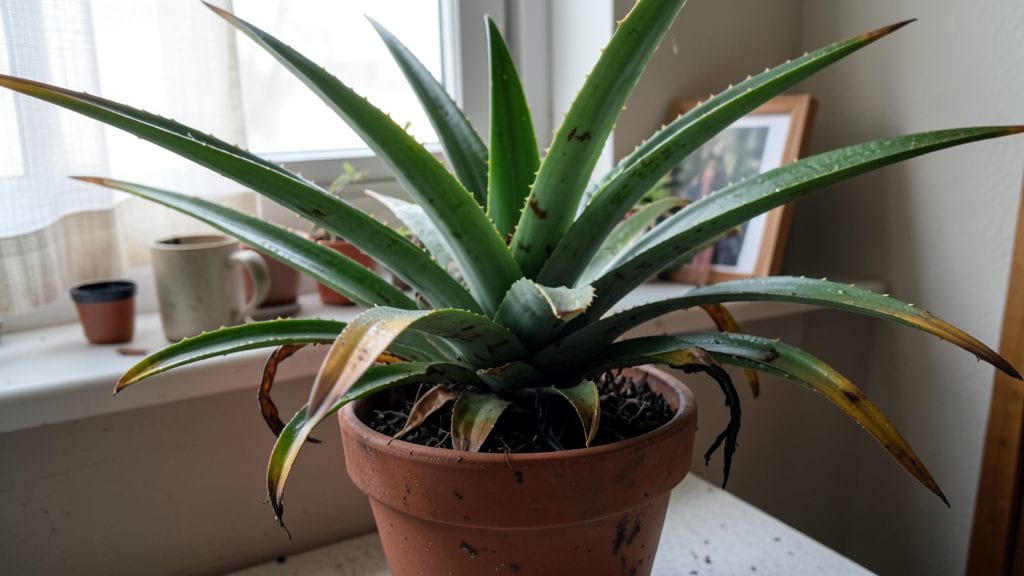
An overwatered pineapple plant looks like a sad, soggy mess—droopy leaves, mushy stems, and that dreaded mold smell. 🌱 I’ve nursed more than a few back from the brink, and the fix starts with cutting back on water and giving roots room to breathe.
The good news? Pineapples are tough once you get the moisture right.
First, check the soil: it should dry out 2-3 inches deep between waterings. If your plant’s in a pot without drainage holes, repot it into a terracotta or perforated container—this makes all the difference. I’ve seen plants recover in just 7-10 days after adjusting water and improving airflow.
What you’ll end up with is a plant that’s firm, upright, and vibrant green again. The leaves will perk up, and new growth will signal it’s back on track.
For long-term care, stick to watering only when the top 1-2 inches of soil feel dry—overwatering is the #1 killer of pineapples.
If mold or rot has spread deep into the stem, you might need to trim away damaged areas with clean scissors. Severe cases may require professional help, but most plants bounce back with these simple tweaks. Let’s get yours thriving!
Root Causes Of Overwatering
When your pineapple plant’s leaves start to droop or turn yellow, it’s often a cry for help—specifically, from roots struggling to breathe. Overwatering is a sneaky issue because it doesn’t always show up immediately.
Instead, it silently suffocates your plant’s roots, cutting off oxygen and nutrients. Let’s break down the key reasons this happens, so you can fix it fast.
Pineapple plants (Ananas comosus) are tropical natives, but they hate soggy feet. If your pot lacks drainage holes or uses heavy, compacted soil (like clay or garden soil without amendments), water pools at the bottom instead of draining away. This creates a waterlogged environment where roots can’t access oxygen—a condition called hypoxia.Why it matters:
- 🔬 Root suffocation: Without oxygen, roots switch from aerobic respiration (efficient energy production) to anaerobic fermentation (inefficient and toxic). This releases ethanol and acetic acid, which burn root cells.
- 🍄 Fungal infections: Stagnant water breeds Phytophthora and Pythium fungi, rotting roots and blocking nutrient uptake.
- 🌡️ Temperature stress: Waterlogged soil cools rapidly, shocking roots in cooler climates and disrupting enzyme activity.
Actionable fix: Use a well-draining mix (50% coconut coir, 30% perlite, 20% orchid bark) and repot into a container with drainage holes. If your pot is decorative, add a cache pot (a secondary pot with drainage) inside.
Pineapples are xerophytic—they evolved in sandy, well-drained soils where droughts are common. Yet, many gardeners water on a fixed schedule (e.g., every 3 days) without checking soil moisture. This leads to:
- Overwatering in cool/wet climates (slow evaporation = soggy soil for weeks).
- Underwatering in hot/dry spells (but roots are already damaged from prior overwatering).
Why it matters:
- 📉 Moisture overload: Pineapple roots need 50–70% air space in soil. If water fills >30% of pore space, roots drown.
- 🔄 Salinity buildup: Frequent watering leaches minerals, but dissolved salts (from tap water or fertilizers) accumulate in the root zone, osmotically stressing cells.
- 🌡️ Temperature confusion: Cool soil (<60°F/15°C) slows root metabolism, making plants less able to process excess water.
Actionable fix:
- 💡 Test soil moisture: Stick your finger 2 inches deep—water only if it’s dry.
- ⏰ Adjust frequency: Water every 7–10 days in summer; every 2–3 weeks in winter (or when leaves pucker).
- 🌧️ Use rainwater: Tap water’s chlorine/fluoride can worsen root stress. Collect rainwater or let tap water sit 24 hours.
Why it matters:
| Pot Issue | Root Impact | Science Behind It |
|---|---|---|
| Too small (<3" diameter) | Roots circle tightly, girdling and competing for oxygen. | Limited soil volume = anaerobic pockets form faster. |
| Too large (>12" diameter) | Water sits in unused soil for weeks, promoting rot. | Evaporation slows; microbes deplete oxygen in wet zones. |
| Non-porous material (glazed ceramic) | Blocks transpirational pull, forcing roots to sit in water. | Pineapples rely on capillary action—porous pots help wick excess moisture away. |
Actionable fix:
- 🏺 Size matters: Repot into a container 10–20% larger than the root ball (max 6" for mature pineapples).
- 🪨 Material upgrade: Use terracotta, coconut fiber, or plastic with holes.
- 🌿 Elevate pots: Place in a saucer with gravel (not water) to improve airflow.
Why it matters:
- 🌡️ Cold soil shock: Temperatures below <60°F (15°C) reduce root enzyme activity by 50%, impairing water absorption.
- 💨 Low humidity: Dry air increases transpiration (leaf water loss), tricking you into overwatering to "compensate."
- 🌧️ Rainfall confusion: Outdoor plants may get natural hydration but still receive additional watering from you.
Actionable fix:
- 🌡️ Monitor temps: Keep pots away from drafts (windows, AC vents). Use a heat mat in winter if indoors.
- 💧 Humidity hack: Mist leaves daily or place the pot on a pebble tray with water (not touching the pot).
- 🌧️ Outdoor adjustment: Move pots to covered areas during heavy rain; reduce watering by 50%.
Revive Your Pineapple Plant Now
Overwatering can feel like a silent killer for your pineapple plant—🌱 drooping leaves, mushy roots, and a sad, soggy fate. But don’t panic! With the right steps, you can rescue your plant and prevent future watering disasters.
Below, we’ll break down cause-specific fixes and share practical prevention tips to keep your pineapple thriving.
Cause: Excess moisture suffocates roots, leading to rot and nutrient starvation. Fix:
- Pause watering for at least 3–5 days to let the soil dry out. Pineapples are drought-tolerant and prefer well-draining soil over soggy conditions.
- If the soil feels damp more than an inch below the surface, wait longer. Stick your finger in—if it’s wet, hold off!
- Pro Tip: 💡 Use a moisture meter for accuracy, especially if you’re unsure.
Cause: Compacted or waterlogged soil traps moisture, preventing roots from breathing. Fix:
- Repot the plant if the soil is severely soggy or compacted. Choose a terracotta pot (breathable!) with drainage holes.
- Replace the top 2–3 inches of soil with fresh, fast-draining mix:
- 50% cactus/succulent soil
- 30% perlite or pumice (for aeration)
- 20% coarse sand or orchid bark (to prevent clumping)
- Gently loosen roots if they’re matted. Trim any black, mushy roots with sterilized scissors—healthy roots are firm and white.
Cause: Overzealous watering (or poor drainage) leads to chronic sogginess. Fix:
- Water only when the top 2 inches of soil are bone-dry (test with your finger!).
- Bottom-watering method (best for pineapples):
- Place the pot in a tray of 1–2 inches of water for 10–15 minutes.
- Let excess water drain completely before returning to its spot.
- Avoid overhead watering—it can cause fungal issues like leaf spot.
- Prevention Tip: 🌡️ Water less in winter (growth slows) and more in summer (but still check soil moisture!).
Cause: Stagnant air + low light = slower recovery and higher rot risk. Fix:
- Move to bright, indirect light (a south- or west-facing window is ideal). Pineapples need 6+ hours of sunlight daily.
- Improve airflow:
- Place a small fan on low nearby (but not directly blowing on leaves).
- Space plants 3–4 inches apart if growing multiple.
- Trim yellow/brown leaves with clean scissors to redirect energy to healthy growth.
Cause: Overwatering flushes out nutrients, weakening the plant. Fix:
- Wait 2–3 weeks after repotting before fertilizing.
- Use a balanced, diluted fertilizer (e.g., 5-5-5 or 10-10-10) at half-strength.
- Best schedule: Every 4–6 weeks in spring/summer; skip in fall/winter.
- Pro Tip: ✨ Organic options like fish emulsion or worm castings are gentler for recovery.
- Pot selection matters: Terracotta or fabric grow bags wick away moisture better than plastic. - Test your soil: If it stays wet for days, amend it with more perlite or sand. - Monitor humidity: Pineapples dislike high humidity (above 60%).
Use a dehumidifier if needed. - Watch for pests: Overwatered plants attract fungus gnats or mealybugs. Treat with neem oil if spotted.
Remember: 🌟 Pineapples are tough survivors—with these fixes, your plant should bounce back in 2–4 weeks. Stay patient, and soon you’ll be harvesting sweet, tropical fruit!
Frequently asked questions
How do I know if my pineapple plant is overwatered?
Check for droopy, yellowing leaves, a mushy or discolored stem, and soil that stays damp for days. Healthy pineapples have firm, upright leaves and dry out 2-3 inches deep between waterings. If you see mold or a foul smell, it’s a clear sign of overwatering.
Can I save my pineapple plant if the roots are rotting?
Yes! Trim away any black, mushy roots with sterilized scissors, then repot in fresh, well-draining soil (50% cactus mix, 30% perlite, 20% sand). Let the soil dry completely between waterings for 1-2 weeks to prevent further rot. Most plants recover within 2-4 weeks if the crown stays healthy.
Why does my pineapple plant need less water in winter?
Pineapples grow slowly in cooler months, so their water needs drop by 50%. Soil stays moist longer when temperatures are below 60°F (15°C). Water only when the top 1-2 inches of soil are completely dry—typically every 2-3 weeks in winter.
What’s the best pot material to prevent overwatering?
Terracotta pots are ideal because they wick away moisture through their walls. Avoid sealed plastic or glazed ceramic—they trap humidity. For decorative pots without drainage, add a cache pot (a secondary pot with holes) inside to improve airflow.
How often should I fertilize after fixing overwatering?
Wait 2-3 weeks after repotting before fertilizing. Use a diluted, balanced fertilizer (5-5-5) at half-strength every 4-6 weeks in spring/summer. Skip fertilizing in fall/winter when growth slows. Organic options like fish emulsion work well for recovery.