Watering
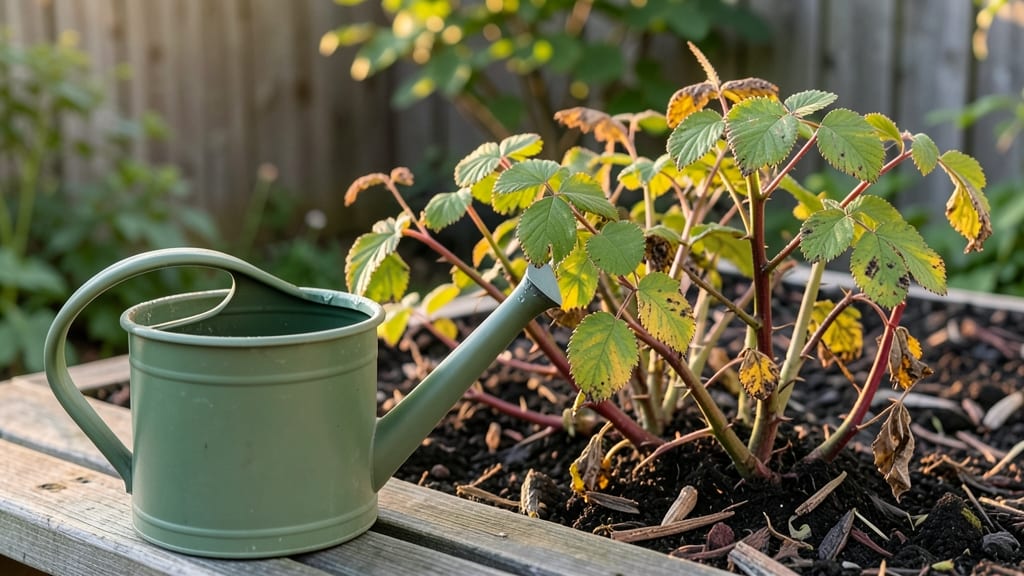
My overwatered raspberry plant looked like a soggy disaster last summer—until these three simple recovery steps saved it. 🌱 The first sign? Yellowing leaves that felt mushy when I touched them, paired with soil that smelled sour instead of fresh.
I thought I was helping, but I was actually suffocating the roots.
Raspberries hate soggy feet, and once root rot sets in, it spreads fast. The fix starts with cutting back watering to just 1 inch per week (check with your finger—top 2 inches should be dry).
Then improve drainage by mixing in 3 inches of coarse sand or perlite into the soil around the base. Finally, prune any blackened or hollow stems at the ground level to stop the rot from spreading.
Within 2-3 weeks, you’ll see new green growth pushing through, and the canes will stand tall again. The key is consistency: stick to watering only when the top 2 inches of soil feel dry, and mulch with straw to keep moisture even.
I’ve revived three overwatered plants this way—your raspberries can bounce back too.
This works for backyard patches, raised beds, or even container-grown raspberries. The same rules apply whether you’re in a humid climate or a dry one—just adjust how often you water based on your local weather. Keep a journal to track what works best for your patch.
Root Causes Of Too Much Water
When your raspberry plants look like they’ve been left in a swamp, it’s usually because their roots are drowning—not thriving. Raspberries are hardy, but they’re not waterlogged weeds. Understanding why this happens helps you fix it fast. Here’s what’s really going on beneath the soil.
Raspberries hate soggy feet—literally. If your garden soil is heavy clay, compacted, or lacks organic matter, water pools around the roots instead of draining away. This creates anaerobic conditions, where roots suffocate because oxygen can’t reach them.
- 🔍 Signs: Yellowing leaves, mushy stems, or a foul smell near the base.
- Why it matters: Without oxygen, roots can’t absorb nutrients or water efficiently, leading to wilting even when the soil feels damp.
- 💡 Fix it: Amend soil with compost or sand to improve aeration. Raised beds or containers with drainage holes can also help.
Raspberries need consistent moisture, but too much at once is a recipe for disaster. Frequent shallow watering or ignoring weather changes (like sudden rain) can flood the root zone. Even well-draining soil can’t handle excessive frequency—roots need time to breathe between waterings.
- 🔍 Signs: Drooping canes, yellowing foliage, or water pooling around the plant base.
- Why it matters: Overwatering flushes away nutrients and encourages fungal diseases like Phytophthora, which rots roots.
- 💡 Fix it: Water deeply 2–3 times per week (adjust for climate) and let the top 1–2 inches of soil dry out between sessions.
Pots and raised beds seem like a great solution, but they can retain moisture longer than field soil—especially if they lack drainage holes or mulch. Without proper airflow, water sits at the bottom, suffocating roots. Even "fast-draining" mixes can compact over time, trapping moisture.
- 🔍 Signs: Root rot (black, mushy roots), stunted growth, or plants wilting despite "wet" soil.
- Why it matters: Containers heat up faster, accelerating evaporation but also creating a feedback loop: hot soil + trapped water = ideal conditions for root diseases.
- 💡 Fix it:
- Ensure containers have drainage holes and a cache pot (gravel layer) to prevent soggy bottoms.
- Use a chunky potting mix (like 60% inorganic + 40% compost) to improve aeration.
- Water only when the top 1 inch feels dry—stick your finger in to check!
Mother Nature doesn’t always play by the rules. Heavy rain, high humidity, or cool temperatures slow evaporation, making soil stay wet longer than usual. If you’re on an automatic irrigation timer, it might keep running even when the ground is already saturated.
- 🔍 Signs: Wilting despite recent rain, mold on mulch, or leaves curling inward.
- Why it matters: Prolonged wetness stresses plants and invites pests like slugs or diseases like Botrytis (gray mold).
- 💡 Fix it:
- Check soil moisture with a moisture meter or your finger—if it’s damp 2+ inches down, hold off on watering.
- Adjust irrigation seasonally: reduce frequency in spring/fall when evaporation is slower.
- Mulch with straw or wood chips to regulate soil temperature and reduce surface evaporation.
Once you spot the real cause, you can revive your raspberries in no time. The key? Balance—never let roots sit in standing water, but don’t let them dry out either. Your plants will thank you with plump, juicy berries!
Fixing Overwatered Raspberry Canes
Reviving an overwatered raspberry plant starts with identifying the root cause—literally! Whether it’s soggy soil, poor drainage, or overzealous watering habits, the key is to act fast and adjust your care routine. Below are practical, step-by-step solutions tailored to common causes, plus prevention tips to keep your berries thriving.
If your raspberry plant’s soil feels like a swamp, it’s time to release the pressure before roots suffocate.
**🔥 How to do it: - Stop watering immediately—no more H₂O until the soil dries out. - Move the pot (if potted) to a shaded, well-ventilated spot to reduce evaporation stress. - Use a turkey baster or small watering can to gently pour out excess water from the drainage holes at the bottom.
Let gravity do the work! - For in-ground plants, create shallow trenches around the base to redirect water away from the roots.
⚠️ Warning: Avoid yanking the plant out to check roots—this can cause more damage. Instead, stick a finger 2 inches deep into the soil. If it’s still damp after 48 hours, hold off on watering.
Raspberries hate sitting in wet feet. If your soil is compacted or lacks organic matter, it’s time to give roots room to breathe.
🍳 How to fix it:
- For potted plants:
- Repot into a
- 50%
- 30% compost or worm castings
- 20% sand or coconut coir (for aeration)
**💡 Pro Tip: If repotting isn’t an option, dig a small trench around the plant to encourage water runoff.
Consistency is key—raspberries prefer deep but infrequent watering over daily sips.
👨🍳 How to water correctly:
- Water deeply 1–2 times per week (adjust for climate). Aim for 1–1.5 inches of water per session.
- Water at the base, not overhead, to prevent fungal diseases like botrytis (a raspberry nemesis).
- Use a moisture meter or the finger test—water only when the top 1–2 inches of soil are dry.
- Morning watering is best—it gives foliage time to dry before evening humidity sets in.
✨ Bonus: Collect rainwater in a barrel for a chemical-free water source.
Once your raspberry plant is back on track, lock in these habits to avoid soggy soil disasters:
- Choose the right pot: Ensure containers have drainage holes (and saucers to catch excess water).
- Monitor weather: Skip watering if rain is forecasted—raspberries can handle light drought better than soggy roots.
- Prune wisely: Remove dead or yellowing canes to improve airflow and reduce disease risk.
- Test your soil: A pH of 5.5–6.5 and well-draining soil are non-negotiable for raspberries.
🎯 Final Check: After 7–10 days, your plant should show signs of recovery—perky canes, new growth, and fewer yellow leaves. If not, revisit drainage or consider root rot treatment (hydrogen peroxide soak for potted plants).
With these fixes, your raspberry plant will bounce back—and next season, you’ll be harvesting plump berries** instead of wrestling with waterlogged soil! 🍓💦
Frequently asked questions
How do I know if my raspberry plant is overwatered?
Check for yellowing leaves that feel mushy when touched, drooping canes, or soil that smells sour. Root rot is confirmed by black, mushy roots when you gently dig near the base. If leaves curl inward or mold appears on mulch, it's another red flag.
Can I save a raspberry plant with root rot?
Yes, but act fast! Prune away all blackened stems at the base, then repot in fresh, well-draining soil mix (50% cactus soil + 30% compost + 20% perlite). For potted plants, soak roots in 3% hydrogen peroxide solution for 10 minutes before replanting. Recovery takes 2-3 weeks with proper care.
Why does my raspberry plant wilt even when the soil feels wet?
This is classic overwatering! Wet soil without oxygen creates anaerobic conditions, suffocating roots. Raspberries need 1-2 inches of dry soil between waterings. Check drainage - if water pools after 30 minutes, your soil is too compacted. Amend with coarse sand or perlite immediately.
How often should I water raspberries in containers?
Water container-grown raspberries when the top 1 inch of soil feels dry—typically every 2-3 days in summer or weekly in cooler months. Empty saucers after watering to prevent root suffocation. Containers dry out faster than garden beds, so monitor closely during heatwaves.
Will mulch help prevent overwatering?
Yes, but use the right type! Straw or wood chips regulate moisture by slowing evaporation, but keep it 2-3 inches thick—too much can smother roots. For soggy soil, create a 1-inch gap between mulch and plant stems to improve airflow. Avoid thick layers in rainy climates.