
Watering
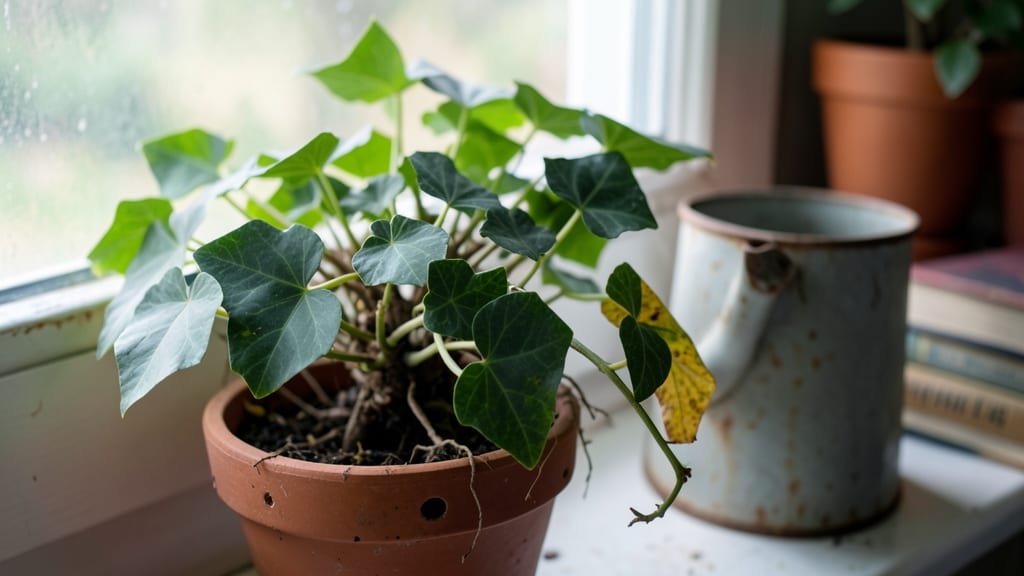
This overwatered ivy plant with its droopy, yellowing leaves is begging for a rescue—and the answer isn’t more water, believe it or not. 🌿 I’ve nursed back more soggy ivies than I’d like to admit, and the fix starts with cutting back on water, not adding more.
The second you see those limp, mushy stems or brown roots, you’ve got a week to act before the whole plant turns to mush.
Here’s the thing—ivy roots need air almost as much as water. Most people drown them by keeping soil constantly damp, which turns roots black and leaves yellow. The solution? Let the top inch of soil dry out completely between waterings, and make sure your pot has drainage holes.
If it doesn’t, repot into something breathable ASAP—this is your plant’s lifeline.
Within two weeks, you’ll see new growth pushing through, leaves firming up, and that signature ivy drape returning. The key is consistency: once you’ve adjusted the watering, stick with it.
Prevent future soggy stems by testing soil moisture with your finger—if it’s damp above the knuckle, wait another day. Your ivy will thank you with glossy, thriving foliage.
This works for both hanging ivy in pots and trailing varieties in garden beds. The same rules apply—just scale the pot size to the plant’s needs. Let’s get that ivy bouncing back to its best self.
Root Causes Of Ivy Overwatering
Ivy plants (Hedera helix) are hardy climbers, but their roots can’t handle excess moisture—especially when combined with poor drainage or environmental stress. Understanding the why behind overwatering is the first step to saving your drooping greenery.
Let’s break down the science and scenarios that lead to soggy soil and struggling ivy.
Ivy thrives in well-draining soil, but when planted in heavy clay, compacted earth, or containers without drainage holes, water pools around the roots instead of draining away. Here’s what happens:
- Oxygen Starvation: Roots need oxygen to breathe—just like you! Waterlogged soil displaces air, suffocating roots and triggering anaerobic conditions (no oxygen). This forces roots to switch to inefficient fermentation, producing toxic ethanol and hydrogen sulfide.
- Fungal Feasts: Stagnant water creates a paradise for Phytophthora and Pythium fungi, which rot roots and block nutrient uptake. Yellowing leaves? That’s your ivy’s SOS signal.
- Salt Buildup: Over time, minerals from tap water or fertilizers accumulate in saturated soil, creating a salty, toxic sludge that burns delicate root hairs.
💡 Pro Tip: Test your soil’s drainage by filling a pot with water, then timing how long it takes to drain. If it’s still damp after 2 hours, your ivy’s roots are drowning.
Many gardeners assume ivy needs frequent watering—especially in hanging baskets—but this fast-growing vine actually prefers consistent moisture, not soggy conditions. Here’s why rigid schedules backfire:
- Topsoil Illusion: Watering on a fixed schedule (e.g., every 3 days) often leads to over-saturating the top inch of soil while deeper roots stay dry. Ivy roots extend 12–18 inches deep, so surface watering creates a false sense of hydration.
- Seasonal Misjudgment: Ivy’s water needs shift with temperature and humidity. In winter, it may only need water every 2–3 weeks, while summer heat demands weekly checks—but not automatic watering.
- Container Confusion: Small pots dry out faster, but overwatering is still a risk. Ivy in containers lacks the natural soil buffering of garden beds, so even "light" watering can lead to root rot if done daily.
✨ Actionable Fix: Stick your finger 2–3 inches deep into the soil before watering. If it’s damp, wait. If it’s bone-dry, water thoroughly—then let excess drain completely.
Even with perfect watering habits, ivy can still drown when external factors tip the balance. These hidden culprits amplify overwatering damage:
| Factor | How It Harms Ivy | Solution |
|---|---|---|
| Low Light | Ivy grows slower in shade, so roots can’t absorb excess water efficiently. Stunted metabolism + soggy soil = root rot. | Move to bright, indirect light (e.g., near a window but not direct sun). |
| Humid Climates | High humidity slows evaporation, keeping soil wet longer. In tropical areas, ivy may need 50% less water than in dry climates. | Use a hygrometer to monitor humidity. Aim for 40–60%. |
| Cold Temperatures | Chilly roots absorb water poorly, leading to waterlogging. Ivy in pots on cold patios is especially vulnerable. | Move containers to a protected spot (e.g., under an eave) or use a mulch blanket. |
🌡️ Quick Test: If your ivy’s leaves feel slimy or drop easily when touched, it’s likely overwatered plus stressed by another factor.
Now that you know the why, the next step is fixing the damage—stay tuned for our troubleshooting guide on reviving yellowing ivy! 🍃
Revive Your Ivy Plant Now
If your ivy plant is suffering from overwatering, don’t panic—it’s often reversible with the right steps! Below, we’ll break down practical fixes based on the most common causes of yellowing leaves, mushy stems, or drooping vines.
Follow these solutions to nurse your plant back to health and keep it thriving long-term.
Yellow leaves are a classic sign of overwatering, but they can also indicate root rot or nutrient deficiencies. Here’s how to tackle it:
🔥 Step 1: Stop Watering Immediately
- Let the soil dry out completely before watering again. Stick your finger 1-2 inches deep—if it’s damp, wait.
- Pro Tip: 💡 If your ivy is in a pot, lift it to check the weight.
A soggy pot means it’s time to hold off on water.
🍳 Step 2: Improve Drainage
- Repot if needed: If the soil is compacted or lacks drainage, transfer your ivy to a pot with drainage holes and fresh, well-draining potting mix (like a blend of peat, perlite, and compost).
- Add perlite or sand to existing soil to aerate it and prevent waterlogging.
👨🍳 Step 3: Trim Damaged Foliage
- Snip off yellow or brown leaves with clean scissors to redirect the plant’s energy to healthy growth.
- Avoid cutting green leaves—only remove those that are clearly dead or diseased.
⏰ Step 4: Adjust Your Watering Routine
- Ivy prefers moderate moisture but hates soggy roots. Water only when the top 1-2 inches of soil are dry.
- Winter care: Reduce watering—ivy grows slower in cooler months and needs less frequent hydration.
If your ivy’s stems feel soft or mushy, root rot may have set in. Act fast to save it!
🔪 Step 1: Check for Root Rot
- Gently remove the plant from its pot and rinse the roots under lukewarm water.
- Healthy roots are firm and white; rotten roots are black, mushy, and smell foul.
🌡️ Step 2: Prune Rotten Roots
- Use sterilized scissors or pruners to cut away any black, squishy roots.
- Disinfect tools with rubbing alcohol to prevent spreading disease.
🎯 Step 3: Repot in Fresh Soil
- Place the cleaned plant in a clean pot with fresh, well-draining soil.
- Pro Tip: 🌡️ Add a fungicide (like neem oil or hydrogen peroxide solution) to the soil to prevent fungal growth.
✨ Step 4: Monitor and Adjust Care
- Keep the soil slightly moist but not soggy for the first few weeks.
- Avoid watering from above—use a watering can with a narrow spout to direct water to the soil, not the leaves.
Once your ivy is on the mend, keep these prevention tips in mind:
- Use the right pot: Terracotta pots dry out faster than plastic—great for ivy! - Test soil moisture: Invest in a moisture meter or use the finger test to avoid guesswork. - Water in the morning: This gives excess moisture time to evaporate during the day. - Fertilize lightly: Over-fertilizing can also stress ivy.
Use a balanced, diluted fertilizer every 4-6 weeks in spring/summer. - Rotate your plant: Ensure even light exposure so it doesn’t lean or develop weak spots.
With these steps, your ivy should bounce back in 2-4 weeks, showing fresh green growth and perky vines. Stay patient, and soon you’ll have a lush, happy plant draping beautifully once again! 🌿✨
Frequently asked questions
How do I tell if my ivy plant is overwatered?
Check for yellowing leaves, mushy stems, or soil that smells foul when dry. Healthy ivy roots are firm and white, while overwatered roots turn black and squishy. If leaves feel slimy or drop easily, it’s a clear sign of excess moisture.
Can I save an ivy plant with root rot?
Yes! Remove the plant from its pot, rinse the roots, and trim away any black, mushy sections. Repot in fresh, well-draining soil with a fungicide like neem oil. Keep soil slightly moist (not soggy) and avoid watering until new growth appears in 2-4 weeks.
Why does my ivy need less water in winter?
Ivy grows slower in cooler months, so its roots absorb moisture more efficiently. Water only when the top 2 inches of soil are dry—typically every 2-3 weeks in winter. Overwatering in cold weather accelerates root rot due to reduced evaporation.
Is it better to underwater or overwater ivy?
Both extremes harm ivy, but overwatering is more damaging. Ivy prefers moderate moisture—water when the top inch of soil is dry. Yellowing from underwatering recovers faster than root rot. Test soil with your finger before watering to avoid guesswork.
How often should I repot my ivy?
Repot every 2-3 years or when roots circle the pot. Use a container 1-2 inches larger with drainage holes and fresh potting mix. Ivy thrives in terracotta pots, which dry out faster than plastic. Prune roots if they’re dense before repotting.