Diseases
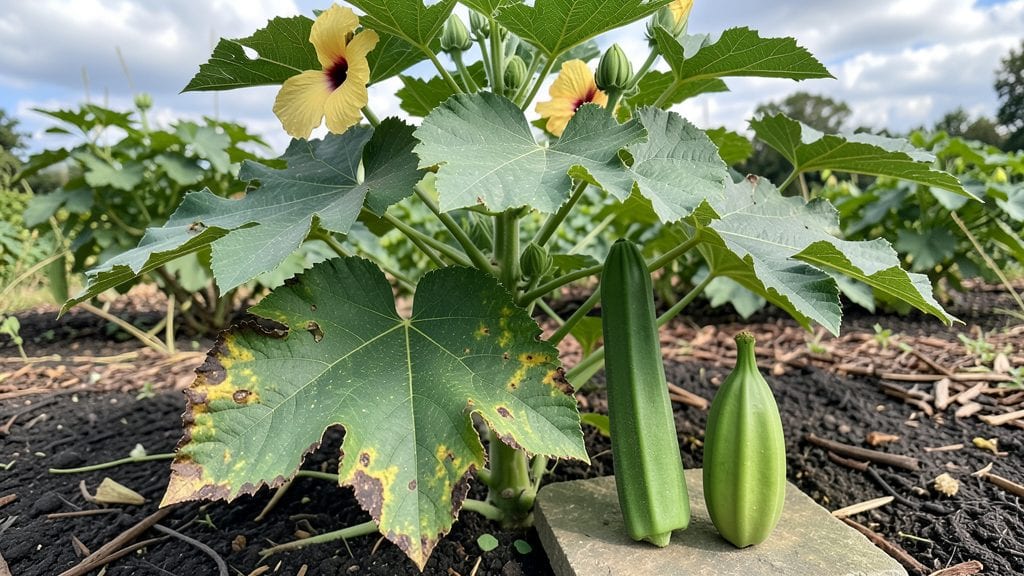
Okra plant diseases can turn your thriving crop into a sad, wilted mess if you don’t catch them early. 🌿 I’ve seen powdery white spots, blackened stems, and leaves curling up like old paper—all signs your okra is fighting something serious.
The key is spotting these problems before they spread, so you can save your plants and still enjoy that crisp, fresh okra you love.
Most of these diseases start with too much moisture, poor airflow, or stressed plants. Fungal infections like powdery mildew or leaf spot love warm, humid conditions, while bacterial issues like blight strike fast when plants are crowded.
Even pests can open the door for bigger problems, so keeping your okra healthy from the start makes all the difference.
You’ll learn to recognize the 10 most common foes—from yellowing leaves to oozing stems—and how to stop them without harsh chemicals. With the right mix of prevention and quick action, your okra can bounce back stronger than ever. Let’s get your plants back on track!
This guide covers everything from simple fixes like pruning for airflow to organic sprays that work fast. Whether you’re dealing with a new problem or just want to stay ahead, these tips will keep your okra thriving all season long.
Root Causes Behind Okra Ailments
Okra plants, like any other crop, are vulnerable to diseases due to a mix of environmental, biological, and cultural factors. Understanding these root causes can help gardeners and farmers take proactive steps to protect their harvest. Let’s break down the most common reasons why okra plants fall prey to diseases.
Okra thrives in warm climates with temperatures between 70–90°F (21–32°C), but extreme heat or sudden shifts can stress plants, making them more susceptible to fungal and bacterial infections. High humidity—especially above 80% for prolonged periods—creates the perfect breeding ground for pathogens like Phytophthora and Colletotrichum.
Why it happens:
- Stagnant air traps moisture on leaves, encouraging fungal spores to germinate.
- Nighttime dew combined with warm days promotes downy mildew and powdery mildew.
- Poor air circulation in dense plantings prevents evaporation, keeping foliage damp.
💡 Pro Tip: Space okra plants 18–24 inches apart and avoid overhead watering to reduce humidity around leaves.
Okra plants are drought-tolerant, but excessive moisture—especially in poorly drained soil—invites root rot and soil-borne diseases like Fusarium wilt and Pythium. Waterlogged roots suffocate, weakening the plant’s defenses.
Why it happens:
- Compacted or clay-heavy soil prevents oxygen from reaching roots, promoting anaerobic bacteria.
- Frequent shallow watering keeps the soil surface soggy, encouraging fungal growth.
- Lack of mulch leads to rapid soil evaporation, but improper mulch (e.g., thick organic layers) can trap moisture.
🌡️ Actionable Fix: Test soil drainage—dig a hole, fill it with water, and time how long it takes to drain. If it’s slower than 4–6 hours, amend with sand or compost.
Okra diseases often persist due to leftover pathogens in soil from previous crops, especially if the same family (e.g., mallow) was grown nearby. Soil-borne diseases like Verticillium wilt and Rhizoctonia can lie dormant for years, waiting for the right conditions to strike.
Why it happens:
- Monocropping okra year after year depletes beneficial microbes and accumulates pathogens.
- Infected plant debris left in the soil provides a food source for fungi and bacteria.
- Poor soil solarization (heating soil to kill pathogens) leaves harmful microbes intact.
✨ Prevention Tip: Practice crop rotation—avoid planting okra in the same spot for 3+ years. Use resistant varieties like ‘Clemson Spineless’ if wilt diseases are recurrent.
Pests like aphids, spider mites, and okra leaf miners don’t just eat leaves—they injure plant tissues, creating entry points for secondary infections. For example, aphid saliva can transmit Cucumber mosaic virus, while chewed leaves invite fungal spores.
Why it happens:
- Pests feed on sap, reducing the plant’s ability to produce protective compounds like phytonutrients.
- Open wounds from chewing or sucking insects provide direct access for bacteria and fungi.
- Stressed plants (due to pest pressure) allocate energy to recovery instead of disease resistance.
🔥 Early Intervention: Use neem oil or insecticidal soap to control pests before they cause significant damage. Introduce beneficial insects like ladybugs to manage populations naturally.
Okra requires a balanced diet of nitrogen (N), phosphorus (P), and potassium (K), but deficiencies or excesses can weaken immunity. For instance, low potassium reduces cell wall strength, making plants more prone to target spot and bacterial blight.
Why it happens:
- Nitrogen-heavy soils promote lush foliage but weaker stems, increasing susceptibility to wind damage and fungal entry.
- Phosphorus deficiency stunts root growth, reducing the plant’s ability to absorb water and nutrients efficiently.
- Calcium or magnesium shortages lead to blossom end rot-like symptoms in okra pods, weakening overall health.
📊 Soil Test First: Conduct a soil test to check pH (ideal: 6.0–6.8) and nutrient levels. Amend with compost or balanced fertilizer (e.g., 5-10-10) as needed.
By addressing these root causes—environmental stress, poor hygiene, pest pressure, and nutrient gaps—you can significantly reduce the risk of okra diseases and keep your plants thriving. Early detection and proactive care are your best tools!
Practical fixes for okra plant woes
When your okra plants show signs of distress, quick action can make all the difference. Below are targeted solutions for the most common okra diseases, along with preventive tips to keep your garden thriving.
Whether it’s fungal infections, bacterial blights, or viral threats, these fixes are designed to be easy to follow and highly effective.
🔥 Remove Infected Foliage Immediately
- How: Snip off yellowed or spotted leaves with sterilized pruners (wipe with rubbing alcohol between cuts).
- Why: Fungi spread rapidly—removing infected parts stops the cycle.
- Pro Tip: 🌡️ Do this in the early morning when humidity is lower to prevent spores from dispersing.
🍳 Apply Fungicidal Sprays (Organic & Chemical Options)
| Disease | Organic Fix | Chemical Fix |
|---|---|---|
| Powdery Mildew | Neem oil spray (1 tsp neem + 1 tsp baking soda + 1 quart water) | Sulfur-based fungicide (e.g., Bonide Copper Fungicide) |
| Leaf Spot | Baking soda spray (1 tbsp baking soda + 1 quart water + few drops of soap) | Chlorothalonil (e.g., Daconil) |
| Downy Mildew | Copper fungicide (e.g., Cupron) | Mancozeb (e.g., Penncozeb) |
- Spray Schedule: Apply every 7–10 days or after rain. Always spray undersides of leaves—that’s where fungi hide!
🌬️ Improve Air Circulation & Reduce Moisture
- How: Space plants 18–24 inches apart, prune overcrowded branches, and avoid overhead watering.
- Why: Fungi love damp, stagnant air. Good airflow = fewer fungal spores.
👨🍳 Prune & Sterilize Tools Religiously
- How: Cut out blackened or wilted leaves (bacterial blight causes dark, water-soaked spots). Dispose of clippings in the trash (not compost)—they’re contagious!
- Sterilize Tools: Wipe blades with 10% bleach solution (1 part bleach to 9 parts water) between plants.
🔪 Use Copper-Based Bactericides
- Best Options:
- Copper hydroxide (e.g., Kocide 3000)
- Copper octanoate (e.g., Badge X2)
- How to Use: Spray every 5–7 days at dawn or dusk (avoid direct sun to prevent leaf burn).
🌱 Rotate Crops & Avoid Overwatering
- Crop Rotation: Don’t plant okra in the same spot for 2–3 years—bacteria linger in soil.
- Watering Hack: Use drip irrigation instead of sprinklers to keep foliage dry.
🚫 Remove Infected Plants ASAP
- No Cure Exists: Viruses spread via aphids and infected seeds. Pull and destroy affected plants immediately to prevent spread.
- Quarantine New Plants: Inspect seeds/seedlings before planting—discard any with unusual mottling or stunting.
🎯 Control Aphid Vectors (Natural & Chemical)
| Method | How to Do It |
|---|---|
| Neem Oil Spray | Mix 1 tbsp neem oil + 1 tsp soap per quart of water. Spray every 3–5 days. |
| Ladybugs/Lacewings | Release beneficial insects (buy from garden centers). |
| Insecticidal Soap | Spray directly on aphids (avoid okra flowers). |
| Pyrethrin Spray | Use last resort (kills aphids fast but may harm bees). |
💡 Preventative Measures
- Use Row Covers: Protect young plants with floating row covers to block aphids.
- Interplant with Repellents: Grow marigolds, basil, or garlic nearby—they deter aphids.
🔥 Strengthen Plant Immunity
- Fertilize Right: Use a balanced fertilizer (10-10-10) at planting, then switch to low-nitrogen, high-phosphorus (5-10-10) when flowers appear.
- Mulch Heavily: Apply 2–3 inches of straw or wood chips to retain moisture and suppress weeds (which harbor diseases).
✨ Sanitation & Garden Hygiene
- Clean Up Debris: Remove all plant residue after harvest (burn or bag it).
- Solarize Soil (For Fungi/Bacteria): In hot climates, cover soil with clear plastic for 4–6 weeks to kill pathogens.
- Disinfect Tools & Containers: Use bleach or alcohol before and after use.
🌱 Choose Resistant Varieties
- Best Disease-Resistant Okra Types:
- Clemson Spineless (resistant to leaf spot)
- Emerald Okra (tolerates heat & humidity)
- Jumbo Red (good for bacterial blight-prone areas)
Final Reminder: 🚨 Act fast—okra diseases spread quickly! The sooner you intervene, the better your harvest will be. With these fixes, your okra plants will bounce back stronger than ever. 💪🌱
Frequently asked questions about okra plant diseases
What are the first signs of fungal infections like powdery mildew on okra?
Look for white, powdery patches on the upper surface of leaves—this is powdery mildew’s trademark. Early stages show faint white spots that spread rapidly in humid conditions. Check leaf undersides too, as fungi often start there before moving to the top.
Can I still harvest okra pods if the leaves have bacterial blight?
Yes, but only if the pods themselves are healthy. Bacterial blight (dark, water-soaked spots) usually attacks leaves first. Remove infected leaves immediately to prevent spread, but harvest unaffected pods as usual. Avoid touching infected areas when picking.
How often should I spray neem oil to prevent diseases?
Apply neem oil every 7–10 days during hot, humid weather or after rain. For best results, mix 1 tablespoon neem oil + 1 teaspoon mild soap per quart of water and spray in the early morning. Avoid spraying when flowers are open to protect pollinators.
Will crop rotation really help if my soil already has fungal diseases?
Rotating okra with non-mallow family crops (like beans, tomatoes, or peppers) breaks the disease cycle. Solarize the soil first by covering it with clear plastic for 4–6 weeks in hot weather to kill lingering pathogens before replanting.
What’s the fastest way to tell if my okra has a viral infection?
Watch for mottled or yellowed leaves, stunted growth, and unusual patterns like ring spots. Viruses (often spread by aphids) don’t have cures—remove infected plants immediately and quarantine new seedlings to prevent spread.