
How To
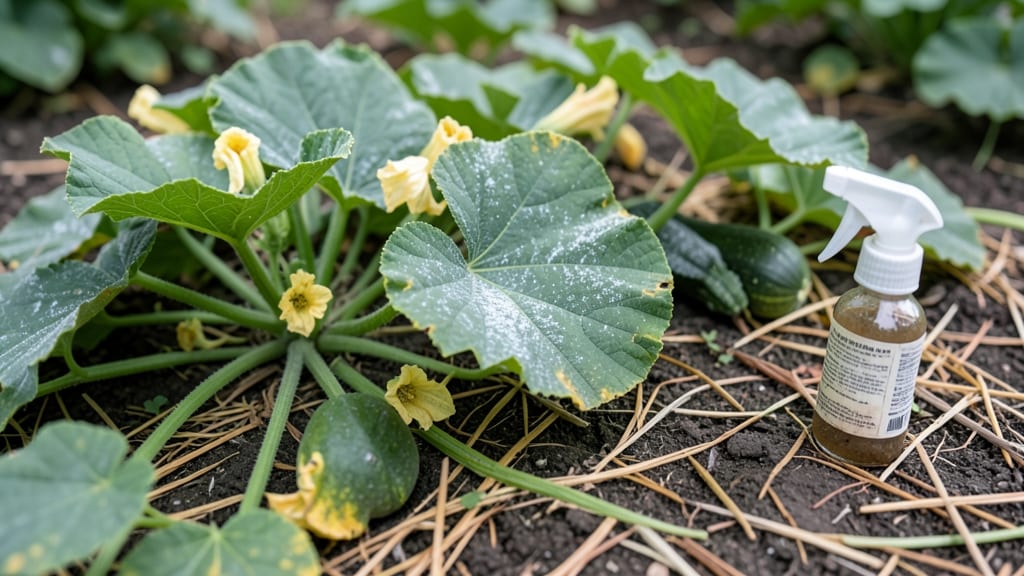
Treating powdery mildew on squash plants starts with a simple but powerful spray—neem oil mixed with water. 🌿 I’ve battled this white, flour-like fungus on my summer squash, and this organic remedy saved my harvest when store-bought chemicals failed.
The key is acting fast before the mildew spreads to new leaves.
Powdery mildew thrives in warm, humid conditions, so proper airflow and spacing are your first line of defense. My squash plants now get morning sun and afternoon shade, plus I prune crowded vines to let air circulate.
When mildew appears, I spray the undersides of leaves—where spores hide—every 5 to 7 days until it disappears.
After just one treatment, the white spots fade, and new growth stays clean. The plants rebound faster than I expected, and the neem oil doesn’t harm beneficial insects. You’ll notice healthier leaves within a week, and the mildew won’t return if you keep up the preventative sprays.
For severe cases, I’ve also removed the worst-infected leaves, but most of my squash recovers without losing any foliage. The secret is consistency—don’t skip a spray, and your plants will bounce back stronger than ever.
Why it happens
Powdery mildew isn’t just a random nuisance—it’s a fungal infection that thrives under specific conditions. Understanding why it attacks your squash plants is the first step to stopping it in its tracks. Below, we break down the key factors that turn your healthy vines into a fungal buffet.
🌱 Poor Air Circulation Traps Moisture
Fungal spores need humidity to germinate, but they also rely on still, damp air to spread. Squash plants with dense foliage or crowded growth create the perfect microclimate for powdery mildew.
When leaves rub together or water droplets linger (from overhead irrigation or morning dew), spores land on surfaces and germinate within 6–24 hours.
- Actionable clue: Check for mildew first on lower leaves or areas where foliage overlaps.
- Science note: The fungus Erysiphe cichoracearum (a common squash pathogen) releases enzymes that break down leaf cuticles, creating entry points.
💦 Overhead Watering Feeds Fungal Growth
Watering from above doesn’t just wet leaves—it splashes spores from soil, infected debris, or nearby plants onto healthy tissue. Powdery mildew spores are lightweight and can hitchhike on water droplets for miles. Once settled, they germinate in 3–5 days if conditions stay humid (above 75–85% relative humidity).
| Watering Method | Risk Level | Why? |
|---|---|---|
| Overhead sprinklers | ⚠️ High | Creates prolonged leaf wetness and spreads spores. |
| Drip irrigation | 🟢 Low | Keeps foliage dry and reduces spore dispersal. |
| Hand watering at soil level | 🟢 Low | Minimizes leaf contact and evaporation. |
🌡️ Warm, Humid Weather Creates Ideal Conditions
Powdery mildew loves warmth + moisture—think of it as the fungus’s version of a tropical vacation. Temperatures between 60–85°F (15–30°C) with high humidity at night (especially 70%+) trigger rapid spore germination.
Cool nights followed by sunny days (a classic summer pattern) condense dew on leaves, giving spores the perfect launchpad.
- Regional hotspots: Mildew is rampant in Southern U.S. states (e.g., Florida, Georgia) and Pacific Northwest (due to coastal humidity).
- Seasonal peak: Late summer (July–August) is prime time for outbreaks.
🌿 Weak or Stressed Plants Are Easy Targets
Healthy squash plants have thick cuticles and natural defenses, but stress weakens them. Common stressors that invite powdery mildew include:
- Nutrient deficiencies: Low nitrogen or phosphorus makes leaves thinner and more susceptible to fungal penetration.
- Overcrowding: Competitive plants develop smaller leaves with less protective wax coating.
- Physical damage: Hail, pests (like cucumber beetles), or rough handling break the leaf barrier.
- Improper pruning: Removing too many leaves reduces the plant’s ability to photosynthesize and self-defend.
Pro tip: Look for mildew starting on young, tender leaves—these are the first to show signs of stress.
🌱 Contaminated Tools or Soil Spread Spores
Fungal spores are persistent and can survive in soil or on tools for years. If you’ve grown squash (or other susceptible crops like cucumbers or melons) in the same spot before, spores may already be lurking.
Even pruners, gloves, or trellis supports can carry infected debris from plant to plant.
- Lifespan of spores: Some strains remain viable in soil for up to 5 years.
- Cross-contamination risk: Sharing tools between infected and healthy plants accelerates outbreaks.
Quick Fixes for Powdery Mildew
Powdery mildew on squash plants can feel like a sneaky foe—it creeps in when you least expect it, but the good news? You can turn the tide with the right moves.
Below, we’ve mapped out practical solutions based on the root causes (like humidity, poor airflow, or weak plants) to help your squash bounce back—fast. Prevention tips are sprinkled in like secret weapons, so you can keep future outbreaks at bay.
Cause: Squash plants packed too closely trap moisture, creating mildew’s favorite breeding ground. Solution:
- Prune aggressively 🔪—snip away crowded vines to improve airflow. Aim for 12–18 inches of space between plants.
- Train vines upward (if growing vertically) to lift leaves away from damp soil.
- Thin seedlings early—don’t let them compete for space. Stronger plants = fewer mildew magnets.
- Pro Tip: 💡 Use tomato cages or trellises for bushier varieties like zucchini to keep foliage off the ground.
Cause: Morning dew + wet leaves = mildew party. Overhead watering keeps foliage soggy for hours. Solution:
- Water at the base 🌊 only—use a soaker hose or drip irrigation to avoid wetting leaves. Aim for deep, infrequent watering (1–1.5 inches per week).
- Water in the morning ⏰—this gives leaves time to dry before evening humidity sets in.
- Mulch heavily 🌿—straw or shredded leaves 3–4 inches deep keep soil moist without splashing water onto leaves.
- Pro Tip: 🌡️ If humidity is extreme (think 80%+), run a fan near plants for 10–15 minutes daily to dry leaves faster.
Cause: Fungal spores thrive when left unchecked. Organic sprays disrupt their party. Solution: Neem Oil Spray (Best for Prevention & Early Stages)
- Mix 1 tbsp neem oil + 1 tsp mild soap + 1 quart water in a spray bottle. 🍳
- Spray undersides of leaves (where mildew hides!) and stems every 7–10 days or when rain dilutes it.
- Reapply after rain—neem washes off easily.
Baking Soda Spray (Budget-Friendly & Fast-Acting)
- Stir 1 tbsp baking soda + 1 tbsp vegetable oil + 1 tsp soap + 1 gallon water. 👨🍳
- Spray directly on mildew until leaves glisten. Repeat every 5–7 days until gone.
- Pro Tip: ✨ Add 1 tbsp hydrogen peroxide (3%) to baking soda spray for extra fungal kick.
Cause: Mildew spreads like wildfire—every infected leaf is a spore factory. Solution: - Snip off infected leaves 🔪—don’t yank them (risks damaging healthy vines). Dispose of them far from the garden (not compost!). - Prune entire branches if mildew covers >30% of a vine.
Your plant will thank you with new growth! - Burn or bag heavily infected debris to stop spores from reinfecting. - Pro Tip: 🎯 Disinfect pruners with rubbing alcohol between cuts to avoid spreading spores.
Cause: Weak, nutrient-starved squash are mildew’s favorite buffet. Solution:
- Fertilize right: Use a balanced organic fertilizer (5-5-5 or 3-4-6) when vines start running. Avoid high-nitrogen—it promotes leafy growth (more mildew targets).
- Side-dress with compost 🌿—bury 1–2 inches of compost near roots mid-season for a slow-release boost.
- Interplant with mildew fighters: Marigolds, nasturtiums, or garlic repel fungal spores naturally.
- Pro Tip: 💪 Hardening off seedlings (acclimating them to outdoor conditions gradually) reduces stress = stronger defenses.
Check these boxes before mildew shows up: ✅ Choose resistant varieties—look for ‘Defender’ zucchini or ‘Butternut Waltham’ squash. ✅ Rotate crops—don’t plant squash in the same spot yearly (fungi linger in soil!). ✅ Test soil pH—aim for 6.0–6.8.
Too alkaline? Add sulfur or compost to balance it. ✅ Sanitize tools—clean pruners and gloves with 10% bleach solution between gardens. ✅ Monitor weather—cover plants with floating row covers if rain is forecasted for >3 days.
If mildew spreads despite your efforts, it’s time for heavy artillery:
- Copper fungicide (like Bordeaux mixture)—spray every 10 days for severe cases.
- Potassium bicarbonate (e.g., Bonide Fung-onil)—safer than copper but works fast.
- Last resort: Remove the entire plant if >50% is infected (saves your garden!).
Remember: Consistency is key! Mildew fights back, so stay vigilant—check leaves daily and act at the first sign of white fuzz. Your squash (and your sanity) will thank you! 🎉
Frequently asked questions about squash mildew
How quickly does powdery mildew spread on squash plants?
Powdery mildew can spread rapidly—visible symptoms may appear within 3-5 days of spores landing on leaves, especially in warm (70-85°F) and humid conditions. The fungus thrives on overlapping foliage, so crowded plants show signs faster than well-spaced ones. Act within 24 hours of spotting white patches for best results.
Can I still harvest squash if the leaves have powdery mildew?
Yes, you can still harvest fruit even with mildew on leaves! The fungus primarily affects foliage, not the edible squash itself. Focus on removing infected leaves while keeping healthy vines intact. Just wash squash thoroughly before eating to remove any surface spores that might cling to the skin.
Will rain wash away powdery mildew?
Rain won't eliminate mildew—it actually spreads spores through water droplets. After heavy rain, spores may germinate faster on damp leaves. Always reapply treatments within 48 hours of rainfall. The key is keeping foliage dry between rains by watering at the base and improving airflow.
How do I know if my squash plant has powdery mildew vs. another disease?
Powdery mildew appears as a white, powdery coating on leaf surfaces (especially undersides), while other issues like downy mildew cause yellow spots with fuzzy gray growth on leaf undersides. Check for these clues: mildew doesn't cause leaf drop initially, and it thrives in dry conditions (unlike downy mildew which needs moisture).
Can I use vinegar to treat powdery mildew on squash?
While vinegar can help as a natural fungicide, it's less effective than neem oil or baking soda for mildew. Mix 1 tbsp apple cider vinegar + 1 gallon water and spray, but avoid using it more than once every 2 weeks. Vinegar's acidity may harm plants over time, so pair it with proper airflow and pruning for best results.