
Diseases
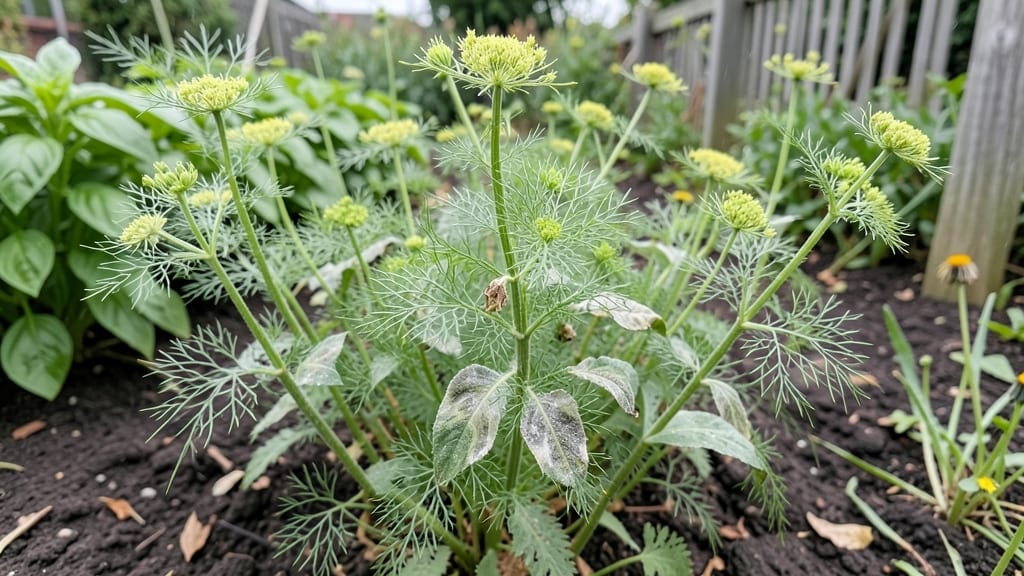
Dill plant diseases like powdery mildew and rust can turn your fragrant herb garden into a sad, yellowing mess if you don’t catch them early.
I’ve seen healthy dill plants go from lush and green to covered in white fuzz or rusty spots in just a few weeks—it’s heartbreaking, but there’s hope.
The key is spotting the warning signs before they spread, and I’ll show you exactly what to look for on the leaves and stems.
Most of these diseases thrive in warm, humid conditions, which means your dill is at risk during late summer when the air feels thick and the plants are crowded.
Powdery mildew starts as tiny white dots that spread like dust, while rust shows up as orange-brown patches on the undersides of leaves. The good news? Both can be managed with simple organic sprays or cultural tweaks—no harsh chemicals needed if you act fast.
By the time you finish this guide, you’ll know how to prune affected leaves, adjust watering habits, and even make a baking soda spray that stops mildew in its tracks.
Your dill will bounce back stronger, and you’ll save those fresh leaves for soups, pickles, or garnishes without the stress of watching them wither away.
Whether you’re growing dill in pots on a patio or in a full garden bed, these strategies work for any setup. Let’s get your plants back to their vibrant best before the next harvest season arrives.
Root Causes Behind Dill Problems
Understanding why dill plants fall victim to diseases like powdery mildew and rust starts with recognizing the environmental, biological, and cultural factors that create the perfect storm for pathogens. Let’s break down the key triggers—so you can nip them in the bud before they spread.
Dill thrives in open, airy conditions, but when plants grow too densely or are crowded in containers, stagnant air becomes a breeding ground for fungal spores. Here’s why it’s a problem:
- Fungal Favorites: Pathogens like Erysiphe (powdery mildew) and Puccinia (rust) love humidity—especially when it lingers above 75% relative humidity for prolonged periods.
Poor airflow traps moisture on leaves, creating a damp, warm microclimate that fungi adore. - Dense Planting: If dill is sown too closely (or not thinned properly), leaves brush against each other, spreading spores like wildfire. 🔥 - Shady Spots: While dill tolerates partial shade, low-light areas slow evaporation, keeping leaves wet longer.
This is a red flag for rust, which thrives in cool, moist conditions.
Actionable Fix: ✅ Space plants 12–18 inches apart (or thin seedlings early). ✅ Prune inner stems to improve airflow. ✅ Avoid overhead watering—use drip irrigation or water at the base.
Dill has shallow roots and hates soggy feet.
When soil stays too wet, it invites: - Root Rot: Fungal pathogens like Pythium or Phytophthora attack weakened roots, making plants susceptible to secondary infections (like rust). - Leaf Wetness: Water droplets on leaves extend the window for spores to germinate.
Powdery mildew, for example, can infect within 6 hours of leaf wetness in ideal conditions.
Signs Your Dill is Drowning:
- Yellowing lower leaves (early rot).
- Stunted growth despite regular watering.
- Soil that stays muddy to the touch for days after watering.
Actionable Fix: ✅ Let the top 1–2 inches of soil dry out between waterings. ✅ Use well-draining soil (mix in perlite or compost). ✅ Water in the early morning so leaves dry quickly.
Dill is a cool-season crop, but extreme heat or sudden temperature swings throw it off balance: - Powdery Mildew’s Sweet Spot: Fungal spores germinate fastest between 60–80°F (15–27°C) with high humidity.
If summer hits 90°F+ (32°C+), growth slows, but the fungus still thrives on stressed plants. - Rust’s Cool Preference: Rust spores require temperatures below 75°F (24°C) to infect.
If your dill bolts in spring or struggles in fall, it’s more vulnerable. - Nighttime Chill: A 10°F (5°C) drop after a hot day can shock plants, weakening their defenses.
Actionable Fix: ✅ Mulch to regulate soil temp (keeps roots cooler in summer). ✅ Provide afternoon shade in hot climates (use shade cloth if needed). ✅ Avoid cold snaps—use row covers if frost threatens.
Healthy dill is resistant to diseases—but poor nutrition makes it an easy target. Watch for these red flags: - Nitrogen Deficiency: Pale, yellowing leaves signal weak growth.
While nitrogen fuels foliage, too little leads to sparse, thin leaves—perfect for fungal attachment. - Potassium Shortage: Without enough potassium, cell walls weaken, making plants more permeable to pathogens. - Over-Fertilized Soil: Excess nitrogen or phosphorus can promote lush, soft growth that’s more susceptible to mildew.
Actionable Fix: ✅ Test your soil (aim for a balanced NPK ratio, like 5-10-10). ✅ Side-dress with compost mid-season for a slow-release boost. ✅ Avoid high-nitrogen fertilizers (like blood meal) if mildew is already present.
Disease doesn’t just come from the soil—your tools might be the culprit!
- Pruners & Shears: If you snip infected leaves without cleaning them, spores hitch a ride to healthy plants.
- Shared Garden Beds: Planting dill where last year’s infected crops (like cucumbers or carrots) grew can reintroduce pathogens.
- Windborne Spores: Rust spores can travel miles on the wind—if a neighbor’s garden has infected plants, your dill is at risk.
Actionable Fix: ✅ Sanitize tools with 70% rubbing alcohol or a 10% bleach solution between uses. ✅ Rotate crops—don’t plant dill in the same spot yearly. ✅ Remove infected plants immediately (don’t compost them—bag and trash to prevent spore spread).
Some pests don’t cause disease directly, but they damage plants, creating entry points for fungi:
- Aphids & Spider Mites: Their honeydew (sticky residue) feeds sooty mold, which weakens leaves and invites mildew.
- Cabbage Moths: Larvae chew holes in leaves, giving rust spores a foothold.
- Slugs & Snails: Their slime trails leave moisture on leaves, perfect for fungal growth.
Actionable Fix: ✅ Inspect leaves regularly for pests (especially undersides). ✅ Use neem oil (fungicidal + pest-repellent) as a preventative spray. ✅ Set up beer traps for slugs or use diatomaceous earth for mites.
Fixing Fungal Foes in Dill
When your dill plants start showing signs of powdery mildew or rust, acting fast is key to saving your harvest. Below are practical, step-by-step solutions tailored to each issue, plus prevention tips to keep your dill thriving. Let’s tackle these problems head-on!
Powdery mildew turns dill leaves white and fuzzy—ugly and harmful. Here’s how to restore your plants:
🔥 Remove Infected Leaves Immediately
- 🍳 Step 1: Snip off heavily mildewed leaves with clean scissors or pruners. Dispose of them in the trash (not compost) to prevent spreading spores.
- 👨🍳 Step 2: Focus on lower leaves first, as they’re often the worst-affected. Thin out crowded foliage to improve airflow—this is critical for stopping mildew.
🥘 Apply Fungicidal Sprays
Use these organic or chemical options (rotate for best results):
- 🌿 Organic Sprays:
- Neem oil solution: Mix 1 tbsp neem oil + 1 tsp mild soap + 1 quart water. Spray early morning or evening (avoid direct sun). Reapply every 7–10 days.
- Baking soda spray: Combine 1 tsp baking soda, 1 tbsp vegetable oil, and 1 quart water. Add a few drops of dish soap as a surfactant. Spray under leaves too.
- 💊 Chemical Sprays (if severe):
- Sulfur-based fungicides (e.g., Bonide Copper Fungicide) or potassium bicarbonate sprays (like Garden Safe Fungine). Follow label instructions precisely.
⏰ Adjust Growing Conditions
Powdery mildew thrives in humidity and poor airflow. Fix this by:
- 🌡️ Watering at the base (never overhead) to keep leaves dry.
- 🎯 Pruning for airflow: Space plants 12–18 inches apart. If growing in containers, ensure pots aren’t overcrowded.
- ✨ Reflect sunlight: Place a white reflective board (or aluminum foil) near plants to reduce leaf moisture from condensation.
Rust causes orange pustules on undersides of leaves, weakening plants. Here’s how to stop it:
🔪 Prune and Destroy Infected Foliage
- 🍳 Step 1: Remove all rust-spotted leaves (even small patches). Rust spores spread via wind and water, so act fast.
- 👨🍳 Step 2: Sterilize pruners with rubbing alcohol between cuts to avoid cross-contamination.
🥘 Use Targeted Fungicides
Rust is stubborn—combine these methods:
- 🌿 Copper fungicides (e.g., Copper Soap) are effective against rust. Spray every 10–14 days until new growth appears.
- 💊 Systemic fungicides like chlorothalonil (e.g., Daconil) can penetrate plant tissue. Use as a last resort if rust spreads rapidly.
- 🌱 Compost tea: A preventative spray made from aerobically decomposed compost can boost plant resistance.
🌡️ Prevent Future Outbreaks
Rust loves wet, warm conditions. Break the cycle with:
- 🎯 Crop rotation: Avoid planting dill (or other umbellifers like parsley) in the same spot next year.
- 💡 Mulch properly: Use straw or grass clippings to keep soil moist but reduce leaf wetness.
- ✨ Choose resistant varieties: If rust is recurrent, try dill varieties like ‘Bouquet’ or ‘Fernleaf’, which are slightly more tolerant.
- 🌱 Start with strong seedlings: Buy disease-resistant dill seeds or grow from organic, untreated plants.
- 🔥 Monitor regularly: Check undersides of leaves weekly for early signs of mildew or rust.
- 🌡️ Avoid overhead watering: Use drip irrigation or soaker hoses to minimize fungal spores splashing onto leaves.
- 🎯 Harvest often: Regularly picking dill stems encourages new growth and reduces stress, making plants more resilient.
With these targeted fixes, your dill should bounce back—stronger and fungus-free! Prevention is your best tool, but quick action can save even heavily affected plants. Happy gardening! 🌿
Frequently asked questions about dill plant diseases
What are the first signs of powdery mildew on dill?
Look for tiny white or gray spots on the upper leaves that resemble dust or flour. These spots will spread and develop a fuzzy, powdery texture as the disease progresses. Check both sides of leaves, especially in crowded areas where airflow is poor. If you see this early, act fast with neem oil or baking soda spray to stop it before it covers the entire plant.
How do I tell if my dill has rust disease or just normal aging?
Rust appears as orange-brown pustules on the undersides of leaves, while normal aging shows uniform yellowing without spots. Rust often starts on lower leaves and spreads upward. Unlike aging, rust pustules will burst and release spores when touched. Remove infected leaves immediately and treat with copper fungicide to prevent spread.
Can I still use dill leaves that have a little mildew?
Only use leaves with very minimal mildew—scrub them thoroughly with water and dry completely before using. Avoid leaves with fuzzy white patches or yellowing. For safety, it's best to remove all affected foliage and compost it separately (not with other garden waste) to prevent spreading spores.
Why does my dill keep getting diseases even after treatment?
Persistent diseases often mean poor growing conditions remain. Check for crowded plants, overhead watering, or high humidity—these create perfect conditions for reinfection. Improve airflow by spacing plants 12–18 inches apart and water at the base. Also, sterilize your tools between pruning sessions to avoid spreading spores.
Are there dill varieties that resist diseases better?
Yes! Varieties like 'Fernleaf' and 'Bouquet' show slightly better resistance to powdery mildew and rust. For maximum protection, choose disease-resistant seeds labeled as such and practice crop rotation—don't plant dill in the same spot year after year. Healthy soil with proper nutrients also helps plants fight off infections.