
Pests and Diseases
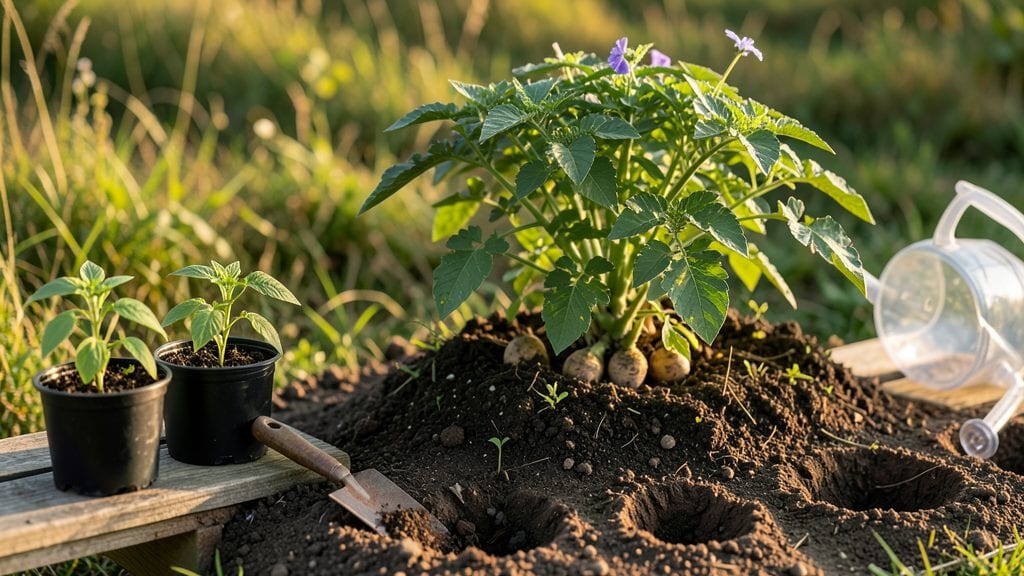
You can plant peppers and potatoes together, but it requires careful planning to minimize risks. These plants share vulnerabilities to diseases like blight and attract similar pests, so spacing them at least 18 inches apart and rotating crops helps reduce threats.
Mixing peppers and potatoes in the same garden bed isn't ideal because both belong to the nightshade family, making them susceptible to the same fungal infections. 🌱 For example, early blight thrives in damp conditions, and its spores can spread from one plant to another through water splashes or tools.
I’ve seen gardens where peppers near potatoes suffered stunted growth because the soil competition stressed their roots—potatoes are heavy feeders, while peppers prefer well-drained soil. The key is choosing disease-resistant varieties and giving them plenty of space to breathe.
If you’re short on space, consider container gardening or interplanting with protective allies like basil or marigolds.
These plants repel pests naturally, creating a buffer zone between your peppers and potatoes. 💫 Just remember: never plant them in the same spot year after year, as this builds up pathogens in the soil.
With the right precautions, you can safely grow both—but watch for early signs of stress, like yellowing leaves or wilting stems.
💡 In This Article
- Disease and Pest Risks of Peppers with Potatoes
- Safe Companion Planting Strategies for Peppers and Potatoes
Disease and pest risks of peppers with potatoes
Both peppers and potatoes belong to the nightshade family (Solanaceae), which means they share genetic vulnerabilities to devastating fungal diseases like verticillium wilt and fusarium wilt.
These soil-borne pathogens create microscopic structures called chlamydospores that can survive in the soil for up to 15 years, waiting for susceptible hosts. When infected potato tubers or pepper roots release spores into the soil, nearby plants inhale them through their root systems like a silent invasion.
Here's what's actually happening: Phytophthora infestans, the fungus responsible for late blight, thrives in moist conditions and spreads through water droplets—this is why heavy rainfall or overhead irrigation turns your garden into a disease highway.
The fungus produces sporangia that splash onto leaves, creating dark, greasy spots that spread within 48 hours if humidity stays above 75%. Peppers and potatoes both exhibit similar symptoms: wilting, brown stem lesions, and leaf spots that look like oil dripped on them.
The root competition adds another layer of stress. Potatoes are heavy feeders, depleting soil nitrogen and potassium at a rate that can starve nearby peppers. I've seen gardens where pepper plants near potatoes developed chlorosis (yellowing leaves) because their roots couldn't compete for nutrients.
This weakened state makes them even more susceptible to diseases, creating a vicious cycle where stressed plants attract more pests like aphids and colorado potato beetles, which jump between plants like a game of biological hopscotch.
Aphids are particularly problematic because they don't just feed—they transmit tobacco mosaic virus, which causes mottled leaves and stunted growth in both peppers and potatoes.
These tiny insects reproduce at an alarming rate (up to 12 generations per year) and produce sticky honeydew that attracts sooty mold, further stressing your plants. The key factor is their shared attractiveness: both crops emit similar volatile organic compounds that aphids can detect from 10 feet away.
What most people don't realize is how soil structure plays a role. Compacted or poorly drained soil worsens the problem by creating anaerobic pockets where fungal spores thrive. Peppers prefer well-aerated, slightly acidic soil (pH 6.0-6.8), while potatoes tolerate more alkaline conditions (pH 5.0-6.5).
This mismatch means their ideal growing conditions are fundamentally at odds, leading to compromised root systems that become easy targets for pathogens.
Consider these key factors when assessing risk: soil history, plant spacing, and variety selection. If your soil has a history of blight (check for previous potato failures), the risk multiplies exponentially.
Even with perfect spacing, stressed plants in compromised soil become ticking time bombs waiting to spread disease to their neighbors.