
Pests and Diseases
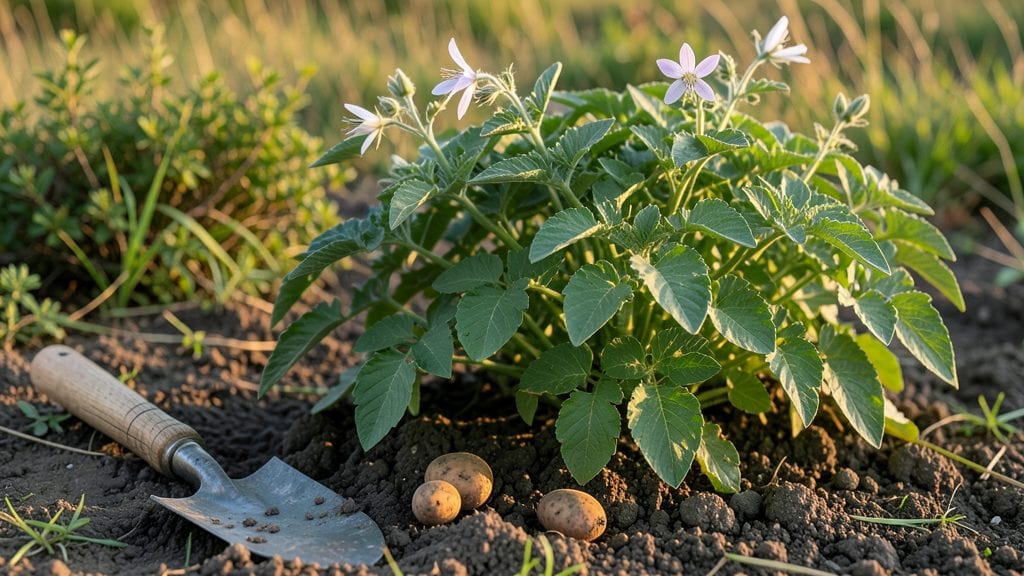
You can plant corn and potatoes together, but they need careful spacing and pest control to prevent competition and disease. Corn draws pests that damage potatoes, while potatoes drain soil nitrogen faster than corn can replace it.
This pairing works only if you plan ahead—corn's tall stalks shade potatoes, stunting their growth, while both crops attract the same pests like Colorado potato beetles. 🔥 The key is spacing: keep plants at least 12 inches apart and plant potatoes in the morning shade of corn rows.
Many gardeners solve this by alternating rows with pest-repelling herbs like basil or marigolds, which disrupt the pest life cycle without competing for nutrients.
For small gardens, try staggered planting: start potatoes 2-3 weeks earlier than corn so they mature before corn fully shades them. This also helps potatoes reach harvest before corn's leaf litter smothers them.
Just avoid planting them in the same row—potatoes need loose soil, while corn thrives in deeper beds.
💡 In This Article
- Companion Planting Science: Why Corn and Potatoes Clash in Gardens
- Optimal Spacing and Alternate Planting Strategies for Corn and Potatoes
Companion planting science: why corn and potatoes clash in gardens
The root of the problem between corn and potatoes lies in their fundamentally different growth habits and nutrient demands. Corn, a heavy feeder, relies on deep soil layers to anchor its tall stalks and develop its extensive root system, which can extend up to 6 feet deep.
Potatoes, meanwhile, thrive in loose, well-aerated soil just 12-18 inches deep where they form tubers. This mismatch creates a battle for space—corn's roots can smother potato tubers by compacting the soil, reducing oxygen flow critical for tuber formation.
Nitrogen depletion is another key factor. Potatoes are voracious nitrogen consumers, requiring about 100-150 pounds of nitrogen per acre during their growing season. Corn, while also nitrogen-hungry, has a better ability to fix nitrogen through its symbiotic relationship with soil bacteria.
However, potatoes exhaust nitrogen so quickly that even corn's nitrogen-fixing capabilities can't keep pace. 🌱 The result? Stunted potato growth and reduced tuber size, even when fertilized. This nutrient imbalance explains why gardeners often see potatoes struggling when planted near corn, despite corn's reputation as a nitrogen-friendly crop.
Pest dynamics create an even more critical clash. Corn's tall stalks and silks provide perfect habitats for pests like corn earworms, which also target potato foliage. The real villain, however, is the Colorado potato beetle—a notorious potato pest that also feeds on corn's leaves.
These beetles lay eggs on corn plants, which hatch into larvae that then migrate to potatoes, creating a vicious cycle. Studies show that gardens with both crops can see potato yields drop by up to 40% due to this shared pest pressure, even with organic pest controls.
Disease transmission adds another layer of complexity. Both crops are susceptible to fungal infections like late blight, which thrives in the humid conditions created by corn's dense foliage. The spores can spread rapidly between plants, turning a small infection into a garden-wide epidemic.
Corn's tall stalks also create microclimates that trap moisture, ideal conditions for fungal growth on potato leaves. 🌡️ This moisture retention explains why potato blight often appears worse when planted near corn, despite both crops appearing healthy at first glance.
Even their growth timelines conflict. Corn typically matures in 60-90 days, while potatoes take 90-120 days to reach harvest. This means corn's leaf litter begins falling just as potatoes need maximum sunlight for tuber bulking.
The decomposing corn leaves create a thick mulch that suffocates potato plants, reducing their ability to photosynthesize efficiently. This temporal mismatch explains why potatoes planted near corn often produce smaller, misshapen tubers even when given adequate water and nutrients.
What most gardeners don't realize is how these factors compound over time. Each year of planting corn and potatoes together degrades soil structure further, making it harder for potatoes to form tubers.
The combination of root competition, nitrogen depletion, and shared pests creates a self-reinforcing cycle that reduces yields year after year. 💫 The science shows this isn't just about space—it's about fundamental biological incompatibility between these two crops when grown in close proximity.