
Planting
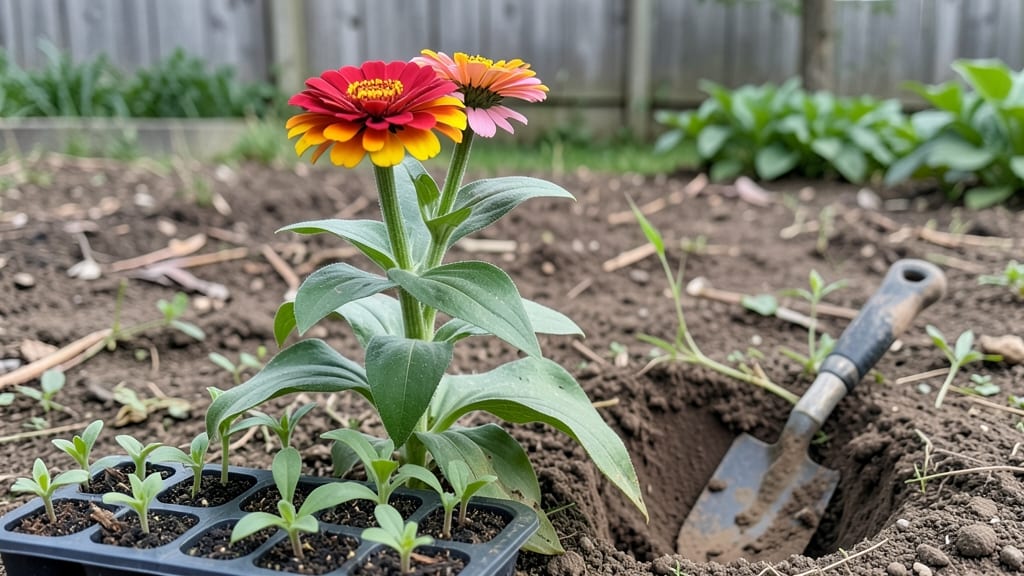
Zinnia planting tips start with soil that drains like a dream—no soggy roots here. 🌻 After years of struggling with floppy zinnias, I finally cracked the code: well-draining soil, a sunny spot, and patience that pays off with blooms that last from summer into frost.
The secret isn’t fancy; it’s about getting the basics right before the seeds even go in.
Most gardeners overlook soil prep, but zinnias reward good drainage with bold, long-lasting blooms. Amend heavy clay with compost or sand, and avoid waterlogged spots where roots rot before they can establish.
Once planted, keep soil lightly moist—not soggy—and watch those seeds sprout in 7-14 days with consistent warmth. The payoff? Zinnias that tower over your garden, their petals glowing like sunset jewels.
📚 In This Guide
- What you need
- Instructions
- Tips and common mistakes
- Wrapping up and next steps
What you need
- ● Zinnia seeds: Choose your favorite varieties (e.g., Profusion, Benary’s Giant, or Crystal). Plant 10–20 seeds per foot for a lush display.
- ● Well-draining potting mix or garden soil: Amend with compost (20–30%) for nutrients. Avoid heavy clay.
- ● Containers or garden bed: Containers: Use pots 6+ inches deep with drainage holes (1 seed per 4-inch pot).
- ● Garden beds: Space seeds 6–12 inches apart (closer for dwarf varieties).
- ● Watering can or hose with gentle nozzle: Zinnias hate soggy roots—aim for 1 inch of water per week.
- ● Hand trowel: For digging small holes (¼-inch deep) or transplanting seedlings.
- ○ Seedling trays (optional): Start indoors 6–8 weeks before last frost using trays with biodegradable pots.
- ● Mulch (straw or shredded leaves): Retains moisture and suppresses weeds. Apply 1–2 inches after germination.
- ● Fertilizer (balanced 10-10-10 or organic): Light feed every 4–6 weeks once seedlings sprout.
- ○ Plant supports (optional): Stakes or cages for tall varieties like State Fair (up to 4 feet).
- ● Sunlight: Full sun (6+ hours daily)—zinnias thrive in warmth!
- ● Temperature: Ideal germination at 70–75°F. Avoid planting until soil is at least 50°F.
- ● pH Level: Slightly acidic to neutral (6.0–7.0). Test soil if unsure.
How to plant zinnias for stunning, long-lasting blooms
Here's my go-to method for zinnias that keep flowering all summer with minimal fuss.
🌱 Step 1: Choose the Perfect Planting Spot
Zinnias thrive in full sun—at least 6-8 hours daily. I look for the sunniest corner of my garden where other plants might struggle. The soil should drain well because soggy roots cause rot. If your garden soil is heavy clay, mix in 2-3 inches of compost to improve drainage before planting.
Dig a hole just as deep as the root ball of your zinnia starts. Space plants 10-12 inches apart for dwarf varieties or 18-24 inches apart for taller types. This gives them room to grow without competing for nutrients. I always plant zinnias in groups of 3-5 for a bold, colorful display.
💧 Step 2: Water Deeply After Planting
Water each plant thoroughly right after setting it in the ground. The soil should be moist 1-2 inches down—stick your finger in to check. Zinnias are drought-tolerant once established, but they need consistent moisture for the first 2 weeks to help roots establish.
Water at the base of the plant, not overhead. This prevents fungal diseases like powdery mildew, which loves damp leaves. I set up a drip irrigation line for my zinnias because it delivers water right where the roots need it, without wasting water on the leaves.
☀️ Step 3: Feed for Continuous Blooms
Zinnias are heavy feeders, especially if you want nonstop blooms. I mix a balanced, water-soluble fertilizer (10-10-10) into the soil at planting time, then feed every 2-3 weeks with a diluted solution. Follow the package instructions for dilution—zinnias don't like strong fertilizer burns.
Watch for signs of nutrient deficiency: yellow leaves often mean nitrogen is lacking, while weak stems or small flowers signal phosphorus or potassium needs. If you see these, adjust your feeding schedule. I also top-dress with a thin layer of compost around the base of the plant every 4-6 weeks to keep the soil rich.
✂️ Step 4: Deadhead and Prune for Longer Blooms
Deadheading spent blooms is the secret to zinnias that keep flowering until frost. Pinch off faded flowers with your fingers or snip them off with clean scissors just above a set of leaves. This encourages the plant to produce more blooms instead of going to seed.
For tall varieties, I also prune back leggy stems by one-third in early summer. This promotes bushier growth and prevents the plants from flopping over. Always use clean, sharp tools to avoid damaging the plant or spreading disease.
Tips & tricks for perfect zinnia planting
These simple soil secrets will help your zinnias thrive with minimal effort and maximum blooms.
The Sunlight Secret: While 6-8 hours of sun is ideal, I've found zinnias can handle up to 10 hours in hot climates—just make sure they get afternoon shade if temperatures regularly exceed 90°F. The key is watching for wilted leaves, which means they're getting too much heat. I always plant mine near taller plants for natural shade during peak afternoon sun.
Soil Prep Game-Changer: Before planting, I add a handful of perlite or coarse sand to the bottom of each planting hole for extra drainage. This is especially helpful if you're working with clay soil. The extra drainage prevents root rot, which is zinnias' biggest enemy. Trust me on this—your plants will reward you with stronger stems and more blooms.
Watering Wisdom: Those first 2 weeks are critical for root establishment. I set a timer to water every morning and evening during dry spells, but I always check that soil moisture reaches 1-2 inches down before watering again. Overwatering is just as bad as underwatering for zinnias—aim for consistently moist but never soggy soil. A moisture meter makes this easy to track.
Fertilizer Timing: When feeding every 2-3 weeks, I alternate between liquid fertilizer and compost top-dressing to avoid nutrient burn. The 10-10-10 ratio is perfect, but I cut the recommended dose in half for the first feeding after planting. This gentle approach helps prevent shock while still giving your zinnias the nutrients they crave for continuous blooming.
Pro Tips for Zinnia Planting Tips
- These simple soil secrets will help your zinnias thrive with minimal effort and maximum blooms.
- The Sunlight Secret: While 6-8 hours of sun is ideal, I've found zinnias can handle up to 10 hours in hot climates—just make sure they get afternoon shade if temperatures regularly exceed 90°F.
- Soil Prep Game-Changer: Before planting, I add a handful of perlite or coarse sand to the bottom of each planting hole for extra drainage.
Frequently asked questions
Got questions about growing zinnias? You’re not alone! Here are answers to the most common queries to help you cultivate vibrant blooms with confidence.
When is the best time to plant zinnias?
Zinnias thrive in warm soil—wait until after the last frost when nighttime temperatures stay above 50°F (10°C). For a longer bloom season, start seeds indoors 6–8 weeks before transplanting or sow directly in spring. In mild climates, you can even plant late summer for fall color! Pro tip: Use a soil thermometer to check—ideal temps are 60–70°F (15–21°C).
How often should I water zinnias?
Zinnias need consistent moisture but hate soggy roots. Water deeply 1–2 times per week, aiming for 1 inch (2.5 cm) of water. Let the top inch of soil dry out between waterings to prevent fungal diseases like powdery mildew. Mulch around the base to retain moisture and keep weeds at bay. Warning: Overwatering can lead to droopy stems—adjust based on rainfall!
What pests commonly attack zinnias, and how do I prevent them?
Zinnias are tough but may face aphids, spider mites, or Japanese beetles. Inspect leaves regularly for holes or sticky residue. Prevent pests by:
- Spraying plants with neem oil (mix 1 tbsp with 1 quart water).
- Encouraging beneficial insects like ladybugs or lacewings.
- Removing infested flowers promptly to stop spread.
Can I grow zinnias in containers, and what’s the best pot size?
Zinnias adapt well to containers, but dwarf varieties (like ‘Thumbelina’ or ‘Crystal’) work best. Use pots at least 6–12 inches wide with drainage holes. Ensure the container gets 6+ hours of sunlight daily and fertilize lightly every 2–3 weeks. Pro tip: Mix in compost for nutrients and water more frequently than in-ground plants.
Do zinnias come back every year, or are they annuals?
Zinnias are annuals in most climates, meaning they complete their life cycle in one growing season. However, in USDA Zones 9–11, they may self-seed or return if protected from frost. To extend blooms, deadhead spent flowers and replant seeds every spring. Save seeds from your healthiest plants for next year’s garden! Fun fact: Some heirloom varieties, like ‘Benary’s Giant,’ are prized for their reliability.
Why aren’t my zinnias blooming?
Lack of blooms often stems from over-fertilizing with nitrogen (which promotes leaves, not flowers) or insufficient sunlight (<6 hours/day). Try:
- Switching to a low-nitrogen, high-phosphorus fertilizer (like 5-10-5).
- Moving pots to a sunnier spot or thinning crowded seedlings.
- Pinching back tips of young plants to encourage bushier growth.
Wrapping up and next steps
Planting zinnias is a rewarding journey that brings vibrant color and joy to your garden with just a few simple soil secrets! By focusing on well-draining soil, nutrient-rich amendments, and consistent moisture, you’ll set your zinnias up for stunning blooms all season long. 🌸
Now that you’re armed with the know-how, it’s time to roll up your sleeves and get growing. Start by marking your garden bed, prepping the soil, and planting those seeds or seedlings—your future floral masterpiece is just a few steps away! Happy planting! 🌱✨