
Planting
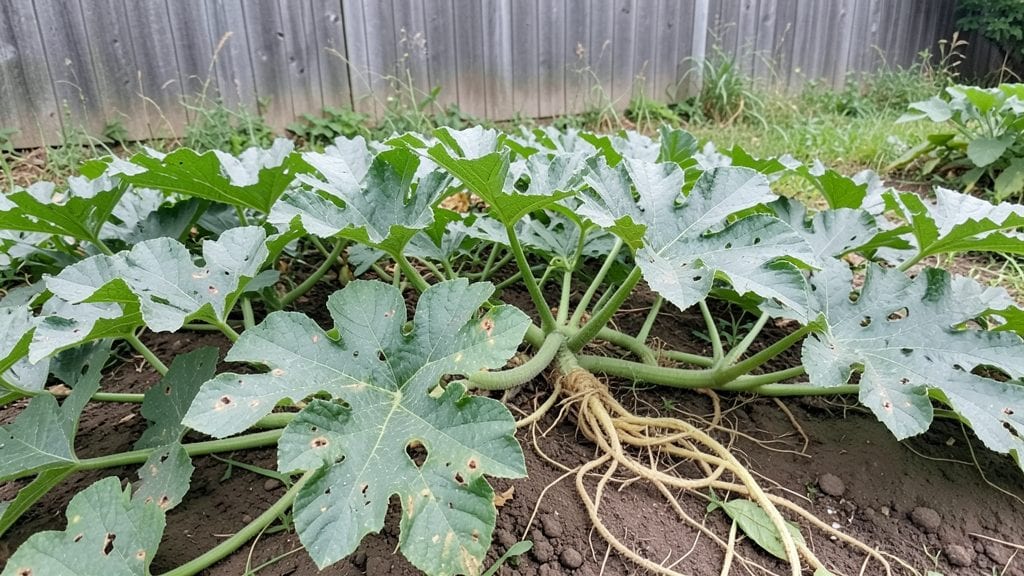
Watermelon plant roots are the hidden powerhouse behind your sweetest harvests—and neglecting them means weaker vines and smaller fruit.
Did you know those sprawling 20-foot vines rely on a root system that spreads just as wide? While the plant itself races across the garden, its roots decide whether your 🍉 thrives or struggles in USDA Zone 6a.
Too shallow, and they’ll dry out fast; too deep, and they’ll drown. The key? Loose, nutrient-rich soil that encourages roots to branch out while staying hydrated—exactly what I’ll show you to grow watermelons that burst with flavor.
From planting depth to soil prep, here’s how to give your roots the perfect foundation for a bigger harvest this summer.


Watermelon root systems: deep vs. shallow growth explained
Watermelons develop a dual root system that combines a primary taproot with an expansive network of fibrous secondary roots. This unique structure allows them to access water deep underground while spreading horizontally to capture nutrients.
The balance between these two systems determines how well your vines thrive—and how heavy your harvest will be.
Most watermelon varieties grow a taproot that extends 3-5 feet deep within the first 4-6 weeks of germination. This deep root anchors the plant and helps it survive drought conditions. Meanwhile, the fibrous roots spread outward up to 3-4 feet from the vine, creating a wide nutrient-gathering zone.
Here’s how these two root types work together: the taproot reaches for moisture, while the fibrous roots absorb nutrients from the topsoil. If either system is restricted—whether by shallow soil or compacted earth—your watermelon plants will struggle to produce strong vines or sweet fruit.
Understanding this balance is key to optimizing your planting strategy. For example, container-grown watermelons need at least 12-inch-deep pots to accommodate their taproots, while in-ground plants benefit from loose, well-aerated soil to encourage fibrous root expansion.
If your soil is too shallow (less than 12 inches), the taproot will struggle to develop fully, leaving your plants vulnerable to drought. I’ve seen watermelons in raised beds with only 8-inch depth produce stunted vines and small fruit—even with daily watering.
The roots simply couldn’t reach the moisture they needed.
On the other hand, fibrous roots thrive in well-aerated soil with organic matter. These roots spread horizontally, so compacted or clay-heavy soil can restrict their growth. Amending your soil with compost or sand helps create the ideal environment for both root types to flourish.
Another critical factor is soil temperature. Watermelon roots grow best in soil that’s at least 70°F. If you’re planting in cooler climates, use black plastic mulch to warm the soil and encourage faster root development.
I’ve found that pre-warming the soil by 2-3 weeks before planting can make a huge difference in early root growth.
For container gardening, choose pots with at least 18-inch depth to accommodate the taproot. Smaller pots will lead to root-bound plants, which produce weaker vines and fewer fruits.
If you’re growing watermelons in hanging baskets, select varieties like 'Sugar Baby' that stay compact but still need deep containers.
Proper root development also affects fruit production. Plants with healthy, deep roots produce 20-30% larger melons compared to those with restricted roots. The extra water and nutrients support stronger vines and heavier fruit loads.
In my own garden, I’ve noticed that watermelons with well-developed roots ripen 1-2 weeks earlier than those struggling in shallow soil.
To encourage deep root growth, avoid overwatering in the early stages. Deep, infrequent watering (every 3-5 days) trains roots to grow downward in search of moisture. Shallow, frequent watering keeps roots near the surface, making plants more susceptible to drought stress.
How to optimize soil conditions for healthy watermelon roots
Watermelon roots need the right conditions to explore deep into the soil and spread wide—critical for supporting those sprawling vines and heavy fruit. Poor soil leads to stunted roots, weak plants, and fewer melons. The key?
A balance of drainage, aeration, and nutrient-rich soil that encourages roots to grow 12-18 inches deep and spread 3-4 feet wide. Let’s break down how to create the perfect foundation for watermelon roots.
Start by testing your soil’s pH level—watermelons thrive in slightly acidic to neutral soil (pH 6.0-7.0). If your soil is too alkaline or compacted, roots struggle to access water and nutrients. Amending the soil with organic matter like compost or aged manure improves both structure and fertility.
For heavy clay soils, mix in sand or perlite to boost aeration, while sandy soils benefit from peat moss or coconut coir to retain moisture.
- ✅ Test soil pH (aim for 6.0-7.0) using a home test kit or lab analysis.
- ✅ Loosen soil to 12 inches deep with a broadfork or tiller to prevent compaction.
- ✅ Add compost (2-3 inches) or well-rotted manure to improve organic matter.
- ✅ Mix in sand (for clay) or peat moss (for sandy soil) to balance texture.
- ✅ Apply balanced fertilizer (10-10-10) at planting to kickstart root growth.
For container-grown watermelons, use a lightweight potting mix combined with 50% coconut coir or compost to mimic loose, fertile soil. Add a handful of perlite or vermiculite to improve drainage—watermelon roots rot quickly in soggy conditions.
If planting in raised beds, ensure they’re at least 12 inches deep to accommodate root growth. Mulch around plants with straw or wood chips to retain moisture, regulate soil temperature, and prevent weeds from competing for nutrients.
Watermelons are heavy feeders, so side-dress with compost or compost tea every 4-6 weeks during the growing season. Avoid over-fertilizing with nitrogen, which promotes leafy growth at the expense of roots and fruit.
Instead, focus on a balanced NPK ratio (e.g., 10-10-10) to support both root development and fruiting. If your soil lacks phosphorus, add bone meal to encourage strong root systems early on.
One often-overlooked tip: Water deeply but infrequently to encourage roots to grow downward. Shallow watering keeps roots near the surface, making them susceptible to drought and heat stress. Use drip irrigation or soaker hoses to deliver water directly to the root zone, reducing evaporation and disease risk.
Avoid wetting the foliage to prevent fungal infections like powdery mildew, which can weaken roots over time.
Finally, monitor your watermelon roots for signs of stress, like yellowing leaves (nutrient deficiency) or wilting despite moist soil (root rot). Healthy roots should be white or tan, not dark or mushy.
By prioritizing soil health, you’ll give your watermelon plants the strong, deep roots they need to produce bigger, sweeter fruit all season long. 🌱