
Watering
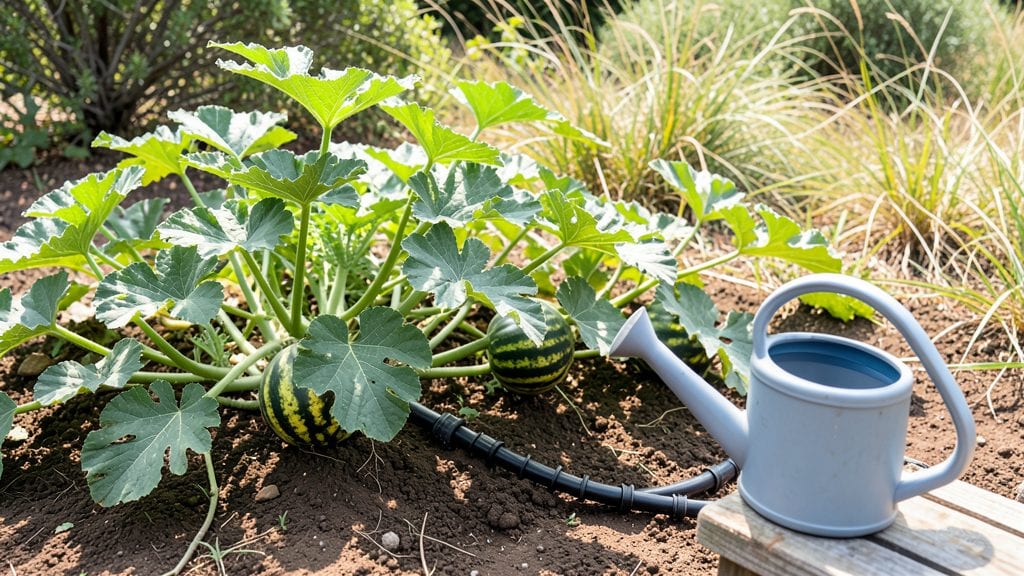
Watermelon plants need deep, consistent watering to deliver those juicy fruits you crave. 💧 I learned the hard way—skipping watering led to bitter, small melons, while drowning them caused rot. The secret is soaking the roots every 2-3 days during hot weather, then backing off as they mature.
Start with 1-2 inches of water per week, delivered slowly at the base of the plant. Drip irrigation or soaker hoses work best—they keep moisture deep where roots need it most.
Avoid overhead watering, which wastes water and spreads disease. Mulch helps retain moisture and keeps soil temps steady, cutting down on watering chores.
You’ll know you’re doing it right when vines spread vigorously and leaves stay crisp. Too little water? Leaves wilt and fruit turns bitter. Too much? Roots suffocate, and vines yellow. The goal is consistency—melons need steady moisture, especially when vines start running and flowers appear.
Adjust for your climate: desert gardeners water daily in summer, while cooler regions might stretch it to every 4-5 days. Watch the soil—it should stay damp but not soggy 2-3 inches down. With this approach, you’ll grow melons so sweet they’ll make your neighbors jealous.
📚 In This Guide
- What you need
- Instructions
- Tips and common mistakes
- Wrapping up and next steps
What you need
- ● Water source: Hose with adjustable nozzle (preferably a gentle spray or drip setting) or a watering can with a narrow spout (for precision).
- ● Soaker hoses or drip irrigation: 50–100 feet (depending on garden size) to deliver water directly to the roots.
- ● Mulch: 2–3 inches of organic mulch (straw, grass clippings, or wood chips) to retain moisture and suppress weeds.
- ○ pH testing kit (optional but helpful): To ensure soil pH is between 6.0–6.8, ideal for watermelon growth.
- ● Garden trowel or small shovel: For checking soil moisture depth (6–8 inches).
- ● Timer (for automatic watering): Programmable sprinkler or drip system to water early morning (2–3 times per week).
- ○ Rain gauge (optional): To monitor natural rainfall and adjust watering accordingly.
- ● Well-draining soil: Sandy loam or amended soil with compost for optimal root health.
- ● Full sun exposure: At least 6–8 hours of direct sunlight daily.
- ● Spacious planting area: Watermelons need 3–4 feet of space between vines (or trellis support for climbing varieties).
Step-by-step guide to watering watermelon plants
Watermelons crave consistency—too much or too little water turns sweet dreams to bitter reality. Here’s how to keep roots happy and vines productive.
💧 Step 1: Deep-Water at Planting and After Germination
When transplanting seedlings, soak the root ball thoroughly before placing it in the hole. This kickstarts hydration and helps the plant recover from transplant shock. Water deeply again immediately after planting—aim for 1-2 inches of moisture reaching the roots. You’ll know it’s right when water drains freely from the bottom of the hole.
After germination, wait until the soil feels dry 1-2 inches below the surface before watering again. Watermelons hate soggy roots, but they also despise drought stress. Stick your finger in the soil; if it’s damp but not wet, it’s time. Overwatering here leads to weak vines and blossom-end rot—neither helps your fruit.
☀️ Step 2: Maintain Consistent Moisture During Flowering
Once flowers appear, watermelons need 1-1.5 inches of water per week, split into two sessions. Morning watering is best—it gives roots all day to absorb moisture before evening heat evaporates it. Use a soaker hose or drip irrigation to deliver water at the base, avoiding wet foliage (this prevents fungal diseases like powdery mildew).
Watch for wilting leaves by midday—this is your first sign of thirst. But don’t overcorrect: watermelons with fluctuating moisture develop hollow fruit. If the soil feels dry just at the surface but damp below, hold off. The roots will find the moisture they need.
🌱 Step 3: Increase Water During Fruit Set and Growth
When fruit forms, ramp up to 2 inches of water per week, delivered in two deep sessions. This supports rapid vine growth and heavy fruit load. Mulch with straw or black plastic to retain moisture and keep roots cool—watermelons in hot climates need extra hydration to prevent cracking. Water at the vine’s base, never overhead, to protect blossoms from damage.
Here’s the trick: water until the soil is saturated 6-8 inches deep. Press your finger in—if it’s damp all the way down, you’ve done it right. If not, keep watering in short bursts until it is. This ensures roots grow deep, which means sweeter, juicier fruit later.
⏰ Step 4: Taper Off Before Harvest
About 2 weeks before harvest, reduce watering slightly to 1 inch per week. This concentrates sugars in the fruit, making it sweeter and more flavorful. Stop watering 3-4 days before picking to let the rind firm up—this prevents soggy, seedy fruit. You’ll know it’s ready when the tendril nearest the stem turns brown and the fruit sounds hollow when tapped.
Real talk: watermelons left on the vine too long lose their juiciness. If you see the rind turning dull or the stem drying out, harvest immediately. Overripe fruit becomes mealy and bland—no one wants that. A properly watered melon will have a creamy yellow spot where it rested on the ground, a dead giveaway for ripeness.
Tips & tricks for perfect watermelon plant watering
Watermelon plants need a delicate balance—too much or too little water can ruin your harvest. Here are my go-to tips to keep your vines thriving and your fruit bursting with juice.
Soil Test Matters: Before watering at any stage, stick your finger 1-2 inches into the soil. If it feels damp but not soggy, your plants are ready for water. I learned this the hard way after overwatering seedlings and watching them develop weak, spindly vines. Consistency is key—watermelons hate moisture swings more than anything else.
Morning Watering Wins: Always water in the early morning to give roots all day to absorb moisture. This prevents fungal diseases like powdery mildew that thrive in damp evening foliage. I've seen entire patches of watermelon plants ruined by nighttime watering—don't make my mistake! Use a soaker hose or drip irrigation to deliver water directly to the base where the roots need it most.
Deep Roots Equal Sweet Fruit: The secret to juicy watermelons is encouraging deep root growth. When you're watering during fruit development, keep going until the soil is saturated 6-8 inches deep. I test this by pressing my finger in—if it's damp all the way down, I know the roots are growing where they should be. This deep hydration is what makes the difference between mealy fruit and that perfect, sweet burst we all crave.
Harvest Prep Timeline: Two weeks before harvest, start tapering off water to 1 inch per week. This sugar concentration is what gives watermelons their signature sweetness. I mark my calendar with sticky notes to remind myself to cut back. The final 3-4 days before picking, stop watering completely to let the rind firm up—this prevents that dreaded soggy texture we've all experienced.
Pro Tips for Watering Watermelon Plants
- Watermelon plants need a delicate balance—too much or too little water can ruin your harvest.
- Soil Test Matters: Before watering at any stage, stick your finger 1-2 inches into the soil.
- Morning Watering Wins: Always water in the early morning to give roots all day to absorb moisture.
Frequently asked questions
Got questions about keeping your watermelon plants happy and hydrated? You’re not alone! Here are some of the most common concerns—plus straightforward answers to help you grow juicy, vine-ripened melons with ease.
How often should I water watermelon plants?
Watermelons thrive with deep, infrequent watering—about 1–2 inches per week (more in extreme heat). Water at the base, not the leaves, to prevent disease. Drip irrigation or soaker hoses work best, especially in hot climates. Avoid wetting foliage after dark to reduce fungal risks.
When is the best time of day to water watermelon plants?
Water in the early morning (6–9 AM) to let foliage dry before evening. This minimizes mildew and gives roots time to absorb moisture. Avoid late afternoon or evening—wet leaves overnight can lead to mold. If you must water later, aim for the soil, not the plants.
Can I use rainwater or tap water for watermelons?
Both work, but rainwater is ideal—it’s naturally soft and free of chlorine/fluoride that can stress plants. If using tap water, let it sit out for 24 hours to off-gas chemicals. Avoid salty or heavily treated water, which can stunt growth or cause nutrient deficiencies.
What should I do if my watermelon leaves look wilted or yellow?
Wilted leaves often mean underwatering or overwatering. Check soil moisture—if the top 2 inches are dry, water deeply. Yellowing leaves? Root rot or nutrient issues may be the culprit. Adjust watering, improve drainage, and test soil pH (ideal: 6.0–6.8). Prune damaged leaves to encourage new growth.
How do I water watermelons in hot vs. cold weather?
| Hot Weather (85°F+) | Cold Weather (Below 60°F) |
|---|---|
| Water every 2–3 days (or daily in extreme heat). Use mulch to retain moisture. | Reduce to 1–2 times per week. Overwatering can drown roots in cool soil. |
| Water deeply in the morning to prevent evaporation. | Water in the late morning to avoid prolonged wetness. |
Pro tip: Mulch heavily in heat (straw or black plastic) to lock in moisture and keep roots cool.
Wrapping up and next steps
Mastering the art of watering watermelon plants is your ticket to a bountiful harvest of sweet, juicy fruit! 🌱 With the right techniques—like deep, consistent soaking and proper mulching—you’re well on your way to success.
Remember, patience and observation are key; your plants will thank you with vibrant growth and delicious rewards.
Now that you’re armed with the know-how, head to your garden and give those roots the love they deserve! Grab your watering can, check the soil moisture, and watch your watermelons thrive. Happy gardening! 🍉💦