
Watering
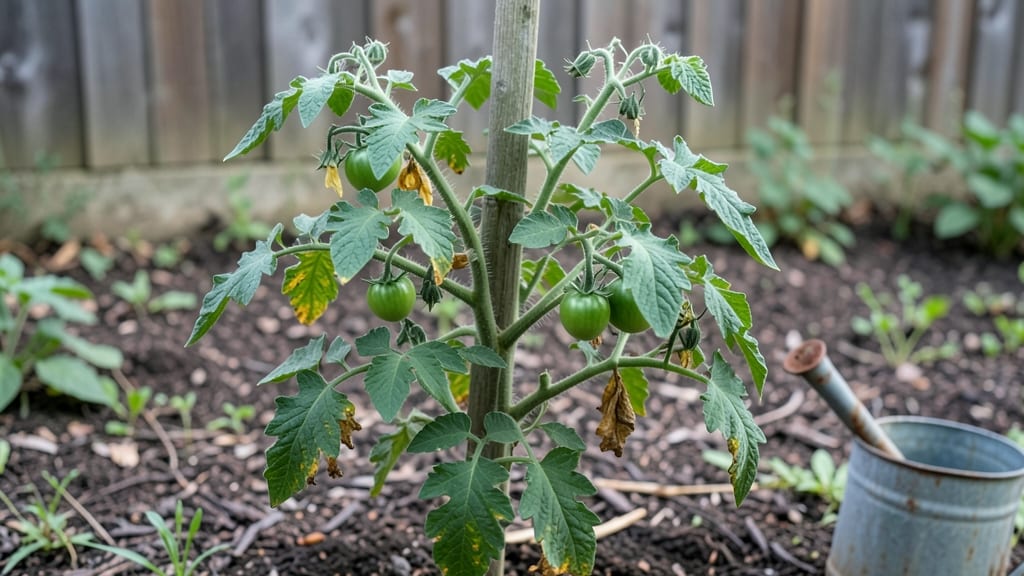
Under-watered tomato plants scream for help with crispy leaves and fruit that cracks like dry clay. 🌱 I’ve watched my own vines go from lush to lifeless when the hose gets forgotten—and the good news? You can bring them back with just a few targeted watering tweaks.
The biggest mistake? Shallow watering that only wets the top inch of soil. Tomatoes need 6-8 inches deep of moisture to keep roots hydrated, especially when fruit is swelling.
Check soil moisture by sticking your finger in—if it’s dry past your first knuckle, it’s time to water deeply. Mulch helps too, locking in moisture and keeping roots cool.
Once you’ve revived them, you’ll see new growth in 3-5 days—deep green leaves, firm stems, and fruit that stays plump. The key is consistency: water in the morning, let soil dry slightly between sessions, and watch your plants bounce back like they’ve never missed a drop.
Works for container tomatoes too—just adjust the volume. Let’s get those roots drinking again, and keep them happy all season.
Root Causes Of Thirsty Tomatoes
Underwatered tomato plants aren’t just a sign of neglect—they’re often the result of a mix of environmental, soil, and human factors working against your lush green friends. 🌱💦 Understanding the real culprits behind wilting leaves and stunted growth helps you fix the problem before it becomes irreversible.
Let’s break down the science behind why your tomatoes might be crying out for water.
Tomatoes thrive on predictability—they hate dry spells followed by sudden soakings. Their deep root systems (which can grow 3–4 feet down in ideal conditions) need steady moisture to transport nutrients and oxygen efficiently.
- The Problem: Shallow, infrequent watering (like once a week) forces roots to stay near the surface, where they dry out quickly.
This creates a "race to the surface"—roots grow upward in search of water, making them weak and brittle. - Science Behind It: When soil dries out, osmotic pressure increases, making it harder for roots to absorb water.
Over time, this leads to oxidative stress in cells, causing wilting even if you later water heavily. - Actionable Fix: Water deeply 1–2 times per week (depending on climate) to encourage roots to grow downward.
Use a moisture meter or the "dry finger test" (stick your finger 2 inches into the soil—if it’s dry, water).
Tomatoes in clay-heavy, compacted, or poorly amended soil struggle to retain moisture or release it efficiently. Water either ponds on the surface (leading to root rot) or drains too fast (leaving roots parched).
- The Problem: - Clay soil holds water but suffocates roots by blocking oxygen. - Sandy soil drains too quickly, offering no moisture reserve. - Compacted soil (from foot traffic or machinery) crushes root hairs, reducing their ability to absorb water. - Science Behind It: Roots rely on capillary action—tiny water pathways in soil—to deliver moisture.
Compacted soil disrupts these pathways, while sandy soil lacks the hydrophilic (water-attracting) particles needed to hold onto water. - Actionable Fix: - Amend clay soil with compost, perlite, or coconut coir to improve aeration. - Add organic matter (like peat moss or aged manure) to sandy soil to boost water retention. - Aerate compacted soil with a garden fork or mulch heavily (2–3 inches of straw or wood chips) to slow evaporation.
Tomatoes transpire (release water vapor) at astronomical rates when temperatures rise above 85°F (29°C) or when drought winds strip moisture from leaves.
- The Problem:
- High temperatures increase evapotranspiration—water leaves leaves faster than roots can replenish it.
- Wind acts like a giant hairdryer, accelerating moisture loss.
- Reflective surfaces (like concrete or pavement) can bake soil, turning it into a desert.
- Science Behind It: Tomatoes close stomata (pores on leaves) to conserve water, but this stops photosynthesis, leading to chlorosis (yellowing leaves) and fruit drop.
- Actionable Fix:
- Water in the early morning or late evening to reduce evaporation.
- Use shade cloth (30–50% coverage) during peak heat.
- Plant near windbreaks (like tall grasses or fences) to reduce desiccation.
- Mulch heavily to keep soil 5–6°F cooler than ambient air.
While fertilizers feed plants, too much salt or nitrogen can disrupt water absorption by altering soil chemistry.
- The Problem:
- High salt levels (from synthetic fertilizers or tap water) create osmotic pressure, making it harder for roots to pull in water.
- Excess nitrogen promotes leafy growth over roots, so plants look lush but can’t support their own water needs.
- Science Behind It: Salts compete with water molecules for root uptake, leading to physiological drought—even if soil looks moist.
- Actionable Fix:
- Flush soil with rainwater or distilled water to reduce salt buildup.
- Switch to organic fertilizers (like compost tea or worm castings) for slow-release nutrients.
- Do a soil test to check EC (electrical conductivity)—ideal levels for tomatoes are 1.0–2.5 dS/m.
Young tomato plants (especially transplants) have underdeveloped roots and can’t access deep water sources right away.
- The Problem: - Seedlings have fragile root hairs that dry out in just 2–3 days without consistent moisture. - Transplant shock (from repotting or moving) temporarily stunts root growth, making plants vulnerable to drought. - Science Behind It: Roots need 7–10 days to adjust after transplanting.
During this time, auxin hormones (which regulate growth) are disrupted, slowing water uptake. - Actionable Fix: - Water seedlings daily until they establish (about 2 weeks). - Use root stimulants (like mycorrhizal fungi or seaweed extract) to speed up recovery. - Avoid transplanting in extreme heat—opt for cool, cloudy days.
Tomatoes in pots or raised beds dry out 2–3 times faster than in-ground plants because:
- Limited soil volume = less moisture reserve.
- More surface area = faster evaporation.
- No natural mulch from surrounding soil.
- The Problem:
- A 5-gallon pot may only hold 1–2 gallons of water—enough for 1–2 days in hot weather.
- Black containers absorb heat, baking roots even if water is present.
- Science Behind It: Container soil heats up 10–15°F hotter than ground soil, increasing transpiration rates by 30–50%.
- Actionable Fix:
- Upgrade to large containers (minimum 5 gallons per plant, 7+ for indeterminate varieties).
- Use self-watering pots or drip irrigation for consistency.
- Paint containers white to reflect heat.
- Mulch with hydroponic mats or wet burlap to retain moisture.
Hard water (high in calcium, magnesium, and chlorine) can clog soil pores and burn root tips, reducing water absorption.
- The Problem:
- Chlorine disrupts beneficial microbes that help roots absorb water.
- Excess minerals form a crust around roots, suffocating them.
- Science Behind It: Calcium carbonate (from hard water) precipitates in soil, reducing hydraulic conductivity (water’s ability to move through soil).
- Actionable Fix:
- Collect rainwater or use a water filter (like a berkey filter).
- Let tap water sit for 24 hours before using to allow chlorine to off-gas.
- Add Epsom salt (magnesium sulfate) occasionally to balance minerals.
Before blaming underwatering, check for other signs:
- Droopy leaves that perk up after watering = underwatered.
- Yellow lower leaves = overwatered or nutrient deficiency.
- Crispy, brown edges = low humidity or salt burn.
Act fast—tomatoes can recover from short-term drought, but prolonged stress leads to blossom drop, cracked fruit, and even death. 🚨
Revive Your Thirsty Tomatoes Now
If your tomato plants are looking wilted, crispy, or just plain miserable, it’s time to roll up your sleeves and give them the deep drink they desperately need. The good news?
With the right approach, you can bring them back to life—and even prevent future watering disasters. Here’s how to diagnose the issue and take action, step by step.
If your plants are suffering from superficial watering (light sprinkles that never reach the roots), they’ll develop shallow root systems that can’t hold moisture. This leads to wilting, even if the soil looks damp on top.
🔥 Deep Watering Technique
- 👨🍳 Step 1: Water Slowly and Deeply Use a soaker hose or a drip irrigation system to deliver water directly to the root zone.
Avoid overhead sprinklers—they waste water and encourage disease. - Pro Tip: 💡 Water in the early morning (before 10 AM) to reduce evaporation and fungal risks.
- ⏰ Step 2: Let the Soil Soak for 20-30 Minutes Dig your finger 2-3 inches deep into the soil. If it’s dry at this depth, keep watering until moisture reaches 6-8 inches down. A well-watered plant should feel damp but not soggy.
- 🌱 Step 3: Mulch to Lock in Moisture Apply 2-3 inches of organic mulch (straw, shredded leaves, or wood chips) around the base of the plant.
This slows evaporation and keeps roots cool. - Pro Tip: ✨ Avoid piling mulch against the stem—keep it 2 inches away to prevent rot.
When temperatures soar, tomato plants transpire (sweat) rapidly, and shallow watering can’t keep up. This causes leaves to curl, yellow, or drop—even if the soil looks moist.
🍳 Emergency Hydration Boost
- 💧 Step 1: Water at the Base, Not the Leaves Use a watering wand or drip line to target the root zone. Wet foliage in hot sun = sunburn risk for your plants.
- 🌡️ Step 2: Increase Frequency in Heatwaves In 90°F+ weather, water every 1-2 days (morning only). Check soil moisture with your finger—if the top 1 inch is dry, it’s time to water again.
- 🔥 Step 3: Use Shade Cloth (Temporarily) If possible, drape 30-50% shade cloth over plants for a few hours during peak sun (11 AM–3 PM). This reduces water loss while you recover them.
If you’ve been overwatering to "fix" underwatering, you might’ve caused root rot—a silent killer that turns roots mushy and black. Look for yellowing leaves, wilting despite wet soil, or a foul smell at the base.
🔪 Salvage & Reset Roots
- 🌱 Step 1: Stop Watering Immediately Let the soil dry out completely for 24-48 hours to prevent further rot.
- 🔪 Step 2: Prune Damaged Roots (If Severe) Gently dig around the plant and trim any black, mushy roots with sterilized scissors. Replant in fresh, well-draining soil (mix in perlite or sand).
- 💧 Step 3: Adjust Watering Forever
- Water only when the top 1-2 inches of soil are dry.
- Use a moisture meter or the finger test to avoid guesswork.
- Pro Tip: 🌡️ Avoid watering at night—wet soil overnight = fungal party.
Once your tomatoes are back in the game, keep them thriving with these low-effort habits:
- 📊 Invest in a Rain Gauge Track rainfall to avoid over/under-watering. Aim for 1-1.5 inches per week (including rain).
- 💪 Upgrade to Drip Irrigation A DIY drip system (as little as $20) delivers water directly to roots, saving time and water.
- 🥗 Choose Drought-Tolerant Varieties If you struggle with watering consistency, try ‘Solar Fire,’ ‘Heatmaster,’ or ‘Mountain Merit’—they handle heat and dry spells better.
- 🎯 Monitor Soil Type
- Clay soil? Amend with compost to improve drainage.
- Sandy soil? Mix in coconut coir to retain moisture longer.
With these fixes, your tomato plants will bounce back stronger—and you’ll never have to play guess-the-water-needs again. 🍅💦 Now go hydrate those roots like they’re your favorite houseplant!
Frequently asked questions
How often should I water tomato plants during extreme heat?
In temperatures above 90°F (32°C), water your tomato plants every 1-2 days in the early morning. Focus on deep watering—aim for 6-8 inches of moisture penetration. Use mulch to retain moisture and reduce evaporation.
Why are my tomato leaves wilting even after I water them?
Wilting after watering could signal root rot from overwatering or shallow roots from inconsistent watering. Check soil moisture 2-3 inches deep—if it's soggy, stop watering for 24-48 hours to let roots recover. For shallow roots, switch to deep, infrequent watering.
Can I use tap water with high chlorine for my tomato plants?
High chlorine levels can damage roots and disrupt beneficial microbes. Let tap water sit 24 hours before using to allow chlorine to off-gas, or collect rainwater instead. If your water is very hard, consider using a water filter or adding Epsom salt occasionally to balance minerals.
How do I know if my tomato plants need water or fertilizer?
Check the soil first: Dry topsoil means water, while yellow lower leaves or slow growth suggests a nutrient deficiency. For underwatering, focus on deep watering. For fertilizer needs, use a balanced organic fertilizer (like compost tea) and test soil periodically.
What’s the best way to revive severely underwatered tomato plants?
Give them a deep soak for 20-30 minutes using a soaker hose, then mulch heavily. Prune any severely damaged leaves to redirect energy to root recovery. Monitor soil moisture closely—recovery may take 3-5 days for new growth to appear. Avoid overhead watering to prevent disease.