
Pruning
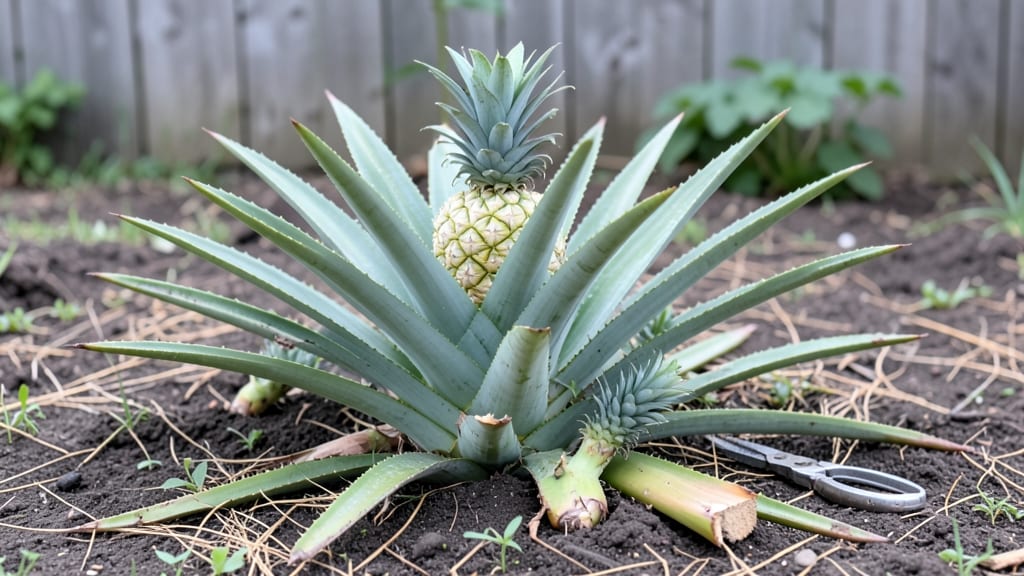
Trimming your pineapple plant isn't just about keeping it tidy—it's the secret to year-round fruit production and a bushier, healthier plant. I've learned that skipping these trims means fewer harvests and leggy growth that looks sad rather than thriving.
The right cuts at the right times turn a single pineapple into a fruiting machine that keeps giving.
You only need three clean cuts a year: one after fruiting, one in early spring, and one in midsummer. Grab sharp pruning shears or a knife, and focus on removing only the bottom third of dry leaves—never more than that.
The plant stores energy in its core, and aggressive cutting shocks it into dormancy. I've seen people overdo it and lose their plant entirely, so start slow and watch how it responds.
After each trim, you'll notice new shoots sprouting from the base within 2-4 weeks. These are your future fruiting stems, and they'll grow faster when you feed the plant with diluted fertilizer every 6-8 weeks.
The first harvest might take 18-24 months, but once you establish this rhythm, you'll have pineapples ready to pick almost every season. The smell of that first ripe fruit? Pure reward for a little maintenance.
Here's the kicker: those trimmings aren't waste. The top 2 inches of healthy leaves from each cut can root into new plants—just dip in water, let them dry for a day, and plant in fresh soil.
My kitchen counter now has three pineapple pups growing from last year's prunings. It's how you turn one plant into an army of fruiting machines without spending a dime.
📚 In This Guide
- What you need
- Instructions
- Tips and common mistakes
- Wrapping up and next steps
What you need
- ● Ready to keep your pineapple plant thriving and productive? Here’s everything you’ll need to trim it like a pro—whether you’re a seasoned gardener or just starting out! 🌱✂️
- ● Pro tip: 💡 If your pineapple plant is in a pot, ensure it has drainage holes—trimmed plants need room to grow roots!
Instructions for trimming a pineapple plant to maximize fruit production
Here’s how I trim my pineapple plants to keep them healthy and productive year after year.
Remove Dead or Yellow Leaves at the Base
Start by inspecting the plant’s base for any leaves that have turned brown, yellowed, or feel brittle to the touch. These are dead leaves that no longer contribute to the plant’s energy. Use clean, sharp pruning shears to snip them off at the base, leaving no stubs. I always work from the bottom up, as lower leaves are more likely to die off due to moisture buildup.
This step is critical because dead leaves can harbor pests or diseases. If you leave them, they’ll compete with healthy leaves for nutrients, weakening the plant’s ability to produce fruit. After trimming, wipe down your shears with rubbing alcohol to prevent cross-contamination between cuts.
Trim Overly Long or Leggy Leaves for Balance
Pineapple plants sometimes grow leaves that stretch too tall or become leggy, especially if they’re not getting enough light. To correct this, trim back any leaves that are significantly longer than the others by about one-third of their length. Focus on the outer leaves first, as they’re less critical for photosynthesis than the inner ones.
Leggy growth often signals a need for more sunlight. If you notice this happening, move your plant closer to a bright window or supplement with a grow light. Avoid cutting into the center of the plant, as this can damage the growing point where the fruit develops. After trimming, the plant will redirect energy to shorter, sturdier leaves.
Prune Off the Old Fruit Stalk After Harvest
Once your pineapple has ripened and been harvested, the stalk will turn brown and dry out. Use your pruning shears to cut the stalk off at the base, just above where it meets the plant. This encourages the plant to produce a new fruit stalk in about 6-12 months, depending on growing conditions.
Don’t rush to remove the stalk—wait until it’s completely brown and crispy, as this ensures the plant has fully redirected its energy. If you cut too early, the plant may struggle to recover and produce another fruit. After removing the old stalk, give the plant a light fertilizer to support new growth.
Encourage Side Offsets for Multiple Harvests
Pineapple plants often produce small offsets, or "pups," around the base of the main plant. These are baby pineapple plants that can be separated and grown into their own fruit-bearing plants. Once the offsets reach about 4-6 inches tall and have developed their own roots, carefully dig them out with a small trowel and replant them in separate pots or the ground.
This step is how you get multiple harvests from a single plant. The main plant will continue producing fruit, while the offsets will mature into new producers. Water the offsets lightly after transplanting and keep them in bright, indirect light until they’re established. Over time, you’ll have a thriving pineapple garden with year-round fruit potential.
Seasonal Maintenance for Year-Round Health
In the spring and fall, give your pineapple plant a final trim to remove any remaining dead or damaged leaves. This keeps the plant tidy and ensures it’s ready for the next growing season. Pineapples thrive in warm conditions, so if you’re in a cooler climate, consider moving the plant indoors during winter or providing extra warmth with a heat mat.
Throughout the year, monitor your plant for signs of stress, such as yellowing leaves or slow growth. These can indicate issues like overwatering, underwatering, or nutrient deficiencies. Adjust your care routine as needed, and your pineapple plant will reward you with consistent, delicious fruit for years to come.
Tips & tricks for trimming a pineapple plant
These simple yet powerful strategies will help you keep your pineapple plant thriving and productive for years to come.
The Right Tools Make All the Difference: Invest in a pair of clean, sharp pruning shears specifically for your pineapple plant. Dull blades can crush leaves and create jagged cuts that invite disease. I sterilize my shears with rubbing alcohol between cuts—this prevents cross-contamination that could spread bacterial or fungal infections. For larger stems, a small pruning saw works better than shears to avoid tearing the plant tissue.
Timing is Everything for New Growth: In Step 4, when removing offsets that have reached 4-6 inches tall, pay close attention to their root development. Gently tug on the offset—if it comes out easily with a small root ball, it's ready for replanting. If roots aren't well-developed, wait another week. I've found that offsets with at least 2-3 inches of roots establish themselves much faster and produce fruit sooner.
Don't Overlook the Fertilizer Step: After removing the old fruit stalk in Step 3, that light fertilizer application is more important than you might think. I recommend using a balanced, water-soluble fertilizer (10-10-10 ratio) at half-strength. This gives your plant the nutrients it needs to recover and begin forming a new fruit stalk. Apply it to the soil around the base, keeping it about 2 inches away from the plant's center to avoid burning the roots.
Seasonal Care Adjustments: In cooler climates, pineapple plants need special attention during winter. If you're moving your plant indoors, place it near a south-facing window where it can get at least 6-8 hours of sunlight daily. If you're keeping it outside, use a heat mat set to 70-75°F to maintain root warmth. I've seen plants that struggled in winter thrive again after just a few weeks of proper warmth and light.
Pro Tips for Trimming Pineapple Plant
- These simple yet powerful strategies will help you keep your pineapple plant thriving and productive for years to come.
- The Right Tools Make All the Difference: Invest in a pair of clean, sharp pruning shears specifically for your pineapple plant.
- Timing is Everything for New Growth: In Step 4, when removing offsets that have reached 4-6 inches tall, pay close attention to their root development.
Frequently asked questions
Got questions about trimming your pineapple plant? You’re not alone!
Here are some of the most common concerns—and their simple, actionable answers—to keep your plant thriving and productive year-round.
When is the best time to trim a pineapple plant?
Trim your pineapple plant after it produces its first fruit. This usually happens 12–18 months after planting. Focus on removing the old fruit stalk (the "crown") and any dead or yellowing leaves to redirect energy to new growth. Avoid trimming during extreme heat or cold—stick to mild spring or fall weather for optimal recovery.
How do I know which leaves to cut?
Only remove brown, yellow, or severely damaged leaves—never trim healthy green ones! Use clean, sharp pruners to snip at the base of the leaf where it meets the stem. Leave at least 2–3 inches of healthy leaf tissue above the soil to protect the plant from pests and disease. Think of it like a haircut: you’re shaping, not shaving!
Can I propagate the trimmed-off parts?
The "pups" (baby plants) that grow at the base of your pineapple or the crown (top) can be replanted. Let the cuttings dry for 1–2 days to form a callous, then plant them in well-draining soil. Keep them lightly moist and in bright, indirect light until roots develop (usually 2–4 weeks). It’s like cloning your plant—just add patience!
What if my pineapple plant looks sad after trimming?
Don’t panic! A little post-trim stress is normal. If your plant wilts or droops, it’s likely conserving energy. Water lightly (but not excessively) and avoid fertilizing for 4–6 weeks. Yellowing leaves? That’s often just old growth making way for new. If you see black spots, mold, or soft rot, trim those areas immediately and check for overwatering or fungal issues.
Do I need to trim my pineapple plant every year?
Not necessarily! Focus on functional trims: remove dead leaves, pups, or fruit stalks as needed. Healthy plants may only need light maintenance once or twice a year. The key is to trim when you see problems (like overcrowding or disease) rather than on a rigid schedule. Think of it as "maintenance mode" for your tropical friend!
Wrapping up and next steps
Trimming your pineapple plant isn’t just about aesthetics—it’s the secret to bountiful, year-round fruit! 🌱 With just three strategic trims, you’ll encourage healthier growth, bigger harvests, and even more plants to propagate.
Whether you’re a seasoned gardener or a curious beginner, these simple steps make it easy to turn your pineapple into a thriving, fruiting powerhouse.
Ready to see your efforts pay off? Start with your first trim today—your future pineapple harvest (and maybe even a few extra plants to share!) will thank you. Happy pruning! 🍍✨