Pruning
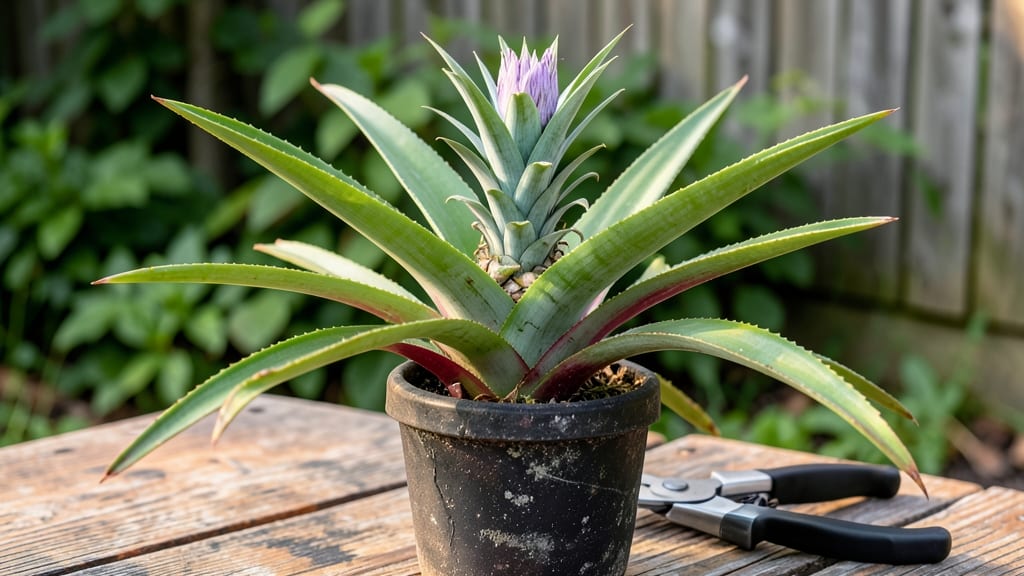
Pruning pineapple plants turns a single crown into a year-round fruit factory—and the secret lies in just three smart cuts. 🌱 I’ve watched my own plants go from scraggly to producing sweet, golden fruit twice a year simply by trimming at the right times.
The key isn’t aggressive pruning but strategic cuts that redirect energy where it matters most.
You’ll need sharp pruning shears, rubbing alcohol to sterilize cuts, and a clear day when temps are above 60°F. Focus on three trims: removing dead leaves after fruiting, harvesting suckers for propagation, and thinning crowded foliage to improve airflow.
Each cut takes less than 10 minutes but extends fruit production for years.
The payoff? A single plant can yield two fruit cycles annually instead of one, with each harvest sweeter and larger. You’ll also get free baby plants from those suckers—no cost, just more pineapples to share. The first trim after flowering is critical; skip it, and you’ll lose next season’s fruit.
Works for both container-grown plants and in-ground tropical gardens. Here’s how to do it without killing your plant—and how to turn every cutting into a new opportunity. Let’s get those shears ready!
📚 In This Guide
- What you need
- Instructions
- Tips and common mistakes
- Wrapping up and next steps
What you need
- ● Sharp pruning shears or a clean, sterilized knife – Choose a pair with bypass blades (4-6 inches long) for clean cuts. Sterilize with rubbing alcohol to prevent disease.
- ○ Gloves (optional but recommended) – Wear heavy-duty gardening gloves to protect your hands from thorns and sap.
- ● Disinfectant (70% isopropyl alcohol or bleach solution) – 1 part bleach to 9 parts water for sterilizing tools between cuts.
- ○ Pruning sealant (optional) – A natural wax-based sealant to protect cuts and reduce moisture loss.
- ● Compost or mulch – For disposing of pruned leaves or using them as nutrient-rich mulch.
- ● Watering can or hose with a gentle spray nozzle – To hydrate plants before and after pruning.
- ○ Plastic bags or containers (optional) – For collecting and repurposing healthy pineapple suckers.
- ● Hand lens or magnifying glass – For closely inspecting plant health and identifying pests.
- ● Pruning saw (for large, woody stalks) – If your pineapple plant has thick, mature growth.
- ● Plant food or fertilizer (balanced 10-10-10 or organic) – To replenish nutrients after pruning.
- ● Notebook and pen – To track pruning dates, plant responses, and growth progress.
Instructions for pruning pineapple plants to maximize fruit production
Mastering these three key cuts will transform your pineapple plant into a year-round fruiting machine.
🌱 Step 1: Remove Lower Leaves After Initial Growth
Once your pineapple plant reaches 18-24 inches tall and develops 8-10 mature leaves, it's time for the first strategic trim. Using a sterilized, sharp knife, cut away the bottom 3-4 leaves at their base. These lower leaves no longer contribute to photosynthesis and instead divert energy from fruit production.
Here's the thing—pineapples are tropical plants, and they direct energy upward. By removing these lower leaves, you're forcing the plant to focus its resources on developing a strong crown and eventually, a fruit. Make clean cuts at the base, leaving no stubs. This also improves air circulation, which prevents fungal issues that can rot the plant from the bottom up.
✂️ Step 2: Trim Suckers for Directed Energy
After your pineapple produces fruit and begins sending out suckers (baby plants) from the base, you'll need to make a choice. Remove all but one or two of the strongest suckers using clean pruning shears. These suckers compete with the parent plant for nutrients, and allowing too many will weaken both.
I know it seems counterintuitive to remove potential new plants, but this is where the magic happens. The remaining suckers will grow into robust offsets that you can eventually transplant. If you leave them all, your main plant will struggle, and the fruit quality will suffer. Time this cut 4-6 weeks after harvest, when new suckers are 2-3 inches tall—this gives them enough energy to establish roots before you separate them.
☀️ Step 3: Deadhead Spent Fruit and Encourage New Growth
Once your pineapple fruit turns brown and begins to soften, it's time for the final pruning of the season. Cut the fruit stem 1 inch above the plant's crown using a sterilized knife. This removes the spent flower and signals the plant to redirect its energy into producing new leaves and potentially another flower stalk.
Don't skip this step—leaving the dead fruit attached can attract pests like fruit flies and encourage rot. After removing the fruit, inspect the plant for any yellow or damaged leaves and trim those away as well. This ensures the plant isn't wasting energy maintaining unhealthy foliage. Within 2-3 months, you'll often see new growth emerging from the center, indicating the plant is preparing for another flowering cycle.
🪴 Step 4: Maintain Year-Round with Seasonal Adjustments
Pineapples thrive on consistency, so adjust your pruning schedule based on the plant's growth cycle rather than calendar seasons. In spring and summer, focus on removing any leaves that are yellowing or damaged, as well as any suckers that aren't part of your planned harvest. In fall and winter, reduce pruning to only essential cuts—these plants need less maintenance when growth naturally slows.
Real talk: Your pineapple plant will thank you for this disciplined approach. By keeping it focused and healthy, you'll see 2-3 harvests per year instead of just one. The key is balance—prune enough to encourage fruit production, but not so much that you stress the plant. Watch for new growth after each trim; that's your signal you're doing it right.
Tips & tricks for pruning pineapple plants
These strategic cuts aren't just about maintenance—they're the secret to turning one harvest into three. Here's what nobody tells you about maximizing your pineapple's potential.
Timing Secret: In Step 1, wait until your plant reaches 20-24 inches before pruning those bottom leaves. This ensures the plant has enough established energy reserves to handle the stress of the cut. I've seen beginners trim too early when plants are still 12 inches tall, and they end up stunting growth instead of encouraging it. The plant needs that initial height to develop a strong root system first.
Tool Technique: Sterilize your pruning tools with rubbing alcohol between cuts—this prevents cross-contamination that can spread fungal diseases. I use a small bottle of 70% isopropyl alcohol and wipe down blades after each plant. For Step 2 when trimming suckers, make cuts at a 45-degree angle about 1/4 inch above the base of each sucker. This angle prevents water from pooling and causing rot.
Seasonal Strategy: The spring and summer maintenance mentioned in Step 4 deserves special attention. During these growing seasons, remove any leaves that are yellowing or brown—these are energy vampires. But here's the key: only trim leaves that are more than 25% damaged. Healthy leaves contribute to photosynthesis, so preserve as much foliage as possible while still maintaining good air circulation.
Recovery Watch: After Step 3 when you deadhead spent fruit, monitor your plant closely for the next 2-3 weeks. You should see new growth emerging from the center within that timeframe. If you don't notice any new shoots after 4 weeks, your plant might be stressed. In this case, reduce future pruning and focus on providing optimal growing conditions—bright, indirect light and consistent moisture.
Pro Tips for Pruning Pineapple Plants
- These strategic cuts aren't just about maintenance—they're the secret to turning one harvest into three.
- Timing Secret: In Step 1, wait until your plant reaches 20-24 inches before pruning those bottom leaves.
- Tool Technique: Sterilize your pruning tools with rubbing alcohol between cuts—this prevents cross-contamination that can spread fungal diseases.
Frequently asked questions
Got questions about pruning pineapple plants? You’re not alone!
Here are some of the most common concerns—plus clear, actionable answers to keep your plants thriving and fruiting year-round.
When is the best time to prune pineapple plants?
Prune pineapple plants after they’ve produced fruit, typically 2–4 weeks post-harvest. This gives the plant energy to recover and regrow. Avoid pruning during extreme heat or cold—stick to mild, dry weather for faster healing. Early fall or late spring are ideal for most climates.
How much of the pineapple plant should I cut off?
Remove about 1/3 of the plant’s height (or up to 1/2 if overgrown) by cutting just above a leaf node. Never trim more than 50%—this stresses the plant and reduces future fruit production. Use clean, sharp shears to avoid damaging the crown.
Can I prune a pineapple plant that’s not fruiting yet?
Yes! Light pruning (removing dead or yellowing leaves) is safe at any time. However, avoid heavy trimming before flowering—this can delay or prevent fruiting. Focus on shaping and removing only damaged foliage until the plant is mature (18+ months old).
What should I do with the cut-off leaves?
Don’t toss them! Use the trimmed leaves for propagation—place them in water or soil to grow new plants. The base of the cut (where it attached to the mother plant) is rich in nutrients, so compost the rest for your garden.
My pineapple plant turned yellow after pruning—is it dying?
Yellowing is normal if only a few leaves change color, but widespread yellowing or wilting means over-pruning or stress. Boost recovery by:
- Reducing water slightly (let soil dry between waterings).
- Fertilizing with a balanced, low-nitrogen mix (e.g., 5-5-5).
- Avoiding pruning for 2–3 months to let the plant rebound.
Pro Tip: Prune in stages!
For large or mature plants, prune in 2–3 sessions spaced 2–3 weeks apart. This reduces shock and gives the plant time to adjust. Think of it like a haircut—better to go slow and steady!
Wrapping up and next steps
Pruning your pineapple plants isn’t just a task—it’s the secret to unlocking year-round harvests and healthier growth! By mastering the three key trims (removing dead leaves, suckers, and spent fruit stalks), you’ll encourage stronger plants, bigger yields, and even repurposed cuttings for new gardens. 🌱✂️
Ready to turn your green thumb into a pineapple-growing powerhouse? Start by applying these techniques this season, then check out our guide on propagating suckers to expand your tropical bounty—your future harvest (and neighbors!) will thank you.