
Diseases
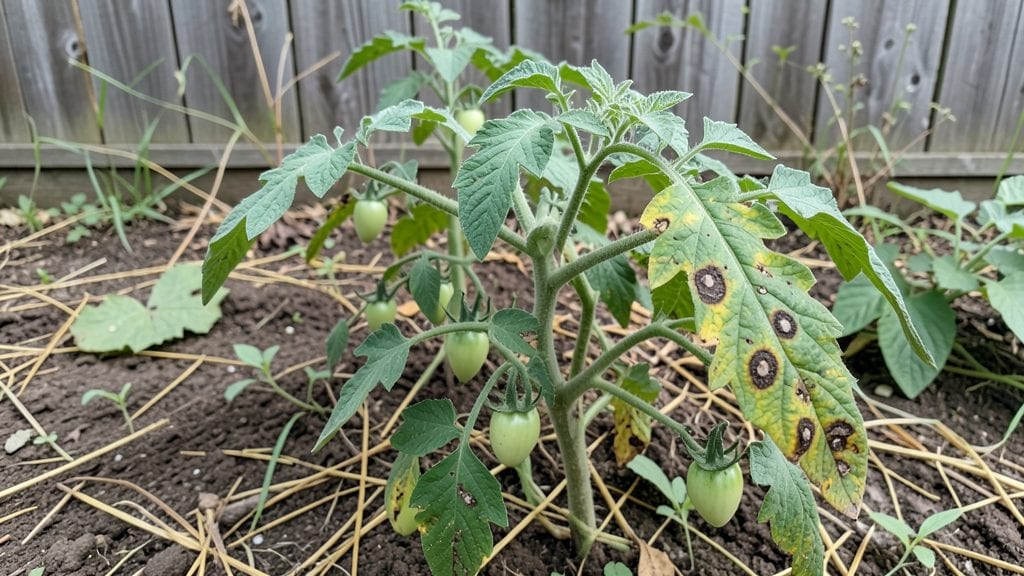
The identification of tomato plant diseases isn’t just about spotting brown spots—it’s about saving your harvest before the fungus or bacteria win. 🌱 I’ve lost entire plants to early blight because I ignored the concentric rings on the leaves, and I’ll never make that mistake again.
The key is catching symptoms early: yellowing leaves, weird stains, or growth that suddenly stops. Most diseases start with subtle clues, and knowing what to watch for means you can act before your plants are beyond help.
This guide breaks down the most common tomato diseases—early blight, late blight, powdery mildew, and bacterial spots—using the visual cues you’ll actually see in your garden. No confusing botanical terms, just clear descriptions of what the spots, stains, and growth patterns look like up close.
For example, early blight shows up as brown, bullseye-shaped spots on the lower leaves, while late blight starts with greasy-looking dark patches that spread fast. The sooner you recognize these, the sooner you can isolate infected plants and stop the spread.
You’ll walk away with a simple, foolproof system for diagnosing problems and a set of organic treatments that actually work—copper sprays for bacterial spots, neem oil for powdery mildew, and proper spacing to keep air flowing.
The goal isn’t just to treat the disease but to create conditions where your tomatoes stay healthy in the first place. And if things get really bad? I’ll tell you when to call in a pro instead of wasting time on lost causes.
Whether you’re a first-time gardener or a seasoned grower who’s seen it all, this guide keeps your plants thriving from seedling to harvest. The right prevention now means fewer headaches—and more tomatoes—later. Let’s get those plants back in fighting shape.
Root Causes Of Tomato Ailments
Tomato plants are resilient, but when diseases strike, they’re often the result of a mix of environmental stress, poor growing conditions, or microbial invaders. Understanding why these problems occur is the first step to prevention—and saving your harvest.
Below, we break down the key triggers behind common tomato plant diseases, from fungal infections to bacterial blights, so you can address the real culprits.
Fungal diseases like early blight (Alternaria solani) and late blight (Phytophthora infestans) thrive in damp, stagnant environments. Here’s why:
- Excess Moisture: Tomato leaves retain water for too long (especially overnight), creating the perfect breeding ground for spores. Fungal pathogens release enzymes that break down plant cell walls, leading to dark, sunken lesions. - Stagnant Air: Crowded plants or dense foliage trap humidity.
Without airflow, spores linger near leaves, increasing infection rates. - Rainfall & Irrigation: Overhead watering (especially in the evening) or heavy rainfall washes spores onto leaves, while poor drainage keeps soil soggy, weakening roots.
Actionable Fix: Space plants 18–24 inches apart, prune lower leaves for airflow, and water at the base early in the day.
Tomatoes are sensitive to swings in weather. Heat stress (above 90°F) weakens plants, making them vulnerable to diseases like powdery mildew (Erysiphe necator), while cool, wet springs (50–70°F) encourage bacterial spot (Xanthomonas perforans).
- High Heat: Prolonged heat causes sunscald (white/yellow patches) and blossom-end rot (calcium deficiency from uneven water uptake). - Cool, Damp Weather: Ideal for bacterial and fungal spores to germinate.
For example, late blight spreads rapidly in temps between 60–77°F with high humidity. - Frost Damage: Weakens cell membranes, allowing secondary infections to take hold.
Actionable Fix: Use shade cloth in peak summer, mulch to regulate soil temp, and avoid planting in low-lying areas prone to cold air pooling.
Healthy soil = healthy plants. But imbalances or contaminated soil pave the way for diseases like verticillium wilt (Verticillium dahliae) or fusarium wilt (Fusarium oxysporum).
- Poor Drainage: Waterlogged soil starves roots of oxygen, stressing plants and inviting fungal invaders. Fusarium thrives in compacted, clay-heavy soils.
- Nutrient Deficiencies: Lack of calcium (blossom-end rot), magnesium (yellowing leaves), or potassium (weakened cell walls) make plants more susceptible to infections.
- Past Infestations: Reusing contaminated soil or garden beds without rotation can reintroduce pathogens like Phytophthora or Alternaria.
Actionable Fix: Test soil pH (aim for 6.0–6.8), amend with compost, and rotate crops annually to break disease cycles.
Some tomato diseases hitchhike on insects.
For example: - Aphids spread tobacco mosaic virus (TMV) by feeding on infected plants, then transmitting it to healthy ones. - Whiteflies transmit gemini viruses, causing leaf curling and stunted growth. - Nematodes in soil weaken roots, making plants more prone to fungal infections.
Actionable Fix: Use neem oil, row covers, or beneficial insects (like ladybugs) to control pests before they spread disease.
Wounds from harsh pruning, wind, or hail create entry points for bacteria and fungi. Even transplant shock (from sudden temperature changes) can lower defenses.
- Mechanical Injury: Broken stems or leaves invite bacterial speck (Pseudomonas syringae) or anthracnose (Colletotrichum).
- Over-Fertilization: Excess nitrogen promotes lush, weak growth prone to powdery mildew.
- Improper Transplanting: Burying stems too deep or disturbing roots stresses plants, making them vulnerable.
Actionable Fix: Prune with sterilized tools, avoid overhead watering post-harvest, and harden off seedlings gradually.
Unsterilized pruners, trellises, or even infected seeds can introduce pathogens to your garden. For instance:
- Early blight spores can survive on old plant debris or tools for years.
- Seed-borne viruses (like TMV) may lie dormant until conditions are right.
Actionable Fix: Clean tools with 70% isopropyl alcohol, rotate garden beds, and buy seeds from reputable suppliers.
Most tomato diseases are opportunistic—they exploit weak spots caused by poor growing practices. By addressing moisture, airflow, soil health, and stress, you can drastically reduce outbreaks. Next, we’ll dive into how to spot these diseases early so you can act fast!
Fixing Tomato Plant Problems Step-by-Step
Now that you’ve identified what’s ailing your tomato plants, it’s time to act! Early intervention is key—whether you’re dealing with fungal infections, bacterial blights, or pest invasions, these practical, garden-tested solutions will help you restore your plants to peak health.
Below, we map each common issue to its cure, plus prevention tips to keep future harvests blemish-free.
Fungi thrive in damp, warm conditions, so speed is critical—delaying treatment lets spores multiply uncontrollably.
🔥 Early Blight (Brown Spots on Lower Leaves)
Fix It: - Remove infected foliage 🌿✂️: Snip off yellow/brown leaves immediately and dispose of them in the trash (not compost).
Fungi can survive in soil for years! - Apply copper fungicide 🛡️: Spray leaves top and bottom with a copper-based solution (like Bordeaux mixture) every 7–10 days. Copper disrupts fungal cell walls. - Improve airflow 🌬️: Prune crowded branches and space plants 18–24 inches apart.
Use stakes or cages to elevate plants off damp soil. - Water at the base 💧: Avoid overhead watering—wet leaves = fungal buffet. Use drip irrigation or water early in the morning.
Prevent It: ✅ Rotate crops: Don’t plant tomatoes or potatoes in the same spot next year (fungi linger in soil). ✅ Solarize soil (for extreme cases): Cover beds with clear plastic for 4–6 weeks in summer to kill fungal spores.
🍳 Late Blight (Rapid Leaf Spots + Black Streaks) Fix It:
- Quarantine infected plants 🚫🌱: Isolate them far from healthy plants to prevent spore spread.
- Use a fungicide blend 💊: Alternate between chlorothalonil (for contact kill) and a biological fungicide like Serenade (contains Bacillus subtilis).
- Remove all plant debris 🧹: Dig up and destroy infected plants—do not compost.
Burn or bag them tightly. - Adjust watering 🌧️: Water only at the roots, and avoid evening watering (moisture + cool nights = blight paradise).
Prevent It: 💡 Plant resistant varieties: Try ‘Mountain Merit’ or ‘Defiant PhR’—they’re bred to tolerate late blight. 💡 Copper + baking soda spray: Mix 1 tbsp baking soda + 1 tsp dish soap + 1 quart water + 1 tsp copper fungicide. Spray every 10 days as a preventive.
👨🍳 Septoria Leaf Spot (Small Black Specks with Yellow Halos)
Fix It:
- Prune aggressively ⚔️: Cut off all spotted leaves—this disease spreads via water splashes.
- Fungicide rotation 🔄: Switch between myclobutanil (for systemic action) and potassium bicarbonate (organic option) every 7 days.
- Disinfect tools 🧼: Wipe pruners with rubbing alcohol between cuts to avoid cross-contamination.
Prevent It: ✨ Mulch heavily: Use straw or grass clippings to keep soil moist but leaves dry. ✨ Avoid overhead sprinklers: Use soaker hoses instead.
Bacteria spread via water, tools, and even your hands. Sterilization is your best weapon.
🔪 Bacterial Spot (Tiny Watery Lesions) Fix It:
- Remove infected leaves 🗑️: Destroy them immediately—bacteria spread faster than fungi.
- Copper soap spray 🧼: Mix copper fungicide + mild soap (like Castile soap) to stick to leaves.
Spray every 5–7 days. - Sanitize everything 🧴: Wash hands, tools, and containers with bleach water (1 part bleach to 9 parts water).
Prevent It: 🌡️ Monitor humidity: Keep it below 60%—bacteria love damp conditions. 🎯 Use drip irrigation: Eliminates water splashes that spread bacteria.
⏰ Bacterial Wilt (Wilting Leaves + Oozing Stems)
Fix It: - Pull infected plants 🚜: There’s no cure—dig them up and destroy them.
Bacteria persist in soil for years. - Rotate crops 🌱: Wait 3–4 years before planting tomatoes, peppers, or eggplants in the same spot. - Solarize soil ☀️: Cover beds with plastic for 6 weeks in summer to kill bacteria.
Prevent It: 🔥 Avoid wounding plants: Rough handling (like rough pruning) invites bacterial entry.
Viruses (like Tomato Mosaic Virus) have no treatment. Your only defense? Stop them before they start.
🚫 How to Prevent Viruses
- Remove weed hosts 🌿: Many viruses live in weeds like nightshade—pull them!
- Control pests 🐜: Aphids and whiteflies spread viruses. Use neem oil or insecticidal soap to keep them off plants.
- Buy certified disease-free seeds/seedlings 🌱: Avoid cheap, unknown sources.
Pests like hornworms or aphids can mimic disease symptoms. Target the culprit directly.
🐛 Hornworms (Chewed Leaves + Green Droppings) Fix It:
- Handpick them 👆: Check leaves daily—squish or drop them in soapy water.
- Introduce predators 🦋: Ladybugs and parasitic wasps love hornworms.
Buy them online or attract them with dill or fennel plants. - Bt spray 💊: Bacillus thuringiensis (Bt) is a natural, organic pesticide safe for humans and pets.
Prevent It: 💡 Plant basil nearby: Hornworms hate basil’s scent—it repels them naturally.
- Test your soil 📊: pH between 6.0–6.8 reduces disease risk.
Amend with lime (for acidic soil) or sulfur (for alkaline). - Plant at the right time ⏰: Avoid late spring/early summer plantings—hot, humid weather fuels fungal growth. - Crop rotation 🔄: Never plant tomatoes, peppers, or potatoes in the same spot two years in a row. - Clean your garden 🧹: Remove all plant debris at season’s end—burn or bag it do not compost.
Final Pro Tip: 🌟 Healthy plants resist disease better! Boost tomato vigor with:
- Balanced fertilizer (10-10-10 or compost tea).
- Mulch (straw or grass clippings) to retain moisture and suppress weeds.
- Morning sunlight (6+ hours daily) to dry leaves quickly.
By following these steps, your tomato plants will bounce back—and next season, you’ll be one step ahead of those pesky pests and pathogens! 🍅💪
Frequently asked questions
How can I tell if my tomato plant has early blight vs. late blight?
Early blight shows brown, concentric "bullseye" spots on lower leaves first, while late blight creates greasy-looking dark patches that spread rapidly to stems and fruit. Early blight progresses slowly, while late blight moves aggressively in cool, wet conditions—often within days.
What's the fastest way to stop bacterial spot from spreading?
Remove all infected leaves immediately and sanitize your hands/tools with bleach water (1:9 ratio). Apply a copper fungicide mix every 5–7 days, and switch to drip irrigation to eliminate water splashes that spread bacteria. Keep humidity below 60% to slow bacterial growth.
Can I still eat tomatoes from plants with powdery mildew?
Yes, but only if the mildew hasn't reached the fruit. Brush off visible powder and wash tomatoes thoroughly before eating. For safety, focus on treating the leaves with neem oil or baking soda spray to prevent further spread to edible parts.
How do I know if my tomato plant's wilting is from disease or just heat stress?
Check for yellowing leaves, dark spots, or oozing stems—these indicate disease. Heat stress wilting happens suddenly in hot weather and recovers overnight. If leaves feel mushy or stems are discolored, it's likely bacterial wilt or fusarium—remove the plant immediately.
What's the best organic treatment for fungal diseases like early blight?
Use a copper fungicide (like Bordeaux mixture) or neem oil for prevention. For active infections, mix 1 tbsp baking soda + 1 tsp dish soap + 1 quart water and spray leaves thoroughly every 10 days. Prune for airflow and water at the base to reduce fungal spores.