
How To
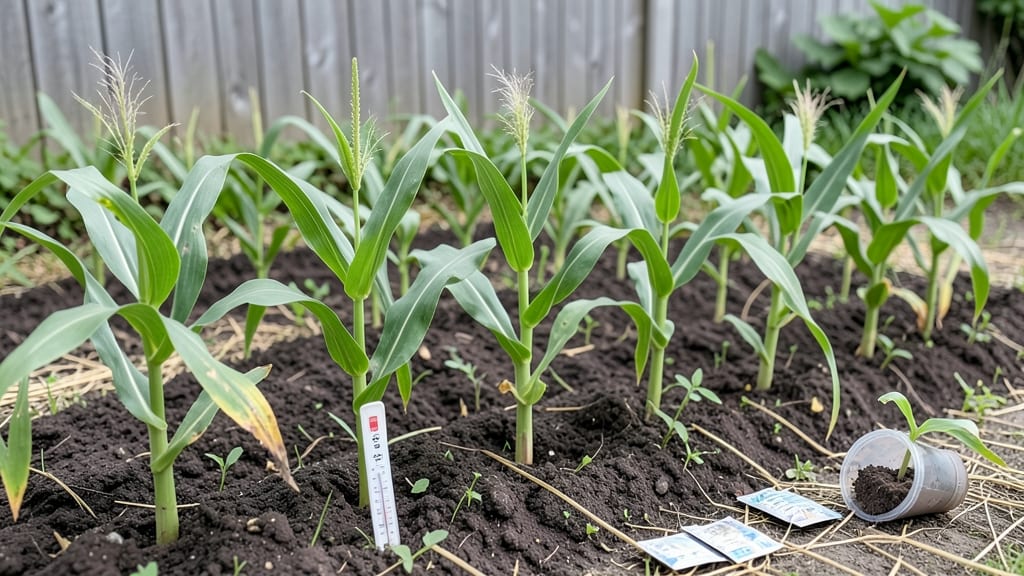
The right soil temperature for planting corn—around 50°F—unlocks those first shoots in just 7-10 days, so you won’t wait weeks for them to appear. I learned the hard way that cool soil makes corn seeds sulk, and even if they sprout, they’ll grow leggy and weak.
The difference between a fast, sturdy stand and a slow, stunted one comes down to that thermometer reading.
Most corn varieties need soil that’s at least 60°F at a depth of 1 inch—that’s where the magic happens for quick germination. Use a simple soil thermometer (they’re cheap and game-changing) to check before planting, especially in cooler zones like 3-5 where frost lingers.
Warmer zones (7-10) can plant earlier, but wait until nighttime temps stay above 55°F to avoid false starts.
You’ll know you’ve got it right when those first pale green tips push through the soil within a week—fast, uniform growth means your corn’s off to a running start. The payoff?
Ears that fill out sooner, resist disease better, and give you a harvest window that’s 2-3 weeks ahead of late-planted corn. Just don’t rush it: planting too early in cold soil wastes seeds and invites rot.
Pro tip: Mix in a thin layer of black plastic mulch a few days before planting to warm the soil faster—it’s like giving your seeds a cozy blanket.
And if your soil’s still cool? Switch to faster-germinating varieties like ‘Silver Queen’ or ‘Peaches and Cream’; they’ll still outpace slower types planted in cold dirt.
📚 In This Guide
- What you need
- Instructions
- Tips and common mistakes
- Wrapping up and next steps
What you need
- ○ Soil thermometer (digital or analog, with a 0°F to 120°F range; optional but highly recommended for accuracy).
- ● Corn seeds (hybrid or heirloom variety; quantity depends on planting area—typically 12-15 seeds per foot in rows 2-4 feet apart).
- ● Garden trowel or planting dibber (for precise seed placement 1-2 inches deep).
- ● Garden hose or watering can (to keep soil moist post-planting).
- ● Planting chart or journal (to track soil temps and germination dates).
- ● Soil warming blanket or black plastic mulch (to speed up warming in cooler climates).
- ● Seedling heat mat (for indoor starts if early planting is needed).
- ● pH test kit (corn thrives in slightly acidic soil (pH 6.0-6.8)).
- ● Compost or fertilizer (balanced 10-10-10 or organic options like worm castings).
- ● Weather app or almanac (to predict frost dates and ideal planting windows).
Instructions for planting corn when soil is perfectly warm
Corn seeds won’t sprout until soil reaches the right warmth—here’s how to time planting for reliable germination in just 7-10 days.
Test Soil Temperature Before Planting
Use a soil thermometer to check 6 inches deep—corn seeds need soil between 60-65°F for consistent germination. I test in the morning when soil is coolest; if it’s below 55°F, wait a few more days. Cold soil slows germination and invites rot.
If your thermometer isn’t working, press your hand into the soil. If it feels warm but not hot (like a summer sidewalk), it’s ready. Corn won’t germinate below 50°F, so don’t rush—waiting a week for the right warmth saves you from replanting.
Warm the Soil Faster (If Needed)
Spread 1-2 inches of black plastic mulch over the planting area 2-3 days before sowing to raise soil temperature by 5-10°F. Remove it just before planting to avoid overheating seeds. I’ve found this trick works best in cooler climates where spring arrives slowly.
For raised beds, water the soil 24 hours before planting—moist soil warms up faster than dry soil. Avoid overwatering, though; soggy soil stays cold longer. Aim for dampness, not saturation.
Plant Seeds at the Right Depth
Drop 2-3 seeds per hole 1 inch deep—corn seeds need darkness to germinate. Planting too shallow (less than ½ inch) exposes them to drying out, while burying them deeper than 1½ inches delays sprouting. I use my finger to make holes for even spacing.
Space seeds 8-12 inches apart in rows 30-36 inches apart (depending on variety). Larger kernels like sweet corn need the extra room. Cover seeds with soil and pat gently—don’t tamp down hard, or you’ll compact the soil around them.
Keep Soil Warm and Moist After Planting
Water lightly right after planting to settle the soil, but avoid soaking it. Corn seeds need consistent moisture but not soggy conditions—too much water cools the soil and suffocates roots. Check daily: the top ½ inch of soil should feel damp, not dry.
If nighttime temperatures drop below 50°F, cover the bed with row covers or a light tarp during the evening. Remove them by mid-morning to let sunlight warm the soil. This protects young seedlings from chilly air while keeping the ground toasty.
Watch for Germination in 7-10 Days
Germination starts when two small leaves (cotyledons) push through the soil—this usually happens within 7-10 days if soil stays 60°F+. I mark each row with a stake so I don’t miss the first sprouts. If nothing appears after 14 days, the soil may have been too cold or too wet.
Once seedlings emerge, thin to 1 strong plant per hill (keep the largest seedling). Remove weaker ones at the base—don’t pull, or you’ll disturb roots. Thinning early ensures your corn gets enough nutrients and sunlight to grow tall and productive.
Tips & tricks for planting corn with perfect soil warmth
Getting the soil temperature right is the secret to fast, reliable corn germination—here’s how to make sure you nail it every time.
Soil Temperature Testing: The morning is the best time to check soil temperature because it’s when the ground is coolest. If your soil thermometer isn’t available, use your hand as a guide: when the soil feels warm but not hot—similar to a summer sidewalk—it’s ready. Remember, corn seeds won’t germinate below 50°F, so patience here saves you from replanting later. The ideal range of 60-65°F ensures those 7-10 day germination times we’re all aiming for.
Warming Soil Strategically: If your soil is running cold, black plastic mulch is your best friend. Spread 1-2 inches over the planting area 2-3 days before sowing to raise temperatures by 5-10°F. For raised beds, water the soil 24 hours before planting—moist soil warms up faster than dry soil, but avoid overwatering. The goal is dampness, not saturation, to keep the soil from staying cold longer. This pre-warming step is especially helpful in cooler climates where spring arrives slowly.
Planting Depth and Spacing: When planting those 2-3 seeds per hole, aim for exactly 1 inch deep—corn seeds need darkness to germinate. Planting too shallow exposes them to drying out, while burying them deeper than 1½ inches delays sprouting. For spacing, use your finger to create holes spaced 8-12 inches apart in rows 30-36 inches apart. Larger kernels like sweet corn need that extra room to grow strong and productive.
Germination Timing: Those two small leaves (cotyledons) should appear within 7-10 days if soil stays at 60°F or warmer. If nothing emerges after 14 days, the soil may have been too cold or too wet. Mark your rows with stakes so you don’t miss the first sprouts. Once seedlings emerge, thin to one strong plant per hill—this ensures your corn gets enough nutrients and sunlight to grow tall and productive.
Pro Tips for Soil Temperature For Planting Corn
- Getting the soil temperature right is the secret to fast, reliable corn germination—here’s how to make sure you nail it every time.
- Soil Temperature Testing: The morning is the best time to check soil temperature because it’s when the ground is coolest.
- Warming Soil Strategically: If your soil is running cold, black plastic mulch is your best friend.
Frequently asked questions
Got questions about planting corn and soil temperature?
You’re not alone! Here are answers to the most common concerns—so you can get your crop off to a fast, healthy start.
What’s the ideal soil temperature for planting corn?
Corn thrives when soil temps hit 50–60°F (10–16°C) at a 4-inch depth. Below 50°F, germination slows dramatically. Use a soil thermometer to check—consistent warmth ensures uniform sprouting in 7–10 days.
Can I plant corn too early if the soil is cold?
Yes, but risky! Planting before 50°F may lead to poor germination, weak seedlings, or rot. If you’re eager, opt for fast-maturing varieties (like ‘Early Sunglow’) or use black plastic mulch to warm the soil faster.
What if my soil stays cold longer than expected?
No panic! Try these fixes:
- Cover crops (like clover) to insulate soil.
- Row covers or low tunnels to trap heat.
- Wait—corn planted at 60°F+ grows 2–3x faster than at 50°F.
Does soil temperature affect corn variety choices?
Short-season varieties
(e.g., ‘Silver Queen’) tolerate cooler soils better, while dent corn (like ‘Pioneer 32B38’) needs warmer, stable temps for peak yields. Match your variety to your climate zone.
How do I test soil temperature without a thermometer?
Use the “hand test”:
- 50°F (10°C): Feels cool but not icy—like a chilled drink.
- 60°F (16°C): Warm to the touch, like bathwater.
Wrapping up and next steps
Getting your soil temperature for planting corn just right is the secret to unlocking fast germination and a thriving crop! 🌱 With the right warmth—typically 50°F (10°C) or higher—you’ll see those little sprouts emerge in 7-10 days, setting your corn on the path to success.
Don’t let hesitation slow you down: grab your soil thermometer, test those temps, and plant with confidence!
🚀 Next Steps:
- Monitor soil moisture—keep it consistently damp (but not soggy) for optimal germination.
- Use a seedling heat mat if your soil is still cool to give those seeds a cozy boost.
- Mark your calendar for thinning seedlings in 2-3 weeks—thick, healthy plants mean bigger yields!