Pruning
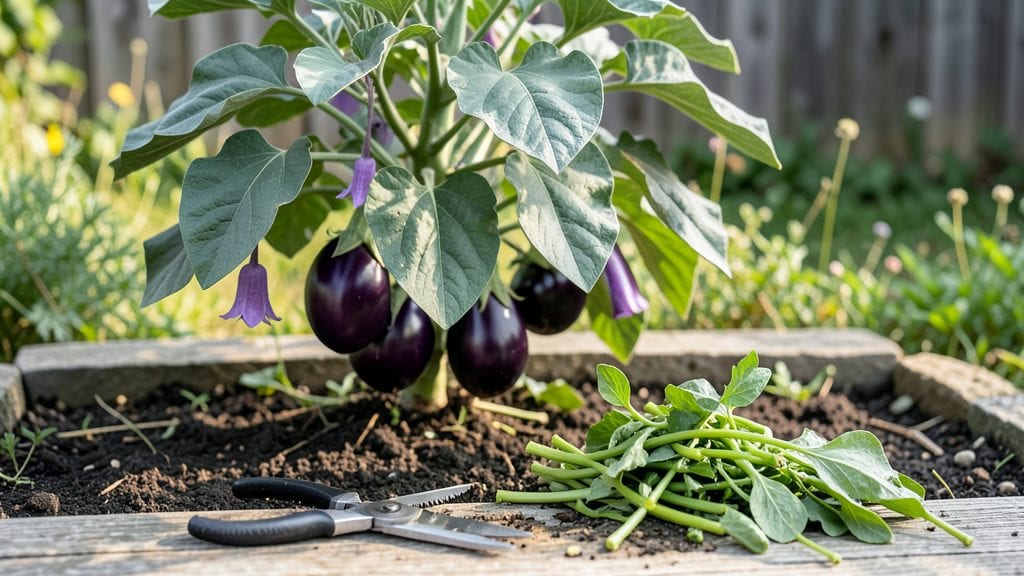
Pruning aubergine plants isn’t just about trimming—it’s the secret to turning one harvest into three. ✨ I learned this after my first eggplant season, when my plants produced just a handful of fruits instead of the bushels I’d hoped for.
The difference? Strategic pruning at the right times, which boosts airflow, directs energy to fruit production, and keeps plants healthy all season.
You’ll need sharp pruning shears, a clean towel for wiping tools between cuts, and about 30 minutes to tackle each plant. Focus on three key trims: right after transplanting to encourage bushiness, during flowering to remove excess leaves, and mid-season to prune any dead or diseased growth.
This method works for both indoor containers and outdoor beds, though timing shifts slightly depending on your climate zone.
What you’ll get is a plant that keeps producing long after most gardens have given up—glossy, dark purple fruits appearing every 2-3 weeks instead of all at once.
The leaves stay vibrant, pests have fewer hiding spots, and you avoid the common problem of overcrowded stems that lead to blight. It’s the kind of hack that makes neighbors ask, “How do you do that?”
Fair warning: pruning eggplants takes practice, especially when it comes to spotting suckers (those little side shoots) without accidentally removing flower buds. But once you see the difference—more fruit, bigger size, and a harvest that stretches into fall—you’ll never go back to letting them grow wild.
Let’s get those shears ready!
📚 In This Guide
- What you need
- Instructions
- Tips and common mistakes
- Wrapping up and next steps
What you need
- ● Sharp pruning shears or secateurs: Choose sterilized, bypass-pruning shears (4–6-inch blades) for clean cuts.
- ○ Gloves (optional but recommended): Nitrile or leather gloves to protect against thorns and sap irritation.
- ● Disinfectant (rubbing alcohol or bleach solution): 1 part bleach to 9 parts water—sterilize tools between cuts to prevent disease.
- ● Pruning saw (for thick stems): Only needed if trimming woody stems over ½-inch thick.
- ○ Garden twine or plant ties: For supporting stems after heavy pruning (optional but helpful for large plants).
- ● Compost or mulch: To cover cut stems and retain moisture post-pruning.
- ● Hand lens or magnifying glass: For spotting pests or diseases on small stems.
- ● Plant growth regulator (e.g., seaweed extract): Spray after pruning to encourage faster recovery.
- ● Label markers: If you’re experimenting with different pruning techniques on multiple plants.
- ● Watering can with a fine rose: For gentle hydration after trimming.
Instructions for pruning aubergine plants to maximize fruit production
Here's how to shape your plants for bigger yields and healthier growth—no guesswork involved.
✂️ Step 1: Remove Suckers for Stronger Growth
Start by inspecting the main stem where branches meet. Look for small shoots growing between the main stem and side branches—these are called suckers. Use clean, sharp pruning shears to snip them off just above the leaf they're growing from. I remove suckers that are smaller than a pencil, as these compete with fruit for energy.
Focus on suckers below the first flower cluster—these are the most critical to remove. You'll notice the plant's energy redirects to existing flowers and fruit rather than new growth. This step is easiest when done in the morning, as the plant is fully hydrated and cuts heal faster.
✂️ Step 2: Thin Fruit Clusters for Larger Eggplants
Once flowers bloom, leave only one flower per cluster to develop. Overcrowded fruit strains the plant and results in smaller, misshapen eggplants. Gently twist off excess flowers by hand—no need for shears. I aim to keep 3-4 flowers per plant spaced evenly along the stem, as this balances production without overwhelming the plant.
Watch for fruit that's already set—if two are growing too close, remove the smaller one. You'll see new flowers appear in the gaps you create, ensuring continuous production. This step prevents the plant from diverting energy to too many small fruits instead of a few large, high-quality ones.
✂️ Step 3: Prune Lower Leaves to Improve Airflow
Use pruning shears to trim off the lowest 3-4 sets of leaves, about 12-18 inches from the base. This opens up space between the plant and soil, reducing humidity and preventing disease. I also remove any yellow or diseased leaves immediately—they're entry points for pests and rot.
Focus on leaves that shade the fruit or block airflow. You'll notice the plant's center becomes more open, allowing sunlight to reach developing eggplants. This step is especially important in humid climates, where stagnant air encourages fungal growth. Prune on a dry day to let cuts heal overnight.
⏰ Step 4: Time Trims for Continuous Harvests
Prune suckers every 2-3 weeks throughout the growing season to maintain shape and encourage new growth. I schedule my first trim when the plant reaches 12 inches tall, then repeat every time new suckers appear. For fruit thinning, check clusters weekly—new flowers develop fast, and you don't want to miss the window.
Stop pruning 4-6 weeks before your first frost. The plant needs time to recover and produce one last flush of fruit. You'll know it's time to stop when new growth slows and leaves yellow at the edges. This final step ensures you harvest as much as possible before cold weather sets in.
Tips & tricks for pruning aubergine plants
These simple strategies will help you maximize your eggplant harvest without stressing your plants.
The Timing Secret: In Step 4, when you're pruning suckers every 2-3 weeks, I've found that early morning is the absolute best time. The plant's cells are fully hydrated, which helps cuts heal faster and reduces stress. If you must prune later in the day, do it at least 4-5 hours before sunset to give the plant time to recover before nightfall.
Tool Prep: Before you start Step 1, sterilize your pruning shears with rubbing alcohol or a 10% bleach solution. Clean tools prevent spreading disease between plants. I also keep a small spray bottle of water nearby to mist the cuts immediately after pruning—this helps seal the wound and reduces the risk of infection.
Visual Cues for Step 2: When thinning fruit clusters, look for these telltale signs: healthy flowers should have a bright purple hue and firm petals. If you see flowers with pale petals or brown edges, they're likely stressed and won't produce quality fruit. Also, keep an eye out for fruit that's growing toward the main stem—these will rub against each other as they grow, creating pressure points that can lead to rot.
Seasonal Adjustments: In Step 4, if you're in a hot climate, you might need to prune suckers more frequently—every 1-2 weeks instead of 2-3. The extra heat accelerates growth, so the plant produces new suckers faster. Conversely, in cooler climates, you can stretch the 2-3 week interval to 3-4 weeks without stressing the plant.
Pro Tips for Pruning Aubergine Plants
- These simple strategies will help you maximize your eggplant harvest without stressing your plants.
- The Timing Secret: In Step 4, when you're pruning suckers every 2-3 weeks, I've found that early morning is the absolute best time.
- Tool Prep: Before you start Step 1, sterilize your pruning shears with rubbing alcohol or a 10% bleach solution.
Frequently asked questions
Got questions about pruning aubergine (eggplant) plants? You’re not alone! Whether you're a first-time gardener or a seasoned pro, these common queries can help you grow healthier plants and maximize your harvest. Let’s dive in:
When is the best time to prune aubergine plants?
Prune your aubergine plants early and often—start when they’re about 12 inches tall, then repeat every 2–3 weeks. Focus on trimming suckers (small shoots in the leaf axils) and removing yellow or diseased leaves. Avoid heavy pruning late in the season, as it can stress the plant before harvest.
How much should I cut back when pruning?
For aubergines, aim to remove only what’s necessary—typically 1–2 inches of new growth per trim. Cut just above a leaf node or branch to encourage bushier growth. Over-pruning can reduce fruit production, so avoid trimming more than one-third of the plant at once.
What should I do if my aubergine plant looks sad after pruning?
If your plant wilts or drops leaves post-prune, it’s likely stressed—but don’t panic! Water deeply, provide shade for a day or two, and avoid further trimming. Fertilize lightly with a balanced formula (like 10-10-10) to help it recover. Most plants bounce back within a week.
Can I prune aubergine plants too much?
Yes! Over-pruning can stunt growth, reduce flowering, or even kill the plant. Stick to 3 strategic trims (early growth, mid-season, and light maintenance) and focus on removing only weak, diseased, or unproductive growth. Healthy aubergine plants thrive with minimal intervention.
Will pruning increase my eggplant yield?
Pruning directs the plant’s energy toward fewer, larger, and healthier fruits by improving airflow and reducing competition. Studies show pruned aubergines produce 20–30% more fruit with better quality. Just avoid pruning during flowering or fruiting stages to protect your harvest.
Wrapping up and next steps
Pruning your aubergine (eggplant) plants might seem intimidating at first, but with the right techniques—like the three strategic trims we’ve covered—you’ll unlock a bountiful, year-round harvest! 🌱 The key is patience, consistency, and confidence in your green thumb.
Now that you’re armed with knowledge, grab those pruners and watch your plants thrive.
Ready to take the next step? Start with your first trim this week and track your progress. Before you know it, you’ll be enjoying homegrown, sun-ripened eggplants straight from your garden. Happy pruning!