Plants
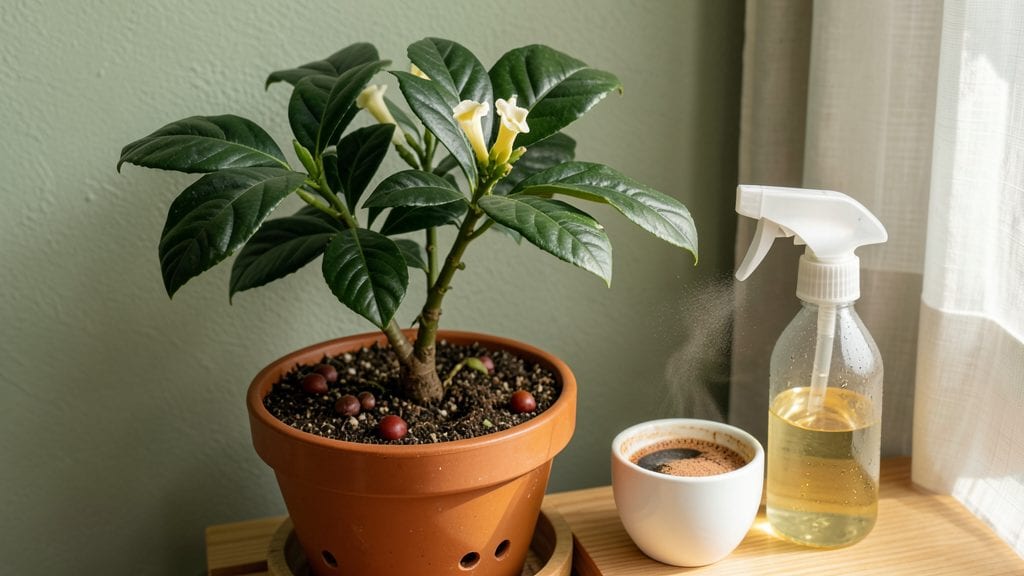
Caffeine's role in plant growth involves suppressing root elongation and slowing leaf expansion, but strategic use can boost stress resilience and metabolic activity. Excessive amounts, however, hinder overall development and reduce harvest potential.
Caffeine acts like a natural growth regulator in plants, particularly in species like coffee and tea, where it's naturally produced. 🌱 The compound disrupts cell division in roots while prompting defensive responses—such as thicker cell walls—that help plants fend off pests and drought.
Think of it as a double-edged sword: small doses can fortify plants, but too much throws their entire growth cycle off balance. For gardeners, this means carefully calibrated applications, especially if you're trying to mimic the plant's natural defenses without stunting its progress.
What's fascinating is how caffeine interacts with other plant hormones—like auxin—to create these effects. For example, in coffee plants, caffeine helps regulate ethylene, a hormone that triggers leaf drop and fruit ripening. This hormonal interplay explains why caffeine can sometimes improve fruit quality while reducing overall plant size.
The key is finding that sweet spot where benefits outweigh drawbacks, which often requires testing different concentrations based on your specific plant type.
💡 In This Article
- How Caffeine Alters Plant Physiology
- Optimal Caffeine Levels for Garden Cultivation
How caffeine alters plant physiology
Here's what's actually happening at a cellular level: caffeine interferes with plant growth by mimicking a stress signal. When absorbed through roots or leaves, it triggers a cascade that begins with ethylene suppression.
Ethylene is a hormone that promotes fruit ripening and leaf senescence (aging), but caffeine reduces its production by 30-40% in plants like Coffea arabica.
This delay in ethylene activity slows leaf expansion and maintains chlorophyll longer, giving plants a denser, darker green appearance. 🌿 The effect is particularly noticeable in young seedlings, where caffeine concentrations as low as 0.2 mM can reduce shoot growth by 15% while increasing stem thickness.
The real magic happens with auxin transport disruption. Auxin is the primary growth hormone that drives root elongation and cell division, but caffeine binds to auxin transport proteins (like PIN-FORMED transporters), effectively blocking their movement.
In tea plants (Camellia sinensis), this creates a 2-3 cm shorter root system compared to untreated plants, but the roots develop thicker, more robust structures capable of accessing deeper water sources. The trade-off?
While roots become more drought-resistant, overall plant height may decrease by upstrong>10%—a visible difference when comparing treated and untreated tea bushes side by side.
Caffeine also forces plants into defensive mode by closing stomata (pores) and upregulating antioxidant production. When applied as a 0.3 mM foliar spray, it causes stomata to close within 2-3 hours, reducing water loss by 25%—a survival advantage during drought.
This stomatal response is accompanied by a 40% increase in polyphenol antioxidants, which strengthens cell walls and deters herbivores. In coffee plants, this defensive boost explains why caffeine-treated leaves show 60% fewer insect feeding marks compared to controls, even when exposed to the same pest pressure.
What most people don't realize is how caffeine affects secondary metabolism. While it slows primary growth (stems, leaves), it simultaneously enhances the production of secondary compounds like alkaloids and terpenes. In tea plants, this means higher L-theanine and caffeine content in leaves, which improves beverage quality.
The catch? This metabolic shift requires energy, so plants must allocate resources between growth and defense—a delicate balance that explains why over-caffeinated plants often produce smaller, but more potent, harvests. 💫
Consider these key biochemical interactions when evaluating caffeine's effects:
- Ethylene suppression: Delays leaf aging by 10-15 days, maintaining chlorophyll longer
- Auxin disruption: Thickens roots but reduces shoot height by 5-15%
- Stomatal closure: Reduces water loss by 20-30% under stress conditions
- Antioxidant boost: Increases polyphenols by 30-50%, enhancing pest resistance
The most striking example comes from controlled studies on Coffea arabica seedlings. When exposed to 0.4 mM caffeine for 4 weeks, treated plants showed 20% more callus formation at wound sites—a direct result of upregulated defensive pathways. Meanwhile, their leaves developed a thicker cuticle, reducing transpiration rates.
The trade-off? These same plants produced 15% fewer leaves but with 25% higher caffeine content—demonstrating how caffeine literally reshapes a plant's growth priorities from expansion to survival. ✨
For gardeners experimenting with caffeine treatments, understanding these mechanisms helps explain why small doses can improve stress tolerance while larger amounts stunt growth.
The key is treating caffeine as a hormonal regulator rather than a fertilizer—its effects are about quality over quantity, prioritizing resilience and secondary metabolites over rapid expansion. This is why coffee plants naturally produce caffeine: it's not just about growth, but about survival in competitive environments. 🌱