
Diseases
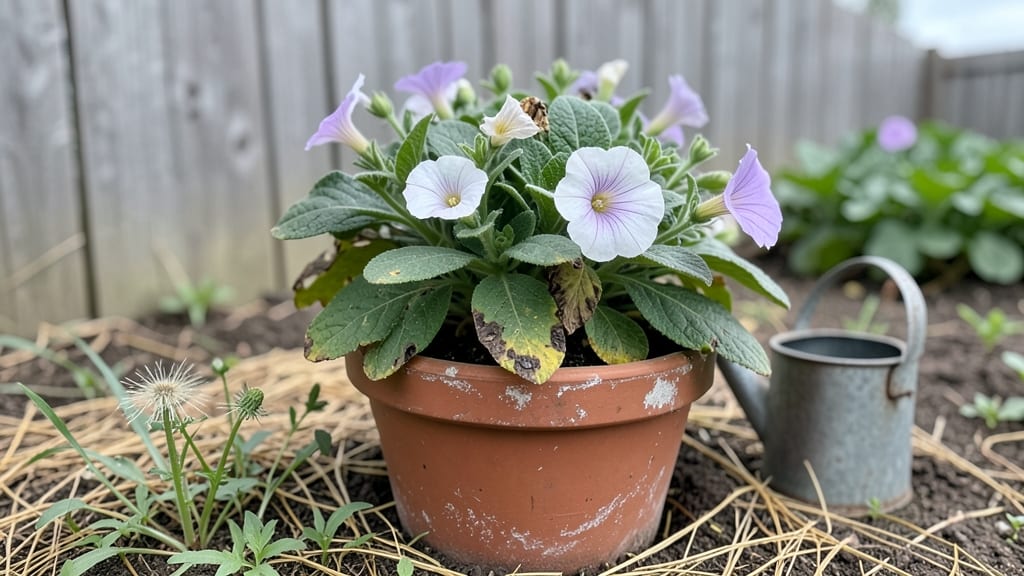
When your petunia plants develop sudden spots, droop like tired flowers, or rot from the inside out, you're dealing with petunia plant diseases that spread faster than you'd think—like powdery mildew turning vibrant blooms into gray dust within days. bacterial wilt collapse entire plants overnight—until I learned the quick fixes that stop them in their tracks.
The good news is most petunia diseases start with simple fixes: spacing plants to improve airflow, watering at the base (not overhead), and snipping off infected leaves before they spread.
My go-to treatments include neem oil for fungal spots, copper fungicide for stubborn mildew, and hydrogen peroxide sprays for bacterial infections—all of which work within 3-5 days if caught early.
You'll rescue plants that looked doomed with just a few minutes of targeted care. The key is acting before the disease moves from leaves to stems—once it reaches the roots, even the best treatments struggle.
I'll show you exactly which symptoms mean "prune now" versus "pull the plant" to save your whole garden.
Works for container petunias, hanging baskets, and in-ground beds alike. The same principles apply whether you're dealing with powdery mildew in July or blossom rot in August. Here's how to turn around those sickly plants fast.
Underlying Causes of Petunia Problems
Petunias are stunning additions to any garden, but their vibrant blooms can quickly fade—or worse—if they fall victim to diseases. Understanding why these issues arise is the first step to prevention.
Let’s break down the science behind the most common culprits and how environmental or cultural factors set the stage for trouble.
Fungal diseases like powdery mildew, botrytis blight, and alternaria leaf spot thrive in one condition: high humidity with poor airflow. Here’s why:
- Moisture on leaves: Fungal spores germinate when water lingers on petunia foliage for more than 6–12 hours. Rain, overhead watering, or morning dew create the perfect breeding ground. Botrytis, for example, spreads via water droplets that carry spores directly to flowers or stems.
- Temperature sweet spot: Fungi like powdery mildew (caused by Erysiphe cichoracearum) love 60–80°F (15–27°C) with high humidity (>75%). Cool nights followed by warm, muggy days accelerate outbreaks.
- Weakened plants: Stress from overcrowding, nutrient deficiencies (especially phosphorus or potassium), or physical damage (e.g., hail) makes petunias more susceptible to fungal invasion.
Pro tip: 💡 Space plants 12–18 inches apart to improve airflow, and water at the base in the early morning to let foliage dry quickly.
Bacterial diseases like bacterial wilt (Ralstonia solanacearum) or bacterial leaf spot (Xanthomonas) strike when bacteria hitch a ride via contaminated tools, water, or insects. Here’s the breakdown:
- Water splashing: Overhead irrigation or rain can splash bacteria from soil onto leaves, creating entry points through stomata (tiny leaf pores). Xanthomonas thrives in warm, wet conditions (75–85°F / 24–29°C).
- Wound entry: Pruning cuts, insect bites, or even thrips feeding can open doors for bacteria. Ralstonia, for instance, invades through root wounds, clogging xylem vessels and cutting off water flow (leading to wilting).
- Contaminated tools: Reusing shears or gloves without sterilizing them (with 70% isopropyl alcohol) can transfer bacteria between plants.
Pro tip: 🔥 Sterilize tools between uses, and avoid working with petunias when leaves are wet to minimize bacterial spread.
Petunias need a balanced diet, but imbalances—especially excess nitrogen or poor drainage—create the perfect storm for diseases like root rot (Phytophthora) or blossom rot.
| Problem | Why It Happens | Actionable Fix |
|---|---|---|
| Overwatering | Soggy soil cuts off oxygen to roots, inviting Phytophthora fungi. Petunias in containers are especially at risk if pots lack drainage holes. | Use well-draining soil (add perlite or sand) and water only when the top inch is dry. |
| Compacted soil | Poor aeration slows nutrient uptake, weakening plants. Pythium fungi exploit this, causing damping-off in seedlings. | Amend soil with compost and avoid walking on garden beds. |
| Nutrient deficiencies | Low calcium or magnesium leads to blossom end rot (brown, mushy petals) or yellowing leaves. Excess nitrogen promotes lush foliage but weak stems, making plants prone to fungal attacks. | Test soil pH (aim for 6.0–7.0) and fertilize with a balanced 10-10-10 formula. |
Pro tip: 🌡️ Monitor soil moisture with a moisture meter—petunias prefer consistently moist but not waterlogged conditions.
Insects like aphids, thrips, or whiteflies don’t just sap nutrients—they create wounds that open the door to secondary infections. Here’s how:
- Sugar-rich honeydew: Aphids excrete sticky honeydew, which attracts sooty mold fungi (Capnodium). This mold coats leaves, blocking sunlight and stressing the plant.
- Physical trauma: Thrips pierce cells while feeding, leaving scars that botrytis or alternaria can infect. A single thrip infestation can reduce a petunia’s defenses by 30–50%.
- Virus vectors: Some pests (like whiteflies) transmit tomato spotted wilt virus (TSWV), causing stunted growth, distorted leaves, and necrotic spots.
Pro tip: ✨ Inspect undersides of leaves weekly, and blast pests off with a strong stream of water or use neem oil as a preventive spray.
By addressing these root causes—whether it’s humidity control, proper watering, or pest management—you’ll give your petunias the best shot at staying healthy and disease-free. Prevention is always easier (and cheaper!) than treatment.
Quick Fixes for Petunia Problems
Now that you know what’s ailing your petunias, let’s roll up our sleeves and get them back to blooming beautifully! 🌸 Each issue has a tailored solution—some require immediate action, while others focus on prevention to keep future problems at bay.
Below, we’ve broken down the fixes by cause, with step-by-step instructions and pro tips to ensure your petunias stay healthy and vibrant.
Fungal diseases thrive in damp, crowded conditions, but with the right care, you can kick them to the curb.
🔥 Remove Infected Plant Parts
Start by pruning off any leaves, stems, or flowers showing signs of powdery mildew (white powdery patches) or leaf spot (brown/yellow spots).
Use sterilized pruners (wipe with rubbing alcohol) to avoid spreading spores. - Pro Tip: 💡 Bag and discard infected plant debris in the trash (not compost)—fungi can survive in compost piles!
🍳 Apply Fungicidal Sprays
For mild cases, baking soda spray (1 tsp baking soda + 1 quart water + a drop of dish soap) can work as a natural fungicide.
For stubborn infections, use a copper-based fungicide or neem oil spray (follow label instructions). - Pro Tip: 🌡️ Water in the morning to allow foliage to dry quickly, reducing humidity—fungi love moisture!
👨🍳 Improve Airflow & Light
- Space plants at least 12 inches apart to enhance airflow.
- Move pots to a sunnier spot (petunias need 6+ hours of sunlight/day).
- Avoid overhead watering—use drip irrigation or water at the base.
⏰ Prevent Future Outbreaks
- Rotate crops if growing petunias in the same spot yearly.
- Clean garden tools after each use.
- Choose resistant varieties like ‘Wave’ or ‘Supertunia’ series, which are bred for disease resistance.
Pests can sap your petunias’ strength, but these fixes will have them bug-free in no time!
🔪 Blast Off Pests with Soap or Oil
- Insecticidal soap (mix 1 tbsp mild liquid soap + 1 quart water) sprays directly on pests.
Reapply every 5–7 days until gone. - Neem oil (1 tsp neem oil + 1 quart water + a drop of soap) disrupts pests’ life cycles. Shake well before spraying! - Pro Tip: 🎯 For aphids, spray a strong stream of water to knock them off leaves first.
🐞 Introduce Beneficial Insects
Ladybugs, lacewings, and parasitic wasps devour spider mites and whiteflies. Buy them online or attract them with native plants like dill or marigolds.
🌿 Prevent Pest Return
- Inspect new plants before bringing them home (quarantine for a week if possible).
- Remove weeds—they harbor pests and diseases.
- Use reflective mulch (like aluminum foil) to deter whiteflies.
Wilting can mean too much or too little water—let’s diagnose and fix it fast!
🥘 Check the Soil Moisture
- Stick your finger 1–2 inches into the soil:
- If dry, water deeply until it drains from the bottom.
- If soggy, stop watering and repot if root rot is suspected (smelly, mushy roots = bad news).
🔪 Trim Damaged Roots (For Root Rot)
- Gently remove the plant from its pot.
- Rinse roots to check for black/mushy areas—snip those off with sterilized scissors.
- Repot in fresh, well-draining soil (mix potting soil with perlite or sand).
- Water lightly for a week to avoid shocking the roots.
🌡️ Adjust Watering Habits
- Water when the top 1 inch of soil is dry (petunias like consistent moisture but hate soggy roots).
- Use pots with drainage holes—no exceptions!
- Mulch with gravel or straw to regulate soil moisture.
✨ Boost Recovery with Fertilizer
After repotting or a drought, feed with a balanced liquid fertilizer (10-10-10 or 20-20-20) diluted to half strength. Wait 1–2 weeks if roots were damaged.
Prevention is the best medicine! Follow these year-round tips to keep your petunias disease- and pest-free:
- 💡 Deadhead regularly (remove spent blooms) to encourage more flowers and reduce fungal spores.
- 🌡️ Monitor humidity—petunias prefer moderate humidity; avoid placing them in steamy bathrooms or greenhouses.
- 🍎 Feed monthly with a phosphate-rich fertilizer (like 5-10-5) for blooms.
- 🔄 Rotate pots every few months to prevent soil-borne diseases from building up.
With these fixes, your petunias should bounce back stronger than ever—ready to dazzle your garden with their show-stopping blooms! 🌺 For persistent issues, don’t hesitate to consult a local nursery or plant clinic for expert advice. Happy gardening!
Frequently asked questions
What are the first signs of powdery mildew on petunias?
Look for white, powdery patches on leaves that resemble dust or talcum powder. These spots start small but spread quickly in humid conditions. The key is to catch it early—once it reaches the stems or flowers, treatment becomes much harder.
Can I save a petunia with bacterial wilt?
Unfortunately, bacterial wilt is usually fatal once symptoms appear (sudden wilting, yellowing leaves, and a mushy stem). The bacteria clog the plant's water transport system, and there's no cure. Remove infected plants immediately to prevent spreading to others.
How often should I spray neem oil for prevention?
Apply neem oil spray every 2-3 weeks during growing season (spring through fall) to prevent fungal and bacterial diseases. For best results, spray in the early morning or evening when temperatures are below 85°F to avoid leaf burn.
Why do my petunia leaves turn yellow?
Yellowing leaves usually indicate either overwatering (root rot) or nutrient deficiency (often nitrogen or magnesium). Check soil moisture first—if it's soggy, reduce watering. If leaves show yellow between veins, it's likely magnesium deficiency (Epsom salt solution can help).
Is it safe to compost petunia plant debris?
Never compost diseased petunia leaves or stems—fungal spores and bacteria can survive and reinfect your garden. For healthy plant debris, you can compost it, but always bag and discard any infected material in the trash.