
Watering
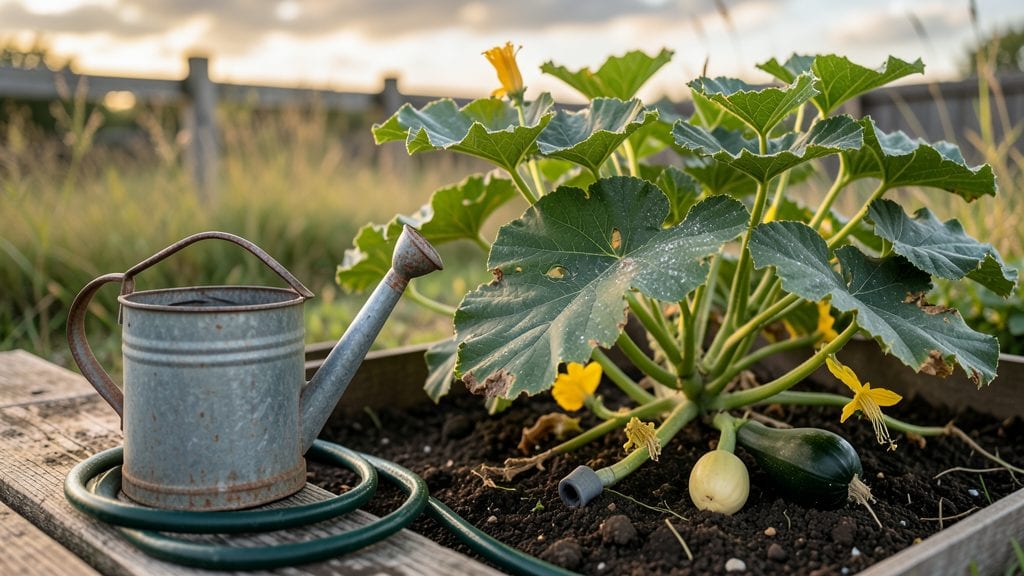
Overwatering squash plants turns your garden into a soggy swamp—root rot, yellow leaves, and those dreaded black spots on your fruit. 🌱 I’ve seen healthy vines collapse in days just because of too much water, and the worst part?
The damage often starts below the soil where you can’t even see it. If your squash leaves look limp or the stems feel mushy when you squeeze them, you’re probably overdoing it with the hose.
The problem isn’t just how much you water—it’s how the soil drains. Squash roots need air almost as much as water, and compacted or clay-heavy soil traps moisture like a sponge. That’s why even well-meaning gardeners drown their plants: they think more water means bigger fruit, but the opposite happens.
The first step is checking your soil—if it stays wet more than an inch below the surface after 24 hours, you’re overwatering.
Here’s the fix: cut back immediately and let the soil dry out between waterings. Amend heavy soil with compost or coarse sand to improve drainage, and space your plants properly so air circulates.
Within a week, you’ll see new growth pushing through, and your fruit will start developing without those ugly black patches. The key is patience—squash plants bounce back faster than you’d think once they’re not swimming in water.
If the rot spreads or you spot fuzzy mold on the stems, it’s time for a fungicide. But in most cases, adjusting your watering and soil saves the season. Trust me, your squash will thank you with bushels of healthy fruit by harvest time.
Root Causes Of Overwatering Squash
When your squash plants start wilting or developing unsightly yellow leaves despite your best efforts, overwatering might be the silent saboteur. Understanding why this happens is the first step to fixing it—and saving your harvest. Let’s break down the science behind why squash plants drown in their own care.
Squash thrives in well-draining soil, but heavy clay or compacted soil acts like a sponge, soaking up water and suffocating roots. When you water too frequently—or too heavily—water pools around the roots instead of draining away. This creates anaerobic conditions, where oxygen is scarce and harmful bacteria thrive.
- Why it matters: Roots need oxygen to absorb nutrients. Without it, they suffocate, leading to root rot and nutrient deficiencies.
- Actionable fix: Test your soil’s drainage by digging a hole, filling it with water, and timing how long it takes to drain. If it’s slower than 4 hours, amend with compost or perlite.
Squash plants have shallow root systems that spread wide but not deep. When you water lightly but often, the topsoil stays soggy while deeper layers dry out. This inconsistency forces roots to grow upward in search of moisture, making them weak and prone to disease.
- Why it matters: Uneven moisture stress triggers osmotic shock, where cells struggle to regulate water intake, leading to wilting or blossom-end rot.
- Actionable fix: Water deeply but infrequently—aim for 1–1.5 inches per week—using a soaker hose or drip irrigation to deliver moisture directly to the root zone.
Overcast days or high humidity trick your brain into thinking plants need less water. But squash leaves transpire (release moisture) slower in damp conditions, so excess water lingers.
If you don’t adjust your watering schedule, roots sit in waterlogged soil, inviting fungal infections like powdery mildew or downy mildew.
- Why it matters: Fungal spores thrive in wet foliage. Overwatering + humidity = a recipe for leaf blight, which weakens the plant and reduces fruit quality.
- Actionable fix: Monitor leaf moisture—if leaves stay damp for more than 6 hours after watering, cut back. Use mulch to regulate soil temperature and reduce evaporation.
Squash vines spread aggressively, and when plants are too close together, their leaves shade the soil, slowing evaporation. While this might seem helpful, it also traps moisture near the roots. Combined with frequent watering, the soil becomes a perfect breeding ground for rot-causing pathogens.
- Why it matters: Crowded plants compete for nutrients and water, leading to weakened immunity. Stress from overwatering + poor airflow = faster disease spread.
- Actionable fix: Space squash plants 3–5 feet apart (depending on variety) and prune excess vines to improve airflow. Thin seedlings early to avoid future struggles.
Pro Tip: 💡 Check the soil before watering! Stick your finger 1–2 inches deep. If it’s damp, wait. If it’s dry, water deeply. A moisture meter can take the guesswork out of it.
Fixing Overwatered Squash Plants
Overwatering your squash plants can feel like a slow-motion disaster—wilting leaves, mushy roots, and fruit that’s less than stellar. But don’t panic! With the right fixes and a few smart adjustments, you can bring your plants back to health and prevent future mishaps.
Below, we’ve mapped out practical solutions for each common cause of overwatering, along with prevention tips to keep your squash thriving.
Problem: Compacted or poorly drained soil traps excess water, cutting off oxygen to roots and inviting rot.
How to Fix It: 🔥 Improve Soil Drainage
- Test your soil’s drainage by digging a 6-inch hole, filling it with water, and timing how long it takes to drain. If it takes more than 4 hours, your soil is too dense.
- Amend heavy clay soil with organic matter: Mix in 2–3 inches of compost, coconut coir, or perlite to loosen it up.
🍳 Raise Planting Beds
- If your garden has poor drainage, consider elevated beds or container growing. Squash loves space—just ensure pots have drainage holes and use a well-draining potting mix.
👨🍳 Adjust Watering Schedule
- Water deeply but infrequently—aim for 1–1.5 inches per week, including rainfall. Use a soaker hose or drip irrigation to deliver water directly to the roots without wetting foliage.
Prevention Tip: 💡 Mulch heavily (2–3 inches of straw or wood chips) to regulate soil moisture and reduce evaporation.
Problem: Frequent shallow watering encourages weak roots and fungal diseases while keeping soil soggy.
How to Fix It: 🔥 Check Soil Moisture
- Stick your finger 1–2 inches into the soil. If it’s damp, wait. If it’s dry, water thoroughly until moisture reaches 6–8 inches deep.
🥘 Water at the Right Time
- Morning is best (before 10 AM) to allow foliage to dry out, reducing fungal risks like powdery mildew.
- Avoid watering in the evening—wet leaves overnight invite disease.
⏰ Use the "Finger Test" Rule
- Before watering, press your finger into the soil. If it feels like a slightly damp sponge, hold off. If it’s bone-dry, it’s time to water.
Prevention Tip: 🌡️ Invest in a moisture meter—these $10 tools take the guesswork out of watering and help you nail the perfect balance.
Problem: Unexpected downpours can drown roots if your plants aren’t adapted to handle excess moisture.
How to Fix It: 🔥 Create Drainage Channels
- If your garden floods after rain, grade the soil to slope away from plants (1–2 inches per 10 feet). Add swales (shallow trenches) to redirect water.
🍳 Temporary Fixes for Wet Soil
- If soil is waterlogged, pause watering and let it dry out naturally. Avoid stepping on beds—compacted soil worsens drainage.
- For containers, empty excess water from saucers immediately after rain.
👨🍳 Choose Drought-Tolerant Varieties
- Some squash (like butternut or acorn) handle moisture fluctuations better. If your garden is prone to soggy spells, opt for these varieties.
Prevention Tip: ✨ Plant on mounds—elevating squash plants (even slightly) helps roots stay aerated during heavy rains.
Problem: Overwatering leaches calcium from the soil, leading to blossom-end rot—those ugly, sunken spots on your squash.
How to Fix It: 🔥 Boost Soil Calcium
- Mix crushed eggshells, lime, or gypsum into the soil before planting. For existing plants, use a calcium-rich fertilizer (like calcium nitrate) every 2–3 weeks.
🥘 Balance Water and Nutrients
- Overwatering dilutes nutrients. Water consistently—never let soil dry out completely, but avoid soggy conditions.
- Side-dress with compost tea or a balanced organic fertilizer to restore nutrients.
🔪 Prune Affected Fruit
- If you spot rot, remove the damaged squash to redirect the plant’s energy to healthier fruit. Don’t compost infected produce—toss it in the trash.
Prevention Tip: 🎯 Monitor soil pH—squash prefers 6.0–7.0. Test your soil and amend with pelletized lime if needed.
If your squash is already wilting or yellowing from overwatering:
- Stop watering immediately—let the soil dry out for 3–5 days.
- Trim damaged leaves (but leave healthy ones to photosynthesize).
- Repot if in containers—fresh, dry potting mix can save the roots.
- Apply a fungal preventative (like neem oil) if leaves show signs of mildew.
Final Thought: Overwatering is fixable, but the key is consistency. Squash plants are resilient—give them good drainage, smart watering, and a little TLC, and you’ll be harvesting plump, rot-free fruit in no time! 🎉
Frequently asked questions
How can I tell if my squash plants are getting too much water?
Check for yellowing leaves (especially lower ones), mushy stems when squeezed, or wilting despite moist soil. Dig near the roots—if the soil smells sour or feels waterlogged, you're overwatering. Root rot often appears as dark, mushy roots instead of firm white ones.
Can overwatering cause blossom-end rot in squash?
When soil stays too wet, it leaches calcium from the roots, preventing proper fruit development. You'll see black, sunken spots on the blossom end of your squash. To fix it, add crushed eggshells or lime to the soil and water consistently—never letting it dry out completely.
What's the best way to fix waterlogged squash soil?
Stop watering immediately and let the soil dry for 3-5 days. Improve drainage by mixing in compost or perlite to loosen heavy clay. For containers, repot into fresh, dry potting mix with drainage holes. Use a moisture meter to avoid future soggy conditions.
Will mulch help prevent overwatering problems?
Yes! A 2-3 inch layer of straw or wood chips helps regulate soil moisture by reducing evaporation. It also improves root health by keeping soil temperatures stable. Just avoid piling mulch against stems to prevent rot. Mulch works best when combined with proper spacing between plants.
How often should I water squash plants to avoid overwatering?
Aim for 1-1.5 inches of water per week, including rainfall. Water deeply in the morning using a soaker hose to reach roots without wetting foliage. Check soil moisture by sticking your finger 1-2 inches deep—if damp, wait before watering again. Adjust frequency based on your climate and soil type.