Watering
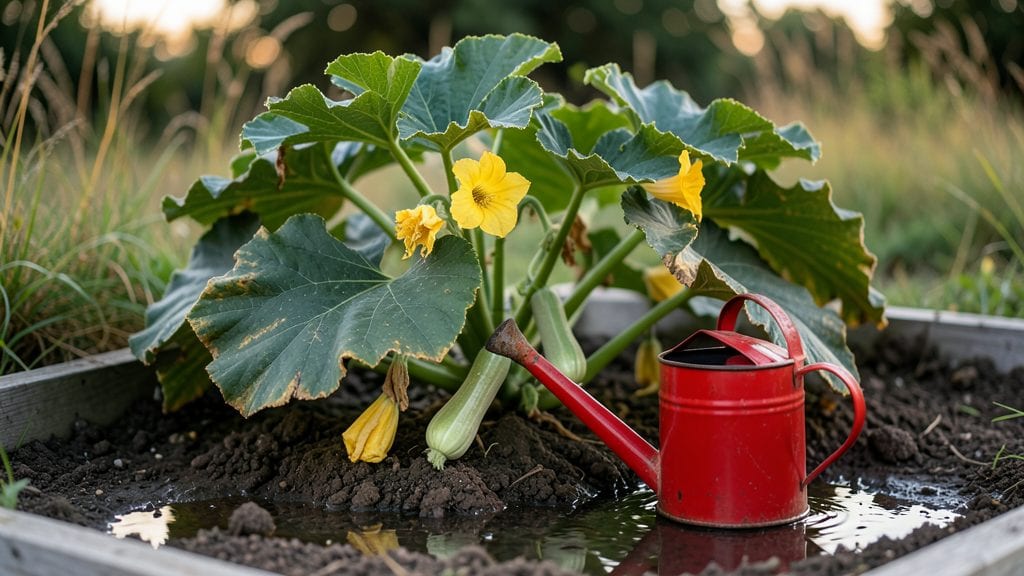
Overwatering squash plants turns your garden into a swamp—yellow leaves, mushy stems, and a smell like a soggy gym sock. 🌱 I’ve watched my own vines collapse from too much love (yes, water is love, but even love can drown things).
The first sign? Leaves that look like they’ve been sunburned but aren’t near the sun.
Squash roots need air almost as much as water, and compacted soil or shallow roots make them desperate for oxygen. That’s when mold moves in, turning your harvest into a science experiment you didn’t sign up for.
The fix starts with your finger in the soil—if the top 2 inches stay damp for more than a day, you’re overdoing it.
Cut back to watering when the top inch feels dry, and add compost to loosen heavy soil. Within a week, you’ll see new growth pushing through, and those wilting vines will perk up like they’ve had a nap.
The key? Let the soil breathe between drinks—squash plants are thirsty, not drowning victims.
For next season, raise your beds or use containers with drainage holes. A little prevention turns “oh no” into “oh wow”—because nothing beats the sight of healthy vines stretching toward the sun, ready to produce. Now go rescue those plants before the slugs move in too.
Root Causes of Waterlogged Squash
Overwatering squash plants isn’t just about pouring too much water—it’s a cascade of environmental and gardening mistakes that suffocate roots and invite disease. Understanding the why behind soggy soil helps you fix the problem before your vines turn to mush. Here’s a breakdown of the key culprits:
Squash thrives in well-draining soil, but compacted, clay-heavy, or organic-rich soils act like sponges, trapping excess moisture.
When water can’t escape, roots drown in anaerobic conditions (low oxygen), leading to: - Root rot (fungal infections like Phytophthora or Pythium) that turn roots black and mushy. - Stunted growth—plants divert energy to surviving oxygen deprivation instead of producing vines or fruit. - Nutrient lockout—waterlogged soil binds essential nutrients (like nitrogen and phosphorus), starving your plants.
💡 Pro Tip: Test your soil’s drainage by filling a jar with soil and water, then timing how long it takes to drain. Ideal? Under 30 minutes. Longer? Amend with perlite, sand, or compost to loosen it up.
Squash plants need 1–2 inches of water per week, but many gardeners overestimate their thirst—especially in humid climates.
Common triggers: - Automatic sprinklers running on timers without checking soil moisture (even light rain can trigger them). - Shallow watering that wets only the top inch of soil, encouraging roots to stay near the surface where they dry out quickly—then you overcompensate with more water. - Ignoring weather forecasts—watering during heavy rain or right after downpours drowns roots faster than the plant can absorb moisture.
🌡️ Watch For: Yellowing leaves that stay soft (not crisp) and a musty soil smell—signs of chronic overwatering.
Squash in containers (like bush varieties in 5-gallon pots) are especially vulnerable because:
- Limited root space forces roots to compete for oxygen in saturated soil.
- Plastic or glazed pots trap moisture longer than terracotta or fabric grow bags.
- No natural drainage—many DIY containers lack holes, turning them into water traps.
✨ Fix It: Use self-watering pots with drainage holes and elevate containers to improve airflow. For heavy feeders, mix in coconut coir to retain moisture without suffocating roots.
Even the best watering habits fail if your garden’s ecosystem works against you:
- High humidity (common in summer or greenhouses) slows evaporation, keeping soil damp longer.
- Shady spots reduce transpiration (water loss through leaves), so plants “hold onto” moisture instead of using it.
- Clay soil in rainy seasons acts like a waterlogged swamp, especially if you’re in a region with consistent rainfall (e.g., Pacific Northwest or Southeast U.S.).
🎯 Action Step: Move containers to sunnier spots or mulch heavily (with straw or wood chips) to regulate soil temperature and evaporation.
Squash plants are heavy drinkers when flowering and fruiting, but their roots are delicate. Key mistakes: - Watering at the wrong time—morning is best (allows foliage to dry before evening humidity sets in).
Night watering? Disaster for fungal risks. - Overhead watering wets leaves, promoting powdery mildew (a fungal disease that thrives in damp conditions). - Skipping mulch—bare soil dries unevenly, leading to erratic watering cycles (e.g., deep soaks followed by drought stress).
🔥 Remember: Squash roots grow 6–12 inches deep—aim water 2 inches below the soil surface to encourage deep root development.
Overwatering rarely happens in isolation. Often, it’s a chain reaction:
- Compacted soil → Poor drainage → Roots suffocate.
- Fungal growth (from excess moisture) → Weakens roots → Plant can’t absorb water efficiently.
- Nutrient depletion → Yellow leaves → You think the plant needs more water (when it actually needs less).
👨🍳 Break the Cycle: After fixing drainage, water only when the top 1–2 inches of soil are dry (stick your finger in—if it’s damp, wait!).
| Symptom | Likely Cause | What to Do |
|---|---|---|
| Mushy, black roots | Root rot from waterlogging | Repot in fresh, dry soil + fungicide |
| Yellow, limp leaves | Overwatering + nutrient lockout | Reduce water; add compost |
| White powder on leaves | Powdery mildew (from damp foliage) | Prune affected leaves; improve airflow |
| Stunted vines, no fruit | Oxygen deprivation in soil | Loosen soil; use raised beds |
By tackling these root causes, you’ll give your squash the dry-but-moist environment they crave—no soggy vines in sight! 🚀
Fixing Overwatered Squash Plants
Overwatering can turn your thriving squash patch into a soggy mess, but the good news is that recovery is possible with the right steps. Below, we’ll break down practical fixes for each common cause of overwatering—plus prevention tips to keep your plants happy and productive.
Let’s get your squash back on track!
If your soil is waterlogged from heavy or frequent watering, your squash plants may struggle to breathe. Act fast to prevent root rot and wilting.
Fix it: ✅ Stop watering immediately – Let the soil dry out before adding more water. ✅ Improve drainage – Mix in compost or coarse sand (1 part to 3 parts soil) to help excess water escape. ✅ Raise plant beds – If growing in containers or garden beds, elevate them slightly to prevent pooling. ✅ Use a moisture meter – Water only when the top 1–2 inches of soil feel dry (aim for 60–70% moisture).
💡 Pro Tip: If your squash is already wilting, trim any yellow or mushy leaves to redirect energy to healthy growth.
Compacted or clay-heavy soil holds water like a sponge, suffocating roots. Break it up to restore airflow.
Fix it: ✅ Aerate the soil – Use a garden fork to poke holes 6–8 inches deep around the base of the plant. ✅ Add organic matter – Work in well-rotted manure, coconut coir, or peat moss to improve texture. ✅ Mulch properly – Apply 2–3 inches of straw or shredded leaves to retain just enough moisture without drowning roots.
🌡️ Watch Out: Over-mulching can trap moisture—keep it 2–3 inches thick max.
Frequent watering can weaken roots, making plants more prone to disease. Encourage deeper, healthier roots with these steps.
Fix it: ✅ Water deeply but less often – Give plants 1–1.5 inches of water per week (including rain), then let the soil dry slightly between waterings. ✅ Use drip irrigation – Slow, consistent watering at the base (not leaves) prevents runoff and fungal issues. ✅ Fertilize lightly – A balanced 10-10-10 or compost tea boosts root resilience (avoid heavy nitrogen—it promotes leafy growth, not roots).
🎯 Prevention Tip: If repotting, root-prune slightly to encourage outward growth before transplanting.
Overwatering creates the perfect conditions for powdery mildew or blight. Reduce humidity and improve airflow.
Fix it: ✅ Water at the base – Avoid overhead sprinkling, which keeps leaves damp. ✅ Space plants properly – Give squash 3–4 feet between vines for airflow. ✅ Prune crowded foliage – Remove yellow or diseased leaves and dispose of them (don’t compost). ✅ Apply neem oil or copper fungicide – Spray every 7–10 days as a preventive measure.
✨ Bonus Hack: Reflective mulch (like aluminum foil) can deter pests that spread disease.
If your squash is already wilting badly, act quickly to revive it.
Do this now: 🔥 Trim damaged vines – Cut back weak, yellow, or mushy growth to save energy. 🍳 Repot if needed – If in a container, move to fresh, well-draining soil and a larger pot. 👨🍳 Boost with Epsom salt – Mix 1 tbsp per gallon of water to replenish magnesium (helps chlorophyll production). ⏰ Monitor closely – Keep soil slightly moist but not soggy for 1–2 weeks while it recovers.
Once your squash is back on track, prevent future overwatering with these habits:
✅ Check soil moisture daily – Stick your finger 1–2 inches deep—if it’s damp, wait. ✅ Use raised beds or containers – They drain 30–50% faster than in-ground soil. ✅ Choose drought-tolerant varieties – Try ‘Butternut,’ ‘Acorn,’ or ‘Zucchini’—they handle dry spells better. ✅ Install a rain gauge – Track natural water input to adjust your schedule.
Final Thought: Overwatering is fixable—don’t let a few mistakes ruin your harvest! With better drainage, smarter watering, and a little TLC, your squash will bounce back stronger than ever. 🌱💪
Frequently asked questions
Why do my squash leaves turn yellow when I water them regularly?
Yellow leaves usually mean your squash is drowning, not drinking enough! Overwatering causes roots to suffocate, preventing nutrient uptake. Check if the soil feels soggy 2 inches deep—if it is, cut back watering and improve drainage with compost or sand.
Can I save my squash plant if the stems feel mushy?
Act fast! Mushy stems signal root rot from excess moisture. Trim damaged areas, repot in fresh, dry soil with perlite, and avoid watering for 3–5 days to let roots recover. If the plant is beyond saving, start fresh with healthy seedlings.
How often should I water squash in containers vs. garden beds?
Containers dry out faster—water when the top 1 inch feels dry (usually every 2–3 days). Garden beds hold moisture longer; water 1–2 inches per week, adjusting for rain. Always check soil moisture before watering!
Will mulch help or hurt my overwatered squash?
Mulch can help—but only if used correctly! Apply 2–3 inches of straw or wood chips to retain moisture without suffocating roots. Avoid thick layers in clay soil, which trap excess water. For recovery, remove mulch temporarily to dry out the soil.
Can I use hydrogen peroxide to fix overwatered squash?
Yes! Mix 1 tablespoon of 3% hydrogen peroxide per gallon of water to oxygenate roots and prevent rot. Water the soil (not leaves) every 5–7 days until the plant recovers. It’s a safe, natural way to revive stressed roots!