Size
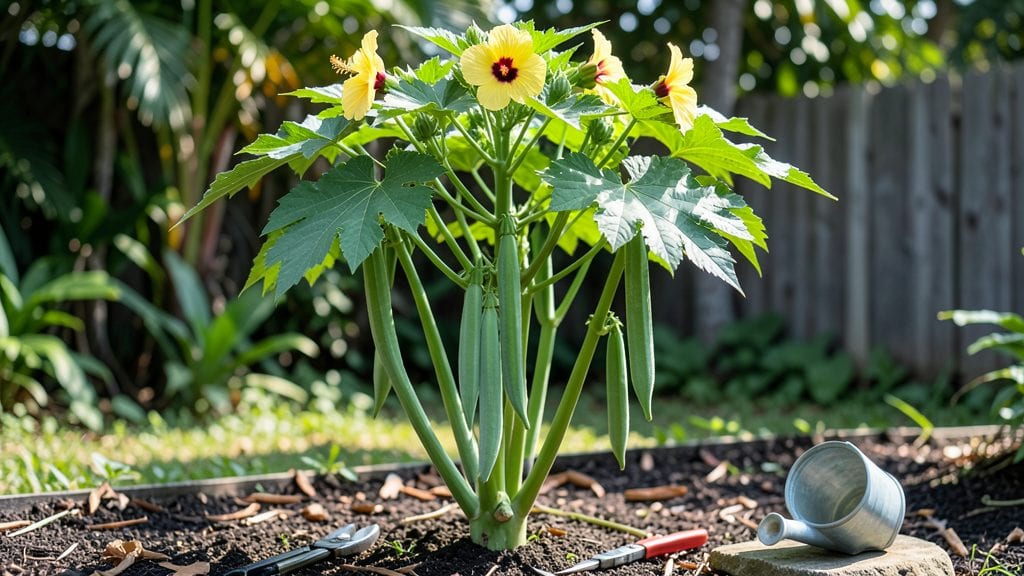
Growing tall okra plants feels like watching a jungle grow in your backyard—those towering stalks can reach 8 feet if you give them the right conditions. 🌿 I’ve seen gardeners struggle with leggy, floppy plants that barely produce, but the secret is in the soil, spacing, and support.
Most people don’t realize okra thrives when it’s encouraged to climb, not just left to sprawl.
The first step is rich, well-draining soil mixed with compost—okra loves to stretch, but it needs nutrients to fuel that growth. Space plants 2 feet apart in full sun (at least 6-8 hours daily), and use sturdy stakes or a 3-foot-tall trellis to guide their upward journey.
Water deeply 2-3 times a week, letting the top inch of soil dry between sessions to prevent weak stems.
When done right, you’ll end up with vibrant green pods hanging like nature’s chandeliers, ready for harvest every 3-5 days once flowering begins. The key is pruning suckers (those tiny side shoots) to focus energy on the main stalk—this keeps the plant strong and productive.
Avoid overcrowding, or you’ll smother growth and invite pests.
Tall varieties like ‘Clemson Spineless’ or ‘Emerald’ need this extra care, but the payoff is worth it: bigger yields, easier harvesting, and plants that look like they belong in a tropical paradise. Ready to let your okra reach new heights?
📚 In This Guide
- What you need
- Instructions
- Tips and common mistakes
- Wrapping up and next steps
What you need
- ● Okra Seeds: Choose tall okra varieties like 'Emerald' or 'Clemson Spineless' (10–20 seeds for a small garden, 50+ for larger plots).
- ● Well-draining soil: Mix garden soil with compost (ratio: 3 parts soil, 1 part compost) or use potting mix for containers.
- ● Fertilizer: Balanced 10-10-10 fertilizer (1–2 tbsp per plant at planting).
- ● High-nitrogen fish emulsion or blood meal (1 tbsp per plant every 3–4 weeks during growth).
- ● Support structures: Bamboo stakes or wooden posts (6–8 ft tall, 2–3 per plant).
- ● Twine or soft plant ties (5–10 ft per plant).
- ○ Trellis or netting (optional, for dense plantings).
- ● Watering supplies: Drip irrigation or soaker hose (to keep soil consistently moist).
- ● Watering can (for seedlings).
- ● Mulch: Straw or shredded leaves (2–3 inches thick to retain moisture).
- ● Epsom salt (1 tbsp per gallon of water, sprayed on leaves monthly for magnesium boost).
- ● Compost tea (for organic nutrient boost).
- ● Shade cloth (30–50% coverage for seedlings in hot climates).
- ● Pruning shears (to trim excess foliage and encourage upward growth).
- ● Row covers (for frost-prone areas or pest protection).
- ● Sunlight: Full sun (6–8+ hours daily).
- ● Temperature: Warm soil (70°F+ for germination; okra thrives in 80–90°F).
- ● Space: 18–24 inches between plants (36+ inches for tall varieties).
- ● pH Level: Slightly acidic to neutral (6.0–7.0).
Step-by-Step instructions for cultivating towering okra stems
Here's how to coax those lanky okra stalks into sturdy, sky-reaching giants—producing pods until frost.
🌱 Step 1: Select and Prepare Your Okra Variety
Start with a tall-growing variety like 'Emerald' or 'Clemson Spineless'—these can reach 8-10 feet with proper support. I always soak seeds overnight in lukewarm water to soften the hard outer shell, which speeds germination from 10-14 days to just 7-10 days. Plant seeds 1 inch deep in warm soil (at least 70°F), as okra refuses to germinate in cold ground.
Space seeds 12-18 inches apart in rows 3 feet apart to allow for trellis installation later. The reason for this spacing? Okra plants grow fast—leaving room prevents overcrowding, which weakens stems and reduces pod production. If your soil drains poorly, mix in 2-3 inches of coarse sand or perlite to improve aeration.
☀️ Step 2: Provide Full Sun and Strategic Watering
Okra demands full sun—at least 8+ hours daily—to develop strong, fibrous stems capable of supporting heavy pods. If your region has hot afternoons, provide partial afternoon shade to prevent leaf scorch, which weakens the plant's structural integrity. I use shade cloth (30-50%) during peak heat, but remove it by mid-afternoon to maintain photosynthesis.
Water deeply 2-3 times per week, aiming for 1-2 inches of moisture each time. The key is consistency—okra hates drying out, but soggy soil invites root rot. You'll know you've got it right when the top 2 inches of soil feel dry to touch before the next watering. Mulch with 2-3 inches of straw to retain moisture and suppress weeds, which compete for nutrients that could otherwise strengthen those towering stems.
🪴 Step 3: Install Support Structures Early
When seedlings reach 12-18 inches tall, install bamboo stakes or a sturdy trellis (I use 6-foot tall wooden frames for rows). Tie stems loosely with soft plant ties or old fabric strips—never wire, which can girdle the stem as it thickens. The goal is to guide growth upward without restricting expansion. Okra stems can support their own weight, but heavy pod loads (especially in humid climates) require support to prevent snapping.
For maximum height, prune side shoots that form below the first 12 inches of the main stem. These lateral branches divert energy away from vertical growth. You'll see stronger central stems and fewer, but larger, pods if you remove these early. Leave the upper leaves intact—they photosynthesize to fuel that skyward growth.
✂️ Step 4: Harvest and Prune for Continuous Growth
Harvest pods when they're 3-4 inches long—any longer and they become fibrous. I pick every 2-3 days to encourage more flowering and pod set. The secret to tall okra? Never let the plant go dormant. As soon as you harvest, inspect the stem for new flower buds forming. If you see yellowing leaves or stunted growth, it's a sign the plant is stressed—usually from underwatering or overcrowding.
After the first flush of pods, trim back the top 6 inches of the main stem to encourage bushier growth lower down. This technique, called "topping," redirects energy to lateral branches, which often produce a second wave of pods. Stop harvesting 4-6 weeks before frost—okra won't regrow after a hard freeze, but the remaining pods will mature fully on the plant.
🌿 Step 5: Extend the Season with Protective Measures
To keep okra producing until frost, cover plants with frost cloth on nights when temperatures dip below 50°F. Okra is a tropical plant—it won't tolerate freezing, but a light covering can buy you 2-3 extra weeks of harvests. Remove the cloth by mid-morning so the plant can photosynthesize. Pair this with daily watering (okra can't handle stressed roots in cool weather) and you'll squeeze every last pod from the season.
Once frost hits, cut the stalks at the base and compost the remaining plant material. The roots won't survive, but the nutrients in the stems will enrich your soil. Next season, you'll notice faster germination and even taller growth—okra rewards patience with sky-high yields.
Tips & tricks for cultivating towering okra stems
Real talk: Growing okra that reaches for the sky isn't just about planting seeds and hoping for the best—it's about understanding the plant's quirks and giving it exactly what it needs. Here are the game-changers that'll transform your okra from average to sky-high giants.
The Germination Hack: That overnight soak in lukewarm water isn't just about speeding up germination—it's about breaking down the seed's tough outer shell while maintaining the perfect moisture balance. I've found that using water around 70°F (not boiling, not ice cold) gives the best results. Too hot and you risk damaging the embryo; too cold and the process slows dramatically. Place your seeds in a jar with the water, cover loosely, and let them soak for exactly 12 hours. This creates a micro-environment that mimics tropical conditions, which is exactly what okra craves.
Support System Strategy: When your seedlings hit that 12-18 inch mark in Step 3, don't just slap in some stakes—think structural engineering. I use a combination of 6-foot bamboo stakes and lightweight PVC piping for my rows. The stakes provide vertical support while the PVC creates a flexible framework that moves slightly with the wind, preventing stem breakage. The key is to tie stems loosely with fabric strips—tight ties will constrict growth as the stem thickens. I adjust these ties every 7-10 days as the plant grows, ensuring they're always snug but not restrictive.
Pruning Precision: That first pruning of side shoots below the 12-inch mark in Step 3 might seem counterintuitive, but it's what separates 4-foot plants from 8-foot monsters. Here's the thing: those lateral branches are energy vampires—they divert nutrients that could be building your vertical growth. Use clean, sharp pruning shears to make cuts just above leaf nodes. The plant will redirect that energy upward, resulting in a single, robust stem capable of supporting heavy pod loads. I always leave the upper leaves intact because they're the plant's solar panels, photosynthesizing to fuel that skyward growth.
Season Extension Secrets: When temperatures dip below 50°F in Step 5, don't just throw on frost cloth and call it a day. I've developed a layered approach that adds weeks to your harvest season. First, cover plants with frost cloth at dusk, then add a second layer of lightweight row cover if temperatures are forecasted to drop below 40°F. Remove both layers by mid-morning to allow sunlight penetration. The second secret? Increase watering frequency to daily during cool weather—okra can't handle stressed roots when temperatures drop. This combination has kept my plants producing until the first hard frost, sometimes even longer with careful management.
Pro Tips for Tall Okra Plants
- Real talk: Growing okra that reaches for the sky isn't just about planting seeds and hoping for the best—it's about u...
- The Germination Hack: That overnight soak in lukewarm water isn't just about speeding up germination—it's about break...
- Support System Strategy: When your seedlings hit that 12-18 inch mark in Step 3, don't just slap in some stakes—think...
Frequently asked questions
Got questions about growing tall okra plants? You’re not alone! Here are some of the most common queries—plus quick answers to help you master those sky-high stalks.
How tall can okra plants actually grow?
Okra plants typically reach 6 to 10 feet tall, but some varieties (like ‘Emerald’ or ‘Clemson Spineless’) can soar even higher—up to 12 feet! With proper support (like trellises or stakes), you’ll encourage vertical growth while maximizing space in your garden.
When should I harvest okra from tall plants?
Harvest when pods are 3 to 4 inches long—this ensures tender, flavorful okra. Check plants every 2–3 days since pods grow fast! Tall plants may produce pods higher up, so use pruners or a small ladder. Pro tip: Harvesting young pods encourages more production.
Why are my tall okra plants wilting or drooping?
Wilting often signals underwatering, heat stress, or poor soil drainage. Okra loves consistent moisture—water deeply 1–2 times weekly (more in extreme heat). If soil feels dry 1 inch below the surface, it’s time to water. Mulch around the base to retain moisture and cool roots.
Can I grow okra vertically in containers?
Use a large pot (at least 12 inches wide/deep) with drainage holes and a sturdy trellis or tomato cage. Dwarf varieties like ‘Burgundy’ work well, but even tall types thrive in containers if pruned regularly. Just ensure the pot stays consistently moist and fertilized.
What pests or diseases threaten tall okra plants?
Watch for aphids, spider mites, and okra borers. For aphids, spray with soapy water; for borers, remove infested pods immediately. Fungal issues (like powdery mildew) can occur in humid climates—improve airflow and avoid overhead watering. Crop rotation helps prevent recurring problems.
Wrapping up and next steps
Growing tall okra plants isn’t just about space—it’s about unlocking their full potential for bountiful, homegrown harvests. 🌱 With the right soil, support, and care, your okra can soar to impressive heights while delivering crisp pods and robust yields.
Whether you’re a seasoned gardener or a curious beginner, these sky-high stalk secrets will turn your garden into a thriving okra paradise.
Now that you’re armed with the know-how, roll up your sleeves and get planting! Start small with a few plants, experiment with trellises or stakes, and watch your okra reach new heights—literally. Happy gardening, and here’s to your tallest, most productive okra yet! 🌿✨