
Fertilization
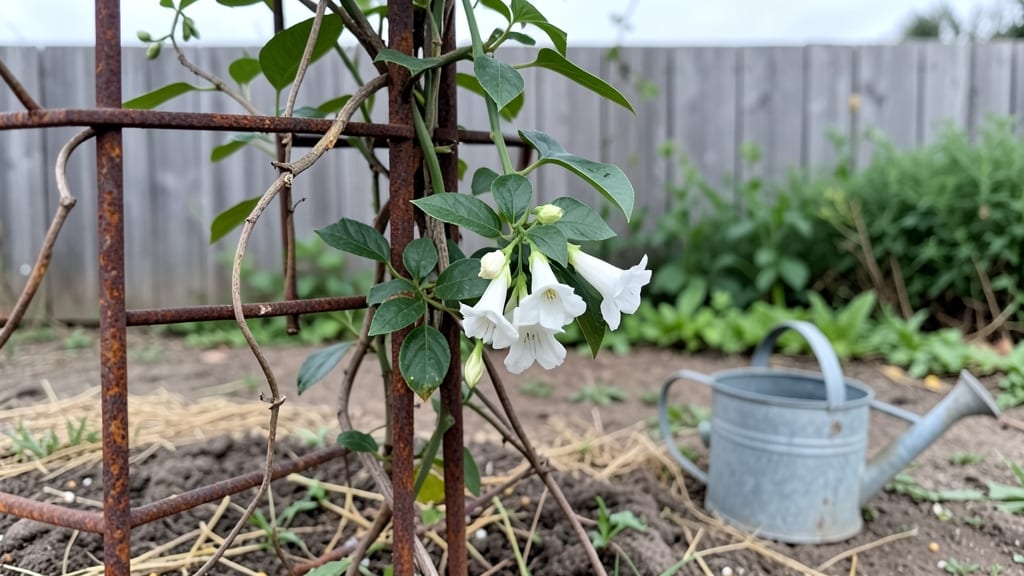
My jasmine plant food recipe isn’t just fertilizer—it’s the secret to lush vines that perfume your garden from spring through fall. 🌿 After years of struggling with weak blooms and sparse fragrance, I perfected a balanced blend that strengthens roots while encouraging those signature white flowers.
The key lies in understanding what jasmine craves: phosphorus for blooms, nitrogen for foliage, and micronutrients to prevent yellowing leaves.
You’ll need just five simple ingredients: a balanced organic fertilizer (like 10-10-10), composted manure for slow-release nutrients, crushed eggshells for calcium, a handful of kelp meal for micronutrients, and a splash of molasses to feed beneficial soil microbes.
Mixing this once every 4-6 weeks during growing season keeps your jasmine thriving without burning delicate roots. Over-fertilizing is the fastest way to kill fragrance—so less is more.
The results are immediate and intoxicating: velvety green leaves, clusters of star-shaped blooms, and an intoxicating scent that lingers in the evening air. Even my neighbor’s jasmine, which had given up on blooming, revived after just two feedings.
The best part? This recipe works for both climbing and bush varieties, whether you’re growing in pots or garden beds.
For winter care, cut back to monthly feedings with half the strength—jasmine rests but still needs nutrients to survive. Watch for signs like leaf drop or brown tips, which mean you’ve overdone it.
With this approach, your jasmine will reward you with year-round fragrance that makes every evening feel like a tropical escape.
📚 In This Guide
- What you need
- Instructions
- Tips and common mistakes
- Wrapping up and next steps
What you need
- ● 1 cup of well-aged compost (homemade or store-bought, organic preferred)
- ● 1 tablespoon of fish emulsion (or 1 tbsp liquid seaweed fertilizer for a vegan option)
- ● 1 tablespoon of Epsom salt (magnesium sulfate) (boosts green growth and flower production)
- ● 1 cup of rainwater or distilled water (chlorine-free for plant health)
- ● 1 small bowl (for mixing)
- ● 1 measuring spoon (for precise ingredient ratios)
- ● Fine-mesh strainer (to remove compost chunks before use)
- ● Spray bottle (for easy application to leaves and soil)
- ● pH testing kit (to check soil acidity—jasmine thrives in slightly acidic soil, pH 6.0–6.5)
- ● Gloves (if handling fish emulsion or compost)
- ● A healthy jasmine plant (no signs of pests, disease, or severe nutrient deficiency)
- ● Well-draining soil (jasmine hates soggy roots—ensure your pot has drainage holes!)
- ● Patience! (Let the mix sit for 10–15 minutes before applying to let nutrients activate.)
Step-by-step instructions for homemade jasmine plant food
Here’s how to whip up a nutrient-rich, organic fertilizer that’ll keep your jasmine blooming like crazy.
🌿 Step 1: Gather and Mix the Base Ingredients
Start by combining 1 part banana peels (finely chopped) with 1 part coffee grounds in a bowl. The banana peels provide potassium for vibrant blooms, while coffee grounds add nitrogen and acidity—jasmine thrives in slightly acidic soil. If you’re using dried materials, soak them in warm water for 30 minutes to soften before mixing.
Next, fold in 1 part eggshells (crushed into fine pieces) and 1 part wood ash. The eggshells supply calcium, and the wood ash boosts potassium while balancing pH. For a 4-serving batch, use 1 cup of each ingredient—this ensures balanced nutrition without overwhelming your plant. Stir everything together until uniformly moist but not soggy.
💧 Step 2: Add Liquid Nutrients for Instant Uptake
In a separate container, mix 1 part compost tea (strained) with 1 part molasses (just 1 tablespoon per quart of water). Molasses feeds beneficial microbes in the soil, which break down nutrients faster. Pour this liquid mixture over the dry ingredients and stir again. The molasses should dissolve completely, creating a thick, dark liquid.
Let the blend sit for 24 hours in a covered container. This allows the microbes to activate and the nutrients to meld. You’ll notice a slight fermentation smell—this is normal and indicates the mix is working. If it smells overly sour or rotten, reduce the molasses next time.
☀️ Step 3: Apply Fertilizer to Jasmine Plants
Dilute the mixture with equal parts water before applying—1 part fertilizer to 2 parts water—to prevent burning roots. Water your jasmine plants deeply at the base, ensuring the soil absorbs the nutrients without runoff. Apply this feed every 4-6 weeks during the growing season (spring through fall) for continuous blooms.
Watch for new leaves and buds within 2-3 weeks—this is your signal the fertilizer is working. Jasmine responds beautifully to organic feeds, especially when combined with regular pruning to encourage bushier growth. Avoid applying fertilizer in winter unless your plant is in a heated indoor space.
✂️ Step 4: Maintain Soil Health Between Feedings
Between applications, top-dress the soil with a thin layer of worm castings (about ½ inch) to replenish micronutrients. Jasmine loves well-draining, aerated soil, so gently loosen the top 2 inches of soil monthly to prevent compaction. This also encourages deeper root growth, which supports more robust flowering.
If you notice yellowing leaves or stunted growth, your plant may need more nitrogen—add a sprinkle of fish emulsion to the next feeding. Conversely, if blooms are sparse, increase the potassium-rich ingredients (like wood ash or banana peels) in your next batch. Balance is key!
Tips & tricks for perfect jasmine plant food
Here's what nobody tells you about crafting the ideal organic fertilizer for your jasmine—these are the details that make all the difference between decent growth and show-stopping blooms.
Ingredient Prep Matters: When soaking dried banana peels and coffee grounds for those 30 minutes, use warm—not hot—water. Hot water can leach out nutrients before they even get a chance to infuse. Chop the banana peels into ¼-inch pieces for faster nutrient release, and crush eggshells until they're powder-fine—this ensures maximum calcium absorption. I learned this the hard way after noticing my jasmine's new leaves still had brown tips from incomplete mineral breakdown.
Fermentation Control: That 24-hour fermentation is your secret weapon, but timing is everything. Place your covered container in a spot where the temperature stays between 65-75°F—warmer than that and you'll risk over-fermentation (think vinegar smell), cooler and the microbes won't activate properly. Give it a gentle stir every 8 hours to distribute oxygen and prevent mold. The perfect mix should smell like fresh soil with a hint of sweetness—never like a science experiment gone wrong.
Application Technique: When diluting your fertilizer with 2 parts water, use a fine-mist sprayer for established plants or a watering can with a rose attachment for seedlings. This ensures even distribution without overwhelming the roots. I've seen gardeners make the mistake of pouring it all in one spot—jasmine roots spread wide but shallow, so you want that nutrient blanket across the entire soil surface. Apply in the morning so any excess has time to absorb before evening evaporation.
Troubleshooting Tips: If your jasmine's leaves start yellowing between feedings, it's often a sign of over-fertilization. Cut back to every 6-8 weeks instead of the standard 4-6 week schedule and flush the soil with plain water. For sparse blooms, increase your wood ash by 25% in the next batch—jasmine loves that extra potassium push. And if you notice white residue on the soil surface after application, that's normal mineral crystallization—just gently scratch it into the top inch with your fingers.
Pro Tips for Jasmine Plant Food
- Here's what nobody tells you about crafting the ideal organic fertilizer for your jasmine—these are the details that make all the difference between decent growth and show-stopping blooms.
- Ingredient Prep Matters: When soaking dried banana peels and coffee grounds for those 30 minutes, use warm—not hot—water.
- Fermentation Control: That 24-hour fermentation is your secret weapon, but timing is everything.
Frequently asked questions
Got questions about keeping your jasmine plant thriving with the right food? We’ve got answers!
Here are some of the most common queries—plus quick fixes to keep those fragrant blooms coming.
How often should I feed my jasmine plant?
Feed your jasmine plant every 4-6 weeks during spring and summer (active growth). In fall and winter, reduce to once every 8-12 weeks or skip entirely if growth slows. Overfeeding can burn roots—always dilute fertilizer to half-strength for extra safety!
Can I use regular houseplant fertilizer instead of homemade jasmine plant food?
Yes! A balanced 10-10-10 or 20-20-20 liquid fertilizer works in a pinch, but jasmine loves a higher phosphorus boost (like 10-30-10) to encourage blooms. Just adjust the frequency—homemade recipes (like banana peel tea or fish emulsion) are gentler and packed with micronutrients.
Why are my jasmine leaves turning yellow after feeding?
Yellow leaves usually mean over-fertilization or root burn. Flush the soil with water to rinse excess salts, then hold off on feeding for 4-6 weeks. If the problem persists, check your plant’s drainage—jasmine hates soggy roots! Pro tip: Always water before fertilizing to protect delicate roots.
What’s the best homemade fertilizer for jasmine blooms?
Jasmine adores banana peel tea (rich in potassium for blooms) or egg shells crushed into water (calcium boost). For a quick fix, mix 1 tbsp Epsom salt per gallon of water monthly—it’s a magnesium powerhouse! Bonus: Coffee grounds (used, composted) add nitrogen and acidity for happy jasmine.
How do I know if my jasmine plant is hungry?
Watch for these signs: slow growth, pale leaves, or sparse blooms. Jasmine also “asks” for food by dropping buds or growing leggy stems. Test your soil’s pH (aim for 6.0–6.5)—low pH can lock out nutrients, even if you’re feeding regularly!
Wrapping up and next steps
Growing a thriving jasmine plant is all about feeding it the right nutrients—and you’ve got the perfect homemade recipe! 🌿 With just a few simple ingredients, you can create a fragrance-packed fertilizer that keeps your plant blooming beautifully year-round.
The key? Consistency, balance, and a little patience—your jasmine will reward you with intoxicating scent and lush greenery.
Now that you’re armed with the knowledge, roll up your sleeves and get growing! Try this recipe this week, observe your plant’s response, and adjust as needed. Happy gardening—and may your home always smell like a tropical paradise! 🌸