
Blooming
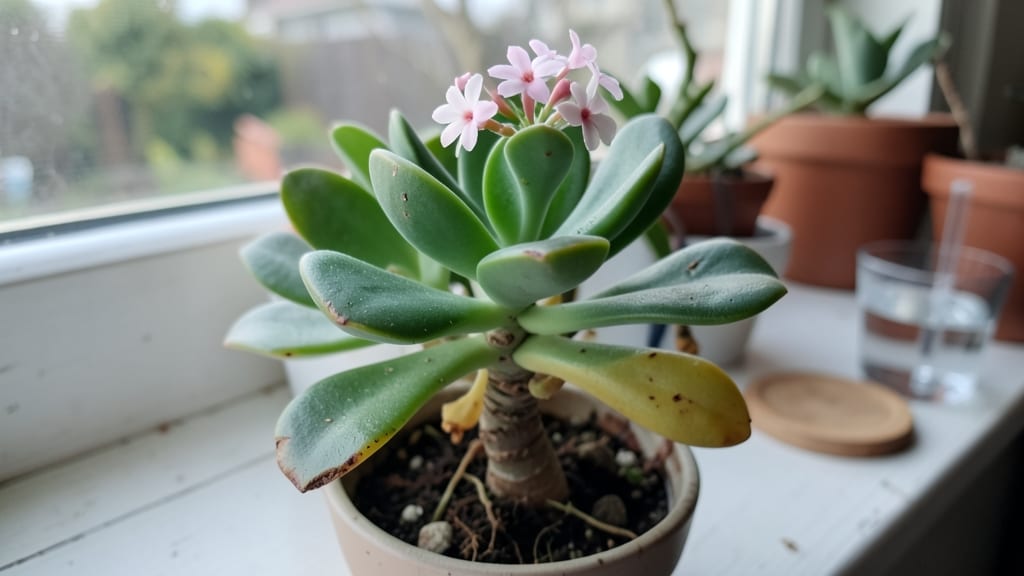
Jade plant flowering is the ultimate reward for patient growers—those tiny white or pink blooms are worth every year of care. 🌟 I’ve watched my own jade plant sit for years without a single flower, until I finally cracked the code on light, temperature, and a little strategic pruning.
The myth that jade plants “rarely flower indoors” is just that—a myth, once you know the tricks.
Here’s the thing—jade plants need bright, direct sunlight for at least 6 hours a day, but they also demand consistent cool nights in winter to trigger blooming. Most people overwater or fertilize too much, which actually prevents flowers.
My plant finally bloomed after I cut back on watering, moved it to a cooler spot at night, and used a low-phosphorus fertilizer in early spring. It took three years, but those first flowers made it all worth it.
By the time spring rolls around, you’ll see those delicate, star-shaped blooms on long stems, often followed by tiny green seedlings that look like miniature jade plants. The secret isn’t just waiting—it’s creating the right conditions and giving your plant the light and rest it craves.
Once you see those flowers, you’ll understand why gardeners obsess over this slow-growing treasure.
This method works for both container-grown jade plants and those in the ground, though indoor plants may need a grow light to supplement winter light. If your plant still refuses to bloom after a year, we’ll troubleshoot the most common mistakes—like overpruning or skipping the cool-season chill.
Let’s get those blooms happening!
📚 In This Guide
- What you need
- Instructions
- Tips and common mistakes
- Wrapping up and next steps
What you need
- ● Mature Jade Plant (Crassula ovata) – At least 5+ years old (younger plants rarely bloom).
- ● Bright, indirect sunlight – A south- or west-facing window (or grow lights for 12–14 hours/day).
- ● Well-draining soil mix – Cactus/succulent blend (e.g., 60% mineral grit, 30% potting soil, 10% perlite).
- ● Pot with drainage holes – Slightly root-bound (1–2 inches smaller than the plant’s height).
- ● Watering can with a narrow spout – For precise hydration (avoid soggy soil!).
- ● Balanced fertilizer – Diluted 10-10-10 or 20-20-20 (apply every 4–6 weeks in spring/summer).
- ○ Thermometer/hygrometer (optional but helpful) – To monitor 60–75°F temps and 40–50% humidity.
- ● Grow lights (LED full-spectrum) – For 12+ hours/day if natural light is limited.
- ● Peat moss or sphagnum moss – To boost humidity during dormancy.
- ● Calcium supplement (e.g., crushed eggshells) – Supports blooming (sprinkle lightly on soil).
- ● Plant support (toothpick or small stake) – If stems grow heavy with buds.
- ● Journal/notebook – Track light, water, and fertilizer changes for bloom success!
Step-by-Step guide to encouraging jade plant flowering
Here's how to coax those stunning, rare blooms from your jade plant—no shortcuts, just proven care.
☀️ Step 1: Provide Bright, Indirect Light for 4+ Years
Jade plants (Crassula ovata) only bloom after reaching maturity, which typically takes 4-5 years with proper light. Place your plant in a south- or west-facing window where it receives 4-6 hours of direct sunlight daily, then supplement with bright, indirect light for the remaining daylight hours. Avoid harsh midday sun, which can scorch the thick, succulent leaves—look for soft, filtered light instead.
You'll know the light is right when the leaves develop a deep, vibrant green hue with subtle reddish-pink edges. If the leaves stretch toward the light (called "etiolation") or turn pale, move the plant closer to the window. In winter, when daylight shortens, supplement with a grow light positioned 12-18 inches away for 12-14 hours daily. This mimics the longer daylight periods jade plants need to trigger flowering.
⏰ Step 2: Simulate Seasonal Changes with Temperature Fluctuations
Jade plants require a cooling period to initiate blooming, just like many temperate-zone plants. During late fall and winter, reduce nighttime temperatures to 50-55°F while maintaining daytime warmth of 65-75°F. This 10-15°F drop at night signals the plant to enter dormancy and set flower buds. If you live in a warm climate, move the plant outdoors to a sheltered, shaded patio during cooler months.
Watch for slower growth and slightly wrinkled leaves—these are signs the plant is conserving energy for flowering. Avoid fertilizing during this period, as jade plants need low nutrient availability to trigger blooms. If your home stays consistently warm year-round, create a cool spell by placing the plant in a garage or basement (away from cold drafts) for 4-6 weeks before returning it to warmer conditions.
💧 Step 3: Adjust Watering to Mimic Drought Conditions
Overwatering is the #1 killer of jade plant blooms, as excess moisture prevents the plant from entering the stress-induced dormancy needed for flowering. Water only when the top 2-3 inches of soil feel completely dry to the touch—this usually means every 3-4 weeks in winter and every 2 weeks in summer. Stick your finger 1 inch into the soil; if it’s damp, wait longer.
When you do water, soak the soil thoroughly until water drains from the bottom of the pot, then empty the saucer to prevent root rot. In winter, reduce watering to once every 4-6 weeks, allowing the soil to dry out completely between waterings. You’ll notice the leaves pucker slightly—this is normal and indicates the plant is conserving moisture. If the leaves shrivel excessively or fall off, you’ve gone too far; revive the plant by placing it in bright, indirect light and watering sparingly until new growth appears.
🌱 Step 4: Fertilize Strategically for Bloom Development
Once your jade plant shows signs of new growth in early spring (usually February or March), switch to a balanced, water-soluble fertilizer with equal parts nitrogen, phosphorus, and potassium (e.g., 10-10-10). Apply half-strength fertilizer every 4-6 weeks during the active growing season (spring and summer) to encourage strong root and foliage development, which supports future blooms.
In late summer, when flower buds begin to form (visible as tiny bumps in the leaf axils), switch to a low-nitrogen, high-phosphorus fertilizer (e.g., 5-10-5) to promote flowering. This shift in nutrients signals the plant to redirect energy toward bloom production. Stop fertilizing 8-10 weeks before the expected bloom time (usually late fall) to allow the plant to focus solely on developing buds. If you fertilize too late, the plant may produce leafy growth instead of flowers.
✂️ Step 5: Prune and Support Flower Stems Gently
Once flower buds appear (typically late fall to early winter), avoid pruning or disturbing the plant, as this can cause buds to drop. If the flower stems grow top-heavy or lean, support them with a small stake or trellis to prevent breakage. Jade plant flowers are fragile and delicate, so handle them with care—never touch the blooms directly, as their waxy coating can be damaged by oils from your skin.
After flowering, the plant may produce seed pods, which can drain energy. Once the blooms fade and the pods turn brown and dry, snip them off at the base with clean, sharp scissors to encourage the plant to redirect energy into new growth. Prune any yellowed, damaged, or leggy stems in early spring to maintain the plant’s shape and promote bushier growth for next year’s blooms. Use sterilized pruners to prevent introducing pathogens to the fresh cuts.
Tips & tricks for perfect jade plant flowering
Patience is the key to unlocking those rare jade plant blooms—here's how to give your plant the exact conditions it needs to thrive and flower.
Light Quality Matters: The 4-6 hours of direct sunlight in Step 1 should be morning or late afternoon light to prevent scorching. I've seen plants in harsh midday sun develop white or yellow patches—these are sunburn signs. For indoor growers, rotate your plant quarter-turn weekly so all sides get even light exposure. This prevents lopsided growth and ensures the plant develops uniformly, which is crucial for flower bud formation.
Temperature Fluctuation Timing: That 10-15°F drop between night and day temperatures in Step 2 is non-negotiable for blooming. I recommend using a thermometer to monitor nighttime temps—50-55°F is ideal. If your home stays above 65°F at night year-round, create the cool spell by moving the plant to a garage or basement for 4-6 weeks before returning it to warmth. This mimics natural seasonal changes that trigger flowering.
Watering Technique: The top 2-3 inches dry rule in Step 3 is critical, but how you water matters just as much. I use the soak-and-drain method: water until it runs freely from the drainage holes, then empty the saucer immediately. This prevents root rot while ensuring the plant gets a thorough drink. In winter, when you're watering every 4-6 weeks, let the soil dry out completely—even slightly wrinkled leaves are better than soggy soil. The plant needs this drought-like condition to signal it's time to conserve energy for blooming.
Fertilizer Transition Strategy: When you switch to that low-nitrogen, high-phosphorus fertilizer (5-10-5) in late summer, do it gradually. Start with quarter-strength for the first application, then increase to half-strength. This helps prevent leafy growth instead of flowers, which happens when plants get too much nitrogen too quickly. The goal is to redirect energy to flower buds, not foliage. Stop fertilizing 8-10 weeks before expected bloom time—this is when the plant needs to focus all its energy on developing those delicate blooms.
Pro Tips for Jade Plant Flowering
- Patience is the key to unlocking those rare jade plant blooms—here's how to give your plant the exact conditions it needs to thrive and flower.
- Light Quality Matters: The 4-6 hours of direct sunlight in Step 1 should be morning or late afternoon light to prevent scorching.
- Temperature Fluctuation Timing: That 10-15°F drop between night and day temperatures in Step 2 is non-negotiable for blooming.
Frequently asked questions
Got questions about coaxing those rare jade plant blooms? You’re not alone—even seasoned plant parents scratch their heads when it comes to this finicky beauty! Below, we tackle the most common curiosities about jade plant flowering, from timing to troubleshooting. Let’s dive in!
How often does a jade plant flower, and why is it so rare?
A healthy jade plant (Crassula ovata) typically flowers every 5–10 years in ideal conditions—though some may never bloom indoors. Their rarity stems from needing maturity (3+ years old), bright light, and a strict winter dormancy period to trigger flowering. Think of it as a slow-burn reward for your patience!
What’s the best time of year to expect jade plant flowers?
Jade plants usually produce buds in late winter or early spring (February–April in the Northern Hemisphere), right after their dormancy phase. If you’ve given them 6+ weeks of cooler temps (50–60°F) and minimal water, you’re on the right track. Missed the window? Don’t stress—consistency next year will help!
Can I make my jade plant flower faster?
While you can’t force blooms overnight, you can optimize conditions to encourage them:
- Light: Place it in a south-facing window or under grow lights (12+ hours/day).
- Dormancy: Reduce watering and temps in winter (like a mini "hibernation").
- Fertilizer: Use a balanced, diluted fertilizer in spring/summer (skip winter!).
What do jade plant flowers look like, and how long do they last?
Jade flowers are star-shaped, pink to white, and clustered on tall stems (up to 6 inches!). They’re fragrant and last 1–2 weeks before fading. If yours never opens, check for overwatering or lack of light—both can stunt buds. Pro tip: Deadhead spent blooms to redirect energy to new growth!
Why did my jade plant get buds but no flowers?
Bud drop is frustrating, but it’s usually due to:
- Sudden stress: Overwatering, drafts, or temperature swings.
- Light issues: Too little light weakens buds; too much direct sun can scorch them.
- Nutrient imbalance: Lack of phosphorus (key for blooms) or over-fertilizing.
Can jade plants flower indoors, or do they need outdoor conditions?
While outdoor jades (in USDA Zones 10–12) may bloom more reliably, indoor jades can flower with the right care:
- Use grow lights if natural light is dim.
- Mimic seasonal changes with cooler temps in winter (e.g., near a window away from heaters).
- Ensure well-draining soil to prevent root rot.
Wrapping up and next steps
Witnessing your jade plant flower is a magical reward for your care and patience—so don’t be discouraged if it takes time! 🌸 The key lies in consistent light exposure, proper watering, and a little extra love during its dormant phase.
With these tricks, you’re well on your way to unlocking those rare, star-shaped blooms.
Ready to take the next step? Celebrate your progress—even small adjustments make a difference! Share your blooming journey with fellow plant parents or explore jade plant care communities for more inspiration. Happy growing! 🌱