Pruning
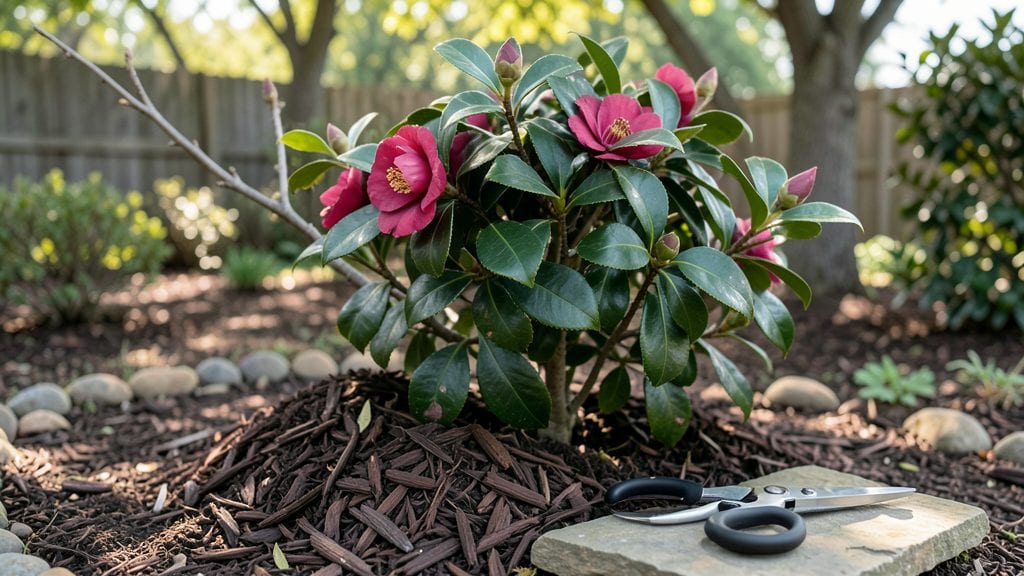
Pruning Japonica plants transforms them from sparse stems into dense, blooming shrubs—if you time it right and use the correct cuts. I learned this the hard way after shearing my camellia back in summer and ending up with half as many flowers the next spring.
The secret lies in matching your cuts to the plant’s natural growth cycle, whether you’re working with Camellia japonica, Gardenia jasminoides, or other Japonica varieties.
You’ll need just three tools: sharp bypass pruners (dull blades crush stems), clean rubbing alcohol for sterilizing cuts, and a pair of gloves to protect from thorns. Start by removing dead or crossing branches first—these are the easy wins that open up the plant’s center.
Then focus on shaping: for camellias, aim to maintain a rounded form, while gardenias respond well to a slightly more open structure to improve airflow and flowering.
After pruning, give your Japonica a deep watering and hold off on heavy fertilizer for about six weeks to let the cuts heal. You’ll notice fresh green shoots within three to four weeks, and by next season, your plant will be fuller with more abundant blooms.
The key is patience—over-pruning in one season often means fewer flowers the following year, so take it slow and observe how your plant responds.
This method works for both container-grown Japonicas and those planted in the ground, though potted plants may need slightly more frequent trims to control size. Whether you’re dealing with a mature camellia or a young gardenia, the same principles apply—just adjust the intensity based on the plant’s age and vigor.
Root Causes Of Overgrowth
If your Japonica plant (like Hydrangea macrophylla or Camellia japonica) is growing leggy, sparse, or struggling to bloom, the issue often stems from underlying biological triggers.
Understanding these causes helps you prune strategically—so you’re not just cutting blindly but addressing the real reasons your plant behaves the way it does.
When roots become densely packed or compete for nutrients, your Japonica plant sends out weak, elongated stems in a desperate bid for sunlight. This happens in two key scenarios:
- 🔬 Soil compaction or poor drainage: Compacted soil restricts root expansion, forcing roots to grow in tight clusters. Japonica plants, especially hydrangeas, thrive in well-draining, aerated soil. If water pools around the base or the soil feels like a brick when dry, roots suffocate. Actionable fix: Amend soil with organic matter (compost or peat moss) and avoid heavy clay blends.
- 🌿 Root-bound pots: Container-grown Japonica plants hit their growth limit when roots circle the pot’s interior, creating a "root ball." This triggers apical dominance—where the top growth stretches upward while lower branches weaken. Actionable fix: Repot every 2–3 years in a container just 1–2 inches larger in diameter, or move to ground soil if outdoors.
Pro tip: 💡 Tap the pot gently before repotting—if roots emerge easily, it’s time to upgrade!
Timing is everything for Japonica plants, which bloom on old wood (last year’s growth) or new wood (current season’s stems), depending on the variety. Cutting at the wrong time can signal the plant to focus on foliage over flowers—or worse, trigger dieback.
| Mistake | Why It Happens | Impact |
|---|---|---|
| Pruning after blooms appear (e.g., cutting hydrangea flowers in late summer). | Old wood bloomers (like Hydrangea macrophylla) set flower buds the previous summer. Late cuts remove next year’s blooms. | No flowers the following season; leggy, sparse growth. |
| Heavy pruning in winter (below the first set of leaves). | Dormant-season cuts stress the plant, as it’s already conserving energy. Japonica varieties like camellias need minimal winter pruning. | Delayed spring growth; increased susceptibility to frost damage. |
| Pruning new wood bloomers (e.g., Hydrangea paniculata) too early (before spring flush). | New wood bloomers need current season’s growth to form buds. Early cuts remove potential flower sites. | Fewer or smaller blooms; weak stems. |
Pro tip: ✨ For old wood bloomers, prune right after flowering (late spring/early summer) to shape without sacrificing next year’s blooms.
Light deprivation and nutrient deficiencies force Japonica plants to prioritize survival over aesthetics. Here’s how it plays out:
- 🌿 Insufficient sunlight: Japonica plants (especially camellias and hydrangeas) need 4–6 hours of direct sun daily. Shady spots trigger etiolation—where stems elongate and leaves grow pale in a bid to reach light. Actionable fix: Gradually acclimate plants to sunnier spots (avoid sudden exposure to prevent leaf scorch). Use dappled shade for partial sun varieties.
- 🌱 Nutrient deficiencies (especially nitrogen or phosphorus):
- Nitrogen (N) deficiency: Leads to slow growth, yellowing lower leaves, and weak stems. Common in over-pruned or root-bound plants.
- Phosphorus (P) deficiency: Causes dark, purplish stems and poor flowering. Often seen in acidic soils (ideal for Japonica plants) lacking bone meal or rock phosphate.
Pro tip: 🌡️ Yellow leaves? Check for chlorosis (iron deficiency)—common in alkaline soils. Apply chelated iron or sulfur to lower pH.
Hidden invaders like aphids, scale insects, or fungal diseases (e.g., powdery mildew) sap your plant’s energy, leading to stunted growth and poor blooming. Here’s how they sabotage your Japonica:
- 🐜 Sap-sucking pests (aphids, scale): These insects inject toxins that distort new growth, causing witches’ broom (dense, bushy clusters of weak stems). They also excrete honeydew, a sticky residue that attracts sooty mold, further blocking sunlight. Actionable fix: Spray with neem oil or introduce ladybugs for biological control.
- 🍄 Fungal infections (powdery mildew, botrytis): High humidity or poor airflow encourages fungal spores to coat leaves and stems. Infected areas turn gray/white (mildew) or develop brown, mushy spots (botrytis), reducing photosynthesis. Actionable fix: Prune for air circulation, avoid overhead watering, and apply copper fungicide preventatively in spring.
Pro tip: 🎯 Inspect undersides of leaves and stem junctions—pests and fungi love hiding there!
Revive Your Japonica with Smart Pruning
If your Japonica plant isn’t thriving despite your best efforts, the issue likely lies in how or when you’re pruning. Below, we’ve mapped out common problems and their solutions—plus prevention tips to keep your plant lush and blooming year-round. 🌿✂️
Problem: Too many cuts or pruning at the wrong time can stress the plant, leading to sparse blooms or leggy growth.
Fix: 🔥 Step 1: Assess the Damage – Look for bare stems, yellowing leaves, or slow regrowth. If the plant looks skeletal, you’ve likely overdone it. 🍳 Step 2: Lighten the Load – Instead of aggressive cuts, focus on removing only dead or overcrowded branches. Aim for a 1/3 reduction max in one session. 👨🍳 Step 3: Feed & Hydrate – After pruning, give your Japonica a balanced fertilizer (10-10-10) and water deeply to recover. ⏰ Step 4: Wait for the Right Time – Prune after flowering (late summer/early fall) or in early spring—never mid-summer when blooms are forming.
Prevention Tips: ✔ Prune in stages if heavy trimming is needed—space cuts 4-6 weeks apart. ✔ Avoid pruning in extreme heat—opt for cooler mornings or overcast days. 💡 Pro Tip: Use sharp, sterilized shears to prevent disease transmission.
Problem: Pruning at the wrong season (e.g., winter dormancy or peak bloom) can stunt growth or kill buds.
Fix: 🌱 For Spring Pruning (Best for Shaping):
- Trim just as new growth begins (late February to March).
- Focus on shaping the bush—cut back about 1/3 of the oldest stems to encourage new shoots.
- Remove any crossing or weak branches to improve airflow.
🌸 For Post-Bloom Pruning (Late Summer/Fall):
- Wait until after flowers fade (August–September).
- Cut back spent blooms and leggy stems to redirect energy to next year’s buds.
- Avoid heavy pruning—just lightly tidy up to prevent winter stress.
❄️ Avoid Winter Pruning – Japonicas are semi-dormant in winter; pruning then can expose them to frost damage.
Prevention Tips: ✔ Mark your calendar – Spring (post-dormancy) and fall (post-bloom) are your pruning windows. ✔ Observe your plant – If buds form but don’t open, you may have pruned too late. 🔥 Pro Tip: Use a pruning guide (like a ruler on your shears) to make clean, angled cuts just above a leaf node.
Problem: Jagged cuts, leaving stubs, or pruning too close to the stem can invite disease or weaken the plant.
Fix: ✂️ Step 1: Use the Right Tools – Sharp, bypass pruners (not anvil shears) make clean cuts. 🔪 Step 2: Cut at the Right Angle –
- Make a 45-degree angle just above a leaf node or outward-facing bud.
- Avoid leaving stubs—these rot and attract pests.
🌡️ Step 3: Sterilize Between Cuts – Wipe blades with rubbing alcohol to prevent fungal spread.
Prevention Tips: ✔ Sharpen blades annually – Dull shears tear stems, causing stress. ✔ Disinfect tools before and after pruning different plants (especially if you have multiple Japonicas). 🎯 Pro Tip: If a branch is too thick for shears, use a pruning saw—but make the cut just outside the branch collar.
Problem: Skipping post-pruning care can leave your Japonica vulnerable to pests, disease, or slow recovery.
Fix: 💧 Step 1: Water Deeply – Soak the root zone to help the plant recover from stress. 🌿 Step 2: Mulch Well – Apply 2–3 inches of organic mulch (like shredded bark) to retain moisture and protect roots. 📊 Step 3: Fertilize Gently –
- Use a low-nitrogen, high-phosphorus fertilizer (e.g., 5-10-10) to encourage blooming.
- Avoid high-nitrogen feeds—these promote leafy growth over flowers.
Prevention Tips: ✔ Monitor for pests – Pruning wounds attract aphids or spider mites. Spray with neem oil if needed. ✔ Avoid over-fertilizing – Too much can burn roots; follow package instructions. ✨ Pro Tip: A light foliar spray with seaweed extract can boost recovery after pruning.
With these fixes, your Japonica will bounce back stronger—and next season’s blooms will be even more spectacular. Remember, pruning is an art, not a science, so don’t stress over perfection. A little patience and the right timing go a long way! 🌸💚
Frequently asked questions
When is the best time to trim my Japonica variety like camellias or gardenias?
For most Japonica plants, prune after flowering in late spring/early summer to shape without harming next year’s blooms. Camellias specifically bloom on old wood, so avoid heavy cuts in winter. Gardenias respond well to light shaping in early spring before new growth starts.
How much should I cut back during pruning?
Never remove more than 1/3 of the plant’s foliage in a single session. For shaping, focus on removing dead branches, crossing limbs, and thinning dense areas. Over-pruning stresses the plant and can reduce flowering. Start conservatively and observe regrowth.
Can I prune Japonica plants in containers differently than those in the ground?
Yes! Potted Japonicas need more frequent pruning to control size. Trim lightly every 4-6 weeks during growing season, and repot every 2-3 years to prevent root-bound stress. Ground-planted varieties can handle less frequent, more structured pruning.
What should I do if my Japonica looks stressed after pruning?
Give it immediate care: water deeply, apply 2-3 inches of mulch to retain moisture, and avoid fertilizing for 6 weeks. Monitor for pests (like aphids) and provide dappled shade if leaves appear wilted. Most plants recover within 3-4 weeks of proper post-pruning care.
Why do some Japonica varieties bloom better after pruning while others don’t?
Old wood bloomers (like camellias) set buds the previous summer, so pruning too late removes next year’s flowers. New wood bloomers (like some hydrangeas) thrive with spring pruning. Always check your specific variety’s blooming habit before cutting—timing is everything!