
Plants
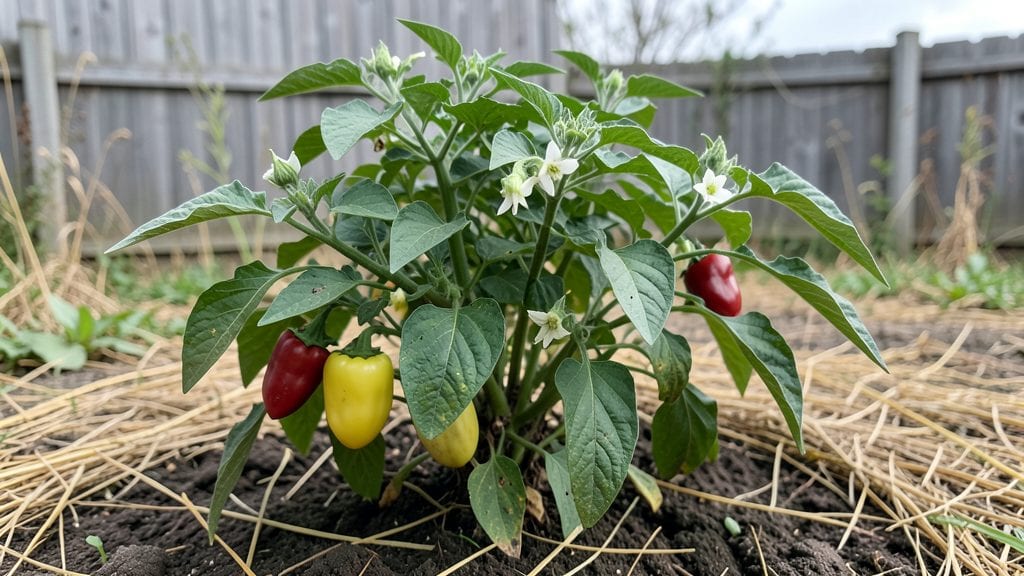
Identifying pepper plants starts with their distinctive serrated leaves and glossy dark green color—nothing else in the garden looks quite like them. 🌿 I’ve spent years confusing my bell peppers for tomatoes (until the fruit showed up), but once you know these leaf clues, you’ll spot them instantly.
The key is the leaf shape: elongated with pointed teeth, and a waxy sheen that repels water.
Common varieties like jalapeños, bell peppers, and habaneros all share these traits, but fruit shape and size differ wildly. A bell pepper’s broad, blocky pods are unmistakable, while jalapeños stay slender and pointed.
Eggplants and tomatoes have smoother leaves and grow in different patterns—pepper plants stay bushy with upright stems, never sprawling like vines.
Healthy pepper plants glow with vibrant foliage and firm stems, while diseased ones show yellowing leaves or spots. A quick leaf rub test reveals powdery mildew if white residue appears. Knowing your plants helps you prune correctly, harvest at the right time, and treat pests before they take hold.
Still unsure? Snap a photo and compare it to apps like PlantNet or the USDA’s plant database. Once you master these clues, you’ll never misidentify a pepper again—and your harvests will thank you for the care. Here’s how to confirm your plants with confidence.
What Triggers Misidentification
Pepper plants can be surprisingly tricky to identify at first glance—even for seasoned gardeners. Misidentification often stems from a mix of biological quirks, environmental factors, and human error. Understanding these causes helps you spot the subtle (or not-so-subtle) clues that distinguish one pepper variety from another.
Let’s break down the most common reasons why pepper plants get confused.
One of the biggest culprits behind misidentification is juvenile foliage. Young pepper plants—especially heirloom or hybrid varieties—often sport leaves that look nothing like their mature counterparts. For example:
- Bell peppers might start with jagged, serrated leaves that later smooth out into the classic heart shape.
- Jalapeños or Serranos can resemble each other early on, with narrow, lance-shaped leaves that only develop their signature serrations as they age.
- Sweet Banana peppers may initially have elongated, almost willow-like leaves before adopting their broader, banana-shaped mature form.
Actionable tip: 🔍 Wait until the plant is at least 6–8 inches tall and has produced 3–4 true leaves (not the initial seedling cotyledons) before attempting identification. If possible, compare it to a reference chart of mature pepper leaves.
Stress from temperature swings, humidity, or light exposure can warp leaf shape and color, making peppers look like entirely different species. Here’s how:
| Stressor | Leaf Reaction | Misidentification Risk |
|---|---|---|
| Cold snaps (<60°F/15°C) | Purple or bronze tinges, stunted growth, curled edges | Might resemble Purple Shallots or Black Krim tomatoes (which also turn purple under stress). |
| Excessive heat (>90°F/32°C) | Yellowing, scorch marks, smaller leaves | Could be mistaken for nutrient-deficient plants or diseased varieties like pepper mosaic virus. |
| Low light | Long, pale stems; leaves grow larger but thinner | Mimics leggy seedlings or overwatered peppers, confusing growers into thinking they’re a different cultivar. |
Pro tip: 🌡️ If your pepper’s leaves are acting “off,” note the conditions for 3–5 days. Stress-induced changes usually revert once the environment stabilizes. Take photos to track progress!
Not all peppers follow the “rulebook.” Hybridization (cross-pollination between varieties) and sports (random genetic mutations) can create leaves that defy expectations:
- Chimera peppers (like the Black Pearl) may produce striped or variegated leaves due to genetic mosaicism.
- F1 hybrids (e.g., Carolina Reaper × Jalapeño crosses) often have unpredictable leaf shapes because their traits blend unpredictably.
- Sports (e.g., a white-fruited mutation of a red pepper) can sprout leaves that look identical to the parent plant but bear entirely different fruit.
Actionable fix: 🧬 If you’re growing from seed or seeds saved from hybrids, label plants by parentage and monitor for unexpected traits. For mutations, isolate the plant and observe its fruit before assuming it’s a new variety.
Even with perfect plants, misidentification happens when we focus on the wrong clues. Common mistakes include:
- Ignoring the stem: Pepper stems vary wildly—hairy stems (like in Cayenne) vs. smooth stems (like Bell peppers) can be a dead giveaway.
- Overemphasizing leaf color: Purple leaves (common in Black Hungarian or Purple Beauty) might make you think it’s a tomato or eggplant.
- Confusing fruit with leaves: Some peppers (like Poblano) have heart-shaped leaves that resemble their fruit, leading to mix-ups with Tomatillos or Cherry Tomatoes.
Quick check: 🔎 Use the “Leaf-to-Fruit Ratio Test”—hold the leaf next to a mature pepper from the same plant. If the shapes are similar, you’re likely looking at a fruit-resembling leaf (common in Habanero or Thai Chili varieties).
By recognizing these triggers, you’ll sharpen your eye for the nuances that separate a Jalapeño from a Serrano or a Bell pepper from a Tomato. Next up: how to correctly identify your pepper plants using these clues!
Quick Fixes for Common Pepper Plant Issues
Once you’ve identified your pepper plant, you might notice a few problems—whether it’s wilted leaves, pests, or stunted growth. Don’t panic! Most issues have simple, effective solutions. Below, we’ll break down common problems by cause and provide step-by-step fixes, plus tips to keep your peppers thriving.
Cause: Too much water, lack of nitrogen, or poor drainage. Fix:
- 🔥 Check the soil: Stick your finger 1–2 inches deep. If it’s soggy, your plant is overwatered.
- 💧 Adjust watering: Water only when the top inch of soil feels dry. Use pots with drainage holes.
- 🌿 Feed your plant: Add a balanced fertilizer (like 10-10-10) or compost to replenish nitrogen.
- 🌡️ Prevent future issues: Mulch around the base to retain moisture without drowning roots.
Cause: Soft-bodied insects suck sap, weakening plants. Fix:
- 🔍 Inspect leaves: Look for sticky residue (honeydew) or tiny webs.
- 🚿 Blast them off: Spray leaves with a strong stream of water to dislodge pests.
- 🧴 Use natural remedies:
- Neem oil spray (mix 1 tbsp neem oil + 1 tsp mild soap + 1 quart water).
- Insecticidal soap (apply in the evening to avoid harming bees).
- 🌿 Prevent reinfestation: Keep plants healthy with proper spacing and prune crowded foliage.
Cause: Lack of sunlight, improper pruning, or stress. Fix:
- ☀️ Move to sunlight: Pepper plants need 6–8 hours of direct sun daily. Rotate pots weekly for even growth.
- ✂️ Prune correctly: Trim leggy stems and remove suckers (side shoots) to encourage bushier growth.
- 🌱 Boost flowering: Use a phosphorus-rich fertilizer (like 5-10-10) to promote blooms.
- 🌡️ Avoid temperature swings: Keep plants in 70–85°F zones—cold drafts or heat stress can halt fruit production.
Cause: Underwatering, low humidity, or fluoride buildup (from tap water). Fix:
- 💧 Water deeply: Soak the soil until water drains from the bottom (but don’t let it sit in water).
- 🌬️ Increase humidity: Place a tray of water near the plant or use a humidifier.
- 🚰 Use filtered water: If using tap water, let it sit out for 24 hours to reduce fluoride.
- 🌿 Trim damaged leaves: Snip off brown edges with clean scissors to prevent rot.
- 🌱 Rotate pots every few weeks for even sunlight exposure.
- 🍅 Harvest regularly to encourage more fruit production.
- 🌿 Monitor soil pH (ideal: 6.0–6.8). Test kits are cheap and easy to use.
- 🐞 Introduce beneficial insects like ladybugs to control pests naturally.
With these fixes, your pepper plant should bounce back—and soon, you’ll be reaping a bountiful harvest! 🌶️🔥
Frequently asked questions
How do I tell if my plant is a pepper vs. a tomato or eggplant?
Look at the leaves first—pepper plants have serrated, glossy green leaves with pointed teeth, while tomatoes have smooth, jagged-edged leaves and eggplants have rough, heart-shaped leaves. Pepper stems are also hairy (especially in hot varieties) and grow upright, unlike tomato vines.
Can I identify a pepper plant just by looking at the fruit?
Yes, but only if the fruit is mature! Bell peppers stay green until ripe, while jalapeños and serranos turn red/yellow. However, young peppers can look like tomatoes—always check the leaves first. Fruit shape is key: bell peppers are blocky, while hot peppers are slender and pointed.
What if my pepper plant leaves look strange or deformed?
Strange leaves could mean stress (heat/cold), pests (aphids), or disease (powdery mildew). Check for white residue (mildew) or tiny insects. If leaves are curled or purple, it’s likely environmental stress. Compare to healthy reference photos to confirm.
Are there apps or tools to help me identify my pepper plant?
Try PlantNet or PictureThis—upload a photo, and they’ll match it to a database. The USDA Plant Database also has pepper variety guides. For quick checks, bookmark PepperGeek.com’s leaf shape comparison charts.
Why do my pepper plant leaves look different from what I expected?
Young plants often have different leaf shapes than mature ones. Hybrid varieties or genetic mutations (like variegated leaves) can also throw you off. Wait until the plant is 6+ inches tall and has 3-4 true leaves before identifying—seedling leaves don’t count!