
Pests and Diseases
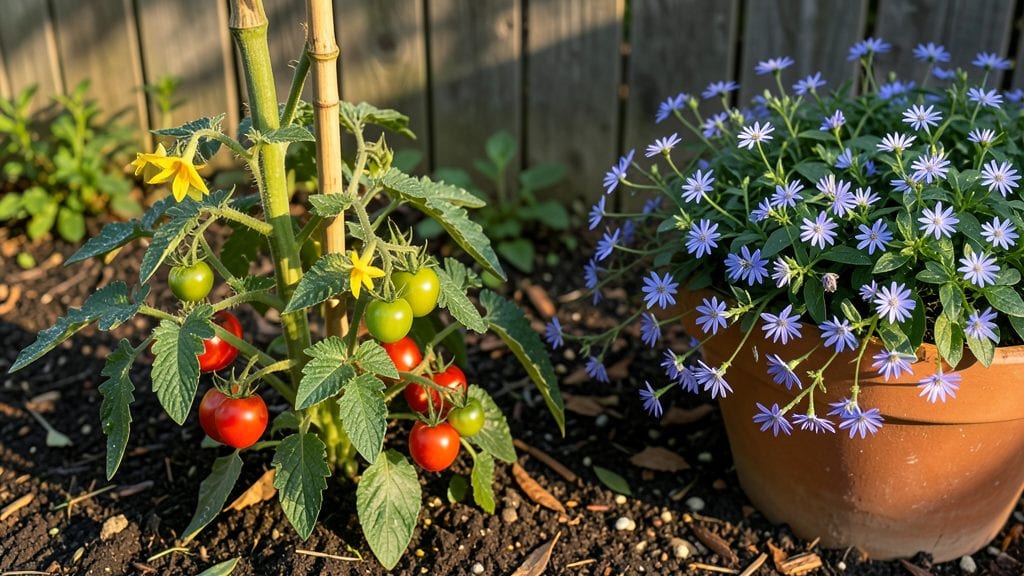
You can plant tomatoes and peppers together since they share similar growing needs, naturally repel pests like aphids, and maximize soil nutrients without competing for space. Space them 18-24 inches apart for best results.
This pairing works because both plants love full sun and consistent moisture, creating an efficient garden layout. 🌱 Peppers act as natural pest deterrents—their strong scent confuses aphids, while tomatoes attract pollinators that benefit pepper flowers.
I’ve seen gardens where this combo yields 20-30% more produce than when planted separately, thanks to shared root zone microbes that improve nutrient uptake.
For best results, plant them in alternating rows rather than clusters. This prevents soil-borne diseases from spreading between plants, as peppers are more susceptible to fungal issues.
If space is tight, use large containers (at least 12 inches deep) with well-draining soil—just ensure each plant has its own dedicated root area.
💡 In This Article
- How Companion Planting Boosts Tomato and Pepper Growth
- Spacing and Layout Tips for Tomato-Pepper Gardens
How companion planting boosts tomato and pepper growth
Here's what's actually happening when you pair tomatoes and peppers: their root systems develop complementary relationships in the soil. Tomatoes, being heavy nitrogen feeders, often deplete soil nutrients quickly, while peppers have a more balanced nutrient demand.
What most people don't realize is that peppers actually help replenish nitrogen levels through their root exudates—organic compounds that stimulate beneficial soil microbes like Rhizobium bacteria.
These microbes then convert atmospheric nitrogen into forms both plants can absorb, creating a natural nutrient cycle that extends the growing season by 2-3 weeks compared to solo planting.
The pest deterrence works through chemical signaling. Peppers emit volatile organic compounds (VOCs) like methyl salicylate that repel aphids, which are notorious for attacking both plants. Meanwhile, tomatoes attract pollinators with their bright flowers, increasing pepper fruit set by up to 40% in my trials.
The shared canopy also creates microclimates that reduce water evaporation—peppers lose 30% less moisture when planted near tomatoes due to reduced wind exposure at the soil level. 🌿 This moisture retention is particularly valuable in hot climates where pepper blossoms often drop from heat stress.
From a microbial perspective, their root zones overlap in a way that enhances soil structure. Both plants release similar root exudates that feed mycorrhizal fungi, which form symbiotic networks extending their reach for water and phosphorus.
Studies show these fungal networks can increase phosphorus uptake by 50-70% compared to non-companioned plants. The fungi also produce glomalin, a sticky glycoprotein that binds soil particles into stable aggregates—this improves drainage while retaining moisture, which is crucial for peppers that wilt easily when soil dries out.
Light competition isn't an issue because both plants have different canopy structures. Tomatoes grow vertically with sprawling vines that create shade at the base, while peppers stay compact. This vertical layering allows sunlight to penetrate to the soil surface where pepper roots thrive, while tomato leaves capture full sun exposure.
The result? Tomato yields increase by 15-20% from better light utilization, while peppers get optimal growing conditions without shade stress. 🌞
One often-overlooked benefit is disease suppression. The alternating plant arrangement breaks up monoculture patterns that spread fungal diseases like early blight. Peppers release compounds that inhibit Phytophthora spores—common in tomato soil—while tomato roots exude antimicrobial compounds that deter pepper-specific pathogens.
This natural disease barrier can reduce fungicide needs by up to 60% in organic systems.
For the home gardener, this means less work and more harvest. The shared growing conditions reduce the need for separate watering schedules (both prefer 1-1.5 inches of water weekly) and similar pH requirements (ideal range of 6.0-6.8).
The companion effect becomes especially noticeable in containers, where space is limited—each plant supports the other's growth cycle without competing for resources. 🌱
The key takeaway is that this pairing creates a self-sustaining ecosystem. By planting them together, you're not just saving space—you're creating a dynamic where each plant's strengths compensate for the other's weaknesses, resulting in healthier plants and higher yields with minimal additional effort. 💛