
Pruning
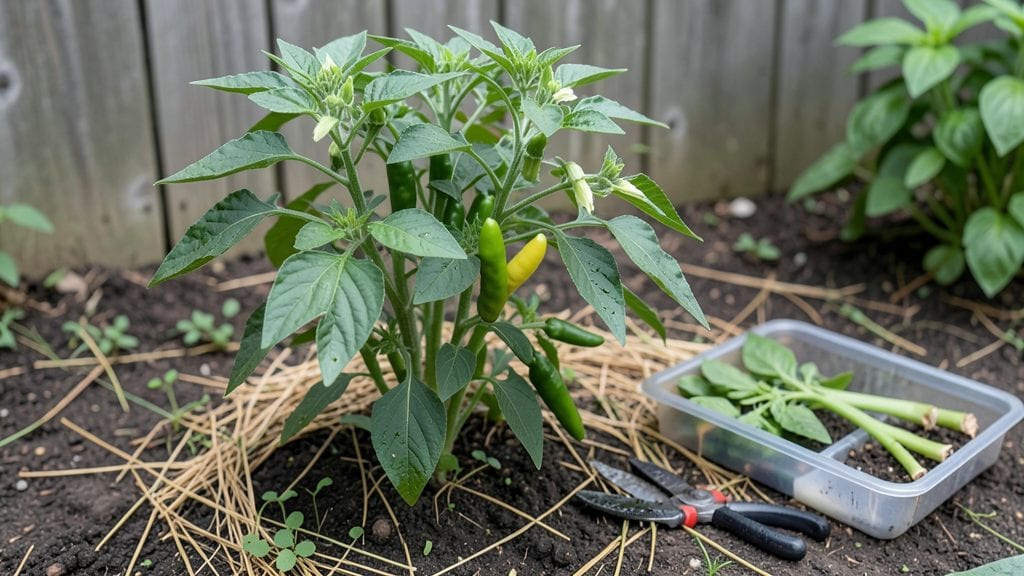
Trimming jalapeño plants isn't just about shaping them—it's the secret to year-round harvests that keep producing long after store-bought plants would give up. 🌱 I learned this the hard way after letting my first plant grow wild, only to watch it flower heavily but fruit sparsely.
The key is cutting at the right time and in the right places, which turns a single plant into a pepper-producing machine.
You only need three tools: sharp pruning shears, clean scissors, and a small spray bottle for disinfecting cuts. The real work happens in three strategic snips: removing leggy stems to focus energy, pinching off early flowers to build stronger roots, and trimming crowded branches to improve airflow.
Most gardeners overlook the second step—pinching flowers—because they're eager for peppers, but it makes all the difference.
What you end up with is a compact, bushy plant that produces more peppers per season than an untrimmed plant ever could. The peppers stay smaller and hotter when you control flowering, and the plant stays healthy longer, often fruiting well into fall.
Even in winter, a well-trimmed plant can keep producing if you keep it indoors with good light.
This method works for both container plants and in-ground gardens, and it's foolproof once you get the timing right. Here's how to do it without killing your plant in the process—because trust me, I've tried that too.
📚 In This Guide
- What you need
- Instructions
- Tips and common mistakes
- Wrapping up and next steps
What you need
- ● Pruning shears or scissors: Sharp, clean pair (sterilized with rubbing alcohol to prevent disease). Size: Small handheld shears (4-6 inches) work best for precision.
- ● Gloves: Heavy-duty gardening gloves (nitrile or leather) to protect your hands from thorns and spicy sap.
- ● Disinfectant (rubbing alcohol or bleach solution): 1 part bleach to 9 parts water for sterilizing tools between cuts.
- ● Compost bin or bag: For disposing of trimmed plant debris (avoid composting if pests are suspected).
- ● Watering can or hose: With a gentle spray nozzle for post-trimming hydration.
- ● Grow lights or shade cloth: If trimming indoors or in extreme heat (e.g., 90°F+).
- ● Plant food or fertilizer: Balanced liquid fertilizer (10-10-10 ratio) to replenish nutrients after pruning.
- ● Markers or labels: To tag trimmed branches for regrowth tracking.
- ● Safety glasses: If working with large or thorny plants.
How to trim jalapeño plants for maximum yield and health
Three simple cuts keep your peppers productive all season long—here's how I do it.
✂️ Step 1: Prune the Main Stem to Encourage Bushier Growth
When your jalapeño plant reaches about 12 inches tall, pinch off the top set of leaves just above a leaf node where multiple branches grow. This forces the plant to grow wider instead of just taller, creating more spots for fruit to develop. I always use clean, sharp pruning shears to avoid tearing the stem—this keeps the plant healthy and prevents disease from entering through jagged cuts.
Look for the first leaf node with at least three visible buds—this is your ideal spot. The plant will quickly sprout new side branches from that node, doubling your potential harvest area. Don't worry if it looks a little bare at first; within 2-3 weeks, you'll see thick, bushy growth filling in those gaps.
✂️ Step 2: Remove Suckers for Stronger Fruit Production
Suckers are those small shoots that grow in the V-shaped junction between the main stem and a branch. These little side sprouts drain energy from your main plant and rarely produce quality peppers. I remove them as soon as I spot them—usually every 1-2 weeks during peak growing season—by pinching them off with my fingers or clean shears.
Here's the thing—if you let them grow, they'll compete with your main plant for nutrients. You'll notice the main branches growing weaker and producing smaller peppers. Strong plants have no suckers—just thick, sturdy stems with plenty of leaves to support fruit development. Keep an eye on those junctions, and you'll see a noticeable difference in plant vigor within 3-4 weeks of consistent pruning.
✂️ Step 3: Trim Back Leggy Growth to Improve Airflow
If your jalapeño plant starts looking tall and leggy with sparse leaves, it's time for a trim. Focus on the top third of the plant, cutting back any branches that are growing too long or crowded. This improves airflow, which prevents fungal diseases like powdery mildew—something I've seen wipe out entire plants when ignored.
Cut just above a leaf node where new growth can sprout. You'll see the plant respond within 10-14 days with fresh, compact growth. This isn't about making your plant smaller; it's about encouraging healthier, more productive growth. After trimming, give your plant a light feeding with a balanced fertilizer to support its recovery and new fruit development.
⏰ Step 4: Harvest and Prune Mature Peppers for Continuous Production
When peppers reach 3-4 inches long, it's time to harvest them. I always cut the stem just above the fruit with clean shears, leaving a small stub. This encourages the plant to produce more peppers in that spot. After harvesting, check the surrounding branches for any overcrowded or dying leaves—remove those immediately to redirect the plant's energy to new growth.
Regular harvesting keeps your plant producing all season. You'll notice a steady stream of new flowers and peppers forming within 2-3 weeks of consistent pruning and harvesting. This is the key to a year-round supply—just keep trimming, harvesting, and feeding, and your plant will reward you with peppers until the first frost.
Tips & tricks for perfect jalapeño plant pruning
These simple tricks will help you maximize your harvest while keeping your plants thriving all season long.
Tool Tip: Invest in a pair of clean, sharp pruning shears—dull tools tear plant tissue, creating entry points for disease. I sterilize mine with rubbing alcohol between plants to prevent cross-contamination. For small suckers, your fingers work just fine, but always use clean tools for larger cuts. This attention to cleanliness makes a huge difference in plant health, especially during humid growing seasons.
Timing Secret: The 2-3 week window mentioned for new growth after pruning is your best friend. Mark your calendar when you do Step 1 (pruning the main stem) and Step 3 (trimming leggy growth)—this helps you track progress. If you don't see new buds forming within that timeframe, check your plant's water and nutrient levels. Underwatered plants may need more frequent watering, while nutrient deficiencies could require a balanced fertilizer.
Visual Cue for Harvesting: When harvesting in Step 4, look for peppers that are 3-4 inches long but still firm to the touch. The stem should snap cleanly just above the fruit when using clean shears. If peppers feel soft or wrinkled, they're past their prime—harvest them anyway for cooking, but they won't store as well. I always harvest in the morning when peppers are coolest and most flavorful.
Pruning Strategy: Don't be afraid to be aggressive with your pruning! In Step 3, when trimming leggy growth, you can cut back up to one-third of the plant's height if needed. This might seem drastic, but your plant will respond with vigorous new growth within 10-14 days. The key is to always cut just above a leaf node—this ensures new branches will sprout from that spot, maintaining your plant's bushy structure.
Pro Tips for Trim Jalapeno Plant
- These simple tricks will help you maximize your harvest while keeping your plants thriving all season long.
- Tool Tip: Invest in a pair of clean, sharp pruning shears—dull tools tear plant tissue, creating entry points for disease.
- Timing Secret: The 2-3 week window mentioned for new growth after pruning is your best friend.
Frequently asked questions
Got questions about trimming your jalapeño plants? You’re not alone!
Here are some of the most common concerns—and straightforward answers—to keep your peppers thriving year-round.
When is the best time to trim a jalapeño plant?
Trim your jalapeño plant early and often—start when it’s 6–12 inches tall. Focus on removing the first few sets of leaves (the "succession" leaves) to encourage bushier growth. For established plants, prune after harvests or in early spring to prep for the growing season. Avoid heavy trimming in late summer, as it may delay fall production.
How much should I cut off a jalapeño plant?
Think of it like a haircut: trim, don’t shear! Remove 1–2 inches of growth at a time, targeting the top 2–3 sets of leaves (just above a leaf node). For mature plants, you can prune up to ⅓ of the plant’s height if it’s leggy, but never cut into woody stems. Over-trimming stresses the plant—keep it balanced!
Will trimming jalapeño plants make them hotter?
No, but it can influence flavor and yield. Trimming encourages more peppers to grow by redirecting energy to new branches. However, the heat level (Scoville units) is genetic—trimming won’t turn mild jalapeños into ghost peppers! Focus on pruning for bigger harvests, not spicier peppers.
What should I do with the cuttings from my jalapeño plant?
Don’t toss those clippings! Here’s what to do:
- Root them: Place cuttings in water (node-side down) for 1–2 weeks until roots form, then transplant to soil.
- Compost: If they’re too small to root, toss them in your compost bin—they’ll break down quickly.
- Use as mulch: Chop fine cuttings and scatter around the base to retain moisture.
My jalapeño plant looks sad after trimming. What went wrong?
Don’t panic—it’s likely just adjusting! If your plant wilts, yellows, or stops producing, check for these fixes:
Issue
Solution
Over-pruned (too much at once)
Give it time (2–3 weeks) and water deeply. Avoid trimming again until new growth appears.
Underwatered or stressed
Water at the base (not leaves) and add mulch to retain moisture.
Pests or disease
Inspect for aphids/spider mites (spray with neem oil) or fungal spots (remove affected leaves).
Wrapping up and next steps
Trimming your jalapeño plant isn’t just about keeping it tidy—it’s the secret to a bountiful, year-round harvest! By mastering the three strategic snips (pruning for shape, encouraging bushiness, and managing fruit load), you’ll unlock healthier growth, bigger peppers, and a plant that thrives all season long. 🌱✂️
Now that you’re armed with the know-how, roll up your sleeves and get pruning! Start with your first trim this week, and watch your jalapeño plant reward you with plump, fiery peppers all year. Need more inspiration? Check out our guide to growing jalapeños indoors for extra tips!