
Pruning
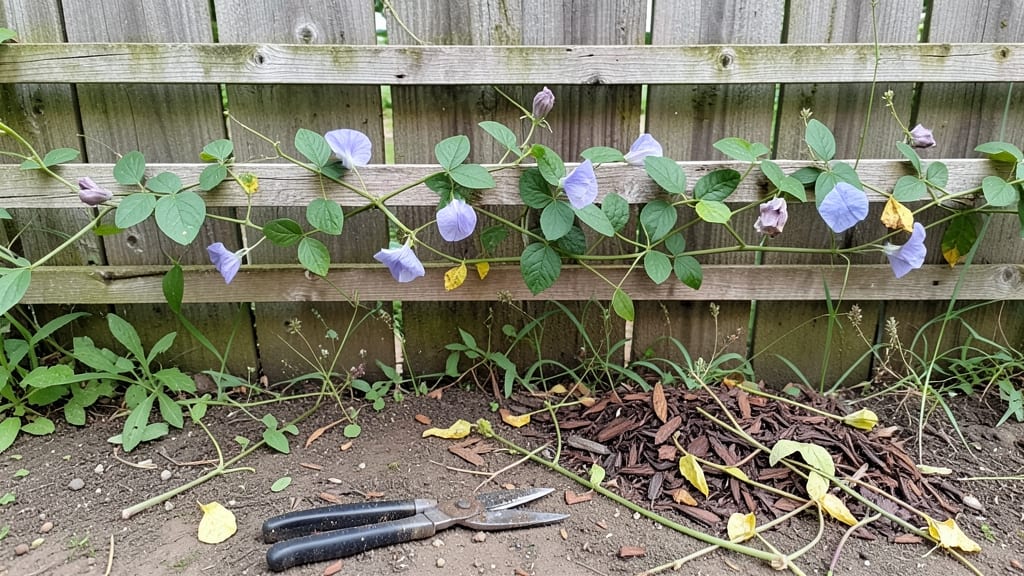
Pruning butterfly pea plants keeps those stunning blue blooms coming all season long—here’s how to do it without stress. I’ve learned the two simple tricks that turn a single flush of flowers into months of vibrant color, even in my small backyard container.
The key is timing and a light touch; overdo it, and you’ll end up with bare stems and fewer blooms.
You only need basic tools: clean pruning shears and a pair of gloves to protect your hands from the occasional thorn. The real magic happens after each flowering cycle—snip back the spent blooms to encourage new growth, and trim leggy stems to promote bushier plants.
This method works for both container-grown and in-ground butterfly peas, and it’s foolproof once you get the rhythm.
Within weeks, you’ll notice fresh clusters of those signature blue flowers popping up where there were gaps before. The plants stay compact, resist pests better, and keep blooming until the first frost. It’s the difference between a one-time showstopper and a season-long display that neighbors will ask about.
Works for both beginners and experienced gardeners—just remember to prune in the morning when the stems are firm, and always cut just above a leaf node. That’s where the next set of blooms will appear. Let’s get those shears ready!
📚 In This Guide
- What you need
- Instructions
- Tips and common mistakes
- Wrapping up and next steps
What you need
- ● Sharp pruning shears – Bypass-style (for clean cuts), sterilized (rubbing alcohol or bleach wipe). Size: 5–7 inches for precision.
- ○ Hand pruners (optional) – For smaller stems or tight spaces. Look for: Ergonomic grips and stainless steel blades.
- ● Garden gloves – Nitrile-coated (for grip and protection against thorns or sap). Tip: Choose breathable fabric to avoid sweaty hands!
- ● Disinfectant solution – 1 part bleach to 9 parts water (or 70% isopropyl alcohol) to sterilize tools between cuts.
- ● Small container or bucket – For collecting trimmings (compost or discard as needed).
- ○ Permanent marker – Optional for marking stems if you’re experimenting with propagation.
- ● Healthy butterfly pea plant – Prune only when stems are at least pencil-thick and leaves are vibrant.
- ● Clear weather – Choose a dry, overcast day to avoid stressing the plant (no pruning in extreme heat or rain).
- ● Time of day – Morning is ideal (gives the plant time to recover before evening).
- ● Patience – Butterfly peas respond best to gradual pruning (never trim more than ⅓ of the plant at once!).
Step-by-Step instructions for pruning butterfly pea plant
Here's how I keep my butterfly pea plants blooming nonstop—no complicated techniques required.
Identify and Remove Dead or Damaged Growth
Start by scanning your plant for any stems that look brown, mushy, or completely devoid of leaves. These are your first targets—dead growth won't recover and only competes with healthy stems for nutrients. Use clean, sharp pruning shears to cut these stems back to the base, about 1/4 inch above the soil line. I always disinfect my shears with rubbing alcohol between cuts to prevent spreading disease.
You'll notice healthy stems have vibrant green leaves and may even show new buds forming. These are the ones to preserve. If a stem has just a few wilted leaves but still shows signs of life (like green at the base), you can trim it back to where the green begins. This encourages the plant to redirect energy to stronger growth.
Pinch Back Leggy or Overgrown Stems
Butterfly pea plants tend to get leggy when they don't get enough light or when they've been blooming heavily. Look for stems that have grown too tall with few leaves or flowers—these need pinching. Using your fingers (no tools needed), pinch off the top set of leaves just above a leaf node where new growth can emerge. This forces the plant to branch out and produce bushier, more compact growth.
I like to do this in early spring or after a heavy flowering cycle. You'll see within a few weeks that the plant fills out more densely, producing more flowers along the way. Avoid pinching in late summer or fall, as this can delay winter dormancy if your plant goes dormant in colder months.
Trim Back Spent Blooms to Encourage More Flowers
Here's the trick to year-round blooms: deadhead regularly. As soon as a flower fades and its petals start to drop, snip the stem back to just above the next set of leaves or buds. This prevents the plant from putting energy into seed production and redirects it to producing more flowers. I do this every few days during peak blooming season—it's a small effort that pays off with nonstop color.
Watch for flower buds forming along the stems. These look like tiny green bulges where flowers will eventually bloom. When you deadhead, make sure to cut just above these buds so the plant knows to focus on opening them into full blossoms. If you leave too much stem, the plant may produce fewer flowers overall.
Lightly Prune for Airflow and Shape (Optional)
If your butterfly pea plant is getting too bushy or crowded, you can give it a light shape-up. Focus on the outer edges, trimming back any stems that are growing inward or crossing over others. This improves airflow, which helps prevent fungal issues like powdery mildew. Cut back to a leaf node or bud, never to bare wood.
This is also a good time to check for any stems that are rubbing against each other. These can create wounds that invite pests or disease. A quick trim here and there keeps your plant looking neat while encouraging stronger growth. Remember, butterfly pea plants are forgiving—you can't over-prune as long as you leave at least a few leaves or buds on each stem.
Schedule Seasonal Pruning for Best Results
For continuous blooms, prune lightly every 4-6 weeks throughout the growing season. In early spring, focus on removing any winter-damaged growth and pinching back leggy stems. During summer, deadhead regularly to keep flowers coming. In fall, you can give your plant a more thorough trim to prepare it for winter, cutting back about 1/3 of the plant's height if needed.
If you live in a warmer climate where butterfly pea plants stay green year-round, you can prune lightly even in winter to encourage new growth. Just avoid heavy pruning during cold snaps. You'll know you're on the right track when your plant responds with fresh, vibrant growth and a steady stream of new blooms.
Tips & tricks for pruning butterfly pea plants
Pruning butterfly pea plants doesn't have to be complicated—these simple tricks will keep your plant thriving and blooming all year. The key is understanding what to look for and when to act.
Timing is Everything: In Step 5, the instructions mention pruning every 4-6 weeks, but I've found that consistency matters more than strict timing. If you notice your plant getting leggy between scheduled prunings, don't wait—pinch back those stems immediately. The plant responds best to regular attention rather than a single heavy pruning session. This approach mimics natural growth patterns and prevents overgrowth that can stress the plant.
Visual Cues Over Rules: When following Step 1 to remove dead growth, trust your eyes more than the calendar. Healthy stems should have vibrant green leaves and may show new buds forming. If a stem has only a few wilted leaves but still has green at the base, trim it back to where the green begins. This "green thumb" rule ensures you're always cutting at the right spot to encourage new growth rather than following a rigid measurement.
Tool Maintenance Matters: The instructions emphasize using clean, sharp pruning shears, but I can't stress enough how important it is to disinfect them between cuts. In Step 1, I always wipe down my shears with rubbing alcohol after each cut, especially when moving between different plants. This prevents spreading disease and keeps your butterfly pea plant healthy. A small bottle of rubbing alcohol in your gardening toolkit is worth its weight in gold for plant health.
Seasonal Adjustments: The instructions mention avoiding pinching in late summer or fall, but I've found that the best time to prune actually depends on your climate. In warmer regions, you can prune lightly year-round, while in cooler climates, a more thorough trim in early spring is ideal. Pay attention to your plant's natural growth cycles—if it's actively growing, it's ready for a light pruning to encourage bushier growth and more flowers.
Pro Tips for Prune Butterfly Pea Plant
- Pruning butterfly pea plants doesn't have to be complicated—these simple tricks will keep your plant thriving and blooming all year.
- Timing is Everything: In Step 5, the instructions mention pruning every 4-6 weeks, but I've found that consistency matters more than strict timing.
- Visual Cues Over Rules: When following Step 1 to remove dead growth, trust your eyes more than the calendar.
Frequently asked questions
Got questions about pruning your butterfly pea plant? You’re not alone!
Here are answers to the most common concerns—so you can keep those vibrant blooms coming all year.
When is the best time to prune butterfly pea plants?
Prune your butterfly pea plant after flowering (late spring to early summer) to encourage bushier growth. Light trims can happen year-round to shape the plant, but avoid heavy pruning in winter unless necessary. Focus on removing spent blooms to promote continuous blooming!
How much should I cut back my butterfly pea plant?
For regular maintenance, trim back one-third of the plant’s height to encourage branching. If it’s leggy, cut just above a leaf node (where new growth emerges). Avoid over-pruning—this can stress the plant. Think of it like giving your plant a haircut, not a buzz cut!
Can I propagate butterfly pea cuttings from pruning?
Snip healthy stems (4–6 inches long) and place them in water or moist soil. Keep them in bright, indirect light until roots form (2–4 weeks). This is a free way to multiply your plants—just like cloning your favorite blooms!
What if my butterfly pea plant doesn’t bloom after pruning?
If blooms slow down, check for overcrowding (thin out leaves) or nutrient deficiencies (feed with balanced fertilizer). Too much shade or cold temps can also stunt flowering. Try moving it to a sunnier spot and prune again in a few weeks—patience pays off!
Do I need special tools to prune butterfly pea plants?
Nope! Clean, sharp pruning shears or scissors work great. Avoid dull tools—they crush stems and invite disease. Wipe blades with rubbing alcohol between cuts for hygiene. For large plants, bypass pruners are ideal, but even kitchen scissors in a pinch will do!
Wrapping up and next steps
Pruning your butterfly pea plant doesn’t have to be intimidating—just a few simple steps can keep it thriving and blooming beautifully year-round! 🌿 By following the right timing, techniques, and tools, you’ll encourage lush growth, vibrant flowers, and even more harvests.
Whether you’re a seasoned gardener or just starting out, these tricks will help you master the art of pruning with confidence.
Now that you’re armed with the know-how, grab your shears and get pruning! 🌸 Watch your butterfly pea plant reward you with stunning blue blooms and a healthier, happier garden. Ready to take it further? Try experimenting with different pruning styles or sharing your progress with fellow plant lovers!