
Diseases
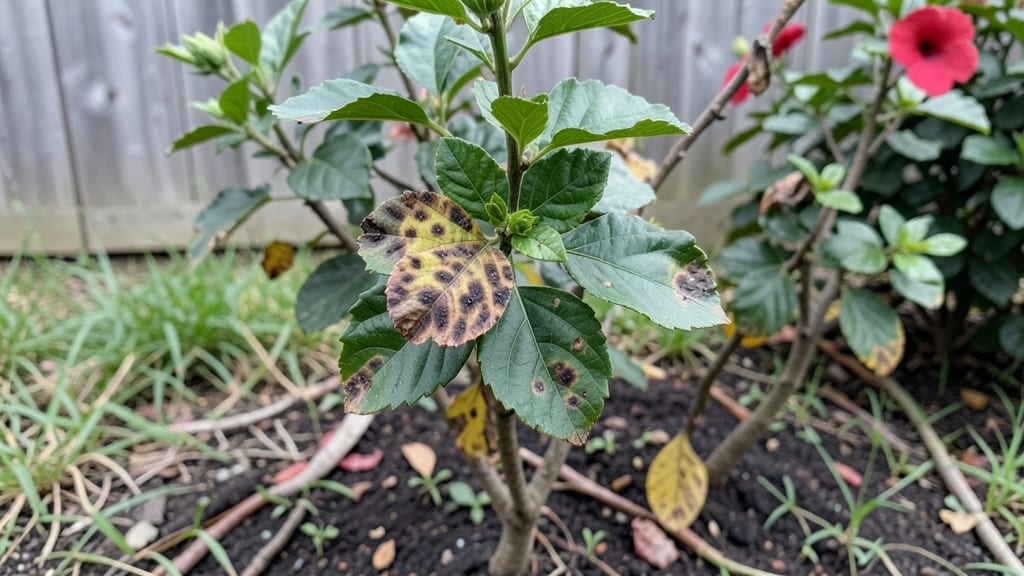
Identifying hibiscus plant diseases early saves your blooms—and sometimes the whole plant. 🌿 I’ve watched fungal spots turn vibrant leaves into a sad, spotted mess, but I’ve also learned how to spot the warning signs before it’s too late.
The key is knowing what to look for: those weird brown patches, the sticky residue, or the sudden wilting that doesn’t make sense.
Most hibiscus diseases start with humidity or poor airflow—your tropical beauty thrives in heat but chokes in soggy conditions. Overhead watering, crowded plants, or even rain-soaked foliage create the perfect breeding ground for fungi.
The good news? Once you recognize the patterns, prevention becomes second nature—think pruning for airflow, watering at the base, and choosing disease-resistant varieties.
You’ll learn to treat each issue with targeted solutions, from homemade sprays to fungicides, without sacrificing your plant’s health. The goal isn’t just to fix the problem but to create an environment where hibiscus can bounce back stronger.
Think of it like giving your plant a shield—one that keeps those pesky spores at bay while keeping the blooms bold and bright.
Whether you’re dealing with rust, powdery mildew, or something more sinister like anthracnose, this guide cuts through the guesswork. You’ll walk away knowing exactly what to watch for, how to act fast, and how to keep your hibiscus looking its best season after season. Let’s get those leaves healthy again.
Root Causes Behind Hibiscus Struggles
Hibiscus plants, with their vibrant blooms and lush foliage, are a gardener’s pride—but when diseases strike, they can wilt faster than you’d expect. Understanding why these issues arise is the first step to prevention and recovery.
Let’s break down the science behind the most common fungal threats and environmental triggers that leave your hibiscus vulnerable.
Fungal diseases like root rot and leaf spot thrive in soggy conditions. When hibiscus roots sit in waterlogged soil for extended periods, Phytophthora and Pythium fungi multiply rapidly. These pathogens block water and nutrient uptake, causing:
- Yellowing leaves (chlorosis) due to oxygen deprivation in roots.
- Black, mushy stems as fungal hyphae invade vascular tissues.
- Stunted growth from systemic infection.
Why it happens: Hibiscus roots need well-aerated, slightly acidic soil (pH 6.0–6.5). Overwatering—especially in containers without drainage holes—or heavy clay soil traps excess moisture, creating the perfect fungal buffet. Actionable fix: Amend soil with perlite or sand, and water only when the top 2 inches of soil are dry.
Hibiscus leaves are a magnet for anthracnose and powdery mildew when humidity hovers above 70% for days. Fungal spores, lightweight and airborne, land on wet foliage and germinate within 24–48 hours. Here’s the science:
- Spores need free water to activate. Dew, rain, or overhead irrigation creates a film on leaves, allowing spores to penetrate stomata (leaf pores).
- Warm nights (75–85°F) accelerate fungal growth. Colletotrichum (anthracnose) thrives in these conditions, causing:
- Dark, sunken lesions with yellow halos.
- Premature leaf drop.
- Powdery mildew (Oidium) forms a white, talcum-like coating by sucking cell sap, weakening photosynthesis.
Why it happens: Hibiscus are tropical but hate stagnant moisture. Poor air circulation (e.g., crowded plants or dense foliage) traps humidity near leaves. Actionable fix: Space plants 2–3 feet apart, prune for airflow, and water at the base (never overhead).
Hibiscus are heat-lovers, but sudden temperature drops (below 50°F) or heat stress (above 95°F) weaken their natural defenses. Stress opens doors for fungi like botrytis blight (Botrytis cinerea). Here’s how:
- Cold stress: Chilly nights slow metabolic processes, reducing the plant’s ability to produce antifungal compounds (like phytoalexins).
- Heat stress: High temps denature enzymes that help repair cell damage, making leaves more susceptible to Alternaria spots.
- Transplant shock: Moving hibiscus without acclimating to new conditions stresses roots, inviting Fusarium wilt.
Why it happens: Hibiscus need consistent warmth (60–90°F). Fluctuations disrupt cuticle integrity (the leaf’s protective waxy layer), allowing fungal spores to breach defenses. Actionable fix: Use row covers for cold snaps, mulch to regulate soil temp, and harden off plants before transplanting.
Fungi like Fusarium and Verticillium lurk in contaminated soil, surviving for years as dormant spores. They infect hibiscus through:
- Root wounds (from pruning or pests like nematodes).
- Grafting or division with infected stock.
- Reusing infested containers without sterilization.
Why it happens: These vascular wilt fungi clog xylem vessels, restricting water flow. Infected plants show:
- Sudden wilting (even with moist soil).
- Vascular discoloration (brown streaks in stems when cut).
- Yellowing leaves that don’t curl (unlike nutrient deficiencies).
Actionable fix: Sterilize tools with 70% isopropyl alcohol, solarize soil (cover with clear plastic for 4–6 weeks), or plant in pasteurized potting mix. Avoid over-fertilizing with nitrogen, which promotes lush but weak growth—a fungal buffet.
Pro Tip: 💡 Diagnose early! Scrape a lesion with a sterile blade—if it’s black, powdery, or oozing, it’s fungal. Isolate infected plants immediately to stop spore spread.
Quick Fixes for Common Hibiscus Ailments
Now that you know what’s attacking your hibiscus, it’s time to take action! Below are practical, step-by-step solutions tailored to each disease, along with prevention tips to keep your plant thriving.
Whether it’s fungal spores, pests, or environmental stress, these fixes will help you revive your hibiscus and protect future blooms.
1. Powdery Mildew (White Dusty Coating)
Fix: 🔥 Prune & Isolate – Remove heavily infected leaves and stems immediately.
Place them in a sealed bag for disposal to prevent spores from spreading. 🍳 Spray with Fungicide – Mix 1 tsp baking soda + 1 quart water + a few drops of dish soap (as a surfactant). Spray early in the morning on both leaf surfaces.
For severe cases, use a copper-based fungicide (like Bordeaux mixture). 👨🍳 Improve Airflow – Thin out overcrowded foliage and space plants at least 2–3 feet apart.
Avoid watering overhead—use drip irrigation or a watering can with a narrow spout. 🌡️ Boost Humidity Control – If your hibiscus is indoors, use a dehumidifier or fan to keep humidity below 70%.
Prevention Tip: 💡 Water in the morning so leaves dry quickly. Avoid wetting foliage when watering.
2. Anthracnose (Dark Spots with Yellow Halos)
Fix: 🔥 Remove Infected Parts – Snip off all spotted leaves and stems.
Sterilize pruners with rubbing alcohol between cuts. 🍳 Apply Fungicidal Spray – Use a chlorothalonil-based fungicide (like Daconil) or a neem oil solution (2 tbsp neem oil + 1 quart water + 1 tsp soap).
Spray every 7–10 days until new growth appears. 👨🍳 Adjust Watering – Water only at the base and avoid wet leaves.
If growing in pots, ensure drainage holes are present. ⏰ Rotate Plant Position – Move your hibiscus to a shadier spot (but still with 6+ hours of sunlight) to reduce stress.
Prevention Tip: 🌡️ Space plants properly—poor airflow encourages fungal spread.
3.
Root Rot (Yellowing Leaves, Mushy Stems) Fix: 🔥 Check the Roots – Gently remove the plant from its pot and inspect roots. Healthy roots are firm and white; rotten roots are brown, mushy, and smelly. 🍳 Trim the Damage – Use sterilized scissors to cut away black/mushy roots.
Dip healthy roots in hydrogen peroxide (3%) for 10 minutes to disinfect. 👨🍳 Repot in Fresh Soil – Use a well-draining mix (50% potting soil, 30% perlite, 20% sand).
Choose a terracotta pot (breathable material) if previously in plastic. 🌡️ Adjust Watering Habits – Let the top 1–2 inches of soil dry out between waterings. Never let it sit in water—empty saucers after watering.
Prevention Tip: ✨ Elevate pots on feet to improve drainage and airflow at the base.
4. Aphids (Sticky Residue, Curling Leaves)
Fix: 🔥 Blast Off with Water – Hold the plant under a strong stream of water to dislodge aphids. 🍳 Soap Spray Remedy – Mix 2 tbsp insecticidal soap + 1 quart water.
Spray directly on infested areas (avoid beneficial insects). 👨🍳 Introduce Predators – Release ladybugs or lacewings (natural aphid eaters) near your plant. 🌡️ Neem Oil Barrier – Spray neem oil solution (1 tbsp neem oil + 1 tsp soap + 1 quart water) weekly as a preventive.
Prevention Tip: 💡 Inspect new plants before bringing them home—aphids hitchhike on leaves!
5.
Spider Mites (Tiny Red Spots, Webbing) Fix: 🔥 Wipe Down Leaves – Use a damp cloth to remove mites from leaves (they’re microscopic but visible with a magnifying glass). 🍳 Miticide Spray – Mix 1 tsp dish soap + 1 quart water and spray every 3–4 days until mites vanish. 👨🍳 Increase Humidity – Spider mites thrive in dry conditions.
Mist leaves daily or place a humidifier nearby. ⏰ Rotate Sprays – If mites return, alternate between neem oil and insecticidal soap to prevent resistance.
Prevention Tip: 🌡️ Keep leaves dust-free—dust traps mites!
6. Chlorosis (Yellow Leaves, Pale New Growth)
Fix: 🔥 Test Soil pH – Hibiscus thrives in slightly acidic soil (6.0–6.5).
Use a soil test kit and amend with lime (to raise pH) or sulfur (to lower pH) if needed. 🍳 Fertilize Properly – Use a balanced fertilizer (10-10-10) or one high in iron (like chelated iron).
Apply every 4–6 weeks during growing season. 👨🍳 Check for Overwatering – Yellow leaves can also mean too much water. Let soil dry 2–3 inches deep before watering again.
Prevention Tip: ✨ Mulch around the base to retain moisture and regulate soil temperature.
7.
Bacterial Blight (Oozing Lesions, Wilting) Fix: 🔥 Destroy Infected Plants – If blight is severe, remove and discard the entire plant (burn it) to prevent spread. 🍳 Copper Fungicide Spray – Apply copper hydroxide (like Kocide) every 10–14 days as a preventive. 👨🍳 Sterilize Tools & Soil – Clean pruners with bleach (1 part bleach:10 parts water).
Replace contaminated soil with fresh, sterile potting mix.
Prevention Tip: 💡 Avoid overhead watering—water at the base only.
- 🌞 Light: Provide full sun (6+ hours daily) but protect from intense afternoon heat in hot climates.
- 💧 Water: Deep watering 2–3 times per week (adjust for climate). Never let soil stay soggy.
- 🍃 Prune: Remove dead or crowded branches to improve airflow.
- 🛡️ Monitor: Inspect leaves weekly for early signs of pests/diseases.
By following these targeted solutions, your hibiscus should bounce back stronger than ever! 🌸 Stay vigilant, and your tropical beauty will reward you with vibrant blooms all season long.
Frequently asked questions
What are the first signs my hibiscus plant might have a fungal disease?
Watch for unusual leaf spots (brown, black, or yellow patches), white powdery coatings, or sudden wilting that doesn’t improve with water. Fungal diseases often start with small discolorations on older leaves, so check the undersides too—many spores hide there. If you spot sticky residue (like honeydew from aphids), that can also signal fungal growth.
Can I save a hibiscus plant with root rot if the stems are already mushy?
You might still save it with immediate action! Trim all black/mushy roots and repot in fresh, well-draining soil mix (50% potting soil, 30% perlite, 20% sand). Use a terracotta pot to prevent future moisture buildup. If the stem is soft and hollow, the plant is likely beyond saving—focus on preventing spread to nearby plants.
How often should I spray fungicide on my hibiscus to prevent diseases?
For prevention, spray every 2–4 weeks during humid months (spring/fall) using a copper-based fungicide or neem oil mix. If your hibiscus is already showing signs, increase to weekly sprays for 4–6 weeks. Always spray in the early morning so leaves dry quickly—wet foliage invites fungal spores.
Why does my hibiscus get powdery mildew even when I water at the base?
Powdery mildew thrives on high humidity (above 70%), not just wet leaves. Poor airflow (like crowded plants or dense foliage) traps moisture near leaves. Prune for better circulation, space plants 2–3 feet apart, and use a fan indoors to keep air moving. A dehumidifier can also help if your home stays damp.
Is it safe to reuse soil from a hibiscus pot after treating fungal diseases?
Never reuse contaminated soil! Fungal spores can survive for years in old potting mix. Sterilize by baking soil at 200°F for 30 minutes or solarizing it (cover with clear plastic for 4–6 weeks). For potted hibiscus, replace the top 2–3 inches of soil annually to prevent reinfection.