
Pests and Diseases
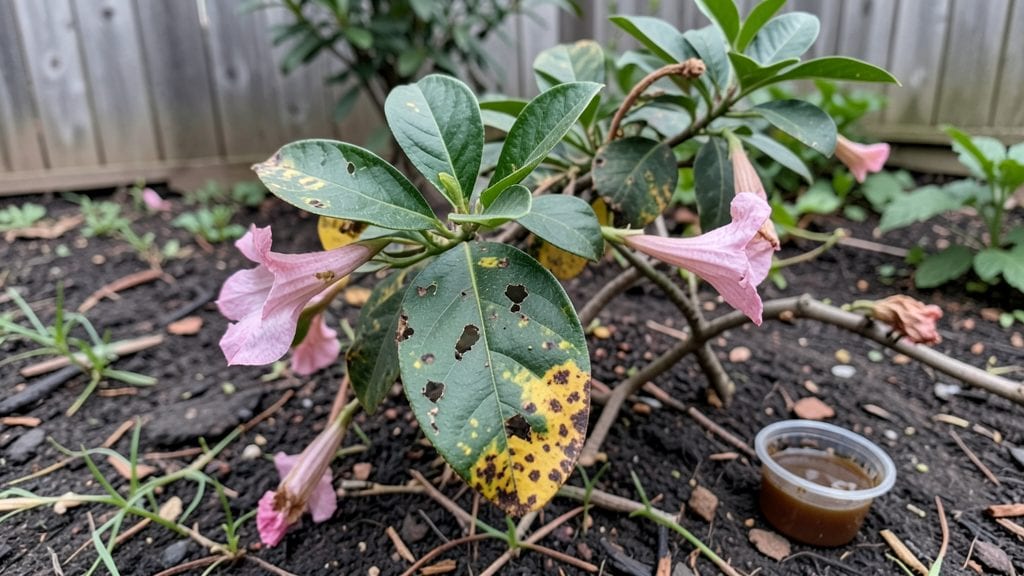
Mandevilla plant diseases can turn vibrant vines into sad, spotted shadows if you don’t catch them early. I’ve seen healthy plants go from lush and blooming to struggling in just weeks—those black spots on leaves?
That’s often powdery mildew or leaf spot, and they spread faster than you’d think. The key is acting fast before the fungus takes over your entire plant.
Most of these fungal issues start with too much moisture or poor airflow—common problems when Mandevillas are crowded or watered at the wrong time. I learned the hard way that letting leaves stay damp overnight invites trouble.
Once you spot the first signs—yellowing, brown patches, or a white powdery coating—it’s time to isolate the plant and treat it before the whole garden suffers.
With the right approach, you’ll save your plant and keep it thriving. A simple mix of neem oil and water can stop powdery mildew in its tracks, while pruning affected leaves gives your Mandevilla a fighting chance.
The goal isn’t just to fix the problem—it’s to create an environment where your plant stays strong enough to resist future attacks.
Prevention is easier than cleanup, and it starts with smart watering, proper spacing, and regular checks. Once you know what to look for, you’ll spot trouble before it becomes a full-blown crisis. Let’s get your Mandevilla back to its best—and keep it that way.
Root Causes Of Mandevilla Struggles
Mandevilla plants, with their stunning trumpet-shaped blooms, are susceptible to diseases—often due to underlying environmental or cultural factors. Understanding why these issues arise is the first step to prevention. Below, we break down the most common triggers, backed by science and practical insights.
Mandevilla plants thrive in well-draining soil, and when they’re overwatered, their roots suffocate. This creates the perfect breeding ground for Phytophthora and Fusarium fungi, which cause root rot and leaf spot diseases.
- Why it happens: Excess moisture weakens the plant’s defenses, allowing pathogens to invade through root wounds or foliage. Mandevillas are tropical but not waterlogged—think "damp, not soggy."
- Actionable fix: Ensure pots have drainage holes and use a cactus/succulent mix amended with perlite. Water only when the top 1–2 inches of soil are dry.
- Pro tip: 💡 Yellowing leaves or mushy stems? Dig up the plant to check for black, foul-smelling roots—a sure sign of rot.
Humidity (60–80%) is ideal for Mandevilla, but stagnant air traps fungal spores like Alternaria and Botrytis, leading to leaf spots and powdery mildew. Poor circulation also delays drying after watering, prolonging moisture on leaves.
- Why it happens: Fungal spores thrive in still, damp air. Mandevillas in greenhouses, bathrooms, or shaded patios are especially vulnerable.
- Actionable fix:
- Space plants 12–18 inches apart for airflow.
- Use a fan on low (3–5 mph) near the plant to mimic natural breeze.
- Wipe leaves with a damp cloth to remove spores.
- Pro tip: ✨ Morning dew? Shake it off—wet leaves at night invite fungal feasts.
Mandevilla plants need bright, indirect light (6+ hours daily). Too little light weakens the plant, making it prone to Anthracnose, while harsh afternoon sun burns leaves, creating entry points for infections.
- Why it happens: Weakened foliage can’t resist pathogens. Leggy growth (stretching for light) signals stress, reducing chlorophyll production and immunity.
- Actionable fix:
- Place near a east-facing window or under 50% shade cloth.
- Avoid deep shade (e.g., under trees) or direct midday sun.
- Rotate pots weekly for even growth.
- Pro tip: 🌡️ Brown leaf edges? It’s often sunburn—not disease. Move the plant gradually to adjust.
Mandevilla plants need balanced nutrients (especially potassium and phosphorus) to fight disease. Over-fertilizing with nitrogen (e.g., lawn fertilizer) promotes lush but weak foliage, while deficiencies (like magnesium) stunt growth, leaving plants susceptible to Pythium.
- Why it happens: Stress from poor nutrition disrupts the plant’s cuticle (its natural protective layer), making it easier for fungi to penetrate.
- Actionable fix:
- Use a balanced 10-10-10 or 20-20-20 fertilizer diluted to half-strength, applied every 4–6 weeks in spring/summer.
- Avoid high-nitrogen fertilizers (like 30-10-10)—they encourage soft, disease-prone growth.
- Test soil pH (aim for 6.0–7.0); acidic soil (below 5.5) can hinder nutrient uptake.
- Pro tip: 🎯 Yellow veins? Magnesium deficiency. Apply Epsom salt (1 tbsp/gallon of water) monthly.
Open wounds from pests (like spider mites or aphids) or improper pruning create entry points for Cercospora and other pathogens. Even minor cuts can invite infection if not sealed properly.
- Why it happens: Pests weaken the plant’s epidermis, and pruning tools can carry fungal spores between cuts. Jagged cuts heal slower than clean, angled snips.
- Actionable fix:
- Prune with sterilized shears (wipe with rubbing alcohol between cuts).
- Make cuts at a 45-degree angle, ¼-inch above a leaf node.
- Apply cinnamon powder or copper fungicide to pruning wounds.
- Control pests with neem oil or insecticidal soap before they cause damage.
- Pro tip: 🔪 Prune in dry weather—wet conditions spread spores faster.
Revive Your Mandevilla: Step-by-Step Fixes
When your Mandevilla plant starts showing signs of disease, quick action is key to saving its vibrant blooms. Below, we’ve mapped out practical solutions for each common fungal foe, along with prevention tips to keep your plant thriving. Think of this as your emergency repair guide—no green thumb required!
Cause: Cercospora or Alternaria spores thrive in damp, humid conditions, creating dark, water-soaked spots on leaves. How to Fix It:🔥 Step 1: Prune the Problem
Remove infected leaves immediately using sterilized pruners (wipe with rubbing alcohol between cuts). Toss the clippings in the trash—not the compost—to prevent reinfection.
🍳 Step 2: Fungicide Treatment
Apply a copper-based fungicide (like copper sulfate) or a neem oil solution (mix 1 tbsp neem oil + 1 tsp mild soap per quart of water). Spray both the leaves and soil, focusing on the undersides where spores love to hide. Reapply every 7–10 days until new growth appears.
🌡️ Step 3: Adjust the Environment
- Improve airflow: Space plants 12–18 inches apart or use a small fan on low for 2–3 hours daily.
- Water wisely: Water at the base in the morning (never overhead). Let the top inch of soil dry out between waterings.
- Reduce humidity: Avoid grouping plants too closely and use a dehumidifier if your space stays damp.
🔪 Step 1: Assess the Damage
Gently remove the plant from its pot and inspect the roots. Healthy roots are firm and white; rotten roots are brown, mushy, and smell foul. Trim away the bad roots with sterilized scissors.
👨🍳 Step 2: Repot in Fresh Soil
- Use a well-draining mix: Combine 50% potting soil, 30% perlite, and 20% orchid bark.
- Add a 1-inch layer of gravel at the bottom of the pot for drainage.
- Repot the plant, ensuring the crown (where stems meet roots) sits above the soil line to prevent future rot.
⏰ Step 3: Adjust Care Routine
- Water only when the top 2 inches of soil are dry—stick your finger in to check!
- Move to a brighter spot (but avoid direct sun, which can stress the plant further).
- Hold off on fertilizer until new growth appears (rot weakens the plant).
🧼 Step 1: Clean the Leaves
Dip a soft cloth or sponge in a mix of 1 tsp baking soda + 1 quart of water + a drop of dish soap. Gently wipe down the leaves to remove the mildew. For stubborn spots, use a hose with gentle pressure (but avoid damaging tender leaves).
🍄 Step 2: Apply Fungicide
Spray with a sulfur-based fungicide or hydrogen peroxide solution (3% strength, diluted to 1:1 with water). Reapply every 5–7 days until the mildew disappears.
🌡️ Step 3: Boost Airflow and Light
- Increase spacing between plants or prune nearby foliage to improve airflow.
- Move to a sunnier spot (powdery mildew loves shade). Aim for 6–8 hours of indirect light daily.
- Avoid overhead watering—water at the base instead.
⚠️ Step 1: Isolate and Prune
Remove all infected leaves and stems immediately. Sterilize your tools between cuts. Do not compost—bag the clippings and dispose of them.
💧 Step 2: Sterilize the Plant
Wipe down remaining leaves with a 70% isopropyl alcohol solution (1:1 with water) to kill surface bacteria. Follow up with a copper fungicide (bacterial blight responds to copper treatments).
🌡️ Step 3: Adjust Care
- Improve drainage: Repot if needed, using a mix with 50% perlite or sand.
- Water only in the morning and avoid wetting leaves.
- Space plants 2 feet apart to reduce humidity.
Pro Tip: For any disease, consistency is key. Stick to your treatment plan for at least 2–3 weeks—even if the plant looks better—to ensure the fungi or bacteria are fully eradicated. 🎯
Frequently asked questions
What do those brown spots on my Mandevilla leaves mean?
Those are likely signs of leaf spot disease caused by fungi like Alternaria or Cercospora. The brown or black spots often have yellow halos and appear after overhead watering or high humidity. Prune affected leaves immediately and apply a copper fungicide to stop the spread.
Can I still save my Mandevilla if the stems look mushy?
Mushy stems usually mean root rot from overwatering. First, check the roots—healthy roots are firm, while rotten ones are brown and smelly. Trim away the bad roots, repot in fresh, well-draining soil, and water only when the top 2 inches are dry. Keep it in bright, indirect light while it recovers.
Why does my Mandevilla keep getting powdery mildew?
Powdery mildew thrives in low light and poor airflow. Move your plant to a sunnier spot (but avoid direct sun) and improve circulation with a small fan. Wipe leaves with a baking soda solution (1 tsp baking soda + 1 quart water + drop of soap) and space plants 12–18 inches apart.
Is neem oil safe for all Mandevilla diseases?
Neem oil works well for fungal issues like powdery mildew and leaf spots, but it’s not effective against bacterial diseases (like bacterial blight). For bacterial problems, use a copper fungicide instead. Always mix neem oil with water and mild soap for best results.
How often should I inspect my Mandevilla for diseases?
Check your plant weekly during warm, humid months and biweekly in cooler seasons. Look for early signs like yellowing leaves, white powder, or tiny spots—catching issues early makes treatment much easier. A quick wipe-down with a damp cloth also helps prevent fungal buildup.