
Shrubs
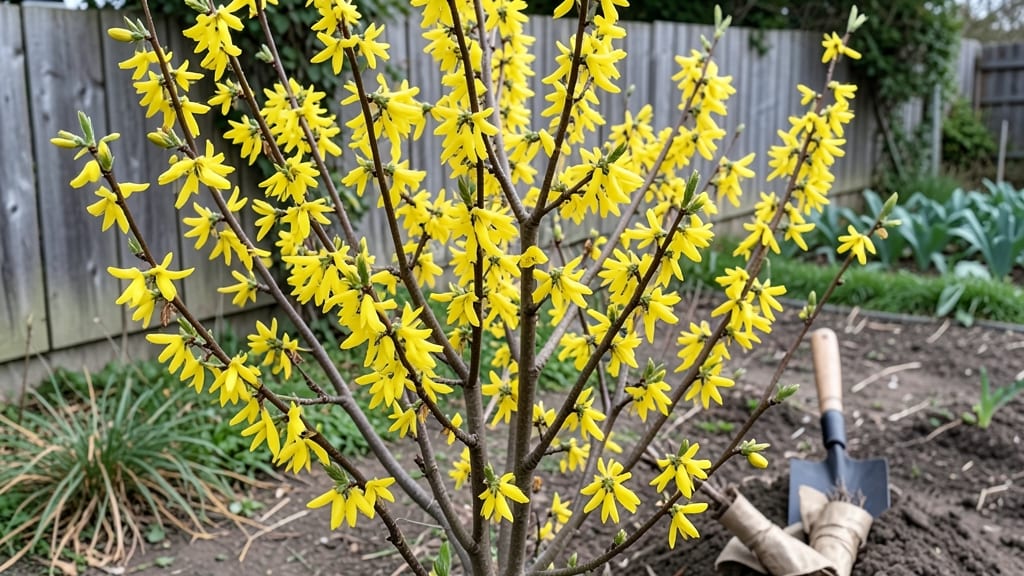
The right forsythia planting distance ensures they thrive—crowding them too close steals sunlight and air, and that’s a fight your shrubs can’t win. The ideal spacing for forsythia—6 to 8 feet apart—gives them room to grow into their full 8- to 12-foot height without crowding.
I learned this the hard way when my first two bushes leaned toward each other like awkward dancers, their blooms sparse and their leaves mildewed.
This golden-yellow shrub thrives in full sun, so spacing ensures every branch gets its share of morning rays. In well-drained soil, forsythia spreads about 6 feet wide at maturity, but proper spacing prevents root competition.
For hedges, plant them 4 to 5 feet apart—closer than standalone plants but still enough room for airflow. That extra space keeps diseases like powdery mildew from turning your spring blooms into a sad, brown mess.
What you’ll get is a bold, reliable display of early spring color that lasts weeks, with fewer pruning headaches. The branches stay sturdy, the blooms stay bright, and you avoid the heartbreak of watching forsythia struggle to reach its potential.
Think of it as giving your shrubs the elbow room they deserve—so they can reward you with showstopping yellow cascades every year.
Works for both single specimens and hedges, whether you’re lining a driveway or framing a garden entrance. The key is matching spacing to your design goals—just don’t skimp on the room. Your forsythia will thank you with vibrant blooms and decades of drama-free growth.
📚 In This Guide
- What you need
- Instructions
- Tips and common mistakes
- Wrapping up and next steps
What you need
- ● Forsythia shrubs: 3–6 plants (depending on desired hedge height and width; e.g., 3 for a 3-ft hedge, 6 for a 6-ft spread). Choose healthy, bare-root or container-grown specimens.
- ● Shovel or trowel: 1 medium-sized shovel for digging holes (12–18 inches deep) and 1 hand trowel for finer adjustments.
- ● Measuring tape: 1 (to ensure proper forsythia planting distance—typically 4–6 feet apart for single shrubs, 3–4 feet for hedges).
- ● Garden gloves: 1 pair (to protect your hands from thorns and soil).
- ● Compost or well-aged manure: 2–3 gallons (to enrich the soil and promote root growth).
- ● Mulch: 2–3 inches of organic mulch (e.g., wood chips or straw) to retain moisture and suppress weeds.
- ● Watering can or hose with a gentle spray nozzle: 1 (for post-planting hydration).
- ○ Stakes and twine (optional but helpful): 3–6 stakes (for support if planting in windy areas).
- ● Soil test kit: To check pH levels (forsythia thrives in slightly acidic to neutral soil, pH 6.0–7.0).
- ● Slow-release fertilizer: 1 packet (e.g., 10-10-10) to give your shrubs a nutrient boost.
- ● Pruning shears: 1 pair (for trimming any damaged branches before or after planting).
- ● Planting grid or spray paint: To mark exact forsythia planting distance for large-scale projects.
- ● Drip irrigation system: For automated watering (especially useful in hot climates).
Instructions for planting forsythia with perfect spacing
Here's how to space forsythia for vibrant blooms and easy maintenance—no guesswork involved.
Choose the Right Location for Forsythia
Forsythia thrives in full sun, meaning at least 6-8 hours of direct sunlight daily. Pick a spot where it gets morning sun and afternoon shade if you live in a hot climate—this prevents leaf scorch. I always check the area's sunlight pattern for a few days before planting to confirm it matches these needs.
The plant also needs good air circulation to prevent fungal diseases. Avoid tight corners or areas where other plants block airflow. If your yard has limited sun, choose a dwarf variety like 'Little Gold'—it tolerates partial shade better than standard forsythia.
Dig Holes at the Correct Depth and Spacing
Dig each planting hole twice as wide as the forsythia's root ball but no deeper. Forsythia roots spread horizontally, so spacing matters more than depth. For standard forsythia, space plants 8-10 feet apart to allow branches to spread naturally without crowding. If you're planting a hedge, reduce spacing to 6-8 feet for a denser look.
I always loosen the soil at the bottom of the hole with a garden fork to help roots penetrate easily. Avoid amending the soil with compost or fertilizer at planting—forsythia prefers native soil conditions. Instead, mix a handful of bone meal into the backfill to encourage root growth.
Plant Forsythia at the Right Level
Place the forsythia in the hole so the top of the root ball sits 1-2 inches above ground level. This prevents water from pooling around the stem, which can cause rot. Fill the hole with the original soil, pressing gently to remove air pockets but not compacting too firmly.
Water deeply right after planting to settle the soil and eliminate air gaps. The soil should feel moist 6 inches down—this ensures roots make contact with the earth immediately. Mulch around the base with 2-3 inches of mulch, keeping it 6 inches away from the stem to prevent moisture buildup.
Prune and Shape for Optimal Growth
After planting, trim any damaged or crossing branches to encourage a strong structure. Forsythia blooms on old wood, so avoid heavy pruning in the first year—just shape lightly to remove dead growth. In subsequent years, prune right after flowering to maintain size and shape.
I always step back and visualize the plant's mature size before finalizing cuts. Forsythia grows 3-6 feet tall and wide, so spacing it properly now saves headaches later. If you're planting multiple bushes, stagger their positions slightly to create a natural, flowing look rather than a straight line.
Water and Monitor for the First Year
Water newly planted forsythia deeply once a week during the first growing season, providing 1-2 gallons per plant. Check soil moisture by sticking your finger 2 inches down—if it feels dry, water again. Overwatering is worse than underwatering, so let the top 2 inches of soil dry out between waterings.
Watch for signs of stress like yellowing leaves or wilting branches. Forsythia is drought-tolerant once established, but young plants need consistent moisture. After the first year, reduce watering to every 2-3 weeks unless your area experiences extreme heat or drought.
Tips & tricks for perfect forsythia planting
A few simple tricks will help you create a thriving forsythia display that blooms beautifully every spring. These insights come from years of trial and error in my own garden—trust me, spacing matters more than you think!
Sunlight Strategy: When selecting your planting location, observe the sunlight pattern for a full week before committing. The 6-8 hours of direct sunlight requirement is non-negotiable for vibrant blooms. I always plant on the north side of trees or structures to maximize morning sun while providing afternoon shade in hotter climates. This balance prevents leaf scorch while ensuring enough light for those signature yellow flowers.
Spacing Secret: The 8-10 feet spacing recommendation for standard forsythia might seem generous, but it's crucial for two reasons. First, it prevents branches from rubbing together as they grow, which creates wounds where diseases can enter. Second, it allows for proper air circulation that reduces fungal issues. For hedges where you reduce spacing to 6-8 feet, be prepared for more frequent pruning to maintain that dense look.
Planting Depth Tip: That 1-2 inch height above ground level for the root ball might seem minor, but it's what keeps your forsythia healthy long-term. I've seen too many plants develop crown rot from being planted too deeply. After planting, I always press the soil gently around the roots to eliminate air pockets while being careful not to compact it too much—think "fluffy cloud" rather than "packed dirt."
Watering Wisdom: The 1-2 gallons per plant guideline for the first year might seem like a lot, but it's essential for establishing strong roots. I use a soaker hose for deep watering to encourage roots to grow downward rather than staying shallow. And remember—letting the top 2 inches of soil dry out between waterings is key. You can test this by sticking your finger in the soil; if it feels dry at that depth, it's time to water again.
Pro Tips for Forsythia Planting Distance
- A few simple tricks will help you create a thriving forsythia display that blooms beautifully every spring.
- Sunlight Strategy: When selecting your planting location, observe the sunlight pattern for a full week before committing.
- Spacing Secret: The 8-10 feet spacing recommendation for standard forsythia might seem generous, but it's crucial for two reasons.
Frequently asked questions
Got questions about spacing your forsythia for the best blooms? Here are some common ones—and their answers—to help you plant with confidence!
What’s the ideal spacing for forsythia shrubs?
For standard forsythia varieties, plant shrubs 4 to 6 feet apart. Dwarf types (like Forsythia ‘Little Gold’) can be spaced 3 to 4 feet apart. This gives them room to grow while ensuring airflow to prevent disease.
Can I plant forsythia too close together?
Yes, but expect crowded growth, fewer blooms, and more pests. Over time, branches may rub, leading to bark damage or disease. If you’re limited on space, opt for dwarf varieties or prune aggressively to maintain airflow.
When is the best time to plant forsythia?
Plant forsythia in early spring or fall for the best root establishment. Avoid extreme heat or frost. If planting in spring, do it 4–6 weeks before the last frost—this gives roots time to settle before summer stress.
How do I fix overcrowded forsythia later?
If your shrubs are already too close, prune back 1/3 of the oldest stems to encourage new growth. Gradually thin out branches over 2–3 years to restore airflow. For severe cases, consider transplanting one shrub to a new location.
Can I plant forsythia near other shrubs or trees?
Forsythia thrives in full sun (6+ hours/day), so avoid planting under tall trees. For companion plants, try daylilies, lavender, or Russian sage—they tolerate similar conditions. Keep them at least 3 feet away from forsythia to prevent root competition.
Wrapping up and next steps
Planting forsythia with the right spacing ensures vibrant blooms, healthy growth, and a stunning landscape all year long! 🌸 Whether you choose 3–6 feet apart for single-stemmed varieties or 6–10 feet for multi-stemmed shrubs, proper distance prevents overcrowding and encourages sunlight access.
With a little planning, your forsythia will thrive, rewarding you with cheerful yellow bursts and lush foliage.
Ready to transform your garden? Mark your planting spots, gather your tools, and get started—your future blooms will thank you! Check out our step-by-step planting guide for a foolproof approach.