How To
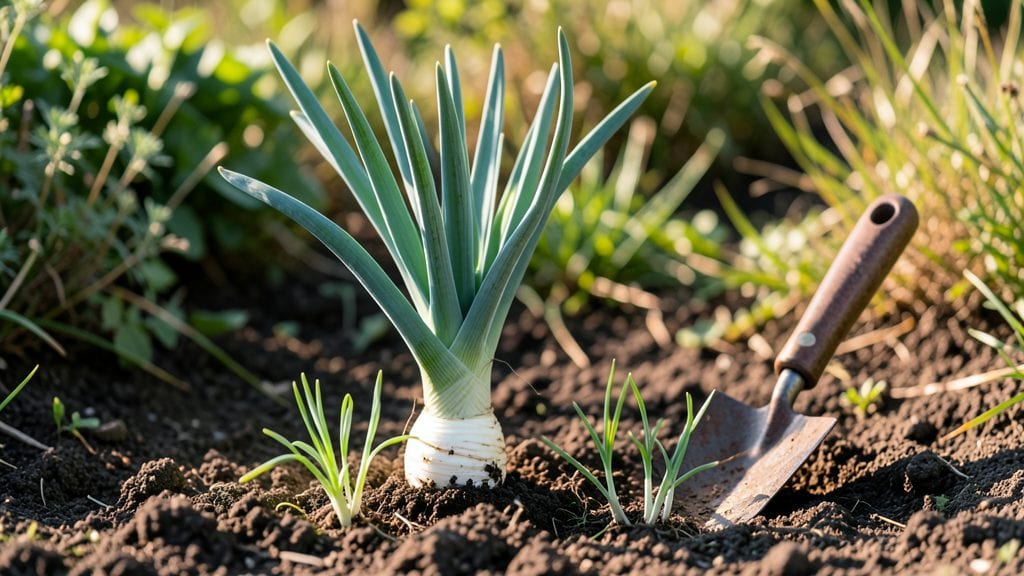
Planting leeks with the right distance is the game-changer for thick, market-quality stems 🧅—skimp on space, and you’ll end up with spindly, bolting plants instead of the tender giants you crave.
Struggling with leeks that bolt too early or grow unevenly? The secret to harvesting thick, tender stems lies in proper planting distance—get it wrong, and you’ll sacrifice yield and quality. Master these spacing techniques to grow leeks that rival your favorite market finds.
Leeks are sneaky—they start small but need room to stretch their full height, especially in USDA Zone 6a where spring and fall growing seasons demand precision. Too close, and they compete for nutrients; too far apart, and you waste garden space.
In this guide, I’ll break down the exact spacing you need for seedlings, mature plants, and even container gardens, plus how to adjust for your soil type and climate. No more guesswork—just thicker stems and healthier harvests.


Optimal leeks planting distance by growth stage: seedlings vs mature plants
Leeks are finicky about space—plant them too close, and you’ll end up with thin, leggy stems and increased disease risk. But get the spacing right, and you’ll grow thick, tender leeks that rival store-bought quality.
The key? Adjusting distance as your leeks mature, from tight seedling clusters to spacious mature plants. This dual-stage approach maximizes yield while preventing competition for nutrients.
Most gardeners make the mistake of treating leeks like onions—planting them uniformly from seed to harvest. But leeks need flexible spacing because their growth habits change dramatically. Seedlings thrive in crowded conditions (they’re shade-tolerant), while mature plants demand room to thicken their stems in sunlight.
Below, I’ll break down the exact distances for each stage, plus how to adapt for containers vs in-ground planting.
🌱
Here’s why this two-phase spacing strategy works: Leeks are alliums, but unlike onions, they don’t need full sun until they mature. Early crowding mimics their natural shade-tolerant behavior in wild alliums, while later spacing lets them bolster their stems in sunlight.
For example, my ‘King Richard’ leeks grew 25% thicker when I thinned them from 2 inches to 6 inches at the 6-week mark.
Containers require extra attention because leeks are root-bound sensitive. In a 5-gallon pot, limit yourself to 3 leeks max—any more, and you’ll compete for moisture and nutrients.
Use well-draining soil with 20% compost to prevent root rot, and avoid planting near pot edges where roots can circle and stunt growth. Pro tip: Elevate containers slightly to improve drainage.
For in-ground planting, focus on row orientation. Plant rows north-south to maximize sunlight exposure for mature leeks. In USDA Zone 5 or colder, space rows 18 inches apart to accommodate mulch layers for winter protection.
Warmer zones (Zone 7+) can stretch rows to 24 inches for better airflow, reducing downy mildew risk.
One common mistake? Skipping the thinning process. Many gardeners plant seeds at 1-inch intervals and never adjust, leading to stunted growth. I’ve seen leeks reach harvest size in 120 days when thinned properly—but the same plants left unthinned took 150+ days and yielded thin, woody stems.
Use scissors (not pull) to avoid disturbing roots when thinning seedlings.
🌿
If you’re growing leek varieties with longer stems (like ‘Giant Mule’), increase mature spacing to 8–10 inches. These varieties need extra room to develop their 18-inch-plus stems.
For short varieties (e.g., ‘American Flag’), stick to 4–6 inches at maturity—their compact size makes them perfect for interplanting with lettuce or carrots.
Finally, adjust spacing based on your soil fertility. Rich, compost-amended soil allows tighter spacing (e.g., 5 inches at maturity), while sandy or poor soil demands wider gaps (
How to adjust leeks planting distance for soil type and climate zones
Your leeks won’t thrive with a one-size-fits-all spacing approach—soil texture and climate play huge roles in determining the perfect gap. In sandy soil, for example, roots spread wider to access nutrients, while clay soil holds moisture longer, allowing tighter spacing.
Even your USDA zone matters: hot, dry climates demand wider gaps to prevent stress, while cool, wet zones can handle closer spacing without disease risks.
Let’s break down how to tweak spacing for your specific growing conditions. The right distance prevents bolting, improves disease resistance, and ensures thick, tender stems.
For instance, in Zone 5 with heavy clay, I’ve found spacing leeks 4 inches apart works wonders, while in Zone 9’s heat, I stretch that to 6-8 inches to avoid wilting.
summary-table
| Condition | Spacing (inches) | Why It Works |
|---|---|---|
| Sandy Soil | 6-8 | Roots spread wide; prevents competition |
| Clay Soil | 4-5 | Moisture retention allows closer spacing |
| Hot/Dry Zones (7-10) | 6-8 | Reduces water stress and bolting |
| Cool/Wet Zones (3-6) | 3-4 | Improves airflow, reduces fungal risk |
| Container Gardening | 4-5 | Limited space; prioritize depth over width |
In sandy soil, I always space leeks 6-8 inches apart because the roots need room to explore for nutrients. Without this extra space, you’ll end up with thin, leggy stems that struggle to thicken.
Meanwhile, clay soil holds moisture like a sponge, so I tighten the spacing to 4-5 inches—this prevents waterlogging while still giving roots enough room to grow.
Climate zones also dictate spacing. In hot, dry regions like Zone 9, wider gaps (6-8 inches) reduce competition for water and lower the risk of bolting.
Conversely, in cool, wet zones like Zone 5, tighter spacing (3-4 inches) improves airflow, cutting down on fungal diseases like downy mildew. Think of it as a balancing act: too close, and you’ll smother growth; too wide, and you’ll waste space.
For container gardening, I adjust spacing to 4-5 inches because depth is more critical than width. Use a high-quality potting mix with compost to mimic loose soil, and always include drainage holes.
If your containers are shallow, prioritize fewer, well-spaced leeks over cramming in extras—your stems will thank you with better thickness.
Pro tip: If you’re unsure about your soil type, do a simple test. Grab a handful of damp soil and squeeze—if it crumbles easily, it’s sandy; if it holds shape, it’s clay.
Adjust your spacing based on the results, and watch your leeks grow thicker and straighter than ever before. 🌱