
Fertilization
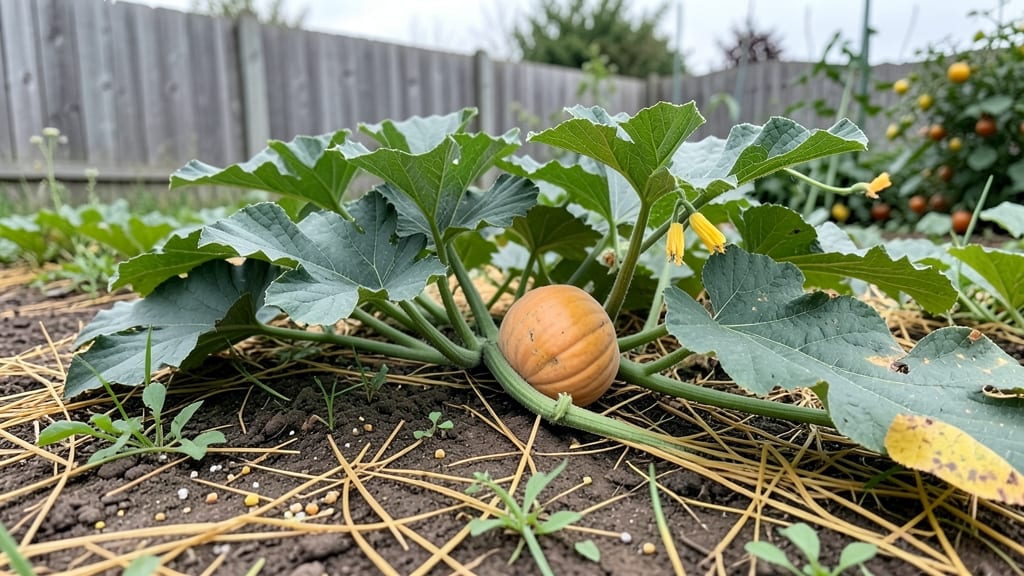
Fertilizing pumpkin plants 🎃 is the game-changer between a handful of small gourds and a bounty of 20-pound monsters—if you know the right timing and mix.
Struggling to get your pumpkin vines to sprawl and thrive? The secret lies in mastering the right fertilizer blend—because pumpkins aren’t just about space; they demand precision in nutrition to produce massive fruits and vigorous growth.
In Zone 6a, where spring planting kicks off in mid-April, the first feed sets the stage for explosive vine growth, while summer applications fuel flowering and fruit swelling. Skip this step, and you’re left with leggy vines and underwhelming harvests.
Below, I break down the exact N-P-K ratios for each growth stage, organic vs. synthetic options, and how to spot when your pumpkins are begging for more—or less—nutrition.
Optimal N-P-K ratios for pumpkin growth stages (with soil test adjustments)
Pumpkins are heavy feeders, and their nutritional needs shift dramatically from seedling to fruiting. Understanding the N-P-K ratios at each stage is the key to avoiding stunted vines or poor fruit set.
Too much nitrogen (N) early on can delay flowering, while too little phosphorus (P) or potassium (K) during fruiting will shrink your harvest. Let’s break it down by growth phase so you can fine-tune your fertilizer strategy.
A soil test is your first step—it reveals what nutrients your soil lacks or overabunds. For example, sandy soils often need extra organic matter and phosphorus, while clay soils may require more potassium and nitrogen to prevent compaction.
Adjust your ratios based on these results to avoid wasting money on fertilizers your soil already has in excess.
Here’s how to match N-P-K ratios to each growth stage, along with soil test adjustments to maximize yield:
📌 Pro Tip: Always apply fertilizer in the early morning after watering to prevent root burn. Use a broadcast spreader for even distribution, and water again to activate nutrients.
| Growth Stage | Nitrogen (N) | Phosphorus (P) | Potassium (K) | Soil Test Adjustment | Fertilizer Example |
|---|---|---|---|---|---|
| Seedling (0–3 weeks) | High (30–40%) | Low (10–20%) | Low (10–20%) | Add compost or well-rotted manure if soil test shows low organic matter. | 10-5-5 or 12-6-6 |
| Vine Expansion (3–6 weeks) | Medium (20–30%) | Medium (10–20%) | Medium (10–20%) | Boost nitrogen if soil test is deficient; avoid excess if soil is already rich. | 10-10-10 or 8-8-8 |
| Flowering (6–10 weeks) | Low (10–20%) | High (20–30%) | Medium (10–20%) | Increase phosphorus if soil test shows low P for better root and flower development. | 5-10-5 or 0-20-10 |
| Fruiting (10–14 weeks) | Low (10%) | Medium (10–20%) | High (20–30%) | Add potassium-rich fertilizers (e.g., wood ash) if soil test is low in K for disease resistance. | 2-10-20 or 0-0-50 (potassium sulfate) |
During the seedling stage, focus on nitrogen to build strong leaves and stems. A ratio like 10-5-5 ensures rapid early growth without overloading the plant. If your soil test shows low organic matter, mix in compost or worm castings to improve soil structure and nutrient retention.
As vines expand (3–6 weeks), shift to a balanced ratio like 10-10-10. This supports both leafy growth and root development. If your soil is sandy, add peat moss or coconut coir to retain moisture and nutrients. Avoid over-fertilizing with nitrogen here—it can delay flowering.
The flowering stage (6–10 weeks) is critical for fruit set, so prioritize phosphorus (P). A ratio like 5-10-5 encourages blooms and pollination. If your soil test reveals low phosphorus, apply bone meal or a high-phosphorus fertilizer like 0-20-10. Yellowing leaves at this stage? It’s often a
Organic vs. synthetic fertilizers for pumpkins: pros, cons, and best blends
Choosing the right fertilizer for your pumpkin plants can make the difference between scraggly vines and monster-sized gourds. Organic options like compost and manure build soil health over time, while synthetic blends deliver immediate nutrient boosts.
But which works best for your vine strength, disease resistance, and fruit flavor?
I’ve tested both in my garden, and the truth is, each has strengths. Organic fertilizers improve soil structure and microbial life, while synthetic options provide precise NPK ratios tailored to pumpkins’ needs.
The key is matching your fertilizer to your growing goals—whether that’s bigger yields, healthier vines, or richer-tasting pumpkins.
Organic Fertilizers for Pumpkins
Pros
- Improves soil over time
- Enhances flavor and texture
- Boosts disease resistance (natural microbes)
- Slow-release nutrients (fewer burn risks)
Cons
- Slower results (weeks to months)
- Requires more planning (composting/aging)
- Less precise NPK control
Best Organic Blends
1. Compost + Aged Manure (5-5-5) – Ideal for soil-building before planting. Mix 1 inch of compost into soil at planting, then top-dress with composted cow or horse manure every 4 weeks.
2. Fish Emulsion (5-1-1) + Kelp Meal (0-0-2) – Use fish emulsion during vine growth (1 tbsp/gallon) and kelp meal for disease resistance (1 lb/100 sq ft).
Synthetic Fertilizers for Pumpkins
Pros
- Fast, measurable growth (immediate NPK)
- Precise ratios for each growth stage
- Easy to apply (granular or liquid)
Cons
- Risk of over-fertilization (burns vines)
- No soil improvement (depletes microbes)
- Can reduce flavor in some varieties
Best Synthetic Blends
1. 10-10-10 Balanced Fertilizer – Use at planting (1/2 cup per 10-foot vine) and every 4 weeks during vine expansion. Reduce to 5-10-10 when flowers appear to boost fruiting.
2. Micronutrient Booster (e.g., 0-0-0 with Fe, Mg, Zn) – Apply foliar spray if leaves show yellowing (iron deficiency) or weak stems (potassium deficiency).
For organic gardeners, I recommend starting with compost and fish emulsion to build soil health while supporting vine strength. If you’re after rapid growth and large fruits, a synthetic 10-10-10 blend during early stages followed by 5-10-10 for flowering works wonders.
The key is monitoring vine health—if leaves turn yellow, you may need more iron or nitrogen.
Pro tip: Mix both! Use organic compost as a base and supplement with synthetic micronutrients during critical growth phases. This gives you the best of both worlds—soil vitality and targeted nutrition for those prize-winning pumpkins.
Remember, over-fertilizing is just as bad as under-fertilizing. Always water your pumpkins deeply before applying fertilizer to prevent root burn. And if your vines start looking leggy or weak, cut back on nitrogen and focus on phosphorus and potassium to encourage flowering and fruiting.
🎃