Diseases
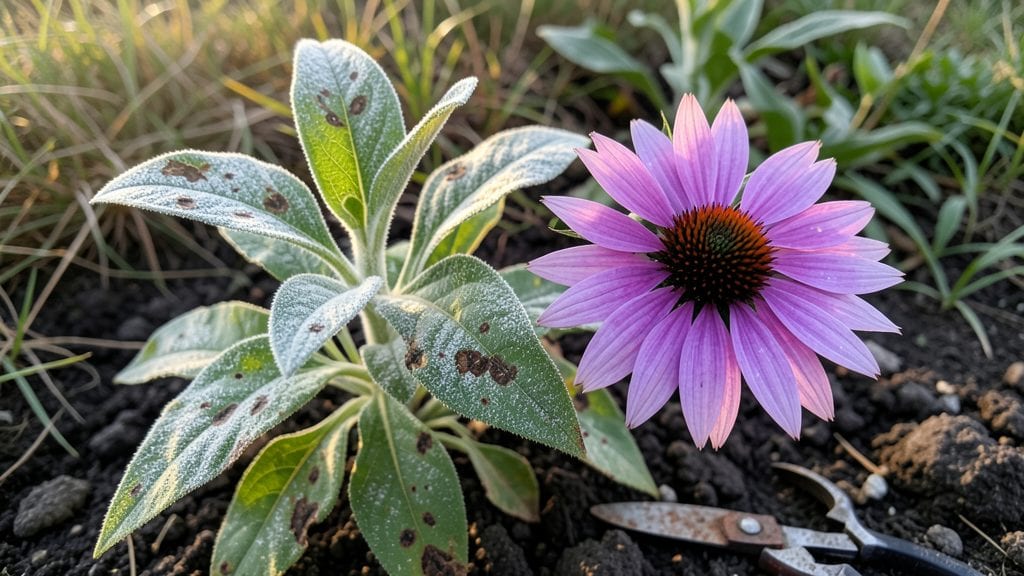
Echinacea plant diseases often include powdery mildew, leaf blight, and rust, which appear as white fungal spots, brown patches, or orange pustules. Proper airflow, fungicide sprays, and removing infected leaves can prevent spread and restore plant health.
Echinacea plants are tough but not invincible—fungal infections like powdery mildew thrive in humid conditions, while leaf blight and rust spread through poor drainage or crowded foliage. 🌱 The key to prevention lies in maintaining 6-8 hours of airflow daily and using organic sprays like neem oil before symptoms appear.
I’ve found that early detection (catching those white spots before they spread) makes all the difference in saving your echinacea’s vibrant blooms.
Many gardeners overlook soil health as a disease trigger—compacted or waterlogged soil invites bacterial infections, while overly rich compost can weaken roots. Rotate your echinacea every 3-4 years to break disease cycles, and always sterilize pruners between cuts to avoid cross-contamination.
Think of your echinacea’s care routine like a shield: proactive steps now mean fewer headaches later.
💡 In This Article
- Identifying Common Echinacea Fungal and Bacterial Infections
- Organic Disease Prevention for Echinacea Plants
Identifying common echinacea fungal and bacterial infections
Here's what's actually happening when your echinacea develops those telltale signs: powdery mildew appears as chalky white patches on leaf surfaces caused by the fungus Erysiphe cichoracearum, which thrives in temperatures between 60-80°F and relative humidity above 75%.
The fungal spores release enzymes that break down leaf cuticles, creating those powdery colonies that spread via wind or splashing water. 🌬️ Unlike rust, which affects both leaf surfaces, powdery mildew stays superficial—like a dusting of baby powder on your plant's foliage.
The orange pustules of echinacea rust (caused by Puccinia species) are actually fungal spores erupting through leaf tissue, creating those distinctive 0.5-1mm blisters.
These spores only infect when leaf surfaces remain wet for 6+ hours, which is why morning dew or overhead watering turns your garden into a rust breeding ground.
The disease progresses in three stages: tiny yellow spots appear first, then brown lesions form, and finally the orange pustules burst open—releasing thousands of spores that can travel up to 100 feet on wind currents.
Leaf blight takes a different approach, caused by bacterial pathogens like Pseudomonas syringae that enter through wounds or natural openings. You'll first notice water-soaked brown spots that expand rapidly, often with yellow halos around the edges—a classic bacterial symptom. These infections spread aggressively in cool, wet springs (below 65°F) and can kill entire leaves within 7-10 days if unchecked. The key difference? While fungal diseases like rust and mildew prefer humidity, bacterial blight thrives when leaves stay damp from rain or poor drainage.
Seasonal patterns reveal why summer often brings outbreaks: powdery mildew peaks in late summer when nights remain warm and days are humid, while rust spreads most aggressively in early summer during frequent rain showers. Bacterial blight, however, strikes hardest in spring when cool temperatures coincide with wet foliage.
What most gardeners don't realize is that these diseases don't just appear—they're often triggered by 3-5 days of ideal conditions where moisture, temperature, and plant stress align perfectly. 🌧️
Visual diagnosis gets tricky because symptoms overlap: all three diseases cause leaf yellowing, but rust's orange pustules only appear on undersides, while mildew's white coating stays on top.
For precise identification, examine leaves under 10x magnification—you'll see powdery mildew's hyphal threads forming a cottony web, rust's spore-filled pustules, or blight's oozing bacterial ooze. The progression speed also helps: mildew spreads slowly (weeks), rust accelerates (days), and blight moves fastest (hours to days).
Understanding these mechanisms helps explain why your echinacea might develop one disease over another. For example, plants grown in shady, damp conditions with poor airflow are 4x more likely to develop powdery mildew, while those in low-lying areas with poor drainage suffer from bacterial blight.
The key to early intervention is knowing which symptoms correspond to which pathogen—and acting before spores have time to spread. Remember: fungal diseases respond to fungicides, but bacterial infections need copper-based treatments to work effectively.