
Watering
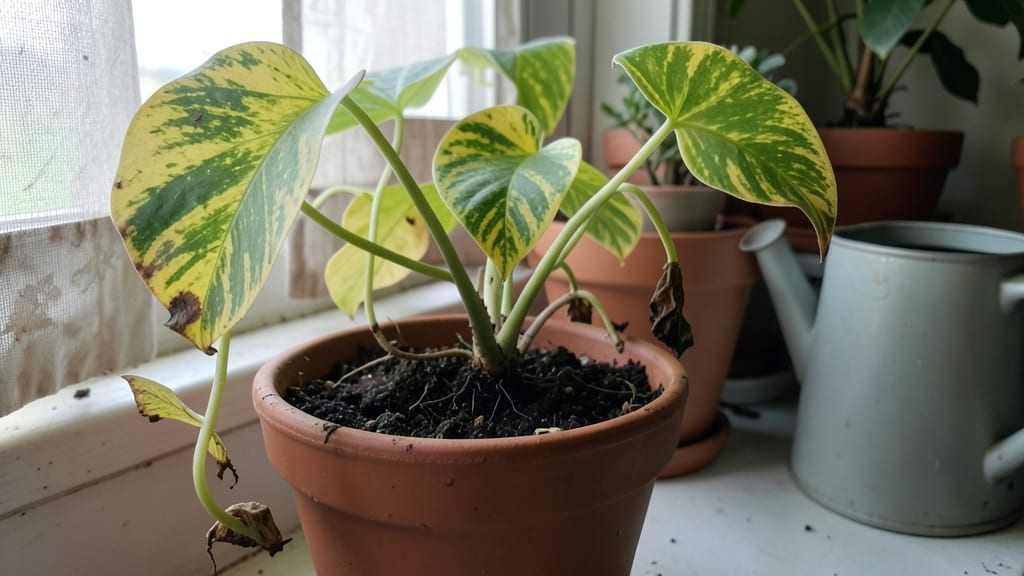
That dying overwatered plant in your pot might still have a second chance—here’s how to nurse it back to life without losing hope. 🌱 The problem isn’t always obvious: yellowing leaves, mushy stems, or that foul smell mean roots are suffocating, not thriving.
First, stop watering entirely and let the soil dry out. Then, check drainage—if water pools in the saucer or sits at the surface, your plant’s roots can’t breathe.
Most overwatered plants need a 3-5 day break from moisture, even if they look wilted. The key is patience: roots can recover if they’re not rotting completely.
You’ll see improvement within 5-7 days—new growth, firmer stems, and a return of that healthy green color. For stubborn cases, gently repot into fresh, well-draining soil and trim any black, mushy roots. Prevention is simple: stick your finger in the soil before watering—if it’s damp, wait.
This trick works for houseplants, herbs, and even struggling garden beds. The same rules apply whether you’re dealing with a fussy fern or a wilting tomato plant. Let’s get those roots breathing again!
Root Causes Of Plant Stress
Overwatering might seem like a harmless act of affection for your green friends, but it can actually suffocate them—literally. When plants receive too much water, their roots struggle to breathe, leading to a cascade of problems that can turn your thriving foliage into a sad, wilted mess.
Here’s why this happens, broken down into the key culprits:
Plants rely on aeration—the presence of air pockets in soil—to deliver oxygen to their roots. When you overwater, these pockets fill with water, displacing the air and creating an anaerobic (oxygen-free) environment. Without oxygen, roots can’t perform cellular respiration, the process that converts nutrients into energy.
This leads to: - Root rot (fungal/bacterial infections thrive in soggy conditions) - Stunted growth (roots can’t absorb water or nutrients efficiently) - Yellowing leaves (a sign of nutrient starvation despite excess water)
Pro tip: 💡 Test your soil’s moisture by sticking your finger 2 inches deep—if it’s damp, wait before watering again.
Too much water doesn’t just drown roots—it flushes away essential nutrients like nitrogen, phosphorus, and potassium. These nutrients dissolve in excess water and leach out of the soil, leaving plants malnourished.
Even if the soil looks wet, the plant may be starving because: - Micronutrients (iron, zinc, manganese) become unavailable in waterlogged conditions. - Beneficial microbes (like mycorrhizal fungi) die off, reducing the plant’s ability to absorb nutrients. - pH imbalances occur, making nutrients even harder to access.
Actionable fix: 🌡️ Use a moisture meter or the "squeeze test" (gently compress soil—if water drips out, it’s too wet).
Waterlogged soil is a breeding ground for pathogens like Phytophthora (root rot) and Pythium. These organisms thrive in saturated conditions, attacking roots and blocking water/nutrient uptake.
Signs include: - Mushy, black, or brown roots (instead of firm white roots). - Foul-smelling soil (a red flag for bacterial decay). - Sudden wilting despite wet soil (the plant can’t transport water upward).
Prevention tip: ✨ Use well-draining soil mixes (add perlite or sand) and avoid watering at night to speed up evaporation.
Overwatering disrupts the microclimate around roots.
Excess moisture: - Traps heat in dense soil, raising root-zone temperatures and stressing plants. - Increases humidity, promoting fungal growth and slowing transpiration (the plant’s natural cooling process). - Alters soil chemistry, leading to salt buildup (from fertilizers or tap water) that burns roots.
Quick check: 🔥 If your plant’s leaves feel cold or slimy, it’s a sign of root stress from poor drainage.
Key takeaway: Overwatering isn’t just about too much water—it’s about disrupting the delicate balance of air, nutrients, and microbes that keep roots healthy. The good news?
Most plants can recover if you adjust watering habits before the damage becomes permanent. Stay tuned for our revival tricks in the next section!
Reviving Your Soggy Plant
Overwatering can feel like a death sentence for your green friend, but don’t toss that plant just yet! With the right steps, you can nurse it back to health—even if it’s currently drowning in its own pot.
Below, we’ll break down cause-specific fixes to rescue your plant, plus prevention tips to keep it thriving long-term.
Cause: Constant moisture without drying periods Fix: Let the soil dry out completely before watering again. This might mean:
- Skip watering for 1–2 weeks (yes, really!) to let excess moisture evaporate.
- Check soil moisture by sticking your finger 2 inches deep—if it’s damp, wait longer.
- Move the plant to a brighter spot (but avoid direct sun, which can stress it further).
✨ Pro Tip: If the pot feels heavy with water, gently tip it to drain excess from the saucer.
Cause: Compacted, waterlogged roots Fix: Give the roots a chance to breathe with these emergency drainage tricks:
- Repot in fresh soil (if roots are mushy or black, they’re rotting—trim them with sterilized scissors).
- Add perlite or sand to improve drainage (mix 20% into the soil).
- Use a pot with drainage holes—if it doesn’t have them, drill some or switch pots.
💡 Prevention: Always use a pot 1–2 inches larger than the root ball, never giant jumps in size.
Cause: Stagnant, humid air trapping moisture Fix: Improve airflow to speed up recovery:
- Move the plant to a well-ventilated area (away from bathrooms or kitchens where humidity spikes).
- Use a fan on low setting nearby to encourage evaporation.
- Wipe leaves with a damp cloth to remove dust (helps with gas exchange).
🔥 Warning: Avoid placing it near AC vents—temperature swings stress plants.
Cause: Overwatering + poor airflow = fungal growth Fix: If you spot yellow leaves, mold, or foul smells, act fast:
- Spray with neem oil (1 tsp per quart of water) to fight fungus.
- Remove affected leaves with clean scissors.
- Disinfect the pot with hydrogen peroxide (3%) before repotting.
🎯 Prevention: Water in the morning so leaves dry quickly.
Once your plant is on the mend, lock in its recovery with these habits:
- Water only when the top 1–2 inches of soil are dry (use your finger as a gauge).
- Rotate the pot weekly for even sunlight exposure.
- Fertilize lightly (half-strength) only after 4–6 weeks of recovery.
📊 Quick Checklist for Success:
| Sign | Action |
|---|---|
| Wilting leaves | Let soil dry out fully |
| Yellowing leaves | Check for root rot, trim if needed |
| Moldy soil | Repot with fresh, dry soil |
| Slow growth | Increase light (but not direct sun) |
Remember: Patience is key—some plants bounce back in 2–4 weeks, while others may take longer. If all else fails, propagate healthy stems to start fresh! 🌱💚
Frequently asked questions
How do I know if my plant is dying from overwatering vs. underwatering?
Check the soil and leaves: overwatered plants have yellowing leaves, mushy stems, and soil that stays damp for days. Underwatered plants show brown, crispy edges and dry, pulling soil. Stick your finger in the soil—if it's wet 2 inches down, you're overwatering.
Can I save a plant with black, mushy roots?
You might! Trim all black/mushy roots with sterilized scissors, then repot in fresh, well-draining soil. Give it 3-5 days without watering first. If roots were only partially damaged, new growth should appear in 2-4 weeks. For severe cases, propagate healthy stems instead.
Why does my plant keep getting overwatered even when I stop?
Poor drainage is often the culprit. Test your pot: if water pools in the saucer after 10 minutes, it needs better drainage. Add perlite or sand to soil, or repot into a container with holes. Also check humidity—bathrooms and kitchens trap moisture, making roots soggy faster.
How long should I wait before watering again after fixing overwatering?
Wait until the top 2-3 inches of soil feel completely dry to the touch. For most houseplants, this takes 5-7 days in normal conditions. If your plant is in bright light, it may dry faster. Always check with your finger before watering—if it's damp, wait longer.
Will my overwatered plant ever fully recover?
Many plants can bounce back if you act quickly! With proper care—drying soil, improved drainage, and trimmed rotten roots—you'll often see new growth in 3-6 weeks. Succulents and cacti are hardest to revive, while ferns and peace lilies recover best. If all leaves turn black, propagation may be your best option.