
Pests
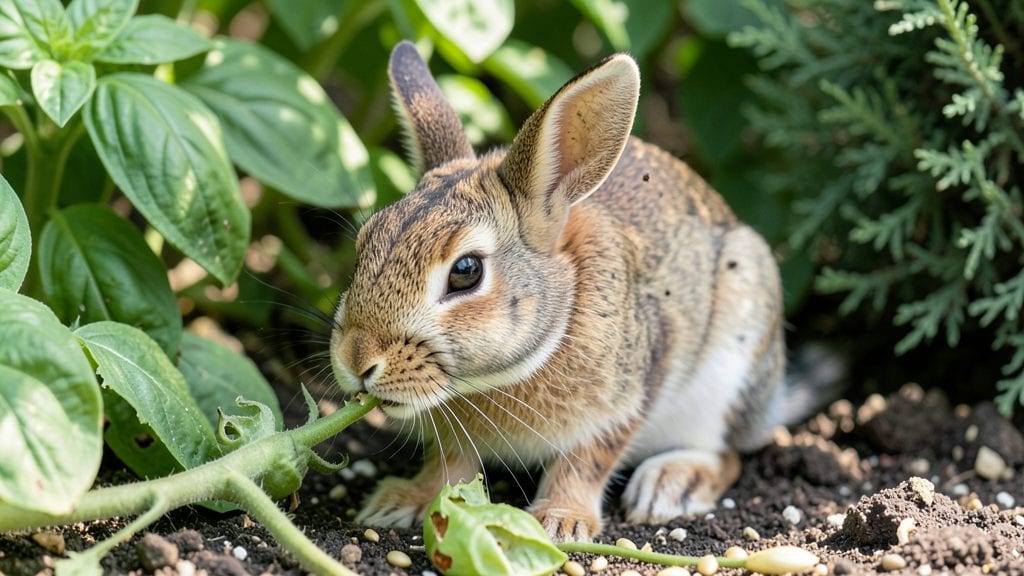
Tomato plants contain solanine, a natural chemical that makes them unappealing—and sometimes harmful—to rabbits. 🌱 This compound gives tomatoes their bitter taste and acts as a defense mechanism against pests, including deer and rabbits.
While mature plants usually remain safe, tender new shoots can still attract hungry bunnies if they’re desperate for food. The key is understanding when rabbits might ignore their natural aversion—usually during early spring when fresh greens are limited.
For gardeners, this means tomato plants are generally low-maintenance when it comes to rabbit protection, but vigilance is still wise during vulnerable growth stages.
Companion planting with strong-smelling herbs like basil or rosemary can add an extra layer of deterrence, while physical barriers remain the most reliable solution for high-risk areas.
💡 In This Article
- Why Rabbits Avoid Tomato Plants Naturally
- Protecting Tomato Plants from Rabbit Damage
Why rabbits avoid tomato plants naturally
Tomato plants deploy a sophisticated chemical defense system that makes them unappealing to rabbits. The primary culprit is solanine, a glycoalkaloid toxin found in the leaves and stems (though much less concentrated in ripe fruit).
This compound gives tomato foliage its bitter taste and acts as a natural deterrent against herbivores.
Solanine levels can reach 0.01-0.05% in leaves, which is enough to cause gastrointestinal upset in rabbits if consumed in significant quantities. 🌿 The plant also produces other alkaloids that contribute to its pungent aroma, further discouraging nibbling.
Here's what actually happens when a rabbit encounters a tomato plant: The strong scent triggers their instinctual avoidance response. Rabbits have an incredibly sensitive olfactory system—capable of detecting smells at concentrations as low as 1 part per million.
Tomato plants emit volatile organic compounds like methyl salicylate (wintergreen scent) and β-damascenone (a fruity aroma), which create a complex bouquet that rabbits find unpleasant. This sensory deterrent works similarly to how skunks use odor as a defense mechanism, but in a plant-based context.
The science behind this involves a fascinating evolutionary arms race. Tomato plants belong to the nightshade family (Solanaceae), which includes other rabbit-repelling plants like eggplants and peppers. These plants developed their chemical defenses over millennia as a survival strategy against browsing animals.
What most people don't realize is that rabbits have evolved to recognize and avoid these chemical signatures through learned behavior passed down through generations. 🐇 This makes tomato plants one of nature's most effective built-in pest deterrents.
When comparing tomato plants to other rabbit-resistant garden plants, you'll notice similar chemical defense strategies at work. For example, lavender contains linalool and linalyl acetate (up to 30% of its essential oil), while rosemary has camphor and pinene compounds that rabbits find overwhelming.
The key difference with tomatoes is that their defenses are concentrated in the foliage rather than just the scent—making them doubly effective against browsers like rabbits. This chemical complexity explains why mature tomato plants rarely suffer rabbit damage, even in gardens with established bunny populations.
There's an important nuance to consider: While mature tomato plants are generally safe, the young seedlings' vulnerability stems from their lower solanine concentration and more tender growth. New shoots contain only about 10-20% of the solanine found in mature leaves, making them more appealing to desperate herbivores.
This is why gardeners often see nibbling damage in early spring when rabbits are seeking fresh greens after winter. Understanding this chemical progression helps explain why protection strategies need to be more aggressive during the first 4-6 weeks of plant growth. 🌱
The scent factor plays an equally crucial role in rabbit deterrence. Studies show that rabbits have 175 million olfactory receptors (compared to humans' 5 million), making them extremely sensitive to plant aromas.
The pungent, slightly medicinal smell of tomato foliage creates what scientists call a "chemical alarm signal" that triggers avoidance behavior. This sensory mechanism works similarly to how moths detect bat echolocation—an evolutionary adaptation that gives plants a survival advantage against herbivores.