
Watering
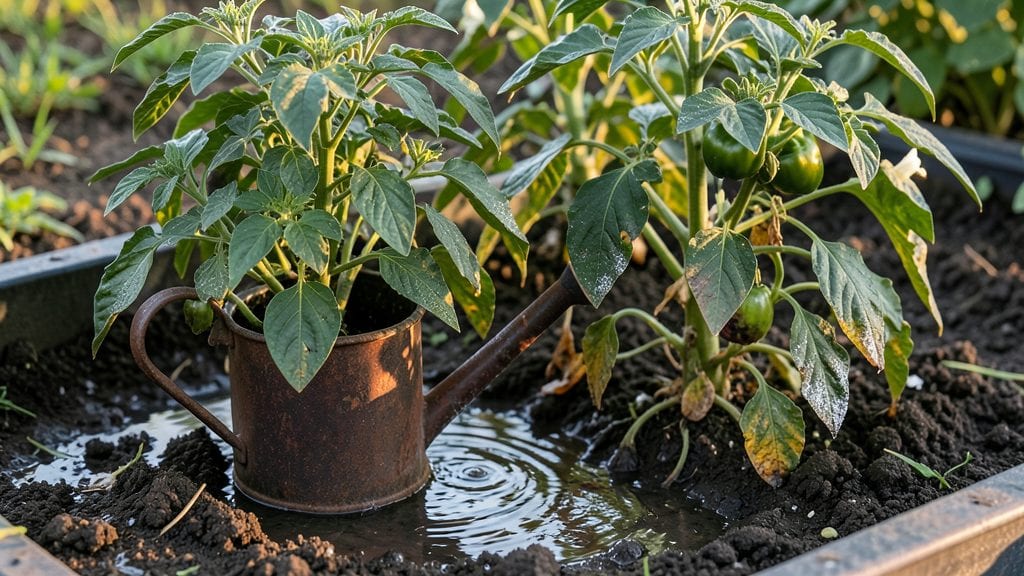
These pictures of overwatered pepper plants show exactly what I saw in my garden last summer—sad, drooping ghosts with yellow leaves and mushy stems after a week of daily waterings. 🌱 The roots suffocate, leaves turn limp, and fruit stops forming, but the good news?
You can often bring them back with the right care. I’ll walk you through the telltale signs, what’s really happening underground, and the step-by-step fix that saved my plants (and my pepper harvest) just in time for harvest season.
Yellowing leaves that start at the bottom and spread upward? That’s classic overwatering, along with stems that feel soft when pressed and soil that smells sour or rotten. The roots can’t breathe, so they drown—even if the soil looks damp.
Pepper plants need well-draining soil and water only when the top inch is dry. My mistake? Ignoring the pot’s drainage holes and assuming more water meant better growth. Once I adjusted, the plants perked up within days.
Reviving them starts with cutting back on water immediately and improving drainage—add perlite or sand to heavy soil, or repot into containers with drainage holes. Prune any mushy stems or blackened roots, then let the soil dry out completely before watering again.
Within a week, you’ll see new green growth, and with consistent care, your peppers will rebound stronger than before. The key is patience and prevention: water deeply but infrequently, and always check the soil before reaching for the hose.
For future seasons, mulch around plants to regulate moisture and choose containers with drainage holes if growing in pots. Overwatering happens more often than we think—especially in humid climates or when we’re eager to see quick results.
But with these adjustments, your peppers will thrive instead of wilt. Let’s turn those sad stems into productive plants again.
Root Causes of Overwatering
Overwatering your pepper plants might seem counterintuitive—after all, plants need water, right? 🌱 But when the roots drown in excess moisture, a cascade of problems begins. Let’s break down the key reasons why your peppers end up soggy, wilted, and struggling, even when you’re trying to help.
🔧 The #1 culprit for overwatered peppers is trapped water.
Pepper plants thrive in well-draining soil that mimics their natural habitat. If your pots lack drainage holes or your garden soil is heavy clay, water pools at the roots instead of draining away. This creates anaerobic conditions—where roots suffocate from lack of oxygen.
- Why it happens:
- Compacted soil (common in clay or heavily amended garden beds) repels water, preventing it from seeping down.
- Cheap or small pots without drainage holes trap excess moisture, while larger containers may not dry out evenly.
- Over-mulching (especially with thick organic layers) can smother roots, trapping humidity near the soil surface.
💡 Pro Tip: Test your soil’s drainage by filling a container with water—if it drains in less than 30 minutes, it’s good. If it takes hours, amend with perlite, sand, or coconut coir to improve airflow.
⏰ More isn’t always better—peppers hate moisture swings.
Pepper plants have shallow but extensive root systems, meaning they need consistent moisture but not a swampy environment. If you water:
- Too frequently (e.g., daily in hot weather), the soil never dries out.
- Unevenly (e.g., heavy watering one day, then neglect the next), roots struggle to stabilize.
- Why it happens:
- Automatic irrigation systems (like drip lines) may run too long or be poorly calibrated.
- Weather changes—rainy days followed by dry spells confuse root activity.
- Overzealous gardeners (yes, even well-meaning ones!) assume peppers need daily drinks like thirsty houseplants.
🌡️ Science Note: Pepper roots prefer the "moist but not soggy" zone—think of a slightly damp sponge, not a dripping wet one.
💨 Stagnant air = a breeding ground for rot and fungus.
Pepper plants in greenhouses, shaded areas, or densely planted beds suffer when humidity spikes but airflow stagnates.
Excess moisture lingers in the air and soil, creating the perfect storm for: - Root rot (Phytophthora or Pythium fungi) - Fungal leaf spots (like Alternaria or Septoria) - Bacterial wilts (e.g., Ralstonia solanacearum)
- Why it happens:
- No ventilation in greenhouses or row covers traps humid air.
- Overhead watering (especially in the evening) keeps leaves wet for hours.
- Crowded plants block airflow, increasing humidity near the soil.
✨ Fix It: Space plants 18–24 inches apart, water at the base, and use fans or open vents to improve circulation.
🌿 Not all soil is created equal—peppers are picky!
Peppers hate soggy, nutrient-poor, or overly fertile soil. If your mix is too rich in organic matter (like fresh manure or compost), it retains water like a sponge.
Similarly, sandy soil may drain too fast, but when combined with heavy watering, it can still lead to nutrient leaching and root stress.
- Why it happens:
- Homemade "garden soil" mixes often lack structure (e.g., too much peat moss or compost).
- Over-fertilizing with nitrogen (e.g., blood meal) encourages leafy growth but weakens roots.
- Using potting soil meant for succulents (too fast-draining) or houseplants (too moisture-retentive).
📊 Ideal Soil Recipe for Peppers:
- 60% potting mix (lightweight, sterile)
- 20% perlite or vermiculite (for aeration)
- 10% compost (for nutrients, not fresh manure)
- 10% coarse sand or horticultural grit (for drainage)
🌞 Peppers don’t drink the same year-round.
A pepper plant’s water needs shift with the seasons:
- Spring/Summer: High heat = more frequent watering (but still let soil dry 1–2 inches deep between sessions).
- Fall/Winter: Cooler temps = reduce watering by 30–50% to prevent rot.
- Dormancy (if in cold climates): Water only enough to keep soil slightly moist—no soggy roots!
- Why it happens:
- Gardeners stick to a rigid schedule instead of checking soil moisture.
- Automatic timers don’t adjust for seasonal changes.
- New growers assume peppers need constant hydration like lettuce.
🔥 Quick Test: Stick your finger 1–2 inches into the soil—if it’s damp, wait. If it’s dry, water deeply until it runs out the drainage holes.
Reviving Your Peppers: Step-by-Step Fixes
Overwatering can feel like a death sentence for your pepper plants, but with the right approach, you can nurse them back to health and even salvage your harvest. The key is acting fast, diagnosing the root cause (literally!), and adjusting your care routine.
Below are practical, actionable solutions tailored to the most common signs of overwatering—plus tips to keep your plants thriving long-term.
Cause: Too much water disrupts nutrient uptake, leading to chlorosis (yellowing) and weak stems.
How to Fix It:
- Let the Soil Dry Out
- Stop watering immediately and allow the top 1–2 inches of soil to dry completely before watering again. Stick your finger in the soil—if it’s soggy past your first knuckle, wait longer.
- Pro Tip: Use a moisture meter for accuracy, especially in containers where soil dries unevenly.
- Improve Drainage
- If your pots lack drainage holes, transfer the plant to a new container or add perlite/pumice to the soil mix to aerate it.
- For in-ground plants, consider amending the soil with compost or sand to boost drainage.
- Fertilize Lightly
- Overwatered plants often lack nitrogen. Use a balanced, water-soluble fertilizer (like 10-10-10) at half-strength to revive growth.
- Avoid high-phosphorus fertilizers—they can worsen root rot.
- Prune Damaged Foliage
- Snip off yellow or mushy leaves with clean scissors to redirect energy to healthy growth. Focus on lower leaves first.
Cause: Root suffocation from excess moisture cuts off water/nutrient flow, causing cells to collapse.
How to Fix It:
- Check for Root Rot
- Gently remove the plant from its pot (if possible) and inspect the roots. Healthy roots are firm and white; rotten roots are black/mushy and smell foul.
- If rot is severe: Trim away affected roots with sterilized scissors, then repot in fresh, dry soil with a fungicide (like copper-based spray).
- Adjust Your Watering Schedule
- Water only when the top 1–2 inches of soil are dry to the touch. Early morning is best—avoid evening watering, which encourages fungal growth.
- For containers: Water deeply but infrequently (e.g., every 5–7 days in summer, less in winter).
- Boost Airflow
- Overwatered plants are prone to fungal infections. Space plants 12–18 inches apart and use a fan on low setting to improve circulation.
- Support the Plant
- If stems are too weak to stand, prop them up with a small stake or tomato cage until they recover.
Cause: Calcium deficiency (often triggered by inconsistent moisture) leads to dark, leathery spots on peppers.
How to Fix It:
- Apply Calcium Directly
- Sprinkle crushed eggshells or calcium nitrate around the base of the plant, then water lightly. Eggshells take 2–3 weeks to break down, so act fast.
- Mulch to Retain Moisture (Without Overdoing It)
- Use straw or wood chips to keep soil moisture stable. Avoid thick mulch layers, which can trap excess water.
- Water Consistently
- Aim for 1–1.5 inches of water per week, including rainfall. Drip irrigation or soaker hoses are better than overhead watering, which can cause uneven moisture.
- Harvest Early
- Pick peppers as soon as they ripen to reduce stress on the plant. Overloaded branches are more prone to rot.
Cause: Ignorance of plant needs or environmental factors (like humidity/clay soil) leads to chronic overwatering.
How to Avoid It:
- Test Your Soil: Use a soil moisture test kit or the "squeeze test"—if soil clumps tightly when pressed, it’s too wet.
- Upgrade Your Pots: Terracotta pots dry faster than plastic. Add expanded clay pebbles to the bottom for extra drainage.
- Monitor Weather: Adjust watering based on rain forecasts. A dry spell? Check soil moisture more often.
- Choose the Right Peppers: Some varieties (like Jalapeños or Bell Peppers) tolerate drought better than Habaneros, which need consistent moisture.
- Mulch Smartly: Organic mulch (like straw) helps retain moisture, but inorganic mulch (like gravel) improves drainage.
💡 Quick Fix Summary Table:
| Symptom | Immediate Fix | Long-Term Solution |
|---|---|---|
| Yellow leaves | Stop watering, fertilize lightly | Improve drainage, mulch |
| Wilting stems | Check for rot, repot if needed | Water only when soil is dry |
| Blossom end rot | Add calcium, harvest early | Mulch, water consistently |
| Slow growth | Prune damaged leaves, aerate soil | Use well-draining soil mix |
🚀 Final Tip: Overwatered peppers can bounce back in 2–4 weeks if you act quickly. Keep an eye on recovery—if new leaves stay yellow or growth stalls, revisit your soil and care routine.
With patience and the right adjustments, your plants will be back to producing spicy, sweet, or smoky peppers in no time! 🌶️🔥
Frequently asked questions about overwatered pepper plants
What do the leaves look like on an overwatered pepper plant?
Overwatered pepper plants show yellowing leaves starting at the bottom and spreading upward, often with soft, mushy stems that collapse when pressed. The foliage may also appear dark green and limp rather than vibrant, and you might notice blackened or rotting roots if you check the soil. The edges of leaves can curl inward as the plant struggles to absorb water properly.
How can I tell if my pepper plant is overwatered vs. underwatered?
Check the soil first—if it’s soggy or smells foul, you’re overwatering. Overwatered plants have yellow, drooping leaves with soft stems, while underwatered plants have crispy, dry edges and wilted leaves that stay wilted even after watering. Tap the pot: if it feels heavy, it’s likely overwatered. A moisture meter or the "finger test" (stick your finger 1–2 inches deep) works best.
Will my pepper plant recover from overwatering?
Yes, but it depends on how severe the damage is! If you catch it early (just yellowing leaves), stop watering immediately, improve drainage, and trim any mushy stems. For root rot, you may need to repot in fresh, dry soil. With proper care, peppers can bounce back in 2–4 weeks, but if the roots are completely rotted, the plant may not survive. Prevention is key—always let the top 1–2 inches of soil dry before watering again.
Can I save peppers that are already producing but look overwatered?
Focus on drainage first—repot if needed and reduce watering immediately. Prune any yellow or mushy leaves to redirect energy to fruit production. If peppers show blossom end rot (dark spots), add crushed eggshells or calcium to the soil. Harvest mature peppers promptly to reduce stress, and avoid overhead watering to prevent fungal issues. With consistent care, your plants can keep producing!
What’s the best way to prevent overwatering in pepper plants?
Use well-draining soil (mix potting soil with perlite or sand), containers with drainage holes, and water only when the top 1–2 inches of soil are dry. Mulch lightly with straw to retain moisture without suffocating roots, and avoid watering in the evening. For containers, terracotta pots dry faster than plastic. Monitor weather—adjust watering during rainy spells or high humidity. A moisture meter takes the guesswork out of it!