Watering
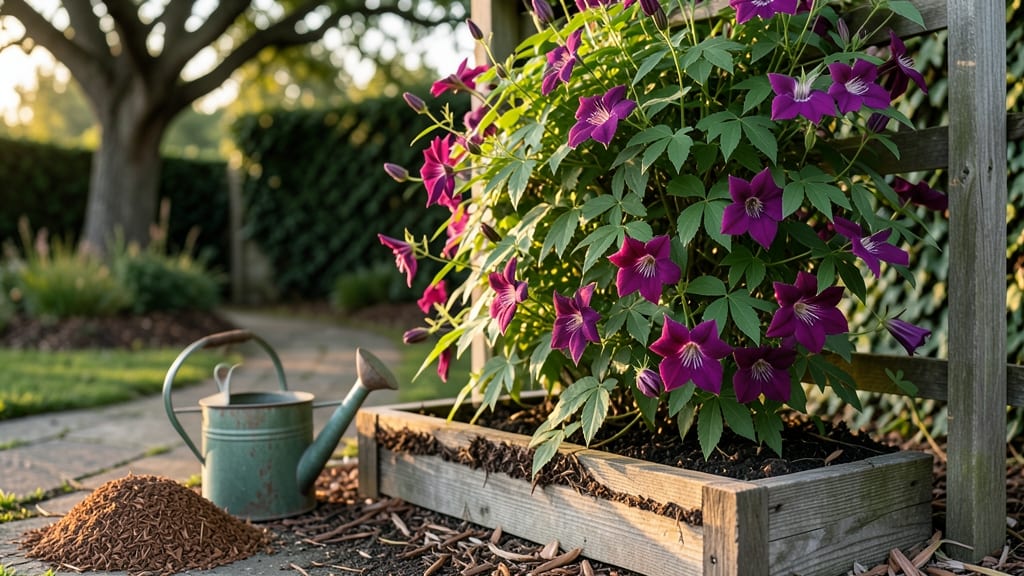
Mastering how to water clematis plants 🌸 keeps those lush vines blooming like clockwork—consistent moisture is the difference between a thriving climber and a sad, wilted shadow.
Struggling to keep your clematis blooming vibrantly all season? The secret lies in mastering watering techniques—too much or too little can stifle growth or invite disease. Discover the precise moisture balance your clematis needs to thrive.
Here’s the deal: clematis roots crave deep, even hydration, but soggy soil is just as deadly as drought. Young plants need frequent checks, while mature vines can stretch watering intervals—if you know the signs to watch for.
Below, I break down the exact schedule for spring through winter, how to tell if your plant is thirsty or drowning, and the one mulching trick that cuts watering in half without extra effort.
How often to water clematis for maximum blooms
Clematis thrives on consistent moisture but despises soggy roots—balancing these needs is key to those show-stopping blooms you adore. Unlike drought-tolerant succulents, clematis roots spread wide, so shallow watering won’t reach them. My secret? Deep, infrequent watering that keeps the soil evenly moist but never waterlogged.
Let’s break down the perfect schedule for each season, because what works in summer heatwaves fails in winter dormancy.
First, check your clematis’ soil moisture by sticking your finger 2-3 inches deep. If it feels dry, it’s time to water. For container-grown clematis, this happens more often than in-ground plants—think every 5-7 days in summer.
But for vines planted in the ground, bi-weekly deep watering usually suffices. The goal? Keep roots hydrated without inviting root rot or powdery mildew, two common clematis killers.
| Season | Frequency | Depth | Notes |
|---|---|---|---|
| Spring | Weekly | 12-18 inches | Encourage root growth; water at soil level (not leaves) |
| Summer | Bi-weekly (every 10-14 days) | 12-18 inches | Deep water during heatwaves; mulch to retain moisture |
| Fall | Every 2-3 weeks | 8-12 inches | Reduce water as growth slows; avoid wet foliage |
| Winter | Monthly (minimal) | 4-6 inches | Only water if soil is bone-dry; protect from frost |
| Containers | Every 5-7 days | Until water runs out drainage holes | Dries out faster; use self-watering pots in summer |
Spring is when your clematis wakes up hungry for water and nutrients. Start watering weekly as soon as you see new growth, aiming for 12-18 inches deep.
Use a soaker hose or drip irrigation to deliver water directly to the roots—this avoids wetting the foliage, which can trigger fungal diseases. I’ve found that watering in the early morning (before 10 AM) gives leaves time to dry, reducing mildew risk.
Pro tip: Apply a 2-3 inch layer of mulch around the base to lock in moisture and regulate soil temperature.
Summer demands the most attention, especially during heatwaves where temperatures soar above 90°F (32°C). Switch to bi-weekly deep watering, but don’t hesitate to water more frequently if the top 2 inches of soil feel dry. Container clematis need even more care—check soil moisture daily in extreme heat.
I’ve seen vines wilt dramatically within hours if neglected during a heatwave. If your clematis droops by midday, it’s a cry for immediate hydration. Give it a deep drink and watch it perk up within hours.
Fall signals a slowdown in growth, so adjust your watering to match. Reduce frequency to every 2-3 weeks and shallow your watering to 8-12 inches deep. The goal is to keep the soil slightly moist but not soggy as roots prepare for dormancy.
Avoid watering late in the day—wet foliage combined with fall rains creates the perfect storm for powdery mildew. If your clematis is in a shady spot, it may need slightly more water, as shade slows evaporation.
Winter care is minimal, but don’t skip it entirely. Most clematis enter dormancy and only need water if the soil is bone-dry. Check monthly and water lightly if needed, focusing on 4-6 inches deep.
If you’re in a cold climate (USDA zones 3-5), protect the base with extra mulch to insulate roots. I’ve lost count of the times I’ve seen clematis roots heave out of frozen soil—always mulch heavily before the first frost.
For container-grown clematis, move pots to a sheltered spot or wrap them in burlap to prevent freezing.
Environmental factors like droughts or high humidity can throw off your watering schedule. During droughts, increase frequency to every 5-7
Signs of overwatering vs. underwatering clematis (and how to fix it)
Your clematis may look stunning, but its leaves tell a silent story about its water needs. Yellowing leaves or mushy stems often signal overwatering, while crispy foliage or drooping vines scream for hydration. Understanding these visual cues is key to keeping your vine thriving and blooming season after season.
Root health is the foundation of your clematis's water balance. Soggy soil or foul-smelling roots mean you're drowning your plant, while dry, brittle roots indicate severe thirst. Let’s decode these signs and restore harmony to your clematis’s watering routine.
Overwatering
- 🌱 Yellow leaves (especially lower ones)
- 🌱 Mushy, black stems at the base
- 🌱 Foul-smelling soil or mold growth
- 🌱 Slow or stunted growth
Fix It:
- ✂️ Trim affected foliage to improve airflow
- 💧 Water only when top 2 inches of soil are dry
- 🪴 Repot if in containers with fresh, well-draining mix
Underwatering
- 🌱 Crispy, brown leaf edges
- 🌱 Wilting vines even when soil feels moist
- 🌱 Dry, brittle stems that snap easily
- 🌱 Dusty, papery leaves
Fix It:
- 💧 Deep watering 2-3 times weekly in summer
- 🪴 Mulch heavily to retain moisture
- ☀️ Move to partial shade if wilting persists
For overwatered clematis, focus on improving drainage. Amend your soil with perlite or sand to prevent compaction, and avoid watering until the top 2 inches of soil feel dry. If mold appears, treat with a fungicide and prune affected areas immediately to stop the spread.
When underwatering is the issue, deep watering is your best friend. Aim for 1-2 gallons per plant during dry spells, and always water at the base of the vine to encourage strong root development. A 5-inch layer of mulch around the plant helps lock in moisture and regulates soil temperature.
Young clematis plants are particularly sensitive to water imbalances. Check soil moisture daily during their first growing season, and adjust your watering routine based on the weather forecast. Established vines are more resilient but still need consistent moisture—especially during peak bloom periods when they’re working hard to produce flowers.
Remember, morning watering is ideal—it gives leaves time to dry before evening, reducing the risk of fungal diseases like powdery mildew. If you notice yellowing between leaf veins, it could be a sign of overwatering or poor drainage.
Test your soil’s moisture by sticking your finger 2 inches deep—if it feels damp, hold off on watering.