
Shrubs
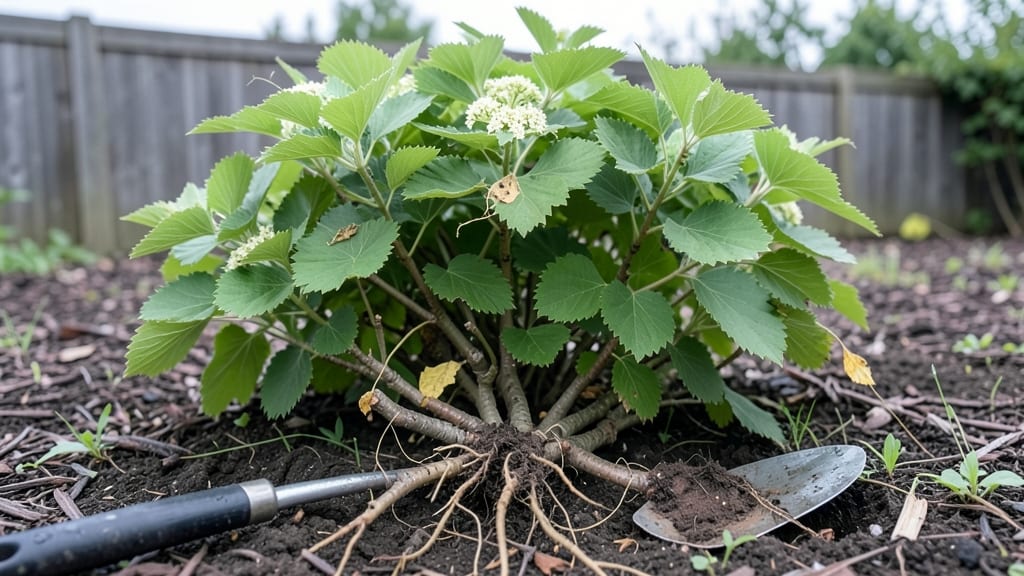
Planting viburnum shrubs at the right distance ensures they thrive with vibrant blooms and strong growth 🌿 — and the spacing rules depend more on their mature size than you might think.
Struggling to decide how far apart to plant your viburnum shrubs? Proper spacing isn’t just about aesthetics—it’s the secret to vibrant blooms, disease prevention, and long-term plant health. Get the science-backed rules to maximize your viburnum’s potential without overcrowding.
Whether you’re planting a dwarf variety like Viburnum bodnantense or a towering standard like Viburnum opulus, the wrong distance can lead to stunted growth or fungal issues. I’ll break down the exact spacing for each type, plus how sunlight and soil affect your layout.
By the end, you’ll know exactly how to space your viburnums for a lush, low-maintenance garden that stays healthy for years.


Optimal viburnum planting distance by variety and growth habit
When planting viburnums, spacing isn’t just about looks—it’s about plant health and long-term success. Different varieties grow at wildly different rates, and crowding can lead to fungal diseases like powdery mildew.
I’ve planted everything from dwarf viburnums to towering standard varieties, and the spacing rules I’ve learned will save you headaches later. Let’s break down the science-backed distances for each type.
Most gardeners focus on mature height, but spread is just as critical. A Viburnum plicatum (Japanese snowball bush) might only reach 10 feet tall but can spread 12 feet wide if given room.
Meanwhile, a Viburnum bodnantense (Winter Wonder) stays compact but still needs airflow to prevent leaf spot. Ignoring these details means stunted growth or worse—your shrubs fighting for resources.
Here’s the rule I follow: measure twice, plant once. Use a measuring tape to mark spacing before digging. For most viburnums, I add an extra 1-2 feet beyond the mature width to account for root spread.
This extra space ensures circulation and reduces competition for water and nutrients. Trust me, your plants will thank you with bigger blooms and healthier foliage.
Now, let’s get to the specifics. Not all viburnums are created equal, and their spacing needs vary dramatically. Below is a comparison table for the most popular varieties, including dwarf, semi-dwarf, and standard types. Pay close attention to the mature width—this is where most gardeners go wrong.
🌿
<comparison-table>| Variety | Growth Habit | Mature Height | Mature Width | Optimal Spacing | Notes |
|---|---|---|---|---|---|
| Viburnum bodnantense (Winter Wonder) | Dwarf | 3-5 ft | 3-4 ft | 4-5 ft apart | Compact; great for borders |
| Viburnum plicatum (Japanese Snowball) | Semi-Dwarf | 8-10 ft | 10-12 ft | 10-12 ft apart | Needs horizontal space for layered branches |
| Viburnum opulus (Guelder Rose) | Standard | 10-15 ft | 8-12 ft | 8-10 ft apart | Wildlife magnet; allow space for berries |
| Viburnum dentatum (Arrowwood) | Semi-Dwarf | 6-8 ft | 6-8 ft | 6-8 ft apart | Versatile; works in hedges or specimen planting |
| Viburnum tinus (Laurustinus) | Dwarf | 4-6 ft | 4-6 ft | 5-6 ft apart | Evergreen; thrives in coastal gardens |
If you’re planting viburnums as a hedge, reduce spacing by 20-30% to encourage dense growth
How to calculate viburnum spacing for your landscape design
Calculating the perfect viburnum spacing ensures your shrubs thrive without competing for nutrients or sunlight. The right distance prevents overcrowding, which can lead to powdery mildew and weak growth.
Start by checking your viburnum variety—dwarf types need 3-4 feet of space, while standard varieties require 6-10 feet to reach their mature size. Your soil type also plays a role; clay soils may need wider spacing to prevent root suffocation.
Next, consider your landscape design goals. Are you planting a privacy hedge or a specimen plant>? Hedges need tighter spacing (4-5 feet) for a dense barrier, while specimen plants benefit from 8-10 feet to showcase their shape.
Don’t forget to account for mature width, which can be nearly as wide as the plant’s height. Skipping this step often leads to regret when shrubs outgrow their space.
Here’s how to calculate spacing with precision using these key factors:
Check your viburnum’s mature height and width (e.g., Viburnum plicatum reaches 8-12 feet tall and wide). Use the plant tag or nursery guidelines.
Full-sun locations (6+ hours/day) need 10-12% more space for airflow. Partial shade (4-6 hours/day) can reduce spacing by 1-2 feet.
Clay soil? Add 2-3 feet to spacing to prevent root competition. Sandy soil allows tighter spacing (1-2 feet less) since roots spread faster.
Online tools (like Garden Planner) let you input dimensions and generate a visual planting diagram. Input your viburnum’s mature size and desired hedge density.
Drive wooden stakes at calculated intervals. Use a measuring tape to ensure consistency, especially for hedges with 20+ plants.
After planting, walk through the area. If you can’t easily slide your hand between branches, space them wider to prevent disease.
For example, if you’re planting Viburnum bodnantense (a dwarf variety) in partial shade with loamy soil, aim for 4 feet between plants. But if you’re using Viburnum tinus in full sun, stretch that to 6 feet.
Pro tip: Use a string line to create a straight hedge row—it’s easier than eyeballing distances in a large plot.
Once planted, monitor your viburnums for leaf yellowing or stunted growth, which often signals overcrowding. If you notice these signs, prune back competing branches or replant in a wider area. With the right spacing, your viburnums will reward you with lush foliage and season-long blooms for decades.
🌿