
Watering
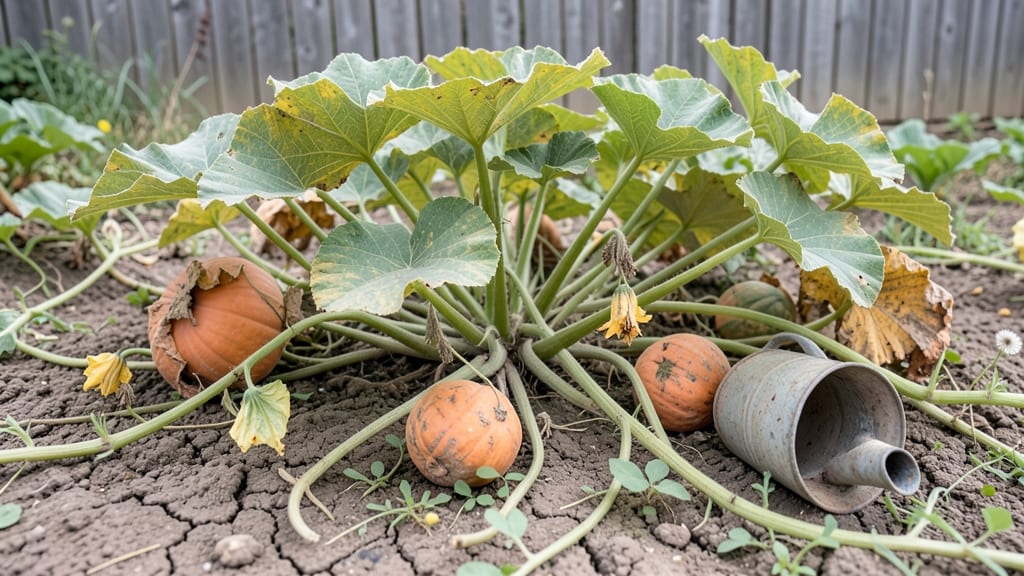
When your pumpkin vines look like overcooked noodles instead of vigorous plants, it’s a clear sign they’re underwatered. I’ve nursed back more than a few sad-looking pumpkin patches, and the fix starts with understanding why the leaves are curling and the stems feel hollow.
The good news? You can often bring them back to life within a single day—if you act fast and do it right.
First, check the soil: it should feel moist about an inch down, not bone-dry like a desert. If your pumpkins are thirsty, water deeply—aim for 1-2 gallons per plant—until the soil is evenly damp.
Avoid shallow watering, which only encourages roots to stay near the surface. After that, spread 2-3 inches of mulch around the base to lock in moisture and keep roots cool, especially in hot afternoons.
Within 24 hours, you should see the vines perk up if the roots are still alive. Look for leaves that uncurl slightly and regain a deeper green color—this means the plant is drinking again.
Long-term, upgrade your watering routine: pumpkins need 1-2 inches of water per week, and container-grown plants dry out faster than in-ground ones.
Prevention is easier than rescue: plant in well-draining soil, choose larger containers (at least 5 gallons per plant), and water consistently rather than sporadically. If your pumpkins are still struggling after a day, the damage might be deeper—check for root rot or pests, but start with the basics first.
Root Causes Of Wilting Pumpkins
When your pumpkin plant starts to droop like a sad balloon 🎈, the most likely culprit is a thirsty root system struggling to deliver water and nutrients to its leaves and vines.
But why does this happen? Let’s break down the science behind the stress and uncover the real reasons your pumpkin plant is begging for hydration.
Pumpkins are heavy drinkers—literally! Their large leaves and sprawling vines demand consistent moisture to stay upright and productive. When you skip watering or rely on inconsistent schedules, the soil dries out too quickly, forcing roots to scramble for water.
- Soil moisture imbalance: Sandy or rocky soil drains water like a sieve, leaving roots parched within hours. Clay soil, while retaining water, can also suffocate roots if not balanced with organic matter.
- Evaporation rate: Hot sun and dry winds accelerate moisture loss. A pumpkin plant can lose up to 1 gallon of water per day in peak summer heat—far more than many gardeners realize.
- Root depth limitations: Pumpkin roots typically grow 12–18 inches deep but spread wide (up to 10 feet!). Shallow watering only wets the top layer, leaving deeper roots high and dry.
💡 Pro Tip: Water deeply 2–3 times per week (or daily in extreme heat) to encourage roots to grow downward. Use a moisture meter or the "finger test" (stick your finger 2 inches into the soil—if it’s dry, it’s time to water).
If water pools around your pumpkin plant instead of soaking in, or if the soil feels like a brick when dry, drainage issues are likely the villain. Roots need oxygen as much as water—when soil is waterlogged or compacted, they suffocate.
- Waterlogging: Overwatering or clay-heavy soil traps excess moisture, cutting off oxygen. Roots in anaerobic (oxygen-free) conditions can’t absorb water efficiently, leading to wilting despite soggy soil.
- Compacted soil: Heavy foot traffic, machinery, or natural settling compresses soil, creating tiny airless pockets. Roots struggle to penetrate, limiting their ability to reach water reserves.
- Lack of organic matter: Soil with little compost or mulch drains too quickly or holds water like a sponge. Both extremes stress roots.
🔥 Fix It: Amend soil with 3–4 inches of compost or aged manure before planting. For compacted areas, loosen the top 6–8 inches with a broadfork. Add perlite or coarse sand to improve drainage in clay soil.
Pumpkins aren’t just wilting because of water—they’re also reacting to their surroundings. Heat, wind, and even pests can dehydrate them faster than you can water.
- Extreme heat or drought: Temperatures above 90°F (32°C) cause plants to transpire (lose water) at alarming rates. Wilting leaves are the plant’s way of reducing surface area to conserve moisture.
- Strong winds: Wind strips moisture from leaves, forcing the plant to use precious water reserves to stay turgid. Vines can also dry out faster when exposed to direct airflow.
- Pest or disease damage: Squash vine borers, aphids, or fungal infections (like powdery mildew) create wounds that increase water loss. A compromised plant wilts even with adequate watering.
🌡️ Beat the Heat:
- Mulch heavily (straw or wood chips) to retain soil moisture.
- Water early morning or late evening to minimize evaporation.
- Use shade cloth (30–50% coverage) to protect plants from scorching sun.
Too much fertilizer—especially synthetic varieties—can burn roots and disrupt their ability to absorb water. The excess salts in soil create a hypertonic environment, making it harder for roots to pull in moisture.
- Fertilizer burn: High concentrations of nitrogen, phosphorus, or potassium can desiccate root tips, reducing the plant’s water-uptake surface area.
- Salt accumulation: Over time, salts from fertilizers, irrigation water, or even tap water can build up in the soil. Roots reject salty water, leading to wilting despite wet soil.
- Imbalanced nutrients: A lack of potassium or calcium weakens cell walls, making leaves more prone to wilting under stress.
✨ Reset the Soil:
- Flush the soil with 2–3 inches of water to leach out excess salts.
- Switch to organic fertilizers (like compost tea or fish emulsion) for a gentler nutrient boost.
- Test your soil’s pH and salinity before reapplying fertilizer.
Now that you know the why behind your pumpkin’s thirst, the next step is fixing it—fast. Stay tuned for actionable revival strategies to bring your vines back to life in 24 hours or less!
How to solve it
If your pumpkin plant is drooping and thirsty, don’t panic—these targeted fixes will get it back on track fast. The key is acting immediately while diagnosing the root cause (literally!). Below, we map common underwatering triggers to step-by-step solutions, plus pro tips to keep your gourds thriving long-term.
If your plant wilted after a dry spell or hot day, it’s likely suffering from surface-level dehydration. Pumpkin roots stretch deep (up to 2 feet!), so shallow watering leaves them parched.
How to Fix It: ✅ 🔥 Step 1: Drench the Soil (Not Just the Leaves)
Water until soil 12–18 inches deep is moist.
Use a hose with a gentle spray or a watering can with a long spout. - Test: Stick your finger 3 inches down—if it’s dry, keep watering. - Pro Tip: 💡 Morning watering (6–9 AM) reduces evaporation and fungal risks.
✅ 🍳 Step 2: Mulch Like a Pro
- Spread 2–3 inches of organic mulch (straw, wood chips, or grass clippings) around the base (but not touching the stem).
- Why? Mulch locks in moisture and cools roots—critical for heat-stressed plants.
✅ 👨🍳 Step 3: Adjust Your Routine
- For sandy soil: Water every 2–3 days (it drains fast).
- For clay soil: Every 4–5 days (retains moisture longer).
- Sign it’s working: Leaves perk up within 4–6 hours. If not, see Cause #2 below.
If your pumpkin’s leaves yellow and the soil feels soggy even after watering, you’ve got root suffocation. Pumpkins hate “wet feet”—their roots need oxygen!
How to Fix It:
✅ 🔪 Step 1: Loosen the Soil Gently
- Use a hand trowel to score the soil around the plant (like making shallow X’s) to break up compaction.
- Avoid digging deep—pumpkin roots are shallow near the surface.
✅ ⏰ Step 2: Improve Drainage Fast
- Option A (Quick Fix): Mix 1 part perlite or coarse sand into the top 6 inches of soil.
- Option B (Permanent Fix): Amend the bed with compost or aged manure (1–2 inches) to aerate naturally.
- Pro Tip: 🌡️ Test drainage by pouring water in a hole—if it pools after 30 mins, you’ve got drainage issues.
✅ 💧 Step 3: Water Less, But Deeper
- Switch to drip irrigation or soaker hoses to deliver water slowly at the root zone.
- Sign it’s working: No more yellowing, and new growth appears in 3–5 days.
Pumpkin vines sprawl, but if they’re too close to each other or competing with weeds, roots struggle to access water and nutrients.
How to Fix It:
✅ 🔥 Step 1: Prune Aggressively (But Strategically)
- Snip 1–2 of the oldest vines (closest to the plant) to redirect energy to healthier roots.
- Focus on: Removing vines with yellowing leaves or no flowers/fruit.
✅ 🌱 Step 2: Thin the Planting
- Space remaining vines 3–5 feet apart (pumpkins need room to breathe!).
- Pro Tip: 💡 Save the strongest vine—if multiple vines emerge from one plant, keep the most vigorous one.
✅ ✨ Step 3: Feed the Roots
- Top-dress with balanced fertilizer (10-10-10) or compost tea to boost recovery.
- Avoid high-nitrogen feeds—they encourage leafy growth over roots.
If wilting pairs with chewed leaves, holes, or mold, pests (like squash bugs) or fungal issues (powdery mildew) may be sapping moisture.
How to Fix It:
✅ 🔪 Step 1: Inspect & Remove Threats
- Pests: Handpick squash bugs/aphids (drop in soapy water) or spray with neem oil.
- Fungus: Remove infected leaves and spray with baking soda mix (1 tbsp baking soda + 1 quart water + drop of soap).
✅ 🌿 Step 2: Boost Plant Immunity
- For pests: Install row covers or plant basil/marigolds nearby to repel bugs.
- For fungus: Water at the base only (avoid wetting leaves) and space plants for airflow.
✅ 💧 Step 3: Hydrate + Support
- After treating, give the plant a deep watering to flush out toxins.
- Sign it’s working: New leaves emerge within a week without damage.
🔥 Prevention Checklist for Next Season:
- ✅ Soil test before planting—aim for pH 6.0–6.8.
- ✅ Mulch heavily (4+ inches) to retain moisture.
- ✅ Use drip irrigation for consistent watering.
- ✅ Monitor weather—increase watering during heatwaves.
- ✅ Rotate crops to prevent soil-borne diseases.
With these fixes, your pumpkin plant should bounce back in 24–48 hours—and with the right care, it’ll produce plump, healthy gourds all season long! 🎃💦
Frequently asked questions
How do I tell if my pumpkin plant is truly underwatered vs. just wilting from heat?
Check the soil first—stick your finger 2 inches deep. If it's dry, that's your issue. Heat-wilted plants often recover quickly when shaded and watered, while underwatered ones stay limp even after watering. Also, look for dry, crispy leaf edges (underwatered) vs. soft, droopy leaves that perk up at night (heat stress).
Can I revive a pumpkin plant that's been underwatered for more than a week?
It depends! If the leaves are still green and the stems are slightly pliable, there's hope. Give it a deep watering (1-2 gallons) and apply mulch immediately. However, if the stems are hollow or blackened, the roots may have died back too far for full recovery. In that case, focus on saving any new growth that appears.
Why does my pumpkin plant wilt even after I water it thoroughly?
This usually means either root suffocation (too much water) or drainage problems. Test by feeling the soil—if it's soggy, your plant can't absorb water properly. Loosen the top 6 inches of soil with a fork and consider adding perlite or coarse sand to improve drainage. Also check for pests like squash vine borers that can block water uptake.
What's the best time of day to water an underwatered pumpkin plant?
Early morning (6-9 AM) is ideal—it gives roots time to absorb moisture before the heat of the day causes evaporation. Avoid watering in the evening, as damp foliage overnight can encourage fungal diseases. For container-grown pumpkins, water whenever the top 1 inch of soil feels dry, as they dry out faster than in-ground plants.
How much water should I give a pumpkin plant after it's been underwatered?
Start with 1-2 gallons per plant for in-ground pumpkins, or 1 gallon per 5-gallon container. Water slowly until it seeps 12-18 inches deep—you should see water running out the drainage holes if potted. For large vines, split the watering into two sessions (morning and evening) to prevent shock. After reviving, maintain 1-2 inches of water per week.