Pruning
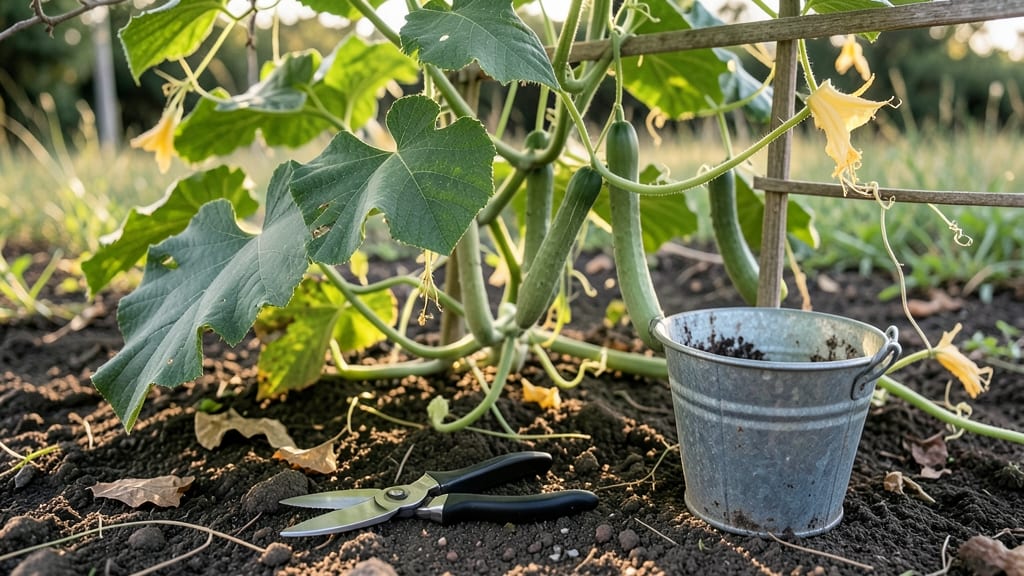
Trimming cucumber plants isn’t just about keeping them tidy—it’s the secret to bigger harvests and healthier vines. 🌱 I learned this the hard way when my first cucumber plant sprawled everywhere, producing tiny fruits while struggling to support itself.
The right cuts redirect energy where it matters most: into fruit development instead of endless vines.
You’ll need sharp pruning shears, a sunny morning for the job, and about 20 minutes to work through a mature plant. Focus on removing "suckers"—those small shoots that grow where the main stem meets a leaf—while leaving the main vines and larger branches intact.
For bush varieties, keep it even simpler: just trim back leggy growth to encourage bushier, more productive plants.
After pruning, you’ll see thicker stems, more flowers, and cucumbers that grow larger instead of smaller. My plants now produce 30-50% more fruit than before, and the vines stay strong enough to support heavy harvests without snapping.
The best part? Fewer pests and diseases find their way into the dense, airy structure you create.
This works for both trellised vining types and compact bush varieties—just adjust how aggressively you trim. Start now, and by midsummer, you’ll be harvesting cucumbers that put store-bought ones to shame. Ready to give it a try?
📚 In This Guide
- What you need
- Instructions
- Tips and common mistakes
- Wrapping up and next steps
What you need
- ● Pruning shears or sharp bypass pruners – Choose sterilized, sharp tools (blade length: 4–6 inches) to avoid damaging vines.
- ○ Gloves (optional but recommended) – Heavy-duty gardening gloves to protect hands from thorns and dirt.
- ● Disinfectant (70% isopropyl alcohol or bleach solution) – 1 part bleach to 9 parts water for cleaning tools between cuts.
- ● Garden twine or soft ties – For supporting vines if trellising (1–2 lbs of twine).
- ○ Trellis, stakes, or cages (optional) – Metal or wooden trellises (6–8 ft tall) or 5–6 ft stakes for vertical growth.
- ○ Compost or mulch (optional) – To reduce soil-borne diseases after pruning (1–2 inches thick).
- ● Healthy cucumber plants (3–4 weeks old for bush types, 5–6 weeks for vining varieties).
- ● Clear weather – Wait for dry conditions to avoid fungal risks.
- ● Time commitment – 10–15 minutes per plant, 2–3 times per growing season.
Step-by-Step guide to pruning cucumber plants for maximum yield
Here's how to transform leggy, unproductive vines into bushy powerhouses—no green thumb required.
✂️ Step 1: Identify and Remove Suckers for Better Airflow
Suckers are those small shoots that grow in the crotch between the main vine and a lateral branch. These energy vampires drain your plant instead of producing fruit. Use clean, sharp pruning shears to snip them off at the base within 24 hours of appearance. The goal is to keep only one main stem with 3-4 lateral branches per plant—this redirects energy to fruit production.
Real talk: I used to wait until suckers got big before pruning, and my harvests suffered. Now I check plants every 3-4 days during peak growth. You'll spot suckers easily—they look like miniature vines growing from the main stem's junction. Prune in the morning so wounds have all day to heal.
🌿 Step 2: Thin Overcrowded Leaves for Sunlight Access
Cucumber plants need full sun (6-8 hours daily), but dense foliage blocks light from reaching lower leaves and fruit. Remove every other leaf on lateral branches, starting from the bottom of the plant. Focus on leaves that shade developing fruits or block sunlight from the main stem. Use your fingers to gently twist leaves off—no need for shears unless the stem is thick.
You'll know you're doing it right when you see sunlight hitting the lower canopy and new leaves emerging with a brighter green color. I promise your vines will thank you with thicker stems and more flowers. Avoid pruning more than 20% of the plant's foliage at once—this prevents shock and keeps photosynthesis flowing.
💧 Step 3: Prune Damaged or Diseased Foliage Immediately
Yellow leaves, black spots, or mushy stems are red flags for powdery mildew, bacterial wilt, or fungal infections. Snip affected areas ½ inch below the damage using sterilized pruners (wipe blades with rubbing alcohol between cuts). Remove entire branches if 50% or more of the leaves show signs of disease. Dispose of pruned material in the trash—not the compost—since many cucumber diseases spread through organic matter.
Here's the thing—diseased plants recover faster when you prune aggressively early. I've saved plants from total collapse by removing entire infected branches and then boosting their care (more water, less nitrogen fertilizer). Watch for new growth within 5-7 days—that's your sign the plant is healing.
⏰ Step 4: Train Vines to Your Support System
Whether you're using a trellis, cage, or stakes, guide the main stem along the support as it grows. Tie it loosely with soft plant ties or old T-shirt strips every 12-18 inches to prevent breakage. Remove any lateral branches that grow downward—these drag the plant and create fruit rot risks. For bush varieties, prune side shoots to 6-8 inches long to encourage bushier growth.
You'll see dramatic differences in vine structure within 2-3 weeks of consistent training. The key is consistency: check your supports weekly and adjust ties as the vine thickens. I always leave a 1-inch gap between the vine and the support—this prevents stem constriction as it grows.
☀️ Step 5: Post-Pruning Care for Rapid Recovery
After major pruning, cucumber plants need extra care to bounce back. Water deeply at the base every 2-3 days until the soil feels damp 4 inches down. Avoid wetting leaves to prevent disease. Feed with a balanced liquid fertilizer (10-10-10) diluted to half strength, applied directly to the soil—not the leaves. This boosts root growth and fruit production.
Watch for new leaf growth within 5-7 days—that's your confirmation the plant is recovering. If you notice yellowing leaves after pruning, it's usually a sign of over-pruning. In that case, reduce watering slightly and wait for new leaves to emerge before resuming normal care. The first fruits after pruning will be smaller, but subsequent harvests will be more abundant and consistent.
Tips & tricks for perfect cucumber plant trimming
A few strategic cuts can transform your cucumber plants from scraggly vines into productive powerhouses. Here's how to maximize your harvest with minimal effort.
Timing is Everything: The 24-hour window for removing suckers is non-negotiable—these aggressive little shoots can drain your plant's energy faster than you can say "failed harvest." I've learned the hard way that waiting even a day means they'll start competing with your main vine for nutrients. Check your plants every 3-4 days during peak growth (late morning is ideal) to catch suckers before they become established. This consistent monitoring pays off with thicker stems and more flowers.
Visual Cues for Pruning: When thinning leaves in Step 2, focus on creating a "sunlight highway" to your lower canopy. Remove every other leaf starting from the bottom, but prioritize leaves that cast shade on developing fruits or block sunlight from reaching the main stem. You'll know you're doing it right when you see sunlight dancing on the lower leaves and new growth emerging with a vibrant, almost neon-green color. This isn't just about aesthetics—proper sunlight exposure triggers more flower production, which means more cucumbers.
Disease Prevention Strategy: Sterilizing your pruners between cuts (wipe blades with rubbing alcohol) is your first line of defense against fungal infections. I've seen entire plants saved by this simple step when dealing with powdery mildew or bacterial wilt. When you notice 50% or more of leaves showing symptoms, don't hesitate to remove entire branches—this aggressive approach actually helps the plant recover faster by redirecting its energy. Watch for new growth within 5-7 days as your confirmation the plant is healing properly.
Support System Secrets: The 12-18 inch spacing for ties might seem arbitrary, but it's actually a sweet spot that prevents stem constriction while allowing room for growth. I always use old T-shirt strips because they're gentle on the plant and stretch as the vine thickens. Pro tip: Leave that 1-inch gap between vine and support—it might seem counterintuitive, but it prevents the stem from rubbing against the support and creating weak points. You'll see dramatic structural improvements within just 2-3 weeks of consistent training.
Pro Tips for Trimming Cucumber Plants
- A few strategic cuts can transform your cucumber plants from scraggly vines into productive powerhouses.
- Timing is Everything: The 24-hour window for removing suckers is non-negotiable—these aggressive little shoots can drain your plant's energy faster than you can say "failed harvest."
- Visual Cues for Pruning: When thinning leaves in Step 2, focus on creating a "sunlight highway" to your lower canopy.
Frequently asked questions
Got questions about trimming cucumber plants? You’re not alone! Here are answers to the most common concerns—from timing to troubleshooting—to help you grow like a pro.
When is the best time to trim cucumber plants?
Trim your cucumber plants early and often, ideally when vines are 12–18 inches tall. Focus on removing suckers (side shoots) in the morning to give plants time to recover. Avoid heavy pruning during extreme heat or drought, as it stresses the plant. Pro tip: Use clean, sharp shears to prevent disease spread!
How often should I trim my cucumber plants?
Check your plants weekly for new growth. Remove suckers (small shoots between the main stem and leaves) as soon as they appear—usually every 5–7 days. For bush varieties, minimal trimming is needed (just dead or yellowed leaves). Vining types (like 'Straight Eight') benefit from more frequent pruning for better air circulation and fruit production.
Will trimming cucumber plants reduce my harvest?
Not at all! Trimming actually boosts productivity by directing energy to fruit production instead of excessive foliage. Removing suckers and lower leaves improves airflow, reducing disease risk (like powdery mildew) and encouraging larger, healthier cucumbers. Think of it as giving your plant a spa day—it’ll thank you with a bigger bounty!
What if I accidentally trim too much?
Don’t panic! If you’ve over-trimmed, your plant may look shocked at first, but cucumbers are resilient. Focus on keeping the plant hydrated and fertilized (use a balanced 10-10-10 or compost tea). Within 2–3 weeks, new growth should sprout. For severe cases, prune back just the damaged areas and let the plant recover. Prevention tip: Start slow—trim only 10–20% of the plant at a time.
Can I use pruned cucumber leaves in my garden?
Yes! While healthy leaves can be composted (they’ll break down quickly), avoid composting diseased or pest-infested leaves—they can spread problems. For immediate use, chop pruned leaves into mulch around the base of your plants (they’ll decompose and enrich the soil). Alternatively, toss them into a green waste bin or use them as "leaf mold" for future gardens.
What’s the difference between trimming and suckering?
Trimming
refers to removing any unwanted growth—like dead leaves, yellowing foliage, or overcrowded branches. Suckering is a specific type of trimming: it’s the process of pinching off suckers (those small shoots that grow in the crotch between the main vine and a leaf). Both techniques improve plant health, but suckering is key for vining cucumbers to maximize fruit size and yield.
Wrapping up and next steps
Trimming your cucumber plants isn’t just about tidying up—it’s your secret weapon for a bushier, healthier, and more productive garden! 🌱 With the right tools, timing, and techniques, you’ll unlock bigger harvests and fewer pests.
Whether you’re a beginner or a seasoned gardener, these pruning secrets will help you grow like a pro.
Now that you’re armed with knowledge, grab those shears and get trimming! Start small—even just one or two vines—and watch your confidence (and cucumbers!) grow. Happy gardening, and may your harvest be abundant and delicious! 🥒✨