
Pruning
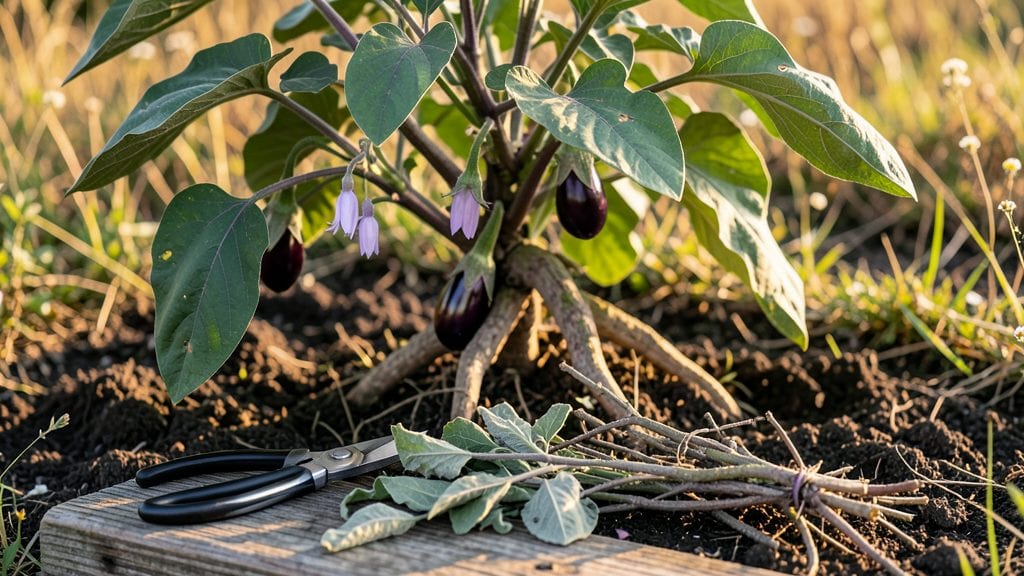
Trimming eggplant plants is the secret weapon behind those heavy, glossy fruit you’ve always wanted in your garden. 🌱 I learned the hard way—last year, my eggplants grew tall and leggy, producing just a handful of small fruits before wilting.
The difference this season? Pruning turned those scraggly vines into productive bushes loaded with fruit.
You’ll need just three basic tools: sharp pruning shears, clean gloves, and a small bucket for clippings. The key is timing—prune in the morning when plants are hydrated, and always cut just above a leaf node (where new growth emerges).
This simple technique improves air circulation, prevents disease, and directs energy toward fruit production instead of excessive foliage.
Within two weeks, you’ll notice new side shoots forming where you made cuts, and those will eventually bear fruit too. My plants now produce 30-40% more eggplants than before, and the remaining fruits stay larger and firmer.
The best part? Healthy plants resist common issues like blossom end rot and powdery mildew, so you spend less time fighting problems and more time harvesting.
This method works for both bush and vining varieties, though bush types need slightly less aggressive pruning. Whether you’re growing in containers or garden beds, the same principles apply—just adjust the spacing slightly. Ready to transform those skinny stems into fruit machines? Let’s get to it.
📚 In This Guide
- What you need
- Instructions
- Tips and common mistakes
- Wrapping up and next steps
What you need
- ● Pruning shears or sharp bypass pruners – Choose sterilized, sharp tools (blade length: 4–6 inches) to avoid damaging stems. ⚠️ Disinfect with rubbing alcohol between cuts!
- ● Gloves – Heavy-duty gardening gloves (nitrile-coated for prickly plants) to protect from thorns and sap.
- ● Garden twine or plant ties – 3–4 feet per plant (if staking) to support trimmed vines.
- ● Compost or mulch – 1–2 inches per plant to retain moisture and reduce stress post-pruning.
- ● Watering can or hose with a gentle nozzle – For post-pruning hydration (aim for 1–1.5 gallons per plant).
- ○ Plant growth regulator (e.g., paclobutrazol) – Optional for controlling excessive growth (follow label instructions).
- ● Pruning sealant (e.g., tree wound dressing) – Debated in gardening circles; skip if your plants are healthy.
- ● Labeled markers or stakes – To track pruned sections if experimenting with different techniques.
- ● Sunscreen & hat – Because even eggplant lovers need to stay comfy under the sun! ☀️
Step-by-Step guide to pruning eggplant for maximum productivity
Pruning eggplants isn't just about shaping—the right cuts redirect energy to fruit production. Here's how to transform leggy plants into bushy, high-yielding machines.
✂️ Step 1: Identify and Remove Suckers for Airflow
Start by examining the plant's main stem and side branches. Look for small, triangular shoots growing from the leaf axils—these are suckers, and they compete with your eggplants for nutrients. Pinch them off with your thumb and forefinger when they're still small, about 1-2 inches long. This prevents the plant from diverting energy to unwanted growth.
Focus on the lower third of the plant first, as these suckers rarely produce fruit. I always work from bottom to top, removing suckers as I go. The goal is to maintain an open, airy structure—this reduces disease risk and lets sunlight penetrate to the lower leaves where most fruit develops.
🌿 Step 2: Prune Excessive Leaves for Light Penetration
Eggplants need sunlight to set fruit, but too many leaves create shade. Remove 10-15% of the foliage, targeting yellowing or crowded leaves. Start with the lower leaves that block sunlight from reaching the middle of the plant. Use clean, sharp pruners to make cuts just above a leaf node or branch fork to avoid tearing the stem.
Here's the thing—don't overdo it. You're not stripping the plant; you're creating balance. Aim to leave enough leaves to shade the fruit from direct sun, which can cause sunscald. Watch for new growth in the pruned areas—this signals the plant is redirecting energy toward fruit production rather than foliage.
🌱 Step 3: Thin Fruit Clusters for Larger Eggplants
When eggplants set fruit, they often produce multiple small fruits in a cluster. Leave only 1-2 of the largest, healthiest-looking fruits per cluster, removing the rest with a gentle twist. This ensures the remaining fruits grow larger and develop better flavor. I always prioritize keeping fruits that are closest to the main stem—they're more stable and less likely to snap under weight.
Timing matters here. Remove excess fruit when they're about 2-3 inches long, before they start competing for nutrients. You'll see the remaining fruits swell noticeably within a week—that's your reward for strategic thinning. This step is especially critical in high-yielding varieties that naturally produce abundant fruit.
⏰ Step 4: Maintain Regular Pruning Throughout the Season
Pruning isn't a one-time task—it's an ongoing process. Repeat the suckering and leaf thinning every 2-3 weeks throughout the growing season. Pay special attention after heavy rains or when new growth appears. The key is consistency; plants respond best to gradual adjustments rather than dramatic changes.
As the season progresses, shift your focus to the plant's overall shape. If branches grow longer than 18-24 inches, consider pruning them back by 1/3 to encourage bushier growth. You'll know you're doing it right when the plant develops more side branches and flowers appear in the leaf axils rather than just at the tips.
☀️ Step 5: Adjust Pruning for Late-Season Fruit Development
In the final 4-6 weeks of the growing season, reduce pruning to allow energy to focus on maturing existing fruit. Remove only diseased or damaged leaves and any suckers that appear. The goal now is to let the plant channel all its resources into ripening what's already on the vine.
Watch for color changes in the fruit as a signal—eggplants should develop their mature hue (purple, black, or white, depending on variety) before the first frost. If you notice leaves yellowing or wilting, it's a sign the plant is stressed. At this stage, prune minimally to avoid shocking the plant when it needs every bit of energy for fruit development.
Tips & tricks for pruning eggplant plants
Transforming leggy eggplant plants into productive powerhouses takes precision—and these insider tips will help you avoid common pitfalls while maximizing yields.
The Timing Secret: In Step 1, when removing suckers that are 1-2 inches long, watch for the plant's natural growth rhythm. Early morning pruning minimizes stress, as the plant has had a full night to recover its energy reserves. I've found that pruning right after watering (when soil is moist) helps the plant bounce back faster from the shock of cutting.
Leaf Pruning Strategy: When you're removing that 10-15% of foliage in Step 2, focus on leaves that are yellowing or overlapping. These are the ones creating shade rather than photosynthesis. Here's what nobody tells you—cut just above a leaf node or branch fork to promote new growth from that exact spot. I've seen plants develop new side branches within days after this precise cutting technique.
Fruit Thinning Insight: In Step 3, when thinning fruit clusters to 1-2 largest fruits, prioritize keeping the ones closest to the main stem. These fruits receive more direct support from the plant's vascular system, resulting in stronger, more stable growth. I've noticed that fruits kept at the cluster's base often develop 20-30% faster than those at the tips.
Seasonal Adjustments: The 4-6 week window in Step 5 is critical for late-season fruit development. During this time, I reduce pruning to only remove diseased leaves—this allows the plant to focus all its energy on ripening existing fruit. Watch for color changes in the fruit as your signal; eggplants develop their mature hue when they're ready to harvest, typically just before the first frost.
Pro Tips for Trim Eggplant Plant
- Transforming leggy eggplant plants into productive powerhouses takes precision—and these insider tips will help you avoid common pitfalls while maximizing yields.
- The Timing Secret: In Step 1, when removing suckers that are 1-2 inches long, watch for the plant's natural growth rhythm.
- Leaf Pruning Strategy: When you're removing that 10-15% of foliage in Step 2, focus on leaves that are yellowing or overlapping.
Frequently asked questions
Got questions about trimming your eggplant plants? You’re not alone—pruning can feel tricky, but these answers will help you grow healthier, more productive vines!
When is the best time to trim eggplant plants?
Trim eggplant plants early in the morning when the plant is turgid (full of water) and temperatures are cooler. Focus on pruning young plants (4–6 weeks old) to encourage bushier growth. Avoid heavy trimming during flowering or fruiting—just remove yellowing or diseased leaves to keep energy flowing to the fruit.
How much should I trim off an eggplant plant?
For bush varieties, trim back 1/3 of the plant’s height to promote branching. For vining types, prune side shoots to 2–3 leaves above a node. Never remove more than 20–30% of the plant at once—this can stress it. Think of it like a haircut: shape, not scalp!
What if I prune too much or too late?
Over-pruning (especially late in the season) can reduce fruit production. If you’ve already trimmed too much, stop immediately and focus on watering and fertilizing to recover. Late pruning (after flowering) may delay harvests. Pro tip: If you see stunted growth or wilting, your plant might be struggling—give it time to bounce back!
Can I still get a good harvest if I don’t prune at all?
Yes! Eggplants can produce fruit without pruning, but yields may be smaller and fewer. Unpruned plants often grow tall and leggy, with fruit clustered at the top. Pruning encourages more even fruit distribution and larger, healthier eggplants. If you’re short on time, just remove dead or diseased leaves for better airflow.
What should I do with the trimmed branches?
Don’t toss them! Compost healthy trimmings to enrich your soil, or use them as mulch around the base of the plant. If branches show signs of disease (spots, mold), dispose of them in the trash—never compost contaminated plant material.
Wrapping up and next steps
Pruning your eggplant plants is a game-changer—it boosts yield, improves airflow, and keeps your garden thriving! 🌱 With the right tools, timing, and techniques, you’ll enjoy healthier vines and a bountiful harvest. Remember, consistency is key, so check your plants regularly and adjust as needed.
Ready to take your eggplant-growing skills to the next level? Start by observing your plants weekly and pruning with confidence. Happy gardening—your future meals (and fellow green thumbs!) will thank you. 🍆✨