
Planting
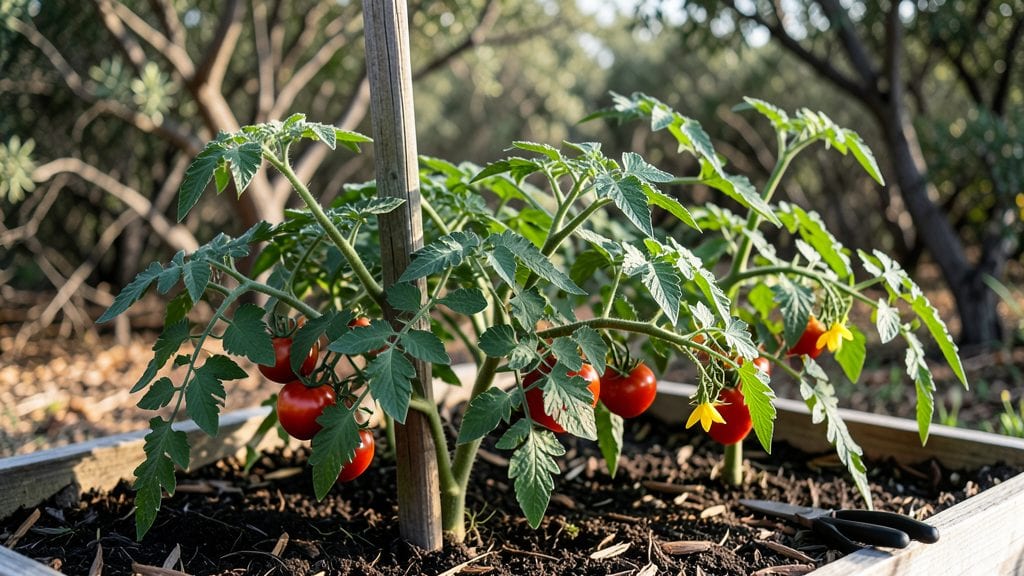
Indeterminate tomatoes grow like vines, reaching skyward like small trees—my backyard's 6-foot tall Sungold plants proved that last summer. 🌱 The key to managing their wild growth isn't brute force pruning but smart training, sunlight, and watering that keeps them producing all season long.
You'll need sturdy trellises or cages (I use 6-foot bamboo stakes), disease-resistant varieties, and a watering routine that matches their thirsty vines. These plants keep growing until frost, so proper support prevents broken stems and maximizes fruit.
The payoff? A single plant can produce 20+ pounds of tomatoes when cared for right.
What sets these "tomato trees" apart is their ability to fruit continuously—unlike their bushy cousins. With regular pruning to remove suckers and consistent watering, you'll harvest ripe tomatoes from July through October, even in small spaces. The secret lies in balancing vertical growth with fruit production.
This method works for balconies, patios, or backyards—just adjust support systems to your space. Whether you're growing cherry tomatoes or beefsteaks, the same principles apply. Let's turn those vines into productive "trees" that feed you all season.
📚 In This Guide
- What you need
- Instructions
- Tips and common mistakes
- Wrapping up and next steps
What you need
- ● Tomato Varieties: Choose determinate varieties like 'Tiny Tim,' 'Patio,' or 'Balcony Red' (compact, bushy growth). Seedlings or seeds (2–3 plants per container).
- ○ Growing Containers: 5-gallon pots or fabric grow bags (12–18" deep) with drainage holes. Optional: Self-watering planters for convenience.
- ● Potting Mix: High-quality, well-draining mix (e.g., 60% peat/coir, 30% perlite, 10% compost). Avoid garden soil—it compacts!
- ● Support System: Cage or Trellis: 4–5 ft tall tomato cage or sturdy A-frame trellis (for vining varieties).
- ● Twine or Soft Tie: 10–15 ft of stretchy plant tie (avoid wire—it damages stems!).
- ○ Fertilizer: Balanced organic fertilizer (10-10-10 or 5-5-5) + slow-release granules (e.g., Osmocote). Optional: Liquid seaweed extract for a boost.
- ● Basic Tools: Trowel, pruning shears, gloves, and a watering can (or hose with gentle nozzle).
- ● Pruning Supplies: Sharp scissors (sterilized with rubbing alcohol) for pinching suckers.
- ● Mulch: Straw or shredded leaves (1–2 inches) to retain moisture and suppress weeds.
- ● Pest Control: Neem oil, insecticidal soap, or row covers (for aphids/spider mites).
- ○ Grow Lights (Optional): LED clip lights (12–14 hrs/day) for indoor setups or early starts.
- ● Sunlight: 6+ hours of direct sun daily (south-facing window or balcony ideal).
- ● Temperature: Warmth! Keep soil above 60°F (15°C); tomatoes love 70–85°F (21–29°C).
- ● Water Access: Consistent moisture (1–2 inches per week). Pro Tip: Use a moisture meter to avoid over/under-watering! 💡
- ● Patience: Compact varieties take 60–90 days to fruit—plan ahead!
Step-by-Step instructions for creating a year-round tomato plant tree
Here’s how to transform your tomatoes into a compact, high-yielding "tree" with strategic pruning and support.
🌱 Step 1: Choose the Right Variety and Start Strong Seedlings
Select a determinate tomato variety—like 'Roma' or 'Celebrity'—since they naturally grow bushier and are easier to shape into a tree form. Start seeds indoors 8-10 weeks before your last frost using the sterile seed-starting mix (never garden soil—it’s too dense). Plant 2-3 seeds per cell at a depth of ¼ inch, then cover lightly with mix.
Keep the soil consistently moist but not soggy—bottom-watering (adding water to the saucer) prevents fungal issues. Place trays under a grow light for 14-16 hours daily to avoid leggy seedlings. Once true leaves appear, thin to the strongest seedling per cell. This ensures you start with stocky, disease-resistant plants ready for shaping.
🪴 Step 2: Build a Central Support Structure
Use the 5-foot bamboo stake as your main trunk. Drive it 6 inches deep into the soil at the center of your planting area. Tie the 4-6 inch wide twine securely to the top of the stake, leaving enough slack to loosely loop around the main stem of your tomato plant. This creates a "trunk" while allowing the plant to grow upward naturally.
As the plant grows, gently weave the secondary twine (the 4 strands of 12-inch twine) into a lattice around the stake, spacing them 6 inches apart vertically. This forms the "branches" where future suckers (side shoots) will be trained. Avoid pulling twine too tight—just enough to guide growth without restricting it.
✂️ Step 3: Prune and Train for a Tree-Like Structure
When your plant reaches 18-24 inches tall, begin pruning. Remove all suckers (the small shoots that grow in the leaf axils) except for 2-3 per node on the main stem. These will become your "branches." Tie the strongest sucker to the first twine lattice using the soft plant ties, angling it outward like a branch.
Repeat this process every 2 weeks as new suckers form. The goal is to create 3-4 main branches that spread outward from the central stake. Prune aggressively—never let more than 3 suckers grow per node, or the plant will become overcrowded. This mimics a tree’s natural branching while keeping the structure compact and productive.
☀️ Step 4: Maintain Light, Water, and Fertility for Year-Round Growth
Place your tomato "tree" in full sun (6+ hours daily) and water deeply at the base every 2-3 days during dry spells. Use the balanced fertilizer (10-10-10) every 4-6 weeks to encourage fruiting without excessive leaf growth. In colder months, move the pot indoors near a south-facing window or under grow lights to maintain 12-14 hours of light daily.
Watch for yellowing leaves—a sign of overwatering or nutrient deficiency. Adjust watering if the soil feels damp more than 1 inch below the surface. In winter, reduce watering slightly but keep the soil evenly moist to prevent stress. This ensures continuous growth without dormancy.
🍅 Step 5: Harvest and Prune for Continuous Production
Harvest tomatoes when they’re fully colored and slightly soft to touch. Pinch off spent flowers to redirect energy to new growth. After each harvest, inspect the plant for damaged or diseased leaves—remove them immediately to prevent spread. In late fall, prune back one-third of the foliage to encourage a smaller, more manageable shape for winter.
This "tree" structure keeps your tomatoes compact, high-yielding, and manageable year-round. With consistent pruning and support, you’ll enjoy harvests every 3-4 weeks—even in winter—without the sprawl of traditional vining varieties. The key is patience: prune early, train often, and never let the plant get overcrowded.
Tips & tricks for perfect year-round tomato plant trees
Creating a tomato plant tree requires patience and precision—here's how to avoid common pitfalls and maximize your year-round harvest.
The Light Factor: Those 14-16 hours of daily grow light during seedling stage are non-negotiable for strong stems. I use a full-spectrum LED bulb that sits just 6 inches above the seedlings—closer than most instructions suggest. Leggy seedlings are a dead giveaway you need more light intensity. If your seedlings stretch toward the light, move the bulb closer or add an extra light source immediately.
Pruning Precision: In Step 3, when training your branches, focus on the strongest suckers—these are the ones growing at a 45-degree angle from the main stem. I've learned the hard way that weak suckers will never support fruit properly. Always tie new branches at the first twine lattice using soft plant ties—never at the second or third. This creates the proper angle for sunlight exposure and air circulation.
Winter Light Strategy: The 12-14 hours of light in colder months is critical, but don't just rely on any old grow light. Invest in a full-spectrum LED grow light that mimics natural sunlight. Place it 12-18 inches above the plant and adjust the timer to automatically turn on at sunrise and off at sunset. This mimics natural daylight cycles and prevents the plant from going dormant during winter.
Fertilizer Timing: That 4-6 week fertilizer schedule is perfect, but here's the secret: split your fertilizer dose in half and apply it twice—once when you plant outdoors and again when you see the first flower clusters forming. This two-step approach prevents nutrient burn while ensuring steady growth. I also recommend using a seaweed-based fertilizer every other application to boost natural resistance to pests and diseases.
Pro Tips for Tomato Plant Tree
- Creating a tomato plant tree requires patience and precision—here's how to avoid common pitfalls and maximize your year-round harvest.
- The Light Factor: Those 14-16 hours of daily grow light during seedling stage are non-negotiable for strong stems.
- Pruning Precision: In Step 3, when training your branches, focus on the strongest suckers—these are the ones growing at a 45-degree angle from the main stem.
Frequently asked questions
Got questions about growing a tomato plant tree?
You’re not alone! Here are answers to the most common queries to help you cultivate a thriving, space-saving harvest all year round.
Can a tomato plant tree really produce year-round?
A tomato plant tree can yield fruit continuously if grown in ideal conditions—like a greenhouse, indoor hydroponics, or a warm climate. However, outdoor plants may need seasonal breaks. Prune aggressively, provide 12+ hours of light daily, and maintain steady warmth (70–85°F) for best results.
How long does it take for a tomato plant tree to bear fruit?
With proper care, a tomato plant tree can produce fruit in as little as 8–12 weeks from transplanting (for fast varieties like ‘Tiny Tim’ or ‘Micro Tom’). Dwarf or determinate varieties may take slightly longer. Start with healthy seedlings, use nutrient-rich soil, and ensure consistent watering to speed up fruiting.
What if my tomato plant tree stops flowering?
Lack of flowers? Check these fixes:
- Light: Move to a sunnier spot (or add grow lights). Tomatoes need 6–8+ hours of direct sunlight daily.
- Temperature: Keep it above 55°F—cold stress halts blooming.
- Water: Over/under-watering stresses plants. Aim for consistent moisture (not soggy soil).
- Nutrients: Feed with a balanced fertilizer (like 10-10-10) during flowering.
Can I grow a tomato plant tree indoors without a greenhouse?
Use a 5-gallon container with well-draining soil, place near a south-facing window, and supplement with a LED grow light (12+ hours/day). Opt for compact varieties like ‘Patio Princess’ or ‘Balcony Red.’ Rotate the plant weekly for even growth, and ensure good airflow to prevent mold.
Are there alternatives to traditional tomato trees?
Yes! Try these space-saving tomato types:
- Cherry Tomatoes: ‘Tumbling Tom’ (trailing) or ‘Sweet Million’ (bushy).
- Mini Varieties: ‘Micro Tom’ (dwarf, red/yellow/purple).
- Grafted Tomatoes: Combine disease-resistant roots with flavorful tops for hardier growth.
- Hydroponic Tomatoes: ‘Roma’ or ‘Beefsteak’ thrive in soilless systems.
Wrapping up and next steps
Growing a tomato plant tree is a game-changer for small spaces and year-round harvests—no green thumb required! 🌱 With the right setup, pruning, and support, you’ll enjoy lush, compact vines bursting with flavorful tomatoes.
Whether you’re a beginner or a seasoned gardener, this method maximizes your yield while keeping your garden tidy and productive.
Ready to elevate your harvest? Start small—plant one or two tomato trees this season and watch your confidence (and tomato supply) grow! Next, experiment with different varieties or try training other vining plants like cucumbers or beans. Happy growing! 🌟