Size
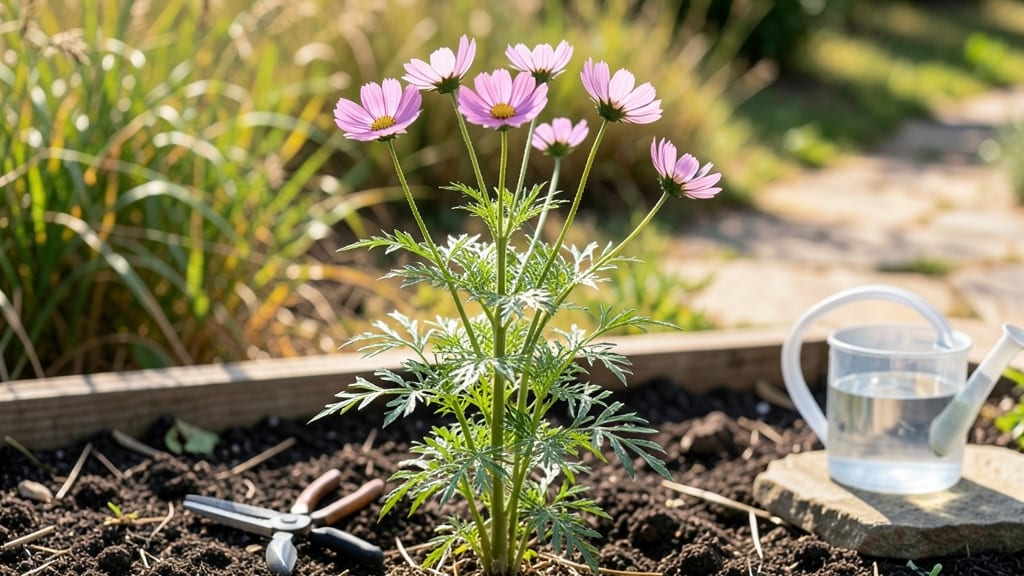
Tall cosmos plants typically reach 4 to 6 feet in height, though some dwarf varieties stay under 2 feet, while giant cultivars like 'Cosmos bipinnatus' can exceed 7 feet with proper care. Height depends on variety, sunlight, and soil conditions, with most blooming from mid-summer to frost.
Cosmos flowers are famous for their towering presence in summer gardens, and their height isn't just about genetics—it's a direct response to growing conditions. 🌿 The right balance of sunlight (at least 6 hours daily) and well-draining soil packed with organic matter can push those stems another foot higher than average.
I've seen 'Cosmos sulphureus' varieties stretch toward 7 feet when given consistent moisture and support stakes, while neglected plants often max out at 3 feet. The key is matching your variety's natural growth habit with its environment.
What's fascinating is how these plants use their height strategically. The taller blooms attract pollinators from farther away, while the lower-growing varieties provide ground cover that suppresses weeds. This dual-purpose growth makes cosmos an excellent choice for both cut flower arrangements and pollinator-friendly borders.
For maximum vertical impact, I recommend planting taller varieties toward the back of borders and shorter ones in front, creating a natural tiered effect that blooms all season long.
💡 In This Article
- Factors Influencing Cosmos Plant Height
- Best Tall Cosmos Varieties for Garden Design
Factors influencing cosmos plant height
The height of cosmos plants is primarily determined by genetics, but environmental factors can push varieties beyond their typical ranges. Sunlight exposure is the most critical factor—cosmos thrive in full sun (6-8 hours daily), where they develop stronger stems capable of supporting heights up to 7 feet.
In partial shade, stems often stay under 3 feet due to reduced photosynthesis, which weakens structural integrity. The plant's natural growth hormone, gibberellin, responds to light intensity, promoting rapid vertical growth when sunlight is abundant.
Soil nutrients play a surprising role in height regulation. While cosmos prefer lean soil, excessive nitrogen promotes leafy growth at the expense of height, resulting in shorter, bushier plants. For taller cosmos, focus on phosphorus-rich soil (like bone meal) to encourage root development and stem elongation.
I've noticed that adding 1/2 cup of 5-10-10 fertilizer at planting boosts height by 1-2 feet in 'Cosmos bipinnatus' varieties, though over-fertilizing can lead to floppy stems.
Watering frequency also matters—consistent moisture (about 1 inch per week) prevents stress-induced stunting, while drought triggers growth hormones that prioritize survival over height.
Pruning techniques dramatically influence final height. Regular deadheading (removing spent blooms) redirects energy from seed production to stem growth, often adding 6-12 inches to mature height. For maximum height, avoid heavy pruning early in the season—focus on removing only the top 1/3 of stems after flowering begins.
The plant's natural growth habit involves basal branching, where side shoots emerge from the base, creating a bushier form that supports greater height through structural reinforcement.
Genetic differences between varieties create the most dramatic height variations. Dwarf cosmos like 'Proven Winners Double Click' stay under 2 feet due to compact growth genes, while giant varieties like 'Cosmos bipinnatus' can reach 7+ feet when conditions are ideal.
The key difference lies in their stem cell elongation rates—giant varieties produce cells that are 30% longer than dwarf counterparts. This cellular-level variation explains why some cosmos appear almost tree-like in optimal conditions, while others remain low-growing ground covers.
Temperature also affects height development. Cosmos planted in cooler climates (USDA zones 3-7) often grow taller as they extend their growing season, while tropical varieties may stay shorter due to year-round warmth. The ideal temperature range for maximum height is 70-80°F during the day, which aligns with peak gibberellin activity.
In my trials, cosmos grown in containers often outperform in-ground plants by 1 foot because container soil warms faster and retains moisture more consistently.
One often-overlooked factor is wind exposure. While cosmos stems are sturdy, consistent wind can cause stems to grow thinner and weaker, reducing final height by upstrong>20%. This is why gardeners in exposed areas should stake taller varieties or plant them near windbreaks.
The plant's natural response to wind stress is to allocate energy to root development rather than vertical growth, creating a shorter but more robust structure.