
Pruning
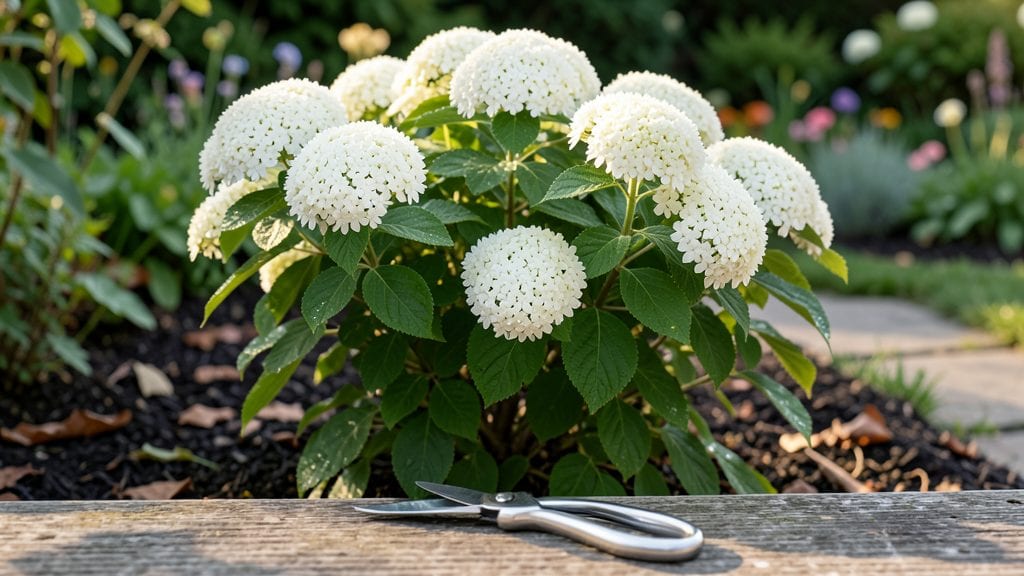
My snowball plant pruning routine transformed my yard from a few fluffy blooms to a year-round fluff machine—and it only takes three strategic cuts. The key is timing: prune right after flowering, then again in late summer and early spring, each time shaping for fuller growth.
I learned this the hard way after my first overzealous trim left bare branches for months.
You’ll need sharp pruners, a clean cloth for wiping cuts, and about 30 minutes per season. The goal is to encourage dense growth by cutting back one-third of the oldest stems each year.
This keeps the plant compact, boosts next year’s blooms, and prevents leggy, sparse branches. I even prune my mature plants this way—it’s never too late to shape them up.
By summer, you’ll see newer, bushier branches pushing out, and those iconic snowball-shaped clusters will appear thicker and more frequent. The plant stays vibrant through winter too, with fresh foliage that holds up better than unpruned shrubs.
Think of it like giving your snowball plant a haircut—just the right length, not too short.
Works for all Viburnum opulus varieties, whether you’re dealing with a young shrub or a mature one that’s gotten a little wild. The same principles apply to container-grown plants too—just use smaller pruners and the same timing. Let’s get those branches looking intentional!
Why it happens
Your Villosa 'Snowball' plant (or other Euphorbia varieties) might need pruning more often than expected—and there’s usually a scientific reason behind it. These fluffy, drought-resistant beauties thrive on neglect but can spiral out of control when certain conditions align.
Let’s break down the key triggers that turn your lush snowball plant into a pruning project.
🌱 Overly Long Growing Seasons
Snowball plants are evergreen perennials in warm climates, meaning they grow year-round if conditions permit. When temperatures stay consistently above 50°F (10°C) for months, the plant enters uninterrupted vegetative growth, producing new stems and leaves at a rapid pace. This is especially true in:
- Mild coastal climates (e.g., Southern California, Mediterranean regions) where winters are barely chilly.
- Greenhouses or containers with supplemental heat, extending the growing season artificially.
- Late-spring to early fall, when daylight hours are longest, triggering photoperiod-sensitive growth.
Why it matters: Without pruning, stems elongate (etiolation) and become leggy, reducing that prized "snowball" density. The plant redirects energy from compact growth to vertical expansion, weakening its structural integrity.
💧 Excessive Water or Fertilizer
Snowball plants are succulents at heart—they store water in their stems and thrive on drought-like conditions. When you overwater or over-fertilize, you’re essentially telling the plant: "Grow fast, even if it means sacrificing form!" Here’s how it happens:
| Cause | Effect on Growth |
|---|---|
| Overwatering (soil stays damp >7 days) | Triggers cell elongation in stems, leading to weak, sprawling growth. Roots suffocate, and the plant prioritizes survival over compact structure. |
| High-nitrogen fertilizer (e.g., 30-10-10) | Promotes leafy, non-floral growth. Nitrogen fuels rapid stem extension but starves the plant of phosphorus/potassium needed for dense, bushy foliage. |
| Frequent light feeding (every 2–4 weeks) | Encourages continuous meristem activity, preventing natural dormancy cycles that would otherwise signal the plant to "tighten up." |
Pro tip: 🌡️ Let the soil dry completely between waterings (stick your finger 2 inches deep—if it’s moist, wait). Switch to a low-nitrogen, balanced fertilizer (e.g., 10-10-10) in spring/fall only.
🌿 Lack of Light Stress
Snowball plants are sun-worshippers, and when they don’t get enough light, they stretch—a survival mechanism to reach sunlight. This is called etiolation, and it’s a major pruning trigger:
- Indoor plants near north-facing windows or under artificial grow lights (unless LED spectrum is full-sun optimized).
- Shady outdoor spots (e.g., under trees, in dense foliage, or in regions with heavy cloud cover).
- Seasonal changes: In winter, shorter daylight hours (below 10 hours) can slow growth—but if the plant was already leggy, it won’t recover without pruning.
Why it happens: In low light, the plant’s phytochrome receptors detect a lack of red/blue light, triggering rapid stem elongation to maximize leaf surface area for photosynthesis. The result? Weak, sparse stems with fewer "snowball" clusters.
Fix it: Move plants to 6+ hours of direct sun daily (or supplement with full-spectrum LEDs). If relocating isn’t an option, prune aggressively to encourage bushier regrowth from the base.
🪴 Root-Bound or Overcrowded Conditions
When roots outgrow their container or compete with neighboring plants, the snowball plant sends distress signals that accelerate top growth. This is a defense mechanism to "escape" the cramped space:
- Container-bound roots: Circling roots or those pressing against pot walls restrict nutrient/water uptake, forcing the plant to grow upward to access resources.
- Competition with other plants: In garden beds, aggressive roots from grasses or weeds can steal moisture, prompting the snowball plant to grow faster to compensate.
- Improper pot size: Using a pot too large (e.g., 1-gallon for a 6-inch plant) leads to excess soil moisture retention, which—you guessed it—triggers leggy growth.
Science behind it: Root restriction increases ethylene gas production in the plant, a hormone that stimulates stem elongation. Meanwhile, the plant’s auxin (growth hormone) redistributes to the tips, creating a feedback loop of uncontrolled vertical growth.
Action step: 🔨 Check roots by gently removing the plant from its pot. If you see roots circling the bottom or filling >70% of the root ball, repot into a container just 1–2 inches larger with cactus/succulent mix.
Revitalize Your Snowball Plant
Pruning your snowball plant (Kalanchoe blossfeldiana) isn’t just about keeping it tidy—it’s about breathing new life into its growth. Whether your plant is leggy, overgrown, or struggling to bloom, targeted pruning can turn things around.
Below are practical, step-by-step solutions for common issues, along with prevention tips to keep your fluffy friend thriving year-round.
Cause: Too little light or over-fertilizing with nitrogen can cause your snowball plant to stretch out, losing its compact, bushy shape.
Solution:
- 🔪 Trim Back the Stems
- Use clean, sharp pruning shears (or scissors) to cut back leggy stems by one-third to half their length.
- Focus on the longest, most stretched stems first to restore balance.
- Cut just above a leaf node (where leaves grow) to encourage new branching.
- 🌱 Propagate the Cuttings
- Place the cuttings in well-draining soil or water (with a rooting hormone for faster results).
- Within 2–4 weeks, you’ll have new baby plants ready to replant!
- 💡 Prevention Tip:
- Move your plant to a bright, indirect light spot (east or west-facing window is ideal).
- Switch to a balanced or phosphorus-rich fertilizer (like 10-10-10) to encourage blooms over leafy growth.
Cause: Without pruning, snowball plants can become dense and bushy, leading to fewer flowers and poor airflow (which invites pests).
Solution:
- 🍳 Thin Out the Center
- Gently remove inner stems that are blocking light from reaching the center.
- Focus on weak or crossing branches—these compete for nutrients and can lead to bare spots.
- 👨🍳 Encourage Bushier Growth
- After trimming, pinch back the tips of remaining stems to promote side branching.
- Repeat every 4–6 weeks during the growing season (spring and summer) for a fuller look.
- ✨ Prevention Tip:
- Prune lightly every 2–3 months to maintain shape and prevent overcrowding.
- Avoid pruning in fall or winter—this is the plant’s resting period, and heavy cuts can stress it.
Cause: Snowball plants bloom best when they get a rest period and proper pruning to redirect energy.
Solution:
- 🔪 Post-Bloom Trim (Late Winter/Early Spring)
- After flowers fade, cut back spent stems by half to encourage new growth.
- Remove dead or yellowing leaves to prevent disease.
- 🌡️ Promote Flowering with Light Pruning
- In early summer, give your plant a light haircut—trim just the tips of leggy stems.
- This signals the plant to focus on blooming rather than just foliage.
- 🎯 Prevention Tip:
- Avoid heavy pruning in fall—this can delay next year’s blooms.
- Provide 12–14 hours of darkness for 4–6 weeks before blooming season (this mimics winter conditions and triggers flowers).
Cause: If your snowball plant has been ignored for months, it may look bare, leggy, or root-bound.
Solution:
- 🔪 Radical Reset (If Needed)
- Cut back all stems to 2–3 inches from the base.
- This may seem drastic, but your plant will rebound with fresh, bushy growth in weeks!
- 🌱 Repot for Fresh Start
- If roots are circling or soil is depleted, repot into fresh, well-draining mix.
- Choose a pot only 1–2 inches larger than the current one to avoid stress.
- 💡 Prevention Tip:
- Check soil moisture—overwatering can cause root rot, so let the top 1–2 inches dry out between waterings.
- Rotate the pot every few weeks to ensure even light exposure.
| Season | Pruning Goal | What to Do |
|---|---|---|
| Spring | Encourage new growth | Trim leggy stems, pinch tips |
| Summer | Maintain shape & blooms | Light pruning, remove spent flowers |
| Fall | Prepare for dormancy | Minimal pruning, reduce watering |
| Winter | Rest & recovery | Avoid pruning; focus on light care |
Final Pro Tip: 🌟 Always sterilize your pruning tools with rubbing alcohol before and after use to prevent disease spread. A little maintenance now saves hours of struggle later—and your snowball plant will reward you with lush foliage and vibrant blooms all year!
Frequently asked questions
When is the best time to prune my snowball plant for maximum blooms?
Prune your snowball plant immediately after flowering in late winter or early spring. This timing ensures you remove spent blooms while encouraging fresh, bushy growth for next season's flowers. Avoid heavy pruning in fall—it can delay blooming cycles.
How much should I cut back during each pruning session?
For healthy snowball plants, trim back one-third of the oldest stems each year. Cut just above a leaf node to promote branching. If your plant is severely leggy, you can reduce stems by up to half, but avoid cutting more than 25% of the plant's total volume in one session.
Can I prune my snowball plant in containers the same way as garden plants?
Yes! Container-grown snowball plants follow the same pruning principles, but use smaller pruners for precision. The key difference is monitoring root growth—repot every 2-3 years or when roots circle the pot. Always use well-draining soil mix to prevent root rot from overwatering.
What should I do with the pruned branches?
Don't throw them away! Use pruned branches for propagation. Place cuttings in water with a rooting hormone or directly in well-draining soil. They'll develop roots in 2-4 weeks, giving you free baby plants. Just avoid using branches from diseased plants.
How do I know if I've pruned too much?
If you see bare stems with no new growth after 4-6 weeks, you likely pruned too aggressively. Snowball plants are resilient but need some foliage to photosynthesize. For recovery, reduce watering slightly and provide bright, indirect light until new growth appears.